Quick Verdict: The Polestar 3 at a Glance
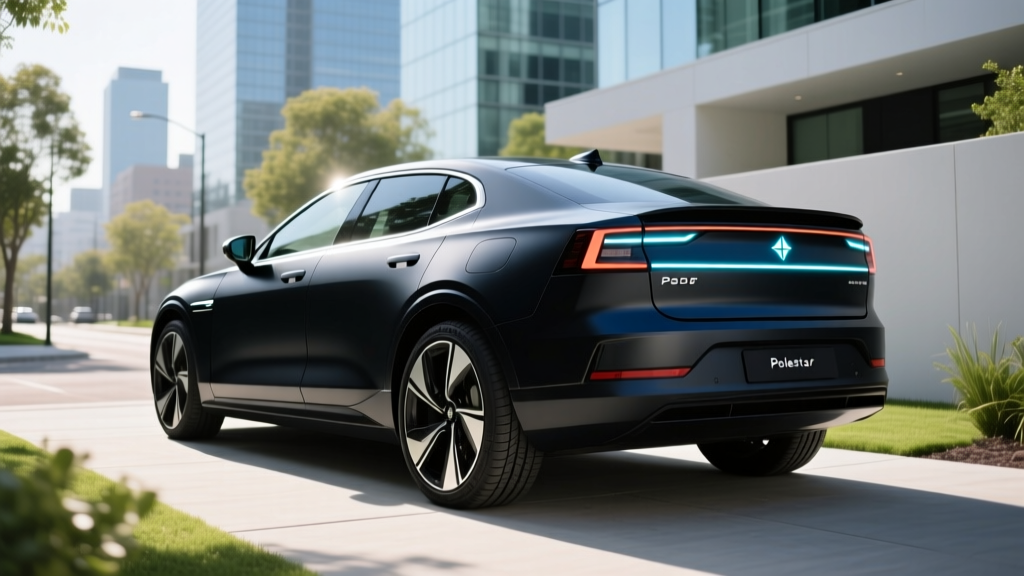
The 2026 Polestar 3 arrives as the Swedish-Chinese brand's first luxury SUV, targeting the BMW iX, Audi Q8 e-tron, and Tesla Model X with a design-forward, performance-oriented approach. Built on the same SPA2 platform as the Volvo EX90, the Polestar 3 offers up to 370 miles of EPA-estimated range in Long Range Dual Motor form, 250 kW DC fast charging, and a premium interior that punches above its weight. But for many buyers, the real story is the lease deal: Polestar's aggressive lease incentives and the ability to capture the $7,500 federal EV credit as a lease cash rebate make this one of the more compelling luxury EV SUV deals available right now — if you understand the rules.
| Spec | Long Range Dual Motor | Long Range Dual Motor w/ Performance Pack |
|---|---|---|
| EPA Range | 370 mi (est.) | 315 mi (est.) |
| Battery (usable) | 107 kWh (NMC) | 107 kWh (NMC) |
| Horsepower | 489 hp | 517 hp |
| 0–60 mph | 4.7 sec | 4.4 sec |
| Drivetrain | AWD (dual motor) | AWD (dual motor) |
| Max DC Fast Charge | 250 kW | 250 kW |
| 10–80% DC Charge | ~30 min | ~30 min |
| Level 2 Home Charge | 11 kW (~35 mi/hr) | 11 kW (~35 mi/hr) |
| MPGe (combined) | ~80 MPGe (est.) | ~73 MPGe (est.) |
| Cargo (behind rear seats) | ~24 cu ft | ~24 cu ft |
| Cargo (rear seats folded) | ~56 cu ft | ~56 cu ft |
| Base MSRP | $67,900 | $73,900 |
| Battery Warranty | 8 yr / 100,000 mi | 8 yr / 100,000 mi |
Range and Efficiency: EPA Numbers vs. the Real World
The Polestar 3 Long Range Dual Motor (without the Performance Pack) targets an EPA-estimated 370 miles of range from its 107 kWh (usable) nickel-manganese-cobalt (NMC) battery pack. The Performance Pack variant, with its larger 22-inch wheels and sportier tuning, drops that to approximately 315 miles EPA.
The EPA sticker is a starting point, not a guarantee. In mixed highway driving at 70–75 mph, expect roughly 290–320 miles from the 370-mi variant and 250–275 miles from the Performance Pack model. In cold weather (below 30°F), plan for a 15–25% range reduction depending on cabin heating demand and whether you precondition. The Polestar 3's heat pump (standard) helps mitigate winter losses compared to resistive heating systems, but physics is physics — a 370-mile SUV in a Minnesota January may deliver closer to 260 miles at highway speeds.
Efficiency lands around 80 MPGe combined for the standard Long Range Dual Motor and roughly 73 MPGe for the Performance Pack. In kWh/100 mi terms, that translates to approximately 35–38 kWh/100 mi, which is competitive for a 5,300+ lb luxury SUV but trails the more aerodynamic BMW iX xDrive50 (~86 MPGe). The large frontal area and tall ride height work against highway efficiency — this is a vehicle optimized for presence and comfort, not hypermiling.
Charging Speed: DC Fast Charging and Home Setup
Polestar equips the 3 with a 250 kW peak DC fast-charge rate via its NACS charge port (native Tesla Supercharger compatibility from launch, no adapter needed). On a V3 Supercharger or comparable 250+ kW Electrify America station, the 10–80% charge takes approximately 30 minutes.
However, the charging curve matters more than the peak number. The Polestar 3's large 107 kWh NMC pack sustains strong charging rates through the mid-SoC range — expect roughly 200+ kW up to about 50% SoC, tapering to ~150 kW by 70%, and dropping below 80 kW past 80%. This is typical NMC behavior. The practical takeaway: plan your road-trip stops around 10–80% charges, and don't expect the final 20% to happen quickly. Charging from 80–100% on DC can add another 25–30 minutes.
| Charge Level | Power / Rate | Speed | Notes |
|---|---|---|---|
| Level 1 (120V household) | ~1.4 kW | ~4 mi/hr | Emergency/trickle only; full charge in ~70+ hours |
| Level 2 (240V home, 48A) | 11 kW | ~35 mi/hr | Full charge overnight in ~10 hours; recommended setup |
| DC Fast Charge (peak) | 250 kW | ~180 mi in 15 min (at peak) | 10–80% in ~30 min; NACS connector standard |
For home charging, the onboard charger supports up to 11 kW on Level 2 (48 amps on a 60-amp circuit). A typical overnight session from 20% to 80% takes about 7–8 hours — perfectly suited for daily driving of up to 150–200 miles with a nightly top-up. Home Level 2 installation with a hardwired 48-amp charger (like the ChargePoint Home Flex or Tesla Wall Connector) typically runs $800–$2,500 including electrician labor and permitting, depending on your panel capacity and run distance. If your home has a 200-amp panel with spare capacity, expect the lower end. Older 100-amp panels may require a $2,000–$4,000 panel upgrade — get a licensed electrician to assess before committing.
Performance and Driving Dynamics
The dual-motor all-wheel-drive powertrain delivers 489 horsepower in standard form and 517 horsepower with the Performance Pack, which also adds torque vectoring on the rear axle, Öhlins dampers, and a sport-tuned air suspension. The 0–60 mph sprint takes 4.7 seconds standard or 4.4 seconds with the Performance Pack — quick for a luxury cruiser but not in the "throw you back in the seat" territory of a Tesla Model X Plaid (2.5 sec).
Where the Polestar 3 excels is the quality of its driving experience. The air suspension (standard on all trims) provides a supple, well-damped ride that absorbs highway imperfections with composure. Steering is precise and weighted appropriately for a vehicle of this mass. The Öhlins dampers on the Performance Pack add genuine handling capability without destroying ride quality — a rare balance. Regenerative braking offers a one-pedal driving mode with adjustable intensity, and the brake blending between regen and friction brakes is among the smoother implementations in the segment.
Towing capacity is rated at 4,400 lbs, adequate for a small boat or utility trailer but below the Rivian R1S (7,700 lbs) if heavy towing is on your list.
Pricing, Lease Incentives, and Federal Tax Credit Eligibility
The 2026 Polestar 3 starts at $67,900 for the Long Range Dual Motor and $73,900 for the Long Range Dual Motor with Performance Pack. The Pilot Pack (advanced driver assists) and Plus Pack (premium audio, heated rear seats, head-up display) are bundled options adding approximately $4,000–$7,000 depending on configuration. A well-equipped Performance Pack model with both option packs can approach $84,000–$88,000 before incentives.
Does the Polestar 3 Qualify for the §30D Federal EV Tax Credit?
This is where the Polestar 3's incentive story gets nuanced. Under current IRS §30D rules, the $7,500 federal tax credit requires:
- MSRP cap: SUVs/vans must be at or below $80,000 MSRP. The base Polestar 3 ($67,900) qualifies; a fully loaded Performance Pack model above $80,000 does not.
- Buyer income cap: Modified AGI must not exceed $300,000 (joint filers), $225,000 (head of household), or $150,000 (single).
- Battery sourcing: Critical minerals and battery components must meet escalating domestic-sourcing thresholds. The Polestar 3's battery is manufactured by CATL (China), which may disqualify it from the full $7,500 under the foreign entity of concern (FEOC) restrictions effective 2024+. Check the latest fueleconomy.gov listing for current eligibility.
- Point-of-sale transfer: If eligible, the credit can be applied at purchase as an immediate price reduction, not just a tax-time rebate.
The lease loophole: Under IRS §45W, the $7,500 commercial clean vehicle credit goes to the leasing company (lessor), not the buyer. Most automakers — including Polestar — pass this through as lease cash, effectively reducing your monthly payment or capitalized cost by $7,500 regardless of your personal income, MSRP caps, or battery-sourcing rules. This is why Polestar 3 lease incentives are particularly attractive: you can capture the full $7,500 value even if a purchase would not qualify. Always confirm with your dealer that the lease cash is being applied to your deal.
| Configuration | Base MSRP | Est. Lease Cash | Effective Lease Price |
|---|---|---|---|
| Long Range Dual Motor | $67,900 | $7,500 | ~$60,400 cap cost |
| LR Dual Motor + Performance Pack | $73,900 | $7,500 | ~$66,400 cap cost |
| LR Dual Motor + Perf. + Pilot + Plus | ~$84,000 | $7,500 | ~$76,500 cap cost |
Monthly lease payments vary by region, term (typically 36 months), money factor, and residual value. Expect roughly $799–$999/month for the base Long Range Dual Motor with lease cash applied and $5,000 due at signing, depending on your credit tier. Polestar periodically offers promotional money factors or loyalty bonuses for existing Volvo/Polestar owners — check the manufacturer's current offers page before visiting a dealer.
Interior, Tech, and Driver Assistance
The Polestar 3 cabin is a standout. A 14.5-inch center touchscreen runs an Android Automotive OS–based infotainment system with native Google Maps, Google Assistant, and access to the Play Store. Wireless Apple CarPlay is standard. The digital instrument cluster is a compact 9-inch display behind the steering wheel, supplemented by an available head-up display with augmented-reality navigation prompts.
Interior materials lean heavily on sustainably sourced textiles — bio-attributed MicroTech vinyl, wool-blend upholstery, and reclaimed wood trim. It reads as Scandinavian-minimal rather than traditional luxury, which will appeal to some and feel sparse to others accustomed to Mercedes-Benz levels of opulence. Front seats are 12-way power-adjustable, heated, and ventilated. Rear legroom measures approximately 38.5 inches, adequate for adults on longer trips. The panoramic glass roof is fixed (no shade), which can create cabin heat in direct summer sun — a notable drawback for Sun Belt buyers.
Driver Assistance: SAE Level 2, Not Self-Driving
The Polestar 3's Pilot Pack includes adaptive cruise control with lane centering, automatic emergency braking, blind-spot intervention, and Pilot Assist (highway lane-keeping + speed management). This is SAE Level 2 driver assistance, meaning you must keep your hands on the wheel and eyes on the road at all times. It is not autonomous driving. A future LiDAR-enabled "unsupervised" system from Luminar is planned but not yet available or approved for public roads.
The Pilot Assist system is competent for highway cruising — it tracks lanes well, handles gentle curves, and manages speed smoothly in traffic. It does not handle highway interchanges, construction zones, or complex urban scenarios. Compared to GM's Super Cruise (which offers true hands-free operation on mapped highways), the Polestar system requires more active driver engagement. Compared to Tesla's Autopilot, it is more conservative but less prone to phantom braking events in our experience.
Who the Polestar 3 Is For (and Who Should Look Elsewhere)
Best for: Design-conscious buyers who want a premium electric SUV that stands apart from the ubiquitous Tesla Model X and the conservative BMW iX. The Polestar 3 rewards those who value build quality, Scandinavian aesthetics, strong (not extreme) performance, and a genuinely comfortable daily-driver experience. The lease incentive structure makes it accessible to buyers who might not qualify for the purchase tax credit. Commuters covering 40–100 miles daily with home charging access will find this vehicle effortless.
Look elsewhere if: You need three rows of seating (consider the Volvo EX90 or Rivian R1S), you want maximum range per dollar (the Tesla Model X Long Range offers ~348 mi at a comparable price), you need hands-free highway driving (GM Super Cruise vehicles), or you tow heavy loads regularly. The Polestar 3 is a five-seat luxury sport-SUV, not a family hauler or work truck.
Pros
- Up to 370 miles EPA range (class-leading for the segment)
- 250 kW DC fast charging with NACS (Supercharger access)
- Lease cash captures $7,500 credit regardless of income/sourcing
- Air suspension and Öhlins dampers deliver excellent ride/handling balance
- Premium, sustainable interior materials with strong build quality
- Google-based infotainment with native Maps and Assistant
Cons
- Fixed glass roof lacks a sunshade — hot in summer
- Higher trims push past $80,000 MSRP cap (purchase credit ineligible)
- No hands-free driving mode (Level 2 only, unlike Super Cruise competitors)
- Rear visibility compromised by thick C-pillars and small rear window
- Limited service center network compared to Tesla or BMW
- Cargo capacity (24 cu ft) trails rivals like the BMW iX (35 cu ft)
Warranty and Ownership Considerations
Polestar provides a 4-year/50,000-mile limited warranty and an 8-year/100,000-mile battery and drive unit warranty with a capacity retention threshold of 70% — meaning Polestar will repair or replace the battery if it degrades below 70% of original capacity within that period. This is industry-standard and matches BMW, Audi, and Tesla. Scheduled maintenance is minimal (cabin air filter, brake fluid, wiper blades), with estimated annual costs of $200–$400.
Insurance premiums for the Polestar 3 are likely to run 15–30% higher than a comparable gas-powered luxury SUV due to the vehicle's repair costs, parts pricing, and performance. Get a quote before signing — a $68,000 SUV can easily cost $2,800–$3,800/year to insure depending on your profile and location.
Frequently Asked Questions
What is the real-world range of the 2026 Polestar 3?
The EPA-estimated range is 370 miles for the Long Range Dual Motor and 315 miles for the Performance Pack variant. In real-world highway driving at 70–75 mph, expect approximately 290–320 miles (standard) or 250–275 miles (Performance Pack). Cold weather below 30°F can reduce range by 15–25%, bringing a 370-mile vehicle down to roughly 260–290 miles in winter highway conditions.
How fast does the Polestar 3 charge at home and on the road?
On a DC fast charger, the Polestar 3 peaks at 250 kW and charges from 10–80% in approximately 30 minutes. At home on a 240V Level 2 charger (48A/11 kW), you'll add about 35 miles per hour, fully recharging overnight in roughly 10 hours. A standard 120V outlet adds only ~4 miles per hour and is not practical for daily use beyond emergency trickle charging.
Does the Polestar 3 qualify for the $7,500 federal EV tax credit?
For outright purchase, eligibility depends on the MSRP staying at or below $80,000 (SUV cap), your income being under the IRS thresholds, and the battery meeting FEOC sourcing requirements — which may be problematic given the CATL battery. However, leasing the Polestar 3 typically allows the lessor to claim the $7,500 commercial credit (§45W) and pass it to you as lease cash, bypassing the income, MSRP, and sourcing restrictions. Confirm lease cash application with your dealer.
How do Polestar 3 lease incentives compare to buying?
Leasing captures the $7,500 incentive more reliably than purchasing due to the §45W commercial credit pathway. Monthly payments with lease cash applied typically range from $799–$999/month on a 36-month term with ~$5,000 due at signing. Buying may be preferable if you plan to keep the vehicle 5+ years, drive under 12,000 miles/year, and can confirm purchase credit eligibility via fueleconomy.gov.
Is the Polestar 3 worth it compared to the BMW iX or Tesla Model X?
The Polestar 3 offers a compelling middle ground: more distinctive design and better ride quality than the Model X, lower starting price than the iX xDrive50, and strong range. It loses to the Model X on cargo space, third-row availability, and Supercharger network maturity (though NACS compatibility closes that gap). It loses to the iX on cargo volume and hands-free driving (BMW's Highway Assistant). If you value design, ride comfort, and a non-ubiquitous badge, the Polestar 3 earns its spot on your shortlist.
What are the biggest drawbacks of the Polestar 3?
The fixed glass roof without a sunshade is the most common owner complaint, especially in warm climates. Cargo capacity (24 cu ft behind the rear seats) is below segment rivals. The driver-assistance system is competent but requires hands-on engagement — no hands-free highway mode is available yet. The service and retail network is still growing, which may mean longer waits for collision repairs or warranty work compared to established luxury brands.