Why Polestar 2 Weight Matters More Than You Think
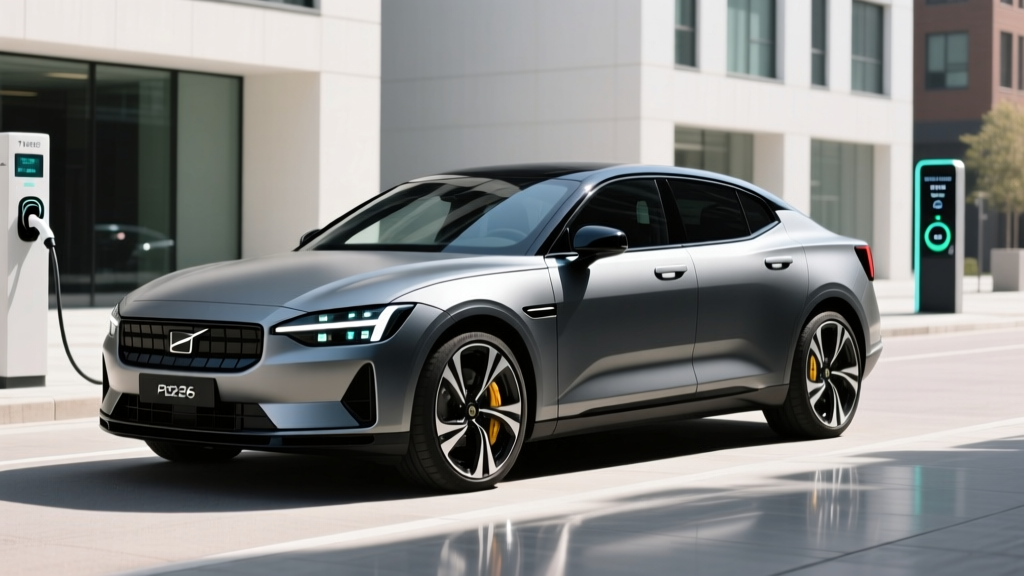
Curb weight is the single most consequential number in any electric vehicle spec sheet, yet it rarely gets the attention it deserves. The Polestar 2 weight ranges from approximately 4,396 pounds (Standard Range Single Motor) to 4,680 pounds (Long Range Dual Motor with Performance Pack), and that mass directly shapes everything from EPA range and tire wear to braking distances and energy consumption. Understanding why this Scandinavian fastback sedan carries the pounds it does — and what that means for your daily driving — is essential before signing a purchase agreement.
Polestar refreshed the 2 lineup significantly for the 2024-2025 model years, shifting the single-motor variant to rear-wheel drive and upgrading battery chemistry. Those changes carried into 2026 with minor software and packaging adjustments. The result is a more efficient, quicker, and better-balanced EV that still carries substantial heft thanks to its 78-82 kWh battery pack, steel-intensive body structure, and premium interior hardware.
| Spec | Standard Range SM | Long Range SM (RWD) | Long Range DM (AWD) |
|---|---|---|---|
| Curb Weight | ~4,396 lbs | ~4,519 lbs | ~4,680 lbs |
| Battery (Usable) | 69 kWh (LFP) | 82 kWh (NMC) | 82 kWh (NMC) |
| EPA Range | 276 mi | 341 mi | 320 mi |
| Horsepower | 272 hp | 299 hp | 421 hp (476 w/ Perf.) |
| 0-60 mph | 6.2 sec | 5.9 sec | 4.3 sec (4.1 w/ Perf.) |
| Drivetrain | RWD | RWD | AWD (Dual Motor) |
| MPGe (Combined) | 107 MPGe | 114 MPGe | 100 MPGe |
| EPA kWh/100 mi | 31 kWh | 29 kWh | 34 kWh |
| Base MSRP | $49,900 | $53,400 | $57,900 |
Real-World Range vs. EPA Estimates
The EPA numbers on the sticker tell one story; highway driving at 75 mph in winter tells another. The Polestar 2's weight — over two tons in every configuration — means more energy is required to maintain speed, accelerate, and overcome rolling resistance. That physics penalty shows up most clearly in real-world efficiency.
- Long Range Single Motor (EPA 341 mi): Expect 285-310 miles on mixed highway/city driving at moderate temperatures. Sustained 75+ mph highway runs drop this to roughly 260-280 miles.
- Long Range Dual Motor (EPA 320 mi): Real-world mixed driving yields 265-290 miles. Highway-heavy trips at speed: 240-260 miles.
- Cold Weather (below 32°F): Subtract 20-30% from EPA figures. The 82 kWh NMC pack with heat pump manages this better than many competitors, but expect 220-250 miles from the Long Range RWD in freezing conditions.
- Standard Range (EPA 276 mi): Real-world mixed: 230-255 miles. Highway: 210-230 miles.
The Long Range Single Motor is the efficiency sweet spot. Despite weighing roughly 123 pounds more than the Standard Range variant, its larger 82 kWh NMC battery and excellent 29 kWh/100 mi efficiency deliver the best real-world distance per charge. The Dual Motor's extra weight, second motor, and all-wheel-drive losses cost it about 21 miles of EPA range and roughly 5 kWh/100 mi in efficiency compared to the RWD Long Range.
Battery Chemistry, Capacity, and Longevity
Polestar made a strategic chemistry split across the 2 lineup. The Standard Range Single Motor uses a 69 kWh (usable) lithium iron phosphate (LFP) battery supplied by CATL. The Long Range variants use an 82 kWh (usable) nickel manganese cobalt (NMC) pack from LG Energy Solution.
| Factor | LFP (Standard Range) | NMC (Long Range) |
|---|---|---|
| Usable Capacity | 69 kWh | 82 kWh |
| Energy Density | Lower (heavier per kWh) | Higher (lighter per kWh) |
| Cycle Life | ~3,000+ cycles | ~1,500-2,000 cycles |
| Recommended Daily Charge | 100% (LFP prefers full charges) | 80-90% daily; 100% for trips |
| Cold Performance | Weaker in freezing temps | Better cold-weather output |
| Degradation (est. 100k mi) | ~5-7% loss | ~8-12% loss |
| Cobalt Content | None | Contains cobalt |
This chemistry choice directly impacts weight. LFP cells are less energy-dense, meaning the 69 kWh pack is heavier per unit of stored energy than the 82 kWh NMC pack. Yet the Standard Range model still weighs less overall because the smaller pack has fewer cells. For buyers planning to keep the car past 100,000 miles, LFP's superior cycle life is a genuine advantage — Polestar's battery warranty covers 8 years or 100,000 miles (whichever comes first) against degradation below 70% capacity on both chemistries.
Charging Speed: DC Fast and Home Level 2
The Polestar 2's weight and battery size also influence charging behavior. Heavier vehicles with larger packs can accept more total energy, but the charge curve — the rate at which the battery accepts power as it fills — matters more than peak numbers.
| Charging Method | Standard Range (LFP) | Long Range (NMC) |
|---|---|---|
| Max DC Fast Charge | 135 kW (peak) | 205 kW (peak) |
| 10-80% DC Time | ~34 minutes | ~27 minutes |
| Sustained DC Rate (10-60%) | ~110-130 kW | ~170-200 kW |
| Level 2 Home (11 kW onboard) | ~32 mi/hr added | ~36 mi/hr added |
| Level 2 Full Charge (0-100%) | ~7 hours | ~8 hours |
| Level 1 (120V, 1.4 kW) | ~4 mi/hr | ~4 mi/hr |
| Connector | CCS1 (NACS adapter available) | CCS1 (NACS adapter available) |
The Long Range's 205 kW peak DC rate is a meaningful upgrade over the earlier 150 kW limit Polestar offered pre-2024. In practice, expect the Long Range to sustain 170-200 kW from roughly 10-50% state of charge, then taper to 80-100 kW through 60-80%, and drop sharply above 80%. A typical 10-80% session at a 350 kW Electrify America or EVgo station takes about 27 minutes when the battery is preconditioned via the navigation system's automatic thermal prep.
The Standard Range LFP model tops out at 135 kW. Its charge curve is flatter — it holds closer to peak for a longer portion of the session — but the lower ceiling means 10-80% takes roughly 34 minutes. For home charging, both variants use an 11 kW onboard charger. A full Level 2 overnight charge on a 48-amp home station (such as a ChargePoint Home Flex or Wallbox Pulsar Plus) is practical and covers virtually all daily needs.
Preconditioning matters. If you navigate to a DC fast charger using the built-in Google Maps, the Polestar 2 will warm or cool the battery to optimal temperature before you arrive. Without preconditioning — especially in cold weather — peak charge rates can drop by 30-50% in the first several minutes.
Performance, Handling, and the Weight Factor
At 4,396-4,680 pounds, the Polestar 2 is not a lightweight. For comparison, a Tesla Model 3 Long Range AWD weighs approximately 4,034 pounds, and the Hyundai Ioniq 6 Long Range RWD sits at about 4,352 pounds. The Polestar's mass comes from its Volvo-derived CMA platform (which uses substantial high-strength steel), a relatively thick battery enclosure, and a premium interior with more sound insulation than many rivals.
That said, the weight is well-managed. The battery pack sits low in the chassis, giving the Polestar 2 a low center of gravity that limits body roll. The Dual Motor with the Performance Pack ($5,000 option including Öhlins dampers, Brembo brakes, and 20-inch forged wheels) transforms the car into a genuinely engaging driver's car — 476 horsepower and 502 lb-ft of torque, 0-60 in 4.1 seconds, and chassis tuning that punches well above its weight class.
| Metric | Polestar 2 LR DM | Tesla Model 3 LR AWD | Hyundai Ioniq 6 LR AWD | BMW i4 xDrive40 |
|---|---|---|---|---|
| Curb Weight | 4,680 lbs | ~4,034 lbs | ~4,541 lbs | ~4,862 lbs |
| Horsepower | 421 hp | 346 hp | 320 hp | 396 hp |
| 0-60 mph | 4.3 sec | 4.2 sec | 5.1 sec | 4.6 sec |
| EPA Range | 320 mi | 341 mi | 316 mi | 282 mi |
| Max DC Charge | 205 kW | 250 kW | 350 kW (peak) | 205 kW |
| Base MSRP | $57,900 | $47,740 | $49,650 | $57,900 |
The Polestar 2 Dual Motor trades some straight-line acceleration to the lighter Tesla Model 3, but the gap is negligible in real-world driving. Where the Polestar differentiates is build quality, steering feel, and the optional Öhlins/Brembo chassis package — features that no Model 3 offers. The Ioniq 6 undercuts on price and offers faster peak charging, but its interior materials and noise isolation don't match the Polestar. The BMW i4 is a closer rival in refinement but carries a higher starting price and less EPA range.
Pricing, Tax Credits, and Total Cost
The 2026 Polestar 2 lineup starts at $49,900 for the Standard Range Single Motor and climbs to $57,900 for the Long Range Dual Motor before options and destination charges. The Performance Pack adds $5,000 to the Dual Motor, and the Plus and Pilot packages (panoramic roof, Harman Kardon audio, advanced driver assists, pixel LED headlights) add roughly $4,000-$5,500 depending on configuration.
| Trim | Base MSRP | As-Tested (Typical) | §30D Credit Eligibility |
|---|---|---|---|
| Standard Range SM | $49,900 | $52,500 (w/ Plus) | Up to $3,750 (partial — battery sourcing rules) |
| Long Range SM (RWD) | $53,400 | $57,000 (w/ Plus+Pilot) | Up to $3,750 (partial — battery sourcing rules) |
| Long Range DM (AWD) | $57,900 | $65,500 (w/ Perf+Plus+Pilot) | Up to $3,750 (partial — battery sourcing rules) |
Federal tax credit eligibility for the Polestar 2 is constrained by the IRS §30D battery component and critical minerals sourcing requirements. As of 2026, the Polestar 2 qualifies for a partial credit of up to $3,750 (meeting one of the two sourcing thresholds but not both). The full $7,500 credit requires meeting both battery component and critical minerals requirements, which the Polestar 2's LG and CATL supply chains do not currently satisfy in full.
Additional eligibility constraints apply:
- MSRP cap: Sedans must have an MSRP at or below $55,000 to qualify. This means the Standard Range SM qualifies, but the Long Range variants may exceed the cap when equipped with packages — check the exact MSRP on your build.
- Income cap: Modified adjusted gross income must not exceed $150,000 (single), $225,000 (head of household), or $300,000 (joint filing).
- Point-of-sale transfer: Eligible buyers can transfer the credit to the dealer at purchase, reducing the out-of-pocket price immediately rather than waiting for a tax refund.
Always verify current eligibility on fueleconomy.gov before purchasing, as sourcing requirements and qualifying vehicle lists update periodically.
Cargo Space, Interior, and Daily Practicality
The Polestar 2 is a fastback sedan with a liftback trunk — more practical than a traditional sedan trunk but less versatile than a hatchback SUV like the Tesla Model Y. Cargo volume is 14.4 cubic feet behind the rear seats and approximately 37.5 cubic feet with the 60/40 rear seats folded. The front trunk (frunk) adds a modest 1.4 cubic feet — enough for charging cables and a small bag.
Interior dimensions are adequate for four adults but tight for five. Rear legroom measures approximately 34.0 inches — sufficient for average-height passengers but snug for taller riders on long trips. Headroom is generous in front but compromised in the rear by the sloping roofline. The cabin materials are excellent: vegan upholstery (textile or WeaveTech), real aluminum or wood inlays, and an 11.2-inch portrait touchscreen running Android Automotive OS with built-in Google Maps, Google Assistant, and the Google Play Store for EV apps.
Notable tech features include:
- Google Automotive infotainment with over-the-air updates
- Standard 12.3-inch digital driver display
- Available 360-degree camera and Park Assist Pilot
- Pilot Pack: adaptive cruise with lane centering, blind-spot monitoring, cross-traffic alert
- Available head-up display (HUD)
- Available Harman Kardon premium audio
Pros, Cons, and Who Should Buy
- Excellent build quality and premium interior materials
- Performance Pack (Öhlins/Brembo) delivers genuine sports-sedan dynamics
- Google Automotive OS is the best native infotainment in the segment
- LFP option offers superior long-term battery cycle life
- Strong real-world efficiency in Long Range RWD (29 kWh/100 mi)
- Standard heat pump for cold-weather range preservation
- Distinctive Scandinavian design that stands out from Tesla ubiquity
- Heavy curb weight impacts efficiency vs. lighter rivals
- Rear seat space is tight for taller passengers
- Partial federal tax credit only ($3,750 vs. full $7,500)
- CCS1 connector requires adapter for Tesla Supercharger access
- DC fast charging (205 kW peak) trails Hyundai/Kia's 800V architecture
- Cargo space smaller than SUV alternatives at similar prices
- Dealer network still limited in some US regions
Who the Polestar 2 suits best: The ideal buyer values design, build quality, and driving dynamics over maximum range or cargo space. It's a strong commuter and road-trip car for singles or couples without large cargo needs. The Long Range Single Motor is the best all-around pick for efficiency and value. The Dual Motor with Performance Pack targets enthusiasts who want a credible alternative to a BMW 3 Series or Audi S4 — with zero tailpipe emissions. Families needing three-across rear seating or substantial cargo should look at the Tesla Model Y, Hyundai Ioniq 5, or Kia EV6 instead.
Frequently Asked Questions
How does Polestar 2 weight compare to the Tesla Model 3?
The Polestar 2 weighs between 4,396 and 4,680 pounds depending on trim, while the Tesla Model 3 Long Range AWD weighs approximately 4,034 pounds. That 350-650 pound difference gives the Tesla an edge in efficiency and acceleration, though the Polestar counters with superior build quality and available performance hardware.
Does the Polestar 2 qualify for the full $7,500 federal EV tax credit?
No. As of 2026, the Polestar 2 qualifies for a partial credit of up to $3,750 under IRS §30D rules, meeting one of two battery sourcing thresholds. Additionally, the MSRP cap for sedans ($55,000) may disqualify higher-trim Long Range models. Income limits also apply.
What is the real-world highway range of the Polestar 2 Long Range?
The Long Range Single Motor (EPA 341 mi) delivers roughly 260-280 miles at sustained 75 mph highway speeds in moderate temperatures. The Dual Motor (EPA 320 mi) yields about 240-260 miles under the same conditions. Cold weather (below freezing) reduces these figures by 20-30%.
How fast does the Polestar 2 charge at home?
With an 11 kW onboard charger and a 48-amp Level 2 home station, the Polestar 2 adds approximately 32-36 miles of range per hour. A full charge from empty takes 7-8 hours depending on the battery pack size. Most owners charge overnight and wake up to a full battery daily.
Is the Polestar 2 good in snow and winter conditions?
The Dual Motor AWD variant handles snow and ice well, with good traction control and a standard heat pump that preserves range better than resistive cabin heaters. The RWD models are competent with winter tires but lack the all-wheel-drive grip. Cold-weather range loss of 20-30% is typical for all trims. Preconditioning the battery and cabin while plugged in mitigates much of the winter penalty.
Should I choose LFP or NMC battery chemistry?
Choose the LFP (Standard Range) if you prioritize long-term battery longevity, don't need more than 276 miles of EPA range, and want to charge to 100% daily without degradation concerns. Choose the NMC (Long Range) if you need maximum range, better cold-weather performance, and faster DC charging — but plan to charge to 80-90% for daily use and reserve 100% for road trips.