Introduction: The Evolution of Polestar
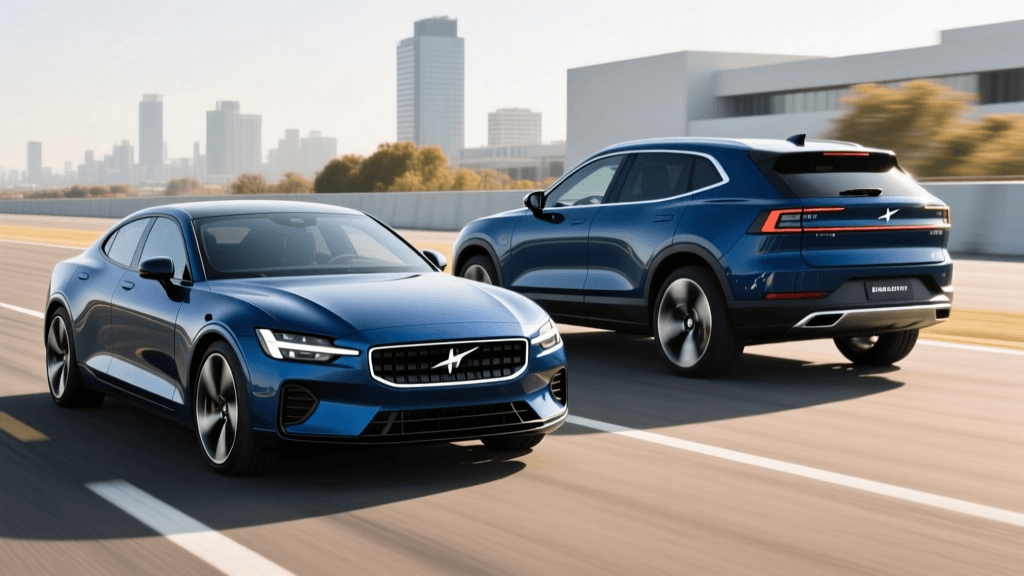
When the Polestar 2 first arrived on the scene, it established the Swedish-Chinese automaker as a serious contender in the premium electric vehicle space. Designed to take the fight directly to the Tesla Model 3, the Polestar 2 offered Scandinavian minimalism, engaging driving dynamics, and a unique fastback silhouette. However, as the EV market has matured, consumer demand has shifted heavily toward sport utility vehicles. Enter the Polestar 3, a luxury midsize SUV built to compete with the Porsche Cayenne and Tesla Model X. But how do these two distinctly different vehicles compare when parked side-by-side? In this head-to-head showdown, we break down the positioning, features, and real-world practicality of the Polestar 2 and Polestar 3 to help you decide which electric vehicle deserves a spot in your garage.
Platform and Design: Fastback vs. Midsize SUV
The most fundamental difference between these two EVs lies in their underlying architecture. The Polestar 2 is built on the CMA (Compact Modular Architecture) platform, which it shares with the Volvo XC40. While capable, it was originally designed with internal combustion engines in mind, resulting in a slightly higher floor and a traditional fastback liftback shape. According to Car and Driver's extensive testing, the Polestar 2's low roofline and sporty stance make it a favorite for driving enthusiasts who prefer a car-like seating position.
In contrast, the Polestar 3 utilizes the brand-new, EV-exclusive SPA2 (Scalable Product Architecture 2) platform. This bespoke skateboard architecture allows for a longer wheelbase, optimized battery placement, and a remarkably low center of gravity for an SUV. Visually, the Polestar 3 introduces Polestar’s new design language, most notably the "SmartZone" front fascia. This aerodynamic sensor housing replaces the traditional grille and integrates cameras and radar, giving the SUV a futuristic, aerospace-inspired look that the older Polestar 2 simply lacks.
Performance, Battery, and Real-World Range
Both vehicles offer dual-motor all-wheel-drive configurations, but their power delivery and battery capacities reflect their different market segments. The Polestar 2 Long Range Dual Motor produces a brisk 421 horsepower (or 476 hp with the optional Performance Software Over-the-Air update). It is nimble, eager to rotate through corners, and perfectly suited for carving up canyon roads or darting through city traffic.
The Polestar 3 Long Range Dual Motor steps things up significantly, delivering 489 horsepower and a massive 664 lb-ft of torque. Despite weighing considerably more, the Polestar 3's rear-biased torque vectoring and available two-chamber air suspension allow it to corner with a flatness that defies its SUV proportions. However, the larger vehicle requires a larger battery. The Polestar 2 utilizes an 82 kWh battery pack, yielding an EPA-estimated range of up to 276 miles. The Polestar 3 houses a massive 111 kWh battery, pushing its EPA-estimated range to an impressive 315 miles, making it the superior choice for cross-country road trips.
Interior Quality, Tech, and Cargo Practicality
Stepping inside, both cabins showcase Polestar’s commitment to sustainable luxury, offering high-quality vegan textile options and available Nappa leather. However, the technology and spatial layouts differ greatly. The Polestar 2 features an 11.1-inch portrait-oriented touchscreen running Google built-in. While intuitive, the vertical screen can feel slightly dated compared to modern landscape layouts, and rear-seat headroom is compromised by the sloping roofline.
The Polestar 3 adopts a stunning 14.5-inch landscape center display alongside a dedicated 9-inch passenger screen. Audiophiles will also note the difference in sound systems. The Polestar 2 offers a fantastic 13-speaker Harman Kardon setup, but the Polestar 3 can be optioned with a breathtaking 25-speaker Bowers & Wilkins system featuring Dolby Atmos and 3D surround sound, turning the cabin into a rolling concert hall.
Regarding practicality, the Polestar 2 offers 14.4 cubic feet of cargo space behind the rear seats, expanding to 32.1 cubic feet when folded. The Polestar 3, benefiting from its SUV dimensions, provides 17.1 cubic feet of rear cargo space (up to 48.4 cubic feet with seats down) and adds a front trunk (frunk) for extra storage, a feature entirely missing on the Polestar 2.
Head-to-Head Specifications Comparison
| Feature | Polestar 2 (Long Range Dual Motor) | Polestar 3 (Long Range Dual Motor) |
|---|---|---|
| Starting MSRP | $52,900 | $67,900 |
| Battery Capacity | 82 kWh | 111 kWh |
| EPA Est. Range | 276 miles | 315 miles |
| 0-60 MPH | 4.1 seconds | 4.7 seconds |
| Cargo Volume (Max) | 32.1 cu ft | 48.4 cu ft + Frunk |
| DC Fast Charging Peak | 200 kW | 250 kW |
Charging Architecture: 400V vs. 800V
One of the most critical technical distinctions between the two models is their electrical architecture. The Polestar 2 operates on a standard 400-volt system, capping its DC fast-charging speed at 200 kW. In real-world conditions, this means a 10% to 80% charge takes roughly 28 minutes at a high-speed Electrify America or Tesla Supercharger station (via adapter).
The Polestar 3, however, leaps into the future with an 800-volt architecture. This allows for a peak charging rate of 250 kW and significantly better thermal management. Under optimal conditions, the Polestar 3 can add 150 miles of range in just 15 minutes. Furthermore, the 800V system allows the Polestar 3's heat pump to operate more efficiently in extreme cold weather, preserving winter range better than the Polestar 2's 400V thermal management system. For buyers who frequently take long road trips, the 800V system in the Polestar 3 is a massive advantage that reduces time spent tethered to public charging stalls.
Advanced Driver Assistance Systems (ADAS)
While the Polestar 2 offers a robust Pilot Pack with adaptive cruise control and lane-centering, the Polestar 3 takes autonomous capabilities to the next level. The Polestar 3 is available with a LiDAR module from Luminar integrated directly into the SmartZone. This hardware, paired with an Nvidia Drive Orin central computer, prepares the SUV for future over-the-air autonomous driving updates, a level of forward-thinking redundancy that the Polestar 2 cannot match.
The Verdict: Which Polestar Fits Your Life?
Choosing between the Polestar 2 and Polestar 3 ultimately comes down to your lifestyle, budget, and daily driving habits. Here is our actionable buying advice:
- Buy the Polestar 2 if: You are an urban commuter or a driving enthusiast who prefers the nimble, connected feel of a sportback. It is significantly more affordable, easier to park in tight city spaces, and offers more than enough range for daily errands and weekend getaways. Ensure you install a Level 2 home charger, like a ChargePoint Home Flex on a NEMA 14-50 circuit, to easily wake up to a full 82 kWh battery every morning.
- Buy the Polestar 3 if: You have a family, require maximum cargo versatility, or frequently embark on long-distance road trips. The 800V charging architecture, LiDAR-equipped ADAS, and premium air suspension justify the higher price tag. The larger 111 kWh battery will require a dedicated 48-amp or 60-amp home charging circuit to maximize off-peak charging speeds overnight.
Before purchasing either vehicle, verify your local utility's time-of-use rates to optimize your home charging schedule and reduce long-term ownership costs. Both vehicles represent the pinnacle of Scandinavian EV design, but the Polestar 2 is the accessible, agile pioneer, while the Polestar 3 is the uncompromising, tech-heavy flagship.