Design and Market Positioning: Fastback vs. SUV
Polestar has rapidly transformed from a niche performance brand into a formidable player in the premium electric vehicle market. What began with the striking Polestar 1 plug-in hybrid has blossomed into a fully electric lineup aimed squarely at Tesla, BMW, and Audi. Today, the brand's core identity rests on two distinct but related pillars: the sleek, fastback-style Polestar 2 and the newly introduced, luxury mid-size SUV, the Polestar 3.
For buyers navigating the premium EV space, choosing between these two can be a complex exercise. While they share a Scandinavian design ethos and a commitment to sustainable manufacturing, their positioning, powertrains, and practical utility differ significantly. In this head-to-head showdown, we break down the Polestar 2 and Polestar 3 across design, performance, technology, and value to help you determine which electric vehicle deserves a spot in your garage.
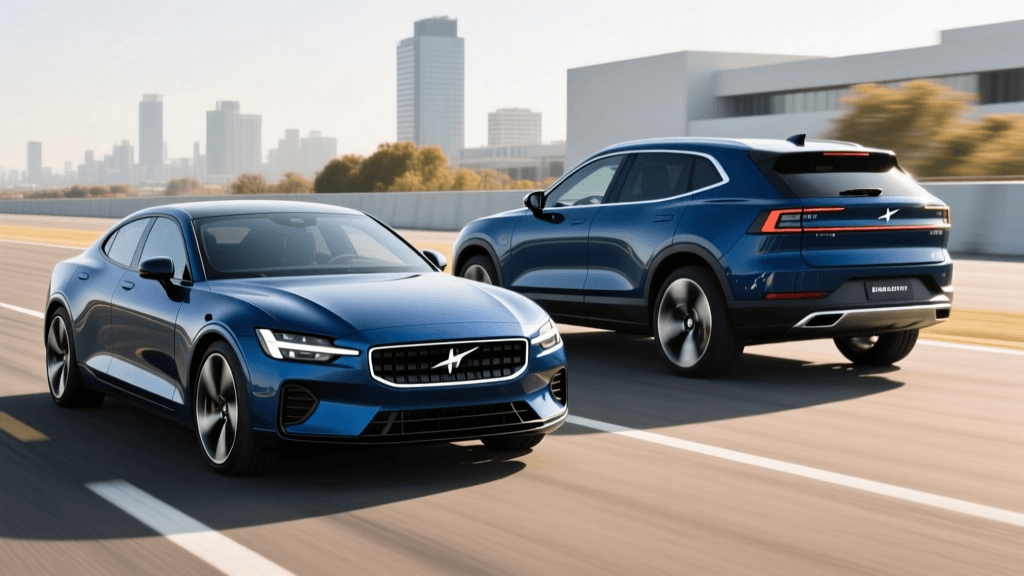
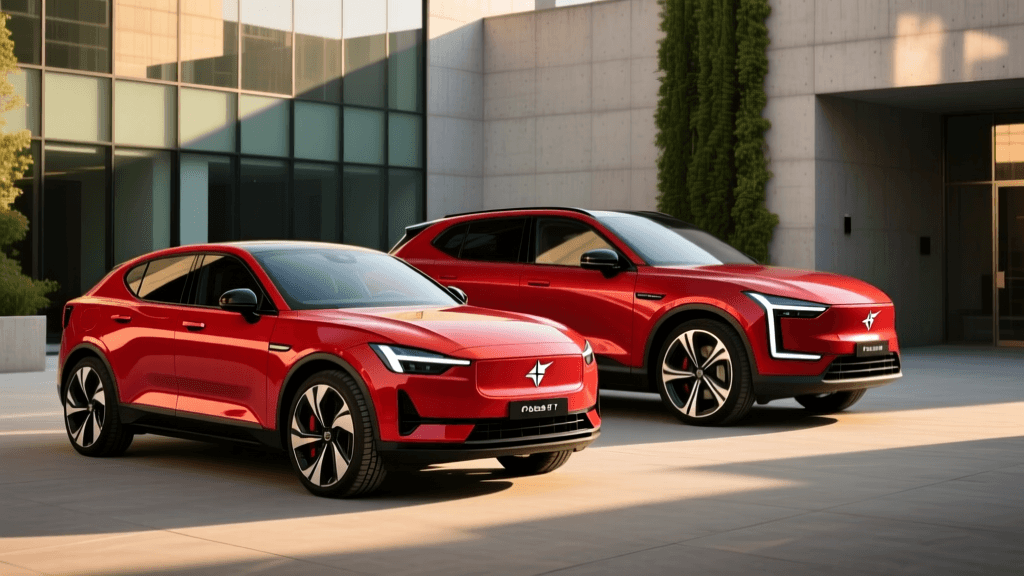
The most obvious difference between the two vehicles is their physical footprint and body style. The Polestar 2 is best described as a five-door liftback or fastback. It rides lower to the ground, featuring a sleek roofline that prioritizes aerodynamic efficiency and sporty aesthetics. It competes directly with the Tesla Model 3, BMW i4, and Hyundai Ioniq 6. Its design is unmistakably minimalist, characterized by sharp angles, the signature Thor's Hammer LED headlights, and a relatively compact footprint that makes it ideal for urban environments and winding backroads.
Conversely, the Polestar 3 is a full-fledged mid-size luxury SUV. Sharing its underlying SPA2 (Scalable Product Architecture) platform with the upcoming Volvo EX90, the Polestar 3 is significantly larger, wider, and taller. It is designed to take on heavyweights like the Tesla Model X, BMW iX, and Audi Q8 e-tron. Despite its larger stature, Polestar's designers have managed to keep the profile surprisingly sleek for an SUV, utilizing a distinctive dual-blade front spoiler and a rear aerodynamic wing to manage airflow and maintain a premium, athletic stance.
Performance and Powertrain Specifications
When it comes to driving dynamics, both vehicles deliver the instant torque and smooth acceleration expected of premium EVs, but their tuning philosophies reflect their distinct body styles.
The Polestar 2 is available in both Single Motor and Dual Motor configurations. For the latest model year, Polestar shifted to rear-wheel drive for the Single Motor variant, vastly improving its everyday driving manners. The Long Range Dual Motor variant produces an exhilarating 421 horsepower and 546 lb-ft of torque (when equipped with the Performance Pack), allowing it to sprint from 0 to 60 mph in just 4.1 seconds. Its lower center of gravity and available Ohlins dampers make it a genuinely engaging driver's car.
The Polestar 3, being a larger and heavier vehicle, requires more grunt to achieve similar performance metrics. It launches exclusively with a Dual Motor all-wheel-drive setup. The standard Long Range Dual Motor produces 489 horsepower, but adding the Performance Pack bumps that figure to an impressive 517 horsepower and 671 lb-ft of torque. Despite tipping the scales at over 5,500 pounds, the Polestar 3 can hit 60 mph in a blistering 4.6 seconds. Furthermore, the Polestar 3 features a sophisticated dual-chamber air suspension system as standard, allowing it to glide over highway imperfections while actively managing body roll in the corners.
Battery Capacity, Range, and Charging Speeds
Range anxiety remains a primary concern for EV adopters, and battery sizing is where the Polestar 3's larger chassis provides a distinct advantage.
The Polestar 2 Long Range models are equipped with an 82 kWh battery pack (gross). According to EPA testing standards, the Single Motor variant achieves an estimated 276 miles of range, while the Dual Motor drops slightly to around 247 miles. DC fast charging peaks at 205 kW, allowing a 10% to 80% charge in approximately 28 minutes under optimal conditions.
The Polestar 3 houses a massive 111 kWh battery pack. This larger capacity translates to an EPA-estimated range of up to 315 miles for the standard Dual Motor, dropping to roughly 300 miles with the Performance Pack. More importantly, the Polestar 3 supports peak DC fast charging rates of up to 250 kW. This means that despite having a much larger battery to fill, it can still achieve a 10% to 80% charge in about 30 minutes. Both vehicles support bidirectional charging capabilities, though software rollouts for vehicle-to-load (V2L) features are still expanding across the brand's network.
Interior, Technology, and Cargo Utility
Step inside either vehicle, and you are greeted by Polestar's signature Scandinavian minimalism. Both cabins eschew traditional buttons in favor of expansive touchscreens running the Android Automotive OS. This system offers native integration with Google Maps, Google Assistant, and the Google Play Store, providing one of the most intuitive and responsive infotainment experiences on the market.
However, the Polestar 3 represents a generational leap in computing power. It utilizes the Snapdragon Digital Chassis, offering vastly superior processing speeds, enhanced graphics, and future-proofing for over-the-air updates. The Polestar 3 also introduces an available Luminar LiDAR system mounted on the roofline, which will eventually enable advanced autonomous driving features and enhanced safety mapping.
Cargo capacity is where the SUV naturally dominates. The Polestar 2 offers a respectable 14.4 cubic feet of rear cargo space, plus a small front trunk (frunk) for charging cables. The Polestar 3, on the other hand, provides up to 25 cubic feet of space behind the rear seats, expanding significantly when the seats are folded flat. It also features a more practical frunk and an available tow rating of up to 4,400 pounds, making it a viable option for active families who need to haul gear or small trailers.
Head-to-Head Comparison Chart
| Feature | Polestar 2 (Long Range Dual Motor) | Polestar 3 (Long Range Dual Motor) |
|---|---|---|
| Body Style | 5-Door Fastback / Liftback | Mid-Size Luxury SUV |
| Starting MSRP (Approx.) | $54,300 | $79,900 |
| Horsepower (w/ Perf. Pack) | 421 hp | 517 hp |
| 0-60 mph Time | 4.1 seconds | 4.6 seconds |
| Battery Capacity | 82 kWh | 111 kWh |
| EPA Est. Range | 247 - 276 miles | 300 - 315 miles |
| Max DC Fast Charge | 205 kW | 250 kW |
| Cargo Space (Rear) | 14.4 cu ft | 25.0 cu ft |
Pricing and Value Proposition
Price is arguably the most significant differentiator between these two models. The Polestar 2 starts in the mid-$50,000 range, making it accessible to a broader segment of the EV-buying public. When factoring in potential federal and state tax incentives, the Polestar 2 becomes an incredibly compelling value proposition, offering premium materials, excellent tech, and brisk performance for less than many luxury compact SUVs.
The Polestar 3, conversely, is positioned as a true luxury flagship. With a starting price hovering around $79,900 (before destination fees or options), it is nearly $25,000 more expensive than a similarly equipped Polestar 2. You are paying for the larger battery, the advanced air suspension, the next-generation computing architecture, and the sheer presence of a full-size luxury SUV. For buyers cross-shopping the BMW iX or Tesla Model X, the Polestar 3's pricing is highly competitive, but it remains out of reach for those simply looking for a premium daily commuter.
Verdict: Which Polestar Should You Buy?
The choice between the Polestar 2 and Polestar 3 ultimately comes down to your lifestyle needs, budget, and spatial requirements.
Choose the Polestar 2 if you prioritize driving dynamics, urban maneuverability, and overall value. It is the purist's choice—a stylish, agile, and tech-forward liftback that delivers a thrilling drive without the massive footprint or premium price tag of a luxury SUV. It remains one of the best alternatives to the ubiquitous Tesla Model 3.
Choose the Polestar 3 if you need maximum utility, cutting-edge safety hardware, and a commanding road presence. It is the ideal vehicle for families, road-trippers, and luxury buyers who demand the latest in autonomous-ready technology (LiDAR) and air-suspension comfort. The Polestar 3 proves that the brand can compete at the very top of the luxury EV food chain, offering a distinct, design-forward alternative to the established German status symbols.