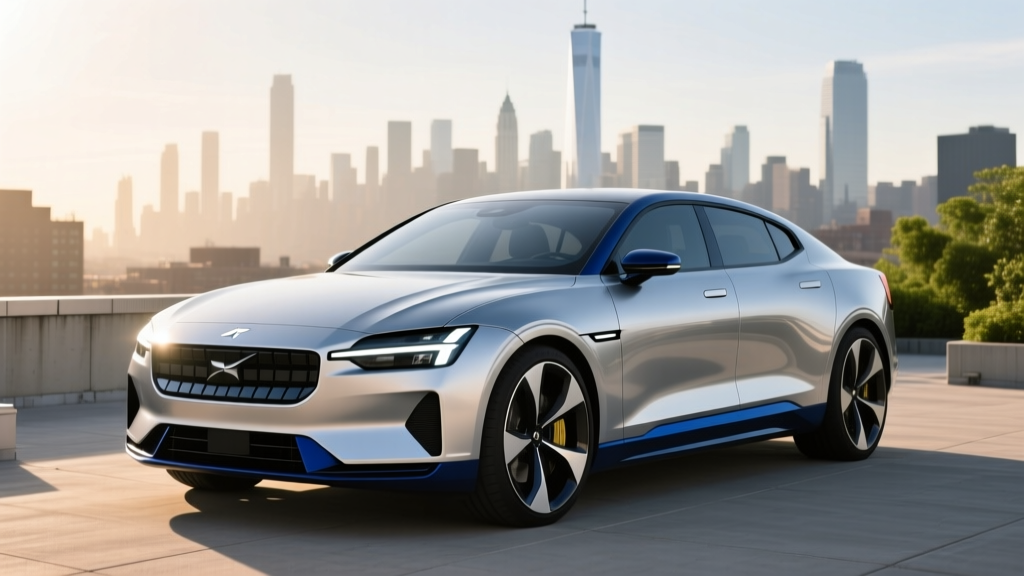
The original Polestar 2 carved out a distinct niche as a premium electric fastback with Scandinavian design sensibility and genuine driving dynamics. But the EV market has moved fast since its 2020 launch. Buyers now expect 300+ miles of EPA range, sub-20-minute DC fast charging, and aggressive pricing that undercuts legacy luxury brands. That pressure makes the Polestar 2 successor one of the most consequential launches in the brand's short history — and one of the most closely watched debuts in the premium compact EV segment for 2026 and beyond.
As of early 2026, Polestar has confirmed that a next-generation model will replace the current Polestar 2, built on an updated iteration of the SEA (Sustainable Experience Architecture) platform shared with Volvo and other Geely-group brands. However, final production specs, pricing, and on-sale dates remain unconfirmed. What follows is a detailed breakdown of everything Polestar has disclosed or strongly signaled, combined with analysis of the competitive landscape the successor will enter.
Platform and Powertrain: What the Next-Gen Architecture Enables
The current Polestar 2 rides on the CMA (Compact Modular Architecture) platform, which was originally designed to accommodate both internal-combustion and electric powertrains. The successor is expected to migrate to a dedicated EV platform — most likely an evolved version of Geely's SEA architecture already underpinning the Polestar 4 and several Volvo models. This shift matters for three concrete reasons:
- Battery packaging: A skateboard-style dedicated EV platform allows a larger, flatter battery pack without compromising cabin or cargo space. Expect usable capacity in the 78–85 kWh range, up from the current car's 75 kWh (Long Range) and 67 kWh (Standard Range) packs.
- 800-volt electrical architecture: The SEA platform supports 800V, enabling significantly faster DC charging than the current Polestar 2's 400V system. This is the single biggest hardware upgrade the successor will bring.
- Motor options: Polestar has confirmed the next generation will offer both single-motor rear-wheel-drive and dual-motor all-wheel-drive configurations. The RWD variant will likely serve as the volume model, while AWD variants target the performance-oriented buyer.
Chemistry-wise, Polestar's parent company Geely has been investing heavily in both NMC (nickel manganese cobalt) and LFP (lithium iron phosphate) cell supply chains. The most probable scenario: NMC chemistry for Long Range and Performance trims (prioritizing energy density), with a potential LFP option on a base trim for cost reduction and cycle-life durability, similar to the strategy Tesla and Ford have pursued.
Expected Range and Efficiency
Range is the metric buyers scrutinize first, and the current Polestar 2's EPA ratings — 276 miles for the Long Range Single Motor, 247 miles for the Long Range Dual Motor with the Performance Pack — have fallen behind competitors. The Polestar 2 successor needs to clear 300 miles to remain competitive.
| Trim / Drivetrain | Est. Battery (usable kWh) | Est. EPA Range | Est. Efficiency |
|---|---|---|---|
| RWD Standard Range (LFP) | ~65 kWh | ~250 mi | ~26 kWh/100mi |
| RWD Long Range (NMC) | ~82 kWh | ~320–340 mi | ~25 kWh/100mi |
| AWD Long Range (NMC) | ~82 kWh | ~295–315 mi | ~27 kWh/100mi |
| AWD Performance (NMC) | ~82 kWh | ~275–295 mi | ~29 kWh/100mi |
All figures are preliminary estimates based on platform capabilities and competitive benchmarking. Final EPA certifications will be published at fueleconomy.gov when available.
EPA range is a blended-cycle estimate. In real-world driving, expect the following for the Long Range RWD variant (~330 mi EPA est.):
• Highway (70–75 mph, moderate climate): ~270–290 miles. Aerodynamic drag dominates at speed, and the fastback shape, while sleek, still loses efficiency above 70 mph.
• City / suburban mixed driving: ~310–330 miles. Regenerative braking recovers significant energy in stop-and-go traffic.
• Cold weather (below 32°F / 0°C): ~230–260 miles. Battery chemistry loses efficiency in cold, and cabin heating draws substantial power. A heat pump (expected standard on the successor) mitigates this by ~10–15% compared to resistive heating, but cold-weather range loss of 20–30% is physics, not a defect.
• Towing (if rated): Expect a 35–50% range reduction at highway speeds with a loaded trailer.
Charging: The 800V Upgrade Changes Everything
The current Polestar 2 maxes out at approximately 200 kW on DC fast chargers — respectable but increasingly outclassed. The Hyundai Ioniq 5 peaks at ~240 kW, the Porsche Macan Electric at ~270 kW, and the upcoming crop of 800V vehicles pushes past 300 kW. The Polestar 2 successor's migration to an 800V-capable platform should deliver a meaningful leap.
| Charging Level | Power / Rate | Speed / Time |
|---|---|---|
| Level 1 (120V household) | ~1.4 kW | ~3–4 mi/hr |
| Level 2 (240V home, 48A circuit) | ~11.5 kW | ~32–38 mi/hr; full charge ~8–9 hrs |
| DC Fast Charge (peak) | ~250–300 kW (est.) | 10–80% in ~18–22 min (est.) |
| DC Fast Charge (sustained avg.) | ~180–220 kW (est.) | Adds ~150 mi in ~15 min (est.) |
A note on charging curves: Peak kW is not sustained kW. Even on an 800V platform, the battery management system will taper charge rate as the state of charge rises — typically beginning around 60–70% SoC and dropping sharply above 80%. The 10–80% time is the practical metric for road-trip planning, because charging above 80% is so slow that most drivers simply resume driving. Preconditioning the battery (via the car's navigation-routed preconditioning feature) will be essential to achieving peak charge rates at DC stations, particularly in cool weather.
The successor will use the NACS (North American Charging Standard) connector, aligning with the industry-wide shift to Tesla's connector design. This grants access to Tesla's Supercharger network — currently the most reliable and expansive DC fast-charging network in North America — without an adapter.
Performance and Driving Dynamics
Polestar has always positioned itself as a driver's brand within the EV space, and the successor should sharpen that identity. Based on platform capabilities and Polestar's existing performance tuning philosophy:
| Variant | Drivetrain | Horsepower | 0–60 mph |
|---|---|---|---|
| RWD Standard Range | Rear-wheel drive | ~295 hp | ~5.8 sec |
| RWD Long Range | Rear-wheel drive | ~340 hp | ~5.2 sec |
| AWD Long Range | Dual-motor AWD | ~440 hp | ~4.1 sec |
| AWD Performance (BST-style) | Dual-motor AWD | ~500+ hp | ~3.5 sec |
The current Polestar 2 BST (Battest) editions demonstrated that Polestar's chassis engineers can extract genuine sports-sedan dynamics from an electric platform. Expect the successor's Performance variant to continue that tradition with Öhlins-tuned dampers, upgraded brakes, and torque-vectoring AWD — though whether it arrives at launch or as a later addition remains to be seen.
Pricing, Trims, and Federal Tax Credit Eligibility
Pricing is where the Polestar 2 successor faces its stiffest challenge. The current Polestar 2 starts around $49,900, placing it in direct competition with the Tesla Model 3, Hyundai Ioniq 6, BMW i4, and the growing roster of premium compact EVs. To remain viable, Polestar must price aggressively — especially as several competitors undercut it while offering comparable or superior range.
| Trim | Est. Base MSRP | Est. As-Tested (w/ options) |
|---|---|---|
| RWD Standard Range | ~$42,000–$45,000 | ~$48,000 |
| RWD Long Range | ~$48,000–$52,000 | ~$56,000 |
| AWD Long Range | ~$54,000–$58,000 | ~$62,000 |
| AWD Performance | ~$62,000–$68,000 | ~$72,000 |
The IRS §30D clean vehicle credit offers up to $7,500 for qualifying new EVs, but eligibility depends on multiple requirements that change annually:
- MSRP cap: Sedans and hatchbacks must have an MSRP ≤ $55,000. SUVs and trucks ≤ $80,000. This means the Polestar 2 successor's base and mid-range trims may qualify, but the Performance variant likely will not.
- Buyer income cap: Modified AGI must not exceed $150,000 (single), $225,000 (head of household), or $300,000 (joint filers).
- Battery sourcing: A percentage of critical minerals and battery components must be sourced from the U.S. or free-trade-agreement countries. These thresholds tighten each year. Polestar's Geely/Chinese supply chain ties make this the biggest wildcard — and a risk factor for credit eligibility.
- Point-of-sale transfer: As of 2024, buyers can transfer the credit to the dealer at purchase, reducing the upfront price rather than waiting for a tax refund.
- FEOC restriction: Vehicles with battery components from a "foreign entity of concern" (primarily Chinese companies) are disqualified. Given Polestar's Geely ownership, this is a critical area to watch.
Consult a tax professional and check the latest IRS guidance before relying on credit eligibility. Rules are subject to legislative change.
Interior, Cargo, and Technology
The current Polestar 2's interior is one of its strongest attributes — minimalist Scandinavian design, vegan upholstery standard, excellent seat comfort, and a clean Google-based infotainment system. The successor should build on this foundation while addressing the most common criticisms:
- Infotainment: The current Google Automotive OS is functional but can feel sluggish compared to Tesla's or even Hyundai's systems. Expect a next-generation processor and a more responsive UI, possibly with expanded third-party app support.
- Display: The 11.2-inch center screen in the current car is small by 2026 standards. A larger 14–15 inch display is likely, along with an updated digital instrument cluster or augmented-reality head-up display.
- Driver assistance: Polestar currently offers Pilot Pack with adaptive cruise, lane-centering, and blind-spot monitoring — all SAE Level 2 driver-assist features requiring continuous driver engagement. The successor may debut a more advanced version with hands-free highway capability on mapped roads (still Level 2, similar to GM's Super Cruise or Ford's BlueCruise), but Polestar has not confirmed this.
- Cargo space: The current Polestar 2 offers 14.4 cu ft of trunk space (it's a liftback, so practical volume is greater than the number suggests) plus a small 1.4 cu ft frunk. The dedicated-EV-platform successor should improve both: expect ~18–22 cu ft rear cargo and a ~3–4 cu ft frunk, thanks to the skateboard architecture freeing up front-axle space.
- Passenger space: Rear legroom in the current car is adequate but not generous (~34.3 inches). The longer wheelbase of a dedicated EV platform should add 1–2 inches of rear legroom, bringing it competitive with the Tesla Model 3 and Hyundai Ioniq 6.
Any driver-assist system in the Polestar 2 successor (adaptive cruise, lane-centering, hands-free highway assist) will be SAE Level 2 — meaning the driver must remain attentive, keep hands on or near the wheel (depending on system design), and be prepared to take over at any moment. This is not self-driving. Only Level 4 services like Waymo's robotaxi operate without a driver. Never treat a Level 2 system as autonomous.
Competitive Positioning: Who Is the Successor Up Against?
The premium compact EV sedan/fastback segment is crowded and only getting more so. Here's how the Polestar 2 successor will likely stack up against its key rivals:
| Model | EPA Range | Max DC kW | 10–80% Time | Base MSRP |
|---|---|---|---|---|
| Tesla Model 3 Long Range | 363 mi | 250 kW | ~22 min | $47,740 |
| Hyundai Ioniq 6 SE Long Range | 361 mi | ~240 kW | ~18 min | $42,715 |
| BMW i4 eDrive40 | 307 mi | ~205 kW | ~31 min | $57,900 |
| Polestar 2 Successor (LR RWD est.) | ~320–340 mi | ~250–300 kW | ~18–22 min | ~$48,000–$52,000 |
The Polestar 2 successor will not win on range alone — the Tesla Model 3 and Hyundai Ioniq 6 both exceed 360 miles on efficient trims. Where Polestar can differentiate is in build quality, interior material quality, chassis tuning, and design distinctiveness. The Model 3's minimalist interior is polarizing; the Ioniq 6's styling is unconventional. The Polestar 2 successor occupies a middle ground: Scandinavian restraint with premium tactility, appealing to buyers who find Tesla too austere and Hyundai too mainstream.
Warranty and Ownership Considerations
Polestar currently offers a competitive warranty package, and there's no reason to expect a reduction for the successor:
- Basic vehicle warranty: 4 years / 50,000 miles
- Battery and drive unit warranty: 8 years / 100,000 miles (with a capacity retention threshold, typically 70% of original capacity)
- Complimentary maintenance: Currently 2 years / 20,000 miles for scheduled service
- Roadside assistance: 4 years / unlimited miles
For long-term ownership, the battery warranty is the critical number. The 8-year / 100,000-mile coverage with a 70% capacity floor is industry-standard and aligns with federal requirements for EV battery warranties. However, real-world degradation data from the current Polestar 2 suggests that most packs retain 90%+ capacity at 60,000 miles under normal use — a positive signal for the successor's longevity, particularly if NMC chemistry carries over with improved thermal management.
Who Should Wait for the Polestar 2 Successor?
- You want a premium compact EV with distinctive Scandinavian design and a high-quality interior that stands apart from Tesla's minimalism
- Chassis dynamics and driving feel are high priorities — Polestar's tuning pedigree is genuine
- You value 800V fast-charging capability for road trips and want NACS/Supercharger access
- You're not in a rush to buy — the successor likely won't reach U.S. showrooms until late 2026 or 2027
- You want a liftback/hatchback form factor with improved cargo versatility over the current model
- Maximum EPA range is your top priority — the Model 3 and Ioniq 6 currently offer 360+ miles and are available now
- You need the lowest possible purchase price — the Ioniq 6 undercuts Polestar's expected pricing significantly
- Federal tax credit eligibility is essential to your budget — Polestar's Geely/Chinese supply chain creates FEOC and sourcing uncertainty
- You need a vehicle immediately — the successor is still in pre-production
- You want a crossover/SUV — consider the Polestar 4 or upcoming Polestar 7 instead
Frequently Asked Questions
When will the Polestar 2 successor be available to buy?
Polestar has confirmed a next-generation replacement for the Polestar 2, but has not announced an exact on-sale date. Based on typical automotive development timelines and Polestar's product roadmap, U.S. deliveries are most likely in late 2026 or early 2027. Reservations may open several months before production begins.
Will the Polestar 2 successor qualify for the $7,500 federal EV tax credit?
This is uncertain and depends on battery sourcing requirements under the FEOC (foreign entity of concern) rules and critical-mineral sourcing thresholds. Polestar's parent company Geely has significant Chinese supply chain ties, which could disqualify the vehicle under current §30D rules. Eligibility may also depend on the specific trim's MSRP (must be ≤ $55,000 for sedans) and the buyer's income. Check the IRS clean vehicle credit page for the latest rules and consult a tax professional.
What connector will the Polestar 2 successor use?
The successor is expected to use the NACS (North American Charging Standard) connector, consistent with the industry-wide adoption of Tesla's plug design. This provides native access to Tesla Superchargers and the growing number of NACS-equipped public chargers from Electrify America, EVgo, and other networks — without requiring an adapter.
Is the Polestar 2 successor self-driving?
No. Any driver-assist features offered on the successor will be SAE Level 2 systems, requiring the driver to remain fully attentive and prepared to take control at all times. Polestar has not announced any Level 3 or Level 4 autonomous driving capability for this model.
Should I buy the current Polestar 2 or wait for the successor?
If you need a car now and find a well-priced current Polestar 2, it remains a compelling vehicle with strong build quality and engaging dynamics. However, the generational leap to an 800V dedicated EV platform will bring substantially faster charging, likely more range, improved interior space, and NACS compatibility. If your purchase timeline is flexible, waiting is the strategically sound choice.
How will the Polestar 2 successor handle cold-weather range loss?
Expect 20–30% range reduction in sustained sub-freezing temperatures, consistent with all lithium-ion EVs. A heat pump (likely standard) will help mitigate cabin-heating energy draw. Battery preconditioning — both for driving and for charging — will be critical to maintaining charging speeds and range in winter conditions. Garage-keeping the vehicle and using scheduled departure preconditioning while plugged in will significantly reduce cold-weather penalties.
This article will be updated with confirmed specifications, pricing, and availability as Polestar releases official information. Last updated: early 2026.