Quick Verdict: The Dual-Motor EV That Punches Above Its Price
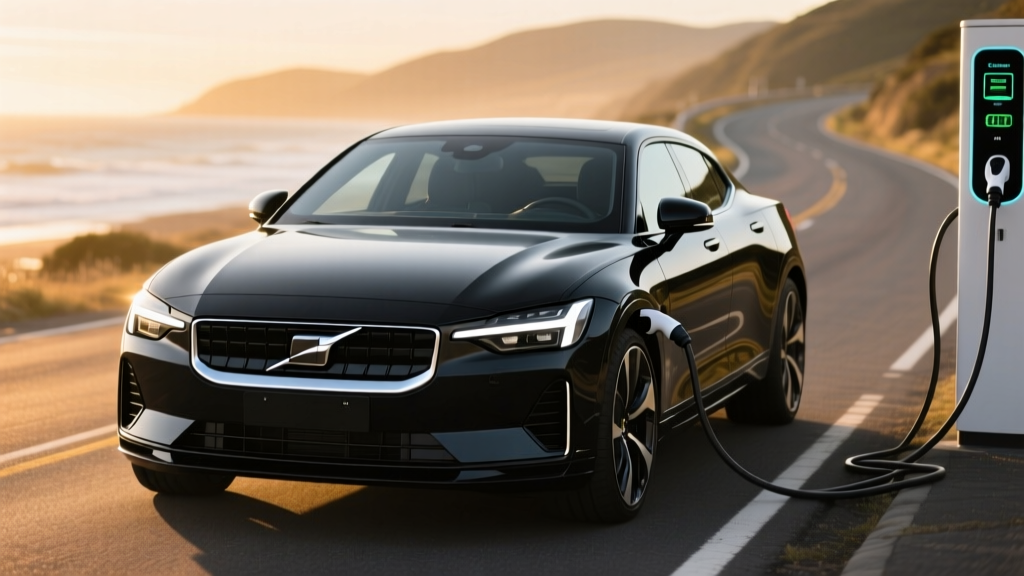
The Polestar 2 Long Range Dual Motor with the Performance Pack remains one of the sharpest-driving electric sedans on the market. With 476 horsepower, a 4.2-second 0-60 mph time, and an EPA-estimated 276 miles of range, it threads the needle between sports-sedan dynamics and daily-drivable efficiency. For 2025-2026, Polestar updated the battery to an 82 kWh usable pack (up from 78 kWh in earlier model years) and bumped DC fast-charging capability to 205 kW — meaningful upgrades that keep it competitive against the Tesla Model 3 Performance, BMW i4 M50, and Hyundai Ioniq 6.
But the Polestar 2's story isn't just about straight-line speed. It's about Öhlins dampers, Brembo brakes, and a chassis tuned by engineers who clearly care about steering feel in an era where many EVs default to numb, isolated ride quality. This review covers every number that matters — range, charging curves, pricing after incentives, and where the Polestar 2 falls short.
Polestar 2 Performance Specs at a Glance
| Specification | Value |
|---|---|
| Drivetrain | Dual-motor AWD |
| Horsepower | 476 hp (355 kW) |
| Torque | 502 lb-ft |
| 0-60 mph | 4.2 seconds |
| Battery (usable) | 82 kWh, NMC (nickel manganese cobalt) |
| EPA Range | 276 miles (w/ Performance Pack); 320 mi (LRDM without pack) |
| EPA Efficiency | 91 MPGe combined / 37 kWh/100 mi |
| Max DC Fast Charge | 205 kW (peak) |
| 10-80% DC Charge Time | ~27 minutes |
| Level 2 Home Charging | 11 kW onboard charger (~35 mi/hr) |
| Cargo Volume | 14.4 cu ft (rear); 41.4 cu ft (seats folded); 1.4 cu ft frunk |
| Base MSRP | $54,300 (LRDM); +$5,500 Performance Pack |
| As-Tested Price | ~$62,800 (w/ Performance Pack, Plus & Pilot packs) |
| Battery Warranty | 8 years / 100,000 miles (min 70% capacity retention) |
| Vehicle Warranty | 4 years / 50,000 miles bumper-to-bumper |
Range and Efficiency: EPA vs. the Real World
Real-World Expectation: ~240-255 miles highway at 70-75 mph; ~210-230 miles in sub-freezing cold weather; up to 280+ miles in mild-weather city driving with regen.
The Performance Pack's 20-inch forged alloy wheels and stickier Pirelli P Zero tires cost you roughly 44 miles of EPA range compared to the standard Long Range Dual Motor on 19-inch wheels (320 miles EPA). That's the trade-off for sharper handling and more grip.
In real-world highway testing at sustained speeds of 70-75 mph in moderate temperatures (55-75°F), expect to see consumption around 38-40 kWh/100 mi, yielding approximately 240-255 miles before the battery buffer kicks in. In cold weather (below 32°F), the NMC chemistry loses some efficiency to cabin heating and battery thermal management — plan on 210-230 miles of usable range unless you precondition the battery while plugged in.
The Polestar 2 does include a heat pump as standard equipment on recent model years, which helps mitigate cold-weather range loss compared to EVs relying solely on resistive heating. City driving with frequent regenerative braking opportunities can push range above the EPA sticker, sometimes reaching 280+ miles in stop-and-go traffic at moderate speeds.
For context, the EPA's fueleconomy.gov listing shows the Long Range Dual Motor at 91 MPGe combined — competitive with the BMW i4 xDrive40 (97 MPGe) but behind the more aerodynamically optimized Hyundai Ioniq 6 Long Range (140 MPGe). The Polestar 2's bluff, fastback styling prioritizes design presence over drag coefficient.
Charging Speed: DC Fast Charging and Home Setup
Polestar upgraded the 2's DC fast-charging capability to a peak of 205 kW for the current generation, up from the previous 150 kW. This is a meaningful improvement for road-trip charging, though it doesn't match the 250+ kW peak rates of the Hyundai Ioniq 5/6 or Tesla Model 3 on V3 Superchargers.
| Charging Level | Power | Speed / Time |
|---|---|---|
| Level 1 (120V household) | ~1.4 kW | ~4-5 miles per hour |
| Level 2 (240V home/public) | Up to 11 kW | ~35 miles per hour; 0-100% in ~8 hours |
| DC Fast Charge (CCS) | Peak 205 kW | 10-80% in ~27 minutes; ~150 mi in 15 min |
Charging curve reality: The 205 kW peak is achieved only between roughly 10-40% state of charge with a preconditioned battery. Above 60% SoC, the rate tapers to approximately 100-120 kW, and above 80% it drops further to protect battery longevity. This is standard behavior for NMC lithium-ion packs, but it means your average charging rate across a 10-80% session is closer to 130-140 kW — not the headline peak.
For home charging, the 11 kW onboard charger is competitive. On a 48-amp Level 2 home charger (hardwired, 240V), you'll add roughly 35 miles of range per hour of charging, meaning a full overnight session easily replenishes a depleted battery. Polestar recommends a Wallbox Pulsar Plus or similar smart charger for home installations. Expect a 200-amp electrical panel to be sufficient for most homes, though older properties with 100-amp service may need a panel upgrade ($1,500-$3,000) — consult a licensed electrician for your specific situation.
The Polestar 2 uses a CCS1 connector for DC fast charging in North America. Unlike Tesla, Ford, and Rivian, Polestar has not yet announced a transition to the NACS (Tesla) connector, so you'll rely on Electrify America, EVgo, ChargePoint, and other CCS-compatible networks. Reliability on these networks varies by location — a factor worth researching for your specific commute and road-trip corridors.
Performance and Driving Dynamics
The Performance Pack is what separates this Polestar 2 from a standard dual-motor EV commuter. The $5,500 upgrade includes:
- Öhlins Dual Flow Valve (DFV) dampers: Manually adjustable 22-position dampers that allow you to dial in ride stiffness. The factory setting balances compliance and body control well, but track-day enthusiasts can firm things up with a wrench.
- Brembo front brakes: 4-piston aluminum calipers with 375mm ventilated discs — noticeably more bite and fade resistance than the standard brake setup.
- 20-inch forged alloy wheels with Pirelli P Zero summer performance tires (all-season available).
- Performance software optimization: Unlocks the full 476 hp / 502 lb-ft output and sharpens throttle mapping.
- Gold seatbelts and Swedish gold details — a signature Polestar visual cue.
The 4.2-second 0-60 mph time puts the Polestar 2 Performance in serious company. It's only a tenth behind the Tesla Model 3 Long Range AWD (4.1 sec) and well ahead of the BMW i4 xDrive40 (4.9 sec). The instant torque delivery from dual permanent-magnet motors makes it feel even quicker in real-world passing situations — there's no turbo lag or transmission downshift delay.
Where the Polestar 2 truly distinguishes itself is steering feel and chassis communication. The electrically assisted steering is weighted and progressive in a way that most EVs — including the Model 3 — simply don't match. The Öhlins dampers absorb sharp impacts with a controlled, almost mechanical suppleness. This is a car engineered for drivers who care about the experience between corners, not just the numbers at the drag strip.
One limitation: the Polestar 2 is not a track car. Sustained high-speed lapping will heat-soak the battery and trigger power limiting. It's a grand-touring performance sedan, not a dedicated sports car, and that's an important distinction.
Interior, Tech, and Practicality
The Polestar 2's interior is distinctly Scandinavian: minimalist, material-forward, and deliberately restrained. The 11.2-inch portrait-oriented touchscreen runs a Google-built infotainment system (Android Automotive OS) with native Google Maps, Google Assistant, and access to the Play Store for apps like Spotify and YouTube (parked only).
Standout tech features:
- Google Built-In: Native Google Maps with real-time traffic, EV-optimized routing that factors in charging stops and battery preconditioning.
- Pilot Pack (optional): Adds adaptive cruise control with stop-and-go, lane centering, and Pilot Assist — a competent SAE Level 2 driver-assist system (not self-driving; driver must remain engaged at all times).
- Plus Pack: Includes a panoramic glass roof, Harman Kardon premium audio, heated rear seats, heated steering wheel, and wireless phone charging.
- Over-the-air (OTA) updates: Polestar regularly pushes software improvements, including range optimizations and feature additions.
Space and practicality: The Polestar 2 is a liftback, not a traditional sedan, which gives it a usefully large rear hatch opening. Cargo volume is 14.4 cubic feet behind the rear seats and 41.4 cubic feet with the 60/40 split rear seats folded. The front trunk (frunk) adds 1.4 cubic feet — enough for charging cables and a small bag. Rear legroom is 34.0 inches, which is adequate for adults but tighter than the Tesla Model 3 (35.3 inches) or Hyundai Ioniq 6 (37.0 inches). Taller passengers may find the sloping roofline compromises headroom in the back seat.
Notable drawbacks: The rear visibility is compromised by the thick C-pillars and high trunk lid — the standard rear camera is essential. The infotainment system, while functional, lacks the fluid responsiveness and app ecosystem of Tesla's interface. And the center console storage is shallow compared to competitors with more EV-optimized skateboard architectures.
Pricing, Tax Credits, and Ownership Costs
The 2025 Polestar 2 Long Range Dual Motor starts at $54,300 (including destination). Adding the Performance Pack brings the base to approximately $59,800. With the Plus Pack ($4,000) and Pilot Pack ($3,500), a well-equipped Performance model lands around $62,800-$65,000 before any incentives.
| Item | Amount |
|---|---|
| LR Dual Motor Base MSRP | $54,300 |
| Performance Pack | +$5,500 |
| Plus Pack | +$4,000 |
| Pilot Pack | +$3,500 |
| Typical As-Tested Price | ~$62,800-$65,000 |
| Federal Tax Credit (§30D) — Max | Up to $7,500 (if eligible) |
| Effective Price After Max Credit | ~$55,300-$57,500 |
Federal tax credit eligibility (§30D): The Polestar 2 is assembled in China (Luqiao), which affects its federal tax credit status. Under current IRS rules for new clean vehicles, vehicles must meet North American final assembly requirements to qualify for the §30D credit. The Polestar 2 does NOT meet the final assembly requirement as of the current model year, meaning it does not qualify for the $7,500 federal purchase credit for new vehicles.
However, there are important nuances:
- Lease loophole (§45W): If you lease a Polestar 2 rather than purchase, the leasing company may be eligible for a commercial clean vehicle credit, and some lessors pass a portion of this savings to the lessee in the form of reduced monthly payments or lease cash. Check with Polestar Financial Services for current lease offers.
- Used EV credit (§25E): If you purchase a pre-owned Polestar 2 from a dealer for $25,000 or less, you may qualify for a used clean vehicle credit of up to $4,000 (30% of sale price), subject to income caps ($75,000 single / $150,000 joint filers).
- State and local incentives: Some states (California, Colorado, New York, and others) offer their own EV rebates or tax credits that are independent of federal assembly requirements. Check your state's energy office or DMV for current programs.
5-year ownership cost considerations: Electricity costs for the Polestar 2 average approximately $0.04-$0.06 per mile (at $0.14/kWh national average), compared to $0.12-$0.15 per mile for a comparable gasoline sport sedan at 25 MPG combined. Over 5 years and 75,000 miles, fuel savings alone can reach $4,500-$6,750. Maintenance costs are significantly lower than ICE equivalents — no oil changes, fewer brake replacements (regen braking extends pad life), and no transmission fluid. Insurance premiums for the Polestar 2 run 15-25% higher than average sedans due to repair costs and parts pricing; get quotes before purchasing.
How It Compares: Polestar 2 Performance vs. the Competition
The Polestar 2 Performance Pack occupies a specific niche: a premium, driver-focused electric liftback in the $55,000-$65,000 range. Here's how it stacks up against three key rivals:
| Spec | Polestar 2 LRDM Perf. | Tesla Model 3 LR AWD | BMW i4 M50 | Hyundai Ioniq 6 LR AWD |
|---|---|---|---|---|
| Price (base) | $59,800 | $47,740 | $67,795 | $48,250 |
| Horsepower | 476 hp | 346 hp | 536 hp | 320 hp |
| 0-60 mph | 4.2 sec | 4.1 sec | 3.7 sec | 5.1 sec |
| EPA Range | 276 mi | 341 mi | 227 mi | 316 mi |
| Max DC Charge | 205 kW | 250 kW | 205 kW | 240 kW |
| Federal Credit | No (China assembly) | Yes (up to $7,500) | No (Germany assembly) | No (Korea assembly) |
| Drivetrain | Dual-motor AWD | Dual-motor AWD | Dual-motor AWD | Dual-motor AWD |
Key takeaways:
- The Tesla Model 3 wins on range, charging speed, Supercharger network access, and federal tax credit eligibility — but its ride quality and steering feel don't match the Polestar 2's sophistication.
- The BMW i4 M50 is faster and more powerful but costs $8,000+ more and sacrifices range (227 miles EPA). It shares the Polestar 2's lack of federal credit eligibility due to German assembly.
- The Hyundai Ioniq 6 is the efficiency champion with 316 miles of range and 140 MPGe, but its 5.1-second 0-60 time and softer suspension tuning place it in a different performance category entirely.
The Polestar 2 Performance wins if you prioritize chassis dynamics, steering feel, and design differentiation over maximum range or the lowest price. It's the driver's choice in this segment — the one you buy because you enjoy the act of driving, not just the destination.
Pros, Cons, and Who Should Buy
- Exceptional steering feel and chassis balance for an EV
- Öhlins DFV dampers and Brembo brakes are legitimate performance hardware
- Distinctive Scandinavian design — stands out in a sea of Tesla ubiquity
- Google Built-In infotainment with native EV route planning
- Heat pump standard for cold-weather efficiency
- Liftback cargo versatility (41.4 cu ft seats folded)
- OTA updates keep the car current
- 276-mile EPA range with Performance Pack trails competitors
- No federal §30D tax credit due to China assembly
- 205 kW peak DC charge rate is adequate but not class-leading
- Rear seat legroom and headroom are tighter than rivals
- CCS-only charging (no NACS/Supercharger access without adapter)
- Infotainment responsiveness lags behind Tesla's interface
- Rear visibility is compromised — camera dependency
Who this EV suits best:
- The driving enthusiast who values steering feel, damper quality, and brake performance over range-maximization.
- The design-conscious commuter who wants something visually distinctive from the Tesla-dominated EV landscape.
- The two-person household that doesn't need spacious rear seats but values cargo versatility from the liftback design.
Who should look elsewhere:
- Range-priority road trippers: The Model 3 Long Range (341 mi EPA) or Ioniq 6 (316 mi) offer meaningfully more range.
- Families needing rear-seat space: The Ioniq 6 or Tesla Model 3 provide more rear legroom and headroom.
- Tax-credit-dependent buyers: The Polestar 2's China assembly disqualifies it from the $7,500 federal purchase credit — a significant financial disadvantage.
Frequently Asked Questions
What is the real-world range of the Polestar 2 Performance?
Expect approximately 240-255 miles on the highway at 70-75 mph in moderate temperatures, and 210-230 miles in sub-freezing conditions. City driving with regenerative braking can exceed the 276-mile EPA estimate. The 82 kWh NMC battery and standard heat pump help mitigate cold-weather losses compared to older EVs.
How fast does the Polestar 2 charge at home and on the road?
At home on a Level 2 (240V, 48A) charger, the Polestar 2 adds about 35 miles of range per hour and charges from empty to full in roughly 8 hours. On a DC fast charger, it peaks at 205 kW and charges from 10-80% in approximately 27 minutes — though the charging curve tapers significantly above 60% state of charge, so average rate is closer to 130-140 kW across the session.
Does the Polestar 2 qualify for the federal EV tax credit?
No — the Polestar 2 is assembled in Luqiao, China, and does not meet the North American final assembly requirement of IRS §30D. It does not qualify for the $7,500 new clean vehicle credit. However, leasing may allow access to the §45W commercial credit (passed through as lease cash), and the used EV credit (§25E, up to $4,000) may apply to pre-owned examples priced at $25,000 or less. Always verify current rules at IRS.gov and consult a tax professional.
Is the Polestar 2 Performance worth it vs. the Tesla Model 3?
It depends on your priorities. The Model 3 Long Range AWD is cheaper ($47,740 vs. $59,800), has more range (341 vs. 276 miles EPA), charges faster (250 kW peak), qualifies for the federal credit, and has Supercharger network access. The Polestar 2 wins on steering feel, ride quality, damper sophistication, design differentiation, and interior material quality. If driving dynamics matter more to you than range and price, the Polestar 2 is the stronger choice. If you optimize for cost, range, and charging infrastructure, the Model 3 wins.
What is the Polestar 2 battery warranty?
Polestar covers the 82 kWh NMC battery pack for 8 years or 100,000 miles, whichever comes first, guaranteeing a minimum of 70% capacity retention. This is industry-standard and matches most competitors. The overall vehicle warranty is 4 years / 50,000 miles bumper-to-bumper. Polestar also includes complimentary scheduled maintenance for the first 3 years or 36,000 miles.
Can the Polestar 2 use Tesla Superchargers?
Not natively. The Polestar 2 uses the CCS1 connector, while Tesla Superchargers use NACS. Polestar has not announced a NACS transition timeline for the Polestar 2 in North America. Some third-party CCS-to-NACS adapters are entering the market, but compatibility and safety certification vary — check with Polestar before using any adapter. For now, plan your road trips around Electrify America, EVgo, and ChargePoint DC fast-charging networks.