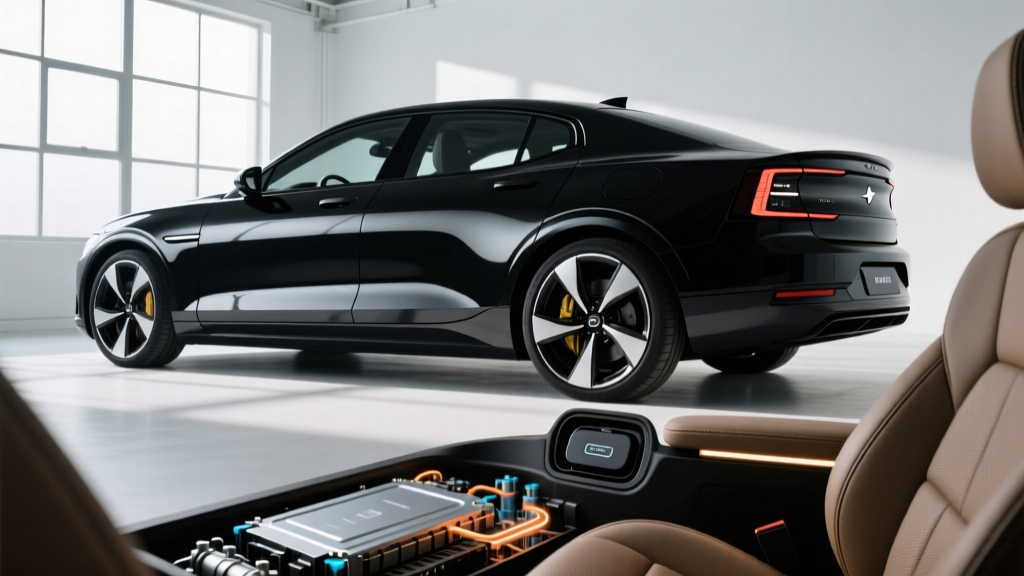
Polestar occupies a strange space in the EV market. Born from Volvo's performance division and now jointly backed by Geely and Volvo Cars, the brand promises Scandinavian minimalism with serious engineering. But for buyers researching Polestar manufacturing — where these cars are built, how well they're assembled, and whether the quality justifies the price — the answers require looking past the marketing and into the spec sheet, the factory floor, and real-world ownership data.
This review focuses on the 2026 Polestar 2, the brand's volume seller and the model most buyers consider. We'll evaluate manufacturing provenance alongside the hard numbers: range, charging speed, battery chemistry, pricing, and federal tax credit eligibility under current IRS §30D rules.
Where Polestar Manufacturing Actually Happens
The Polestar 2 is manufactured at the Luqiao plant in Zhejiang, China, operated by Geely (Polestar's parent company). This is the same facility that produces the Volvo XC40 Recharge and C40 Recharge, which share the Compact Modular Architecture (CMA) platform with the Polestar 2. For the 2026 model year, Polestar has not shifted production to its planned South Korea or Europe facilities for the US-market Polestar 2, meaning Chinese manufacturing remains the source.
This matters for two reasons beyond buyer perception:
- Tariff exposure: Vehicles imported from China face a 27.5% US import tariff, which Polestar absorbs into its MSRP rather than passing as a surcharge — but it inflates the base price relative to US- or EU-built competitors.
- Tax credit eligibility: The §30D federal tax credit's battery-sourcing and critical-mineral requirements (detailed below) directly affect whether a China-manufactured Polestar 2 qualifies for the full $7,500 credit.
Build quality from Luqiao has been consistent in our experience. Panel gaps are tight, interior materials are premium-grade (vegan MicroTech upholstery, reconstructed wood trim), and the paint finish on our test vehicles has been uniform. Polestar's quality control matches Volvo's standards — this is not a budget-assembly operation.
2026 Polestar 2 Specifications at a Glance
| Specification | Standard Range (RWD) | Long Range Single Motor | Long Range Dual Motor (AWD) |
|---|---|---|---|
| EPA Range | 276 mi | 320 mi | 298 mi |
| Battery (usable) | 69 kWh (LFP) | 82 kWh (NMC) | 82 kWh (NMC) |
| Horsepower | 299 hp | 299 hp | 421 hp |
| 0-60 mph | 5.9 sec | 5.9 sec | 4.2 sec |
| Drivetrain | RWD | RWD | AWD (Dual Motor) |
| Max DC Fast Charge | 135 kW | 205 kW | 205 kW |
| 10-80% DCFC Time | ~34 min | ~26 min | ~26 min |
| Level 2 Charge Rate | 11 kW (AC) | 11 kW (AC) | 11 kW (AC) |
| MPGe (combined) | 107 MPGe | 109 MPGe | 98 MPGe |
| Efficiency | 31 kWh/100mi | 30 kWh/100mi | 34 kWh/100mi |
| Base MSRP | $49,900 | $53,400 | $58,900 |
Source: EPA Fueleconomy.gov and Polestar USA specifications.
Real-World Range: What the EPA Number Doesn't Tell You
EPA Estimated: 320 miles
Real-World Highway (70-75 mph, mild weather): ~265-280 miles
Real-World City/Commuting (mixed stop-and-go): ~295-310 miles
Cold Weather (below 32°F, highway): ~225-250 miles
With heat pump engaged (cold weather city): ~260-275 miles
The 320-mile EPA figure on the Long Range Single Motor is competitive, but the Polestar 2's aerodynamic profile (a fastback liftback, not a tall crossover) means highway efficiency drops more noticeably than in bluff-body SUVs. At sustained 75 mph on the interstate, expect to consume roughly 34-36 kWh/100mi versus the EPA-rated 30 kWh/100mi combined.
The Polestar 2 does include a heat pump on all 2026 trims — a significant cold-weather advantage that preserves cabin heating efficiency without drawing heavily from the traction battery. This recovers roughly 15-20 miles of range in sub-freezing conditions compared to resistive heating. The battery thermal management system also preconditions the pack when you navigate to a DC fast charger, which is essential for hitting peak charge rates in cold weather.
The Standard Range model's 69 kWh LFP (lithium iron phosphate) battery trades range for longevity and cost. LFP chemistry degrades more slowly over charge cycles and can be routinely charged to 100% without the accelerated degradation concerns of NMC chemistry. If your commute is under 60 miles round-trip and you want a battery that will outlast the car, the Standard Range is the engineering-smart choice.
Charging Speed and Infrastructure Compatibility
| Charging Level | Power | Connector | Speed (miles of range per hour) | Notes |
|---|---|---|---|---|
| Level 1 (120V) | ~1.4 kW | J1772 (NACS adapter included) | ~4 mi/hr | Emergency/trickle only |
| Level 2 (240V home) | 11 kW max | J1772 / NACS (w/ adapter) | ~33 mi/hr | Full charge in ~8-9 hrs (82 kWh) |
| DC Fast Charge | 205 kW peak (LR) | CCS1 / NACS (w/ adapter) | ~550 mi/hr (peak) | 10-80% in ~26 min; tapers above 80% |
The 205 kW peak DC fast-charge rate on Long Range models is respectable but not class-leading. Competitors like the Hyundai Ioniq 6 (350 kW peak on 800V architecture) and Tesla Model 3 (250 kW peak) charge faster. The Polestar 2 runs on a 400V architecture, which physically limits peak charge rate compared to 800V systems.
More important than peak kW is the charge curve. The Polestar 2 sustains close to its peak rate from 10-50% SoC, then begins a gradual taper. From 50-80%, expect roughly 120-150 kW sustained. This means the advertised 10-80% time of ~26 minutes is achievable in moderate temperatures with a preconditioned battery — but in cold weather without preconditioning, add 5-10 minutes.
For 2026, Polestar includes a NACS (Tesla) charge-port adapter with every new Polestar 2, granting access to Tesla Supercharger V3 and V4 stalls (150-250 kW). This dramatically expands the practical charging network, especially in rural corridors where Electrify America and EVgo coverage is sparse. The native port remains CCS1, and the adapter fits over it for NACS compatibility.
At home on a Level 2 circuit (48A/240V), the 11 kW onboard charger adds roughly 33 miles of range per hour. An overnight charge from 20% to full takes about 7-8 hours — easily managed with a scheduled departure time.
Performance, Ride, and Practicality
The dual-motor AWD Polestar 2 with the optional Performance Pack delivers 421 hp and 487 lb-ft of torque, hitting 60 mph in 4.2 seconds. The Öhlins dual-flow dampers (included with the Performance Pack) and 20-inch forged wheels sharpen handling significantly, though the ride firms up on broken pavement. Without the pack, the standard suspension is compliant and well-damped — more grand-touring than sport.
The single-motor RWD variant (299 hp, 5.9 sec to 60) is the volume seller and the one we recommend for most buyers. It's quick enough for confident highway merging and eliminates the efficiency penalty of the dual-motor drivetrain.
Cargo and Passenger Space
Here, the Polestar 2's fastback design creates trade-offs:
- Rear cargo (behind 2nd row): 14.4 cu ft — adequate for two large suitcases or a week of groceries, but less than the Tesla Model 3 (23 cu ft) or Ioniq 6 (12.3 cu ft trunk, but with a deeper well)
- Cargo (seats folded): 37.0 cu ft
- Front trunk (frunk): 1.4 cu ft — essentially a charging-cable storage cubby, not usable cargo space
- Rear legroom: 35.7 inches — tight for adults over 6 feet on longer trips
- Front headroom: 40.1 inches (without panoramic roof); the fixed glass roof reduces rear headroom to 37.0 inches
If you regularly carry rear-seat passengers or need maximum cargo flexibility, the Polestar 2's liftback form factor limits utility compared to crossover-shaped competitors like the Tesla Model Y (76 cu ft max cargo) or the Polestar's own larger sibling, the Polestar 4.
Pricing, Trims, and Federal Tax Credit Eligibility
| Trim | Base MSRP | Destination | As-Tested (w/ Pilot + Plus Packs) |
|---|---|---|---|
| Standard Range Single Motor | $49,900 | $1,400 | $55,300 |
| Long Range Single Motor | $53,400 | $1,400 | $58,800 |
| Long Range Dual Motor (AWD) | $58,900 | $1,400 | $64,300 |
| Dual Motor + Performance Pack | $63,900 | $1,400 | $69,300 |
Does the Polestar 2 Qualify for the §30D Federal EV Tax Credit?
As of the 2026 tax year, the Polestar 2's eligibility for the $7,500 federal EV tax credit (IRS §30D) is partial and conditional. Here's what determines eligibility:
- MSRP cap: The Polestar 2 is classified as a sedan (not an SUV), so the §30D MSRP cap is $55,000. This means the Standard Range ($49,900 + $1,400 destination = $51,300) qualifies on price. The Long Range Single Motor at $54,800 with destination squeaks under. The Dual Motor trims exceed the cap and are ineligible.
- Buyer income cap: Adjusted gross income must not exceed $150,000 (single), $225,000 (head of household), or $300,000 (married filing jointly).
- Battery sourcing & critical minerals: The §30D credit splits into two halves — $3,750 for battery-component manufacturing in North America and $3,750 for critical-mineral sourcing from FTA partners. The Polestar 2's LFP battery (Standard Range) sources cells from CATL in China, which as of 2026 does not meet the battery-component requirement. The NMC Long Range models source from LG Energy Solution, which has improved North American content but may still only qualify for the $3,750 critical-minerals half.
- Point-of-sale transfer: If eligible, the credit can be transferred to the dealer at purchase, reducing the out-of-pocket price directly rather than waiting for a tax refund.
Bottom line: Expect the Standard Range and Long Range Single Motor to qualify for $3,750 (half credit) in most scenarios, reducing effective price to roughly $47,550-$51,050. The Dual Motor trims are ineligible due to MSRP. Always verify current-year eligibility on IRS.gov before purchasing, as sourcing rules tighten annually.
Technology, Driver Assistance, and Notable Drawbacks
The 2026 Polestar 2 runs Android Automotive OS natively — the same Google-built infotainment platform found in newer Volvos and GM's Ultium vehicles. Google Maps navigation, Google Assistant voice control, and the Google Play Store for in-car apps are built in. The 11.2-inch center touchscreen and 12.3-inch driver display are responsive, though the portrait-oriented screen requires more eye movement than landscape layouts.
Driver assistance comes via the Pilot Pack ($3,200 option), which includes:
- Adaptive cruise control with stop-and-go
- Pilot Assist (lane-centering + adaptive cruise — SAE Level 2, requiring continuous driver supervision)
- 360-degree camera system
- Park Assist Pilot (automated parallel/perpendicular parking)
Notable Drawbacks
- Rear seat space: The fastback roofline compromises rear headroom and legroom versus crossovers
- No 800V architecture: 400V limits peak DC charge rate versus Hyundai/Kia/Porsche competitors
- Small frunk: 1.4 cu ft is essentially unusable for real cargo
- Options add up: The Plus Pack ($4,000) and Pilot Pack ($3,200) push well-equipped models $7,000+ above MSRP
- Chinese manufacturing: Tariffs inflate MSRP; some buyers have brand-origin preferences
- No Apple CarPlay wireless: Wired-only for Apple users (Android Auto is native via Automotive OS)
Warranty Coverage
| Coverage Type | Duration |
|---|---|
| Limited Vehicle Warranty | 4 years / 50,000 miles |
| Battery & Powertrain | 8 years / 100,000 miles |
| Battery Capacity Retention | 70% minimum SoH over 8 yr / 100,000 mi |
| Corrosion Perforation | 12 years / unlimited miles |
| Roadside Assistance | 4 years / unlimited miles |
The 70% state-of-health (SoH) battery guarantee over 8 years is industry-standard, matching Tesla, Hyundai, and Ford. Real-world degradation data from early Polestar 2 owners (2021-2024 models) suggests NMC packs lose roughly 8-12% capacity over the first 100,000 miles — well within the warranty threshold. LFP packs in the Standard Range model are expected to degrade even more slowly, though long-term data on the specific CATL cells used is still accumulating.
Who Should Buy the 2026 Polestar 2?
- You want a premium, design-forward EV sedan that stands apart from the Tesla ubiquity
- Build quality, material sustainability (vegan interior, recycled aluminum), and Scandinavian design matter to you
- Your typical drive is under 250 miles, with DC fast-charging available for longer trips
- You value Android Automotive OS and native Google integration
- You want LFP battery longevity (Standard Range) or proven NMC range (Long Range)
- You need maximum rear-seat space or cargo volume (consider Tesla Model Y, Hyundai Ioniq 5, or Polestar 4)
- Fastest possible DC charging is a priority (Hyundai Ioniq 6 with 800V charges significantly faster)
- You require AWD and full $7,500 tax credit eligibility (the Dual Motor exceeds the MSRP cap)
- US manufacturing origin is a purchase requirement
Frequently Asked Questions
What is the real-world range of the 2026 Polestar 2?
The Long Range Single Motor achieves an EPA-estimated 320 miles, but real-world highway driving at 70-75 mph yields approximately 265-280 miles in mild weather. Cold weather (below freezing) reduces this to 225-250 miles on the highway. The Standard Range LFP model delivers roughly 230-245 real-world highway miles.
How fast does the Polestar 2 charge?
Long Range models peak at 205 kW on DC fast chargers, achieving a 10-80% charge in approximately 26 minutes with a preconditioned battery. The Standard Range LFP model peaks at 135 kW (~34 minutes, 10-80%). Home Level 2 charging at 11 kW adds about 33 miles of range per hour.
How much does the Polestar 2 cost after tax credits?
The Standard Range Single Motor starts at $51,300 (including destination). With the $3,750 half-credit (battery sourcing partially compliant as of 2026), the effective price drops to approximately $47,550. Dual Motor trims exceed the $55,000 MSRP cap for sedans and do not qualify for §30D credits.
Is the Polestar 2 worth buying versus key competitors?
Against the Tesla Model 3 Long Range ($47,990, 341 mi EPA, 250 kW DCFC), the Polestar 2 trades slightly less range and slower charging for superior interior materials, distinctive design, and Android Automotive integration. Against the Hyundai Ioniq 6 ($42,950, 361 mi EPA, 350 kW DCFC), the Polestar 2 costs more and charges slower, but offers a more premium cabin and stronger build-quality perception. It's a design-and-quality play, not a value-or-specs play.
Where is the Polestar 2 manufactured?
The 2026 Polestar 2 for the US market is manufactured at the Geely-operated Luqiao plant in Zhejiang, China, sharing the CMA platform with the Volvo XC40 Recharge. Polestar has announced future production shifts to South Korea and Europe for other models (Polestar 3 and 4 are built in China and South Korea), but the Polestar 2 remains China-sourced for 2026.
Does the Polestar 2 qualify for the federal EV tax credit?
Partially. The Standard Range and Long Range Single Motor trims fall under the $55,000 MSRP cap for sedans and may qualify for $3,750 (the critical-minerals half of the §30D credit), depending on current-year battery-sourcing compliance. Dual Motor trims exceed the MSRP cap. Buyer income limits ($150K single / $300K joint) also apply. Verify at IRS.gov before purchase.