Quick Verdict: Scandinavian Minimalism Meets Genuine EV Practicality
The Polestar 2 occupies a rare position in the electric sedan segment: it's a premium EV that prioritizes build quality and driver engagement over raw screen real estate and spec-sheet theatrics. For 2025, the lineup simplifies into two battery sizes across single-motor (RWD) and dual-motor (AWD) configurations, with the Long Range models delivering up to an EPA-estimated 341 miles. But the real draw — and the reason buyers search for the Polestar 2 interior specifically — is the cabin. Recycled materials, a portrait-oriented Google-based infotainment system, and a cockpit that feels more architecture studio than tech demo set this car apart from Tesla's austerity and German luxury excess alike.
That said, the Polestar 2 isn't for everyone. Its rear seat is tighter than a Hyundai Ioniq 6's, the ride can be firm on the standard 19-inch wheels, and DC fast charging, while respectable at 200 kW peak, trails the 800V architecture rivals from Hyundai/Kia. Here's everything you need to know before signing a purchase agreement.
Polestar 2 Interior: Materials, Space, and Daily Livability
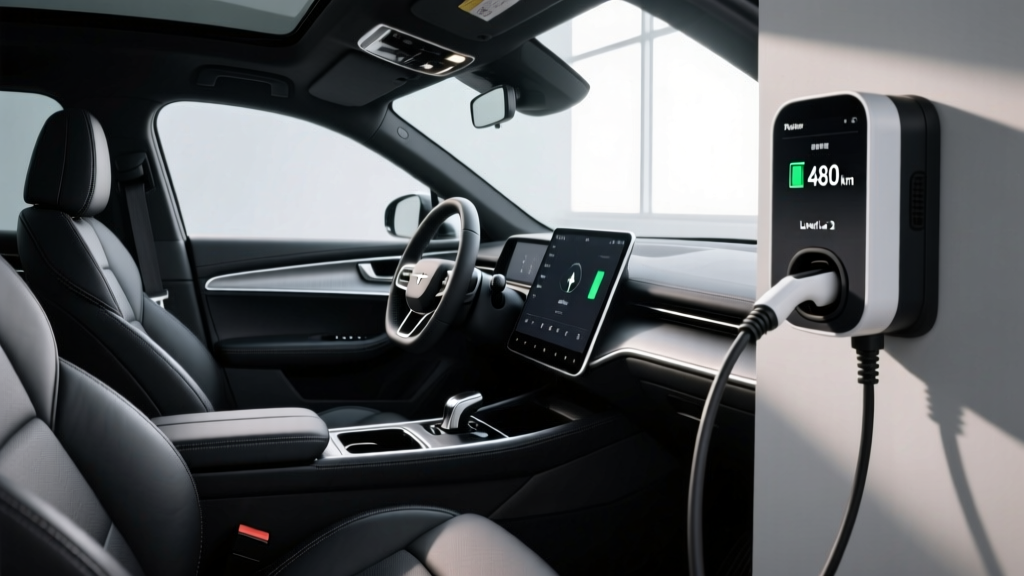
The Polestar 2 interior is where this car earns its premium positioning. The dashboard is dominated by an 11.2-inch portrait touchscreen running Google built-in (Maps, Assistant, Play Store) alongside an 11-inch digital driver display. Physical climate controls are largely absent — nearly everything routes through the screen — but the interface is responsive and the voice assistant integration is among the best in the industry.
Material quality is exceptional for the segment. The standard upholstery is a vegan textile called WeaveTech, which has a durable, almost neoprene-like feel. The available Nappa leather package (with ventilated front seats) adds $4,000 and includes a premium Harman Kardon audio system. Throughout the cabin, you'll find reclaimed wood trim, recycled plastics, and aluminum accents that feel intentional rather than cost-cutting. The center console features a clever floating design that opens up storage underneath.
Passenger and Cargo Dimensions
| Dimension | Polestar 2 (2025) | Tesla Model 3 (2025) | Hyundai Ioniq 6 (2025) |
|---|---|---|---|
| Front Legroom | 42.2 in | 42.7 in | 43.0 in |
| Rear Legroom | 33.4 in | 35.2 in | 35.4 in |
| Front Headroom | 37.3 in | 40.3 in | 39.0 in |
| Rear Headroom | 36.1 in | 37.6 in | 37.1 in |
| Cargo (rear seats up) | 14.4 cu ft (trunk) + 1.4 cu ft (frunk) | 21.0 cu ft (trunk) + 3.1 cu ft (frunk) | 12.3 cu ft (trunk) + 1.6 cu ft (frunk) |
The Polestar 2 is a liftback, which means the entire rear glass opens — making it far easier to load bulky items than a traditional sedan trunk. However, the 14.4 cu ft trunk volume trails the Model 3's 21 cu ft, and the rear seat legroom at 33.4 inches is genuinely tight for adults over 6 feet on longer trips. This is a driver's car first, family hauler second. The frunk (front trunk) is a shallow 1.4 cu ft — enough for charging cables and a small bag, not much more.
Range, Efficiency, and Battery Specs
The 2025 Polestar 2 uses two battery packs depending on trim:
- Standard Range: 69 kWh usable capacity, NMC (nickel manganese cobalt) chemistry, supplied by CATL. Available only with Single Motor RWD.
- Long Range: 82 kWh usable capacity, NMC chemistry, supplied by LG Energy Solution. Available with Single Motor (RWD) or Dual Motor (AWD).
Polestar does not offer an LFP (lithium iron phosphate) option. NMC provides higher energy density (more range per kg) but is less tolerant of repeated 100% charging than LFP. For daily use, Polestar recommends charging to 80-90% and only using 100% for long trips — a practice that extends long-term battery health.
| Spec | Standard Range SM | Long Range SM | Long Range DM (AWD) |
|---|---|---|---|
| EPA Range | 276 mi | 341 mi | 315 mi |
| Battery (usable) | 69 kWh (NMC) | 82 kWh (NMC) | 82 kWh (NMC) |
| MPGe (combined) | 114 MPGe | 115 MPGe | 104 MPGe |
| kWh/100 mi | 29 kWh | 29 kWh | 32 kWh |
| Horsepower | 299 hp | 299 hp | 421 hp |
| 0-60 mph | 5.9 sec | 5.9 sec | 4.2 sec |
| Drivetrain | RWD | RWD | AWD |
| Base MSRP | $49,900 | $53,400 | $57,900 |
Efficiency is competitive at roughly 29 kWh per 100 miles for single-motor variants, translating to about 3.4-3.5 miles per kWh. The Dual Motor AWD consumes more at 32 kWh/100 mi, which is expected given the additional weight and power. According to fueleconomy.gov, these figures place the Polestar 2 in the middle of the premium electric sedan pack — slightly less efficient than a Tesla Model 3 Long Range (25 kWh/100 mi) but comparable to the BMW i4 eDrive40.
Charging Speed: DC Fast, Level 2, and the Charge Curve Reality
| Charging Level | Rate / Power | Miles Added per Hour | Notes |
|---|---|---|---|
| Level 1 (120V) | ~1.4 kW | ~3-4 mi/hr | Emergency/trickle only |
| Level 2 (240V, home) | 11 kW (onboard charger) | ~32-36 mi/hr | Full charge overnight (~8-9 hrs for LR) |
| DC Fast Charge (peak) | 200 kW (LR) / 135 kW (SR) | N/A | 10-80% in ~26 min (LR) |
The Polestar 2 Long Range peaks at 200 kW on a DC fast charger, while the Standard Range maxes at 135 kW. In practice, the Long Range sustains above 150 kW through roughly 40% state of charge before tapering. A 10-80% session takes approximately 26-28 minutes at a sufficiently powerful station (250 kW+).
Here's what the spec sheet doesn't tell you: the Polestar 2 runs on a 400V architecture, not the 800V system found in the Hyundai Ioniq 5/6 or Kia EV6. That means peak charge rates are lower and the taper above 60% SoC is more aggressive. On a road trip, you'll spend 3-5 extra minutes at each charging stop compared to an 800V rival. For most owners who charge at home overnight, this is irrelevant. For frequent road trippers covering 500+ miles in a day, it adds up.
The onboard AC charger is 11 kW (three-phase capable in some markets; effectively 11.5 kW on a 48-amp Level 2 circuit in the US). This means a full Level 2 home charge of the 82 kWh Long Range battery takes roughly 8-9 hours — easily accomplished overnight on a standard home Level 2 installation.
Connector and Network Access
The 2025 Polestar 2 ships with a CCS1 connector in the United States. Polestar has confirmed that future model years will transition to the Tesla NACS standard, and current owners will have access to an adapter. The car's built-in Google Maps provides live charger availability, routing with battery preconditioning, and integration with Electrify America, EVgo, and ChargePoint networks.
Pricing, Tax Credits, and Total Cost of Ownership
| Trim | Base MSRP | Est. Price After $7,500 Credit* | MSRP Cap Status |
|---|---|---|---|
| Standard Range Single Motor | $49,900 | ~$42,400 | Under $55K cap ✓ |
| Long Range Single Motor | $53,400 | ~$45,900 | Under $55K cap ✓ |
| Long Range Dual Motor (AWD) | $57,900 | Not eligible (over cap) | Over $55K cap ✗ |
*Assumes full $7,500 credit eligibility based on battery sourcing, buyer income, and point-of-sale transfer. Verify at irs.gov.
The as-tested price for a well-equipped Long Range Single Motor with the Plus Pack ($4,000: panoramic roof, Harman Kardon audio, heated rear seats, 360° camera) and Pilot Pack ($3,500: Pixel LED headlights, Pilot Assist with adaptive cruise and lane centering) lands around $60,900 before any incentives. The Performance Pack ($5,500 on Dual Motor: Öhlins dampers, Brembo brakes, 20-inch forged wheels) pushes the dual-motor past $65,000.
Insurance costs for the Polestar 2 run slightly higher than a Model 3 — expect $1,800-$2,400 annually depending on your state and driving record, based on industry averages for premium electric sedans. Depreciation has historically been steeper than Tesla's, though the 2025 price reductions and improved product have narrowed this gap.
Driver Assistance, Tech, and Safety
The infotainment system remains one of the Polestar 2's strongest selling points. Google built-in means you get native Google Maps with EV-aware routing (it factors in battery level, charger locations, and terrain), Google Assistant for voice commands, and the Google Play Store for apps like Spotify and YouTube (while parked). Over-the-air updates are regular and have added features like improved battery preconditioning logic and expanded app support post-launch.
Safety ratings are strong. The Polestar 2 earned a 5-star overall rating from NHTSA and the IIHS Top Safety Pick+ designation in prior model years, with good ratings across all crash test categories. Standard safety equipment includes automatic emergency braking with pedestrian/cyclist detection, blind-spot monitoring, rear cross-traffic alert, and run-off-road protection.
Who Should Buy the Polestar 2 — And Who Shouldn't
- You value interior material quality and Scandinavian design over maximum rear-seat space
- You primarily commute solo or with one passenger and take occasional road trips
- You want a premium EV that doesn't look like every other tech-forward sedan
- You prefer Google's ecosystem and want the best native Maps integration available
- You want a physical liftback for cargo flexibility in a sedan footprint
- You regularly carry rear-seat adults — the Ioniq 6 or Model 3 offer significantly more legroom
- You take frequent 500+ mile road trips and want the fastest possible DC charging (consider Ioniq 5/6 with 800V)
- You need maximum cargo volume — the Model 3's trunk is nearly 50% larger
- Lowest total cost of ownership is your priority — a base Model 3 RWD starts ~$10,000 lower
Pros and Cons
- Exceptional interior materials and build quality
- Google built-in infotainment is fast and intuitive
- Liftback versatility in a sedan-sized footprint
- Composed, engaging driving dynamics (especially with Performance Pack)
- Strong safety ratings (NHTSA 5-star, IIHS TSP+)
- Available Öhlins dampers and Brembo brakes (Dual Motor)
- Tight rear-seat legroom (33.4 in) for the segment
- DC charging slower than 800V rivals (200 kW peak vs 350 kW)
- Dual Motor exceeds $55K MSRP cap for federal tax credit
- Small frunk (1.4 cu ft) limits cable/bag storage
- Firm ride quality on 19/20-inch wheels
- Higher insurance costs than some competitors
Frequently Asked Questions
What is the real-world range of the Polestar 2?
The Long Range Single Motor's EPA estimate is 341 miles, but expect roughly 280-300 miles in real-world highway driving at 70-75 mph, and 230-260 miles in cold weather below 32°F. The Standard Range delivers about 225-245 real-world highway miles. City driving with regenerative braking can exceed EPA estimates by 5-10%.
How fast does the Polestar 2 charge at home and on the road?
At home on a Level 2 (240V) charger, the 11 kW onboard charger adds approximately 32-36 miles of range per hour, fully charging the Long Range battery in 8-9 hours. On DC fast chargers, the Long Range peaks at 200 kW with a 10-80% time of about 26-28 minutes. The Standard Range peaks at 135 kW.
How much does the Polestar 2 cost after federal tax credits?
The Standard Range Single Motor at $49,900 and Long Range Single Motor at $53,400 both fall under the $55,000 MSRP cap for sedans. If you qualify based on income and battery sourcing rules, the effective price drops to approximately $42,400 and $45,900 respectively. The Dual Motor at $57,900 exceeds the MSRP cap and is not eligible for the §30D credit. The credit can now be transferred to the dealer at point of sale as an instant discount. Verify eligibility at irs.gov.
Is the Polestar 2 worth buying vs. the Tesla Model 3 or Hyundai Ioniq 6?
If interior quality and design matter most, yes. The Polestar 2's cabin materials and build exceed both rivals. If rear-seat space and maximum efficiency are priorities, the Model 3 wins. If fastest charging and value are key, the Ioniq 6 (800V architecture, 361 mi EPA range, ~$42K starting) is the stronger pick. The Polestar 2 is the choice for buyers who want a premium, understated EV and don't regularly fill the back seat.
Does the Polestar 2 qualify for the $7,500 federal EV tax credit?
Possibly — it depends on the trim, your income, and current battery sourcing rules. The single-motor trims are under the $55,000 MSRP cap, but the critical minerals and battery component sourcing requirements change annually. Income caps apply ($150K single / $300K joint modified AGI). Check the IRS qualified vehicles list for the specific model year and trim before purchasing.
What is the battery warranty on the Polestar 2?
Polestar covers the battery and electric powertrain for 8 years or 100,000 miles, whichever comes first. The warranty guarantees the battery will retain at least 70% of its original capacity during that period. The basic vehicle warranty is 4 years/50,000 miles, which is competitive with other European premium brands but shorter than Hyundai/Kia's 5-year/60,000-mile basic coverage.