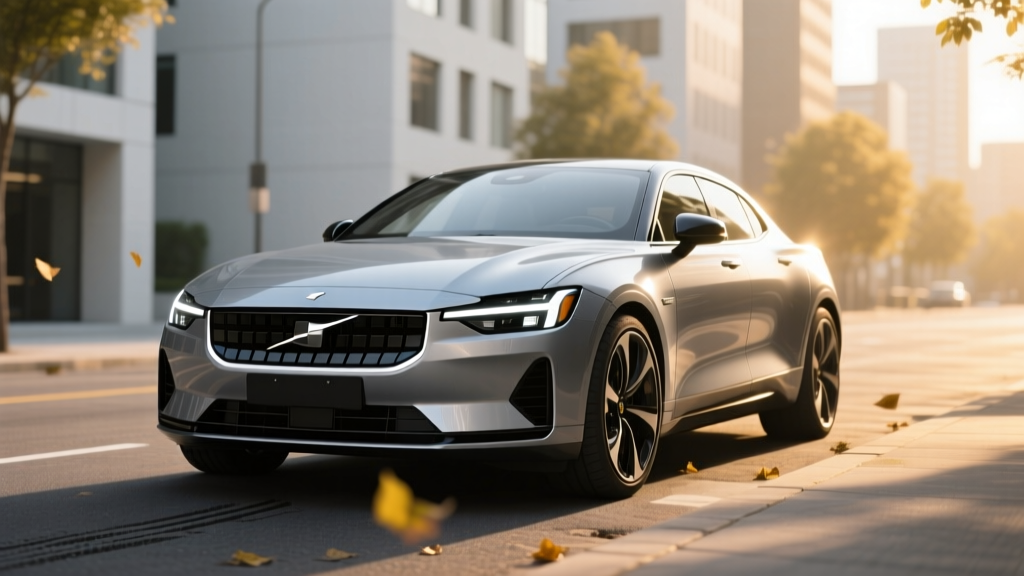
The Polestar 2 occupies a narrow but compelling lane in the premium electric sedan market: Scandinavian design, a Google-built infotainment stack, and a performance envelope that punches above its price class. For 2026, Polestar has streamlined the lineup around a single-motor rear-wheel-drive configuration and a dual-motor all-wheel-drive variant, both riding on an updated 82 kWh (usable) NMC battery pack. This review breaks down every number that matters — from the Polestar 2 HP figures and real-world range to DC charging curves and federal tax-credit eligibility — so you can decide whether this EV earns a spot in your garage.
Quick Verdict: Who the 2026 Polestar 2 Is For
The Polestar 2 is best suited for design-conscious commuters and frequent solo or two-person road trippers who value build quality and software polish over maximum cargo volume. It is not a family hauler — rear-seat space is tight compared to a Tesla Model 3 or Hyundai Ioniq 6 — and it does not tow. But if your priority is a refined, 299-to-421-hp electric sedan with competitive fast-charging speed and a usable 276–320-mile EPA range, the 2026 Polestar 2 delivers a strong value proposition, especially after the federal tax credit.
Spec Table: 2026 Polestar 2 by the Numbers
| Specification | Single Motor (RWD) | Dual Motor (AWD) | Dual Motor w/ Performance Pack |
|---|---|---|---|
| Horsepower | 299 hp | 421 hp | 421 hp (tuned) |
| Torque | 361 lb-ft | 546 lb-ft | 546 lb-ft |
| 0-60 mph | 5.9 sec | 4.1 sec | 3.9 sec |
| Drivetrain | RWD | AWD | AWD (Öhlins dampers) |
| Usable Battery | 82 kWh (NMC) | 82 kWh (NMC) | 82 kWh (NMC) |
| EPA Range | 320 mi | 276 mi | 264 mi |
| Efficiency | 118 MPGe (29 kWh/100mi) | 107 MPGe (32 kWh/100mi) | 104 MPGe (33 kWh/100mi) |
| Max DC Fast Charge | 200 kW | 200 kW | 200 kW |
| 10–80% DCFC Time | ~26 min | ~26 min | ~26 min |
| Level 2 Home Charge | 11 kW (~37 mi/hr) | 11 kW (~37 mi/hr) | 11 kW (~37 mi/hr) |
| Base MSRP | $49,900 | $54,400 | $59,900 |
Source: fueleconomy.gov and Polestar US. Specs reflect 2026 model year.
Polestar 2 HP, 0-60, and Real-World Performance
The headline Polestar 2 HP number depends on which powertrain you choose. The single-motor RWD model produces 299 hp and 361 lb-ft of torque, good for a 5.9-second 0-60 mph run — brisk enough for confident highway merging and passing. The dual-motor AWD variant jumps to 421 hp and 546 lb-ft, dropping the 0-60 to 4.1 seconds. Add the Performance Pack (Öhlins dual-valve dampers, gold Brembo brakes, 20-inch forged wheels) and the sprint falls to 3.9 seconds, though at the cost of roughly 12 miles of EPA range due to stickier tires and added unsprung weight.
On the road, the dual-motor Polestar 2 feels urgent without being brutal. Power delivery is linear and well-modulated — you won't get the neck-snap of a Tesla Model 3 Performance, but the Polestar's chassis tuning is more composed, particularly on broken pavement. The RWD model trades straight-line punch for better efficiency and a slightly more playful rear end under lift-off. For most buyers, the single-motor variant offers the better balance of daily usability and range.
Range and Efficiency: EPA vs. Reality
EPA Estimated Range: 320 miles (Single Motor) | 276 miles (Dual Motor) | 264 miles (Performance Pack)
Real-World Expectation: In mixed driving at 70°F, expect approximately 285–305 miles from the single-motor model. Sustained highway driving at 75+ mph reduces this to roughly 260–275 miles. In cold weather (below 30°F), plan for a 20–30% range reduction — meaning as little as 200–225 miles from the single-motor variant on a frigid winter commute. The dual-motor models, already range-disadvantaged, may dip below 200 miles in harsh winter highway conditions.
The 82 kWh usable NMC (nickel manganese cobalt) battery pack is shared across all trims. NMC chemistry offers higher energy density than LFP, which is why Polestar achieves competitive range in a relatively compact sedan footprint. However, NMC cells are more sensitive to sustained high-state-of-charge storage — Polestar recommends daily charging to 80% and reserving 100% for road trips.
Efficiency is respectable: the single-motor model returns 29 kWh per 100 miles (118 MPGe), placing it slightly behind the Hyundai Ioniq 6 (25 kWh/100mi) but ahead of the BMW i4 eDrive40 (31 kWh/100mi). The dual-motor's all-wheel-drive system and more aggressive tuning push consumption to 32–33 kWh/100mi.
Charging Speed: DC Fast and Home Level 2
| Charging Level | Power / Rate | Speed (Miles Added) | Notes |
|---|---|---|---|
| Level 1 (120V household) | ~1.4 kW | ~4 mi/hr | Emergency / overnight trickle only |
| Level 2 (240V home) | 11 kW | ~37 mi/hr | Full charge in ~8.5 hours (0–100%) |
| DC Fast Charge (peak) | 200 kW | ~180 mi in 15 min | 10–80% in ~26 min; tapers sharply above 80% |
The Polestar 2's 200 kW peak DC fast-charging rate is competitive with the segment. On a 350 kW Electrify America or EVgo station, the car will precondition the battery (if navigation is set to the charger) and ramp to approximately 195–200 kW within the first few minutes. However, like most NMC packs, the charge curve tapers significantly above 60% state of charge and drops to roughly 50–60 kW above 80%. This means the published 10–80% time of roughly 26 minutes is realistic, but charging from 80–100% can add another 25–30 minutes. For road trips, plan your stops around the 10–80% window and move on.
At home, the 11 kW onboard charger is a strong point — it's faster than the 7.7 kW chargers in some rivals, meaning a full overnight replenishment is easily achievable on a 48-amp Level 2 circuit. If your home electrical panel supports a 60-amp dedicated circuit (typical for newer construction), you'll see the full 11 kW benefit. Older homes with 100-amp service may need a panel upgrade; consult a licensed electrician for a site assessment.
Interior, Cargo, and Technology
The Polestar 2 cabin is a study in Scandinavian restraint. Materials are premium — a vegan WeaveTech upholstery is standard, with Nappa leather optional — and the minimalist design avoids the touchscreen-overload feeling of some competitors. The centerpiece is an 11.2-inch portrait touchscreen running Android Automotive OS with Google Maps, Google Assistant, and the Google Play Store natively integrated. This is arguably the best EV infotainment system on the market for navigation and voice control; Google Maps with live traffic and charger-aware route planning is a genuine daily-use advantage.
However, space is the Polestar 2's most significant compromise. Rear legroom measures just 33.4 inches, which is tight for adults on longer trips. Cargo volume is 14.4 cubic feet in the trunk, plus a modest 1.4-cubic-foot frunk (front trunk) useful for charging cables. Total storage is well below the Tesla Model 3's 23 cu ft and even the Hyundai Ioniq 6's 12.3 cu ft trunk (though the Ioniq 6 has no frunk). For a two-person household or commuter, this is adequate; for a family with strollers or frequent Costco runs, it's a limitation.
Driver assistance comes via the Pilot Pack (adaptive cruise control with stop-and-go, lane centering, blind-spot monitoring with steering assist). This is a SAE Level 2 system — it requires your hands on the wheel and eyes on the road at all times. It is not self-driving. The system is competent for highway cruising but less assertive in construction-zone lane shifts than Ford's BlueCruise or GM's Super Cruise.
Pricing, Tax Credits, and Ownership Cost
| Trim | Base MSRP | Federal §30D Credit | Effective Price (if eligible) |
|---|---|---|---|
| Single Motor (RWD) | $49,900 | Up to $7,500 | ~$42,400 |
| Dual Motor (AWD) | $54,400 | Up to $7,500 | ~$46,900 |
| Dual Motor + Performance Pack | $59,900 | Up to $7,500 | ~$52,400 |
All 2026 Polestar 2 trims fall under the $55,000 MSRP cap for sedans under IRS §30D — except the Performance Pack variant, which may exceed the cap depending on destination charges and mandatory options. Always verify the specific VIN's eligibility. Buyer income caps also apply: adjusted gross income must not exceed $150,000 (single filer), $225,000 (head of household), or $300,000 (joint filers). Additionally, the vehicle must meet critical-mineral and battery-component sourcing requirements, which have tightened annually. As of 2026, the Polestar 2 (manufactured in China for earlier model years, now also assembled in South Korea for the US market) has partial eligibility — confirm with your dealer and review IRS guidance on §30D before relying on the full $7,500 credit. The credit can be transferred to the dealer at point of sale, reducing your out-of-pocket cost immediately.
Warranty coverage includes 4 years/50,000 miles bumper-to-bumper and 8 years/100,000 miles on the battery and drive units, with a guaranteed minimum 70% battery capacity retention over that period. This is industry-standard and matches Tesla, Hyundai, and BMW.
Pros and Cons
Pros
- Best-in-class Android Automotive infotainment with native Google Maps
- 200 kW DC fast charging — competitive road-trip replenishment
- Composed chassis tuning; ride quality exceeds Tesla Model 3
- Premium interior materials; distinctive Scandinavian design
- 11 kW Level 2 onboard charger (faster than many rivals)
- Strong single-motor efficiency at 29 kWh/100mi
Cons
- Tight rear-seat legroom (33.4 in) — not family-friendly
- Limited cargo space (14.4 cu ft trunk + 1.4 cu ft frunk)
- Dual-motor range drops to 264–276 mi EPA
- Tax-credit eligibility uncertain due to sourcing and MSRP-cap rules
- No towing capacity
- Performance Pack price pushes past §30D sedan MSRP cap
How the Polestar 2 Stacks Up Against Rivals
The Polestar 2 competes directly with the Tesla Model 3, BMW i4, Hyundai Ioniq 6, and Mercedes-Benz CLA EV. Here's how it compares on the metrics that matter:
- vs. Tesla Model 3 Long Range ($47,740, 363 mi EPA): The Model 3 wins on range, Supercharger access, and rear-seat space. The Polestar 2 wins on interior material quality, ride comfort, and infotainment UX (Google Maps vs. Tesla's proprietary nav).
- vs. BMW i4 eDrive40 ($52,200, 307 mi EPA): The i4 offers more cargo versatility (liftback) and slightly more rear legroom. The Polestar 2 offers faster DC charging and a more modern software stack.
- vs. Hyundai Ioniq 6 SE Long Range ($42,450, 361 mi EPA): The Ioniq 6 dominates on range, efficiency (25 kWh/100mi), and price. The Polestar 2 counters with premium materials, a more powerful available AWD system, and a more engaging driving experience.
Frequently Asked Questions
What is the real-world range of the 2026 Polestar 2?
The EPA rates the single-motor Polestar 2 at 320 miles, but real-world mixed driving yields approximately 285–305 miles. Highway driving at sustained speeds above 75 mph reduces this to roughly 260–275 miles. Cold weather (below 30°F) can cut range by 20–30%, so plan for 200–225 miles on a freezing winter commute.
How fast does the Polestar 2 charge?
On a DC fast charger, the Polestar 2 peaks at 200 kW and charges from 10–80% in approximately 26 minutes. At home on a Level 2 (240V, 48A) charger, it accepts up to 11 kW, adding roughly 37 miles of range per hour and fully replenishing the battery in about 8.5 hours.
Does the 2026 Polestar 2 qualify for the federal EV tax credit?
Eligibility depends on multiple factors under IRS §30D: the buyer's adjusted gross income must be below the caps ($150K single / $300K joint), the vehicle MSRP must not exceed $55,000 (sedan cap), and the battery must meet critical-mineral and component-sourcing thresholds. The Single Motor and base Dual Motor trims are under the MSRP cap, but sourcing requirements may reduce or eliminate the credit. Always verify with your dealer and consult the IRS §30D page before purchasing.
Is the Polestar 2 worth buying over a Tesla Model 3?
If you prioritize interior quality, ride comfort, Google-native software, and a less ubiquitous design, the Polestar 2 is a strong choice. If maximum range, Supercharger network access, and rear-seat practicality are your top concerns, the Model 3 remains the more versatile pick. Test-drive both — the difference in cabin ambiance and suspension tuning is immediately apparent.
What is the Polestar 2's battery warranty?
Polestar covers the battery and drive units for 8 years or 100,000 miles, whichever comes first. The warranty guarantees at least 70% capacity retention over that period. If the battery degrades below that threshold, Polestar will repair or replace it to restore capacity.
Can the Polestar 2 tow?
No. The 2026 Polestar 2 has no factory towing rating and is not rated to pull a trailer. If towing is a requirement, consider the Tesla Model Y, Hyundai Ioniq 5, or Ford Mustang Mach-E, all of which offer 1,500–3,500 lb towing capacity.