The Evolution of Polestar: From Niche to Mainstream
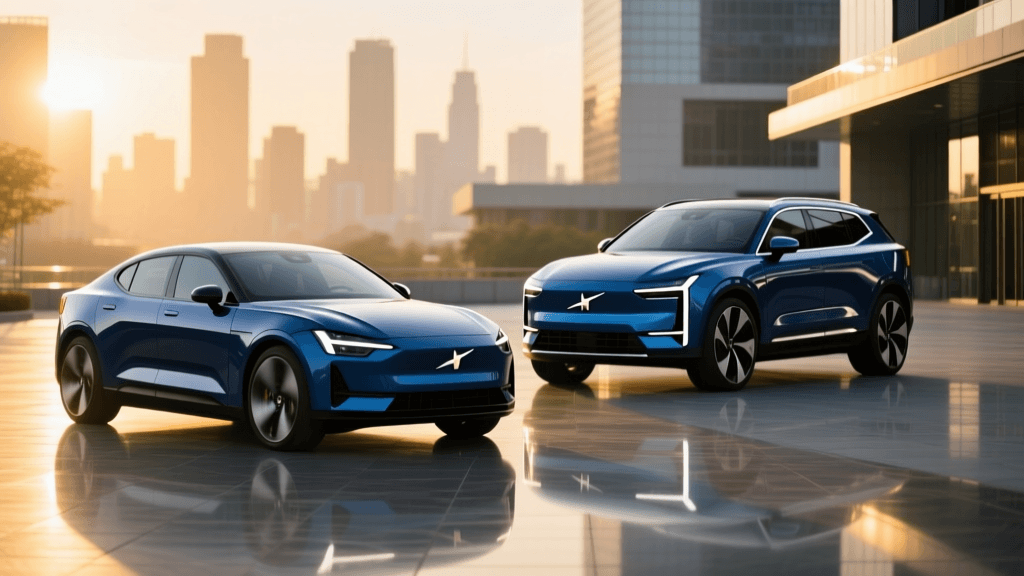
When Polestar transitioned from a Volvo performance sub-brand to a standalone electric vehicle manufacturer, it made a bold statement with the Polestar 1. However, it was the Polestar 2 that truly put the Swedish-Chinese automaker on the global map, taking direct aim at the Tesla Model 3 and the premium compact EV segment. Now, Polestar is expanding its portfolio to capture the lucrative luxury SUV market with the introduction of the Polestar 3.
For prospective EV buyers, this creates a fascinating internal showdown. Do you opt for the agile, practical, and relatively affordable fastback, or do you stretch your budget for the flagship, tech-laden luxury SUV? In this head-to-head comparison, we break down the design, performance, interior technology, and ownership costs of the Polestar 2 and Polestar 3 to help you decide which electric vehicle deserves a spot in your driveway.
Exterior Design and Market Positioning
Polestar 2: The Urban Fastback
The Polestar 2 is defined by its striking fastback silhouette. It blends the sleek roofline of a coupe with the practicality of a five-door hatchback. Its design language is unapologetically Scandinavian: minimalist, sharp, and purposeful. The signature Thor's Hammer LED headlights and the frameless grille give it a distinct, modern face. Positioned as a compact executive car, the Polestar 2 is designed for urban agility, easy parking, and daily commuting, appealing to professionals and small families who prioritize driving dynamics over massive cargo capacity.
Polestar 3: The Aerodynamic Luxury SUV
The Polestar 3 represents a massive leap up in both size and luxury. Positioned to compete with heavyweights like the Porsche Cayenne, BMW iX, and Tesla Model X, the Polestar 3 is a mid-size luxury SUV. Despite its larger footprint, Polestar has obsessively focused on aerodynamics. The SUV features an aero hood that directs air over the windshield, a rear spoiler integrated into the tailgate, and an available air suspension system that lowers the ride height at highway speeds. It commands a premium presence on the road while maintaining the brand's clean, uncluttered aesthetic.
Performance, Battery, and Range
When comparing these two vehicles, it is essential to look at the powertrain configurations. Both vehicles offer Long Range Single Motor and Long Range Dual Motor variants, but the sheer size and weight differences dictate their performance characteristics.
| Feature | Polestar 2 (Long Range Dual Motor) | Polestar 3 (Long Range Dual Motor) |
|---|---|---|
| Battery Capacity | 78 kWh (usable) | 111 kWh (usable) |
| Horsepower | 408 hp (476 hp w/ Performance Pack) | 489 hp (517 hp w/ Performance Pack) |
| Torque | 487 lb-ft | 620 lb-ft |
| 0-60 mph | 4.1 seconds | 4.7 seconds |
| EPA Estimated Range | 276 miles | 315 miles |
| Max DC Fast Charging | 200 kW | 250 kW |
| 10-80% Charge Time | ~28 minutes | ~30 minutes |
While the Polestar 3 packs a significantly larger battery and more torque, the Polestar 2 is lighter, allowing it to achieve a slightly quicker 0-60 mph time in standard dual-motor form. However, the Polestar 3's 800-volt-class charging architecture optimization and 250 kW peak charging rate mean it can absorb electrons incredibly fast, mitigating the penalty of its massive 111 kWh battery pack on road trips. For pure driving engagement and corner-carving agility, the lower center of gravity and lighter chassis of the Polestar 2 make it the undisputed winner. For effortless highway cruising and towing (the P3 can tow up to 4,400 lbs), the Polestar 3 takes the crown.
Interior Quality, Tech, and Cargo Utility
Cabin Materials and Comfort
Step inside the Polestar 2, and you are greeted by a highly functional, vegan-friendly interior. The available WeaveTech and Nappa leather options are durable and stylish, though the overall cabin leans heavily into stark minimalism. The Polestar 3, conversely, elevates the luxury quotient significantly. It offers bio-attributed MicroTech, animal welfare-certified leather, and traceable wool blend upholstery. The sound deadening, material softness, and overall fit-and-finish in the Polestar 3 rival top-tier German luxury automakers.
Infotainment and Digital Cockpit
Both vehicles utilize Google built-in infotainment, meaning Google Maps, Google Assistant, and the Google Play Store are natively integrated. However, the hardware differs. The Polestar 2 features an 11.2-inch vertical center touchscreen. It is responsive and user-friendly but looks a bit dated compared to modern luxury standards. The Polestar 3 upgrades to a massive 14.9-inch horizontal center display powered by the Qualcomm Snapdragon Digital Chassis. Furthermore, the Polestar 3 includes a 9-inch driver display and an available 35-inch augmented reality head-up display, creating a much more immersive and modern digital cockpit.
Cargo Space and Practicality
- Polestar 2: Offers 14.4 cubic feet of rear cargo space (expandable with folded seats) and a small 1.4 cubic foot front trunk (frunk). It is adequate for groceries and luggage for a weekend trip but falls short of traditional hatchbacks.
- Polestar 3: Boasts a massive 17.1 cubic feet of rear cargo space behind the second row, expanding to 49.8 cubic feet with the seats folded. It also includes a more usable 3.2 cubic foot frunk, making it a highly capable family hauler.
Safety and Advanced Driver Assistance Systems (ADAS)
Safety is a core pillar of Polestar's DNA, inheriting decades of engineering from Volvo. The Polestar 2 has proven its mettle in crash testing, earning the prestigious Top Safety Pick+ award from the Insurance Institute for Highway Safety (IIHS). It comes standard with Pilot Assist, adaptive cruise control, and lane-keeping aid, providing a robust safety net for daily driving.
The Polestar 3 pushes the envelope into next-generation autonomous capabilities. It is equipped with a centralized Nvidia DRIVE core computer processing data from multiple cameras, radars, and ultrasonic sensors. Crucially, the Polestar 3 offers an available Luminar LiDAR system integrated seamlessly into the roofline. This LiDAR provides precise, long-range 3D mapping of the vehicle's surroundings, preparing the SUV for future over-the-air software updates that will enable advanced, hands-off supervised highway driving features. If cutting-edge ADAS is a priority, the Polestar 3 is vastly superior.
Pricing, Trims, and Ownership Costs
The most significant differentiator between these two EVs is the price tag, which dictates entirely different buyer demographics.
- Polestar 2 Pricing: Starts at approximately $49,900 for the Standard Range Single Motor, climbing to around $63,000 for a fully loaded Long Range Dual Motor with the Performance Pack. It remains eligible for various regional incentives and is positioned as an attainable luxury EV.
- Polestar 3 Pricing: Commands a premium, starting around $79,900 and easily crossing the $90,000 threshold when equipped with the Plus and Pilot packages, LiDAR, and the Bowers & Wilkins premium audio system.
From an ownership cost perspective, the Polestar 2 will naturally incur lower insurance premiums, lower tire replacement costs, and better overall energy efficiency (miles per kWh) due to its lighter weight and smaller frontal area. The Polestar 3, while more expensive to run, offers a luxury ownership experience, including complimentary scheduled maintenance and premium roadside assistance during the initial warranty period.
Final Verdict: Which Polestar Wins Your Driveway?
The choice between the Polestar 2 and the Polestar 3 ultimately comes down to your lifestyle, budget, and spatial requirements.
Choose the Polestar 2 if: You are an urban dweller or a small family seeking a stylish, engaging, and relatively affordable daily driver. Its compact dimensions make it easy to maneuver in tight city streets, and its fastback design offers just enough practicality without the bulk and high price tag of a luxury SUV. It remains one of the best-driving EVs in its class.
Choose the Polestar 3 if: You require maximum cargo space, cutting-edge LiDAR safety technology, and a true luxury cabin experience. If you frequently take long road trips, need towing capabilities, or simply prefer the commanding ride height and air suspension comfort of a premium SUV, the Polestar 3 justifies its steep premium. It is a technological tour de force that successfully challenges established European luxury marques.
Both vehicles showcase Polestar's commitment to sustainable materials, striking design, and dynamic performance. Whichever you choose, you are investing in one of the most forward-thinking brands in the electric vehicle landscape.