Quick Verdict: A Design-Forward EV With Real Substance
The Polestar 2 occupies a specific niche in the premium electric sedan market: Scandinavian minimalism meets genuine long-range capability. For 2026, the lineup offers five standard exterior colors, two premium metallics, and the range-topping BST Edition's exclusive Stealth Green. But beyond the paint, the Polestar 2 delivers up to 320 miles of EPA-estimated range (Long Range Single Motor), 200 kW peak DC fast charging, and a starting MSRP of $49,900. Whether it's the right premium EV for you depends on how you weigh its sharp design and Google-native tech against tighter rear-seat space and a still-evolving charging network partnership.
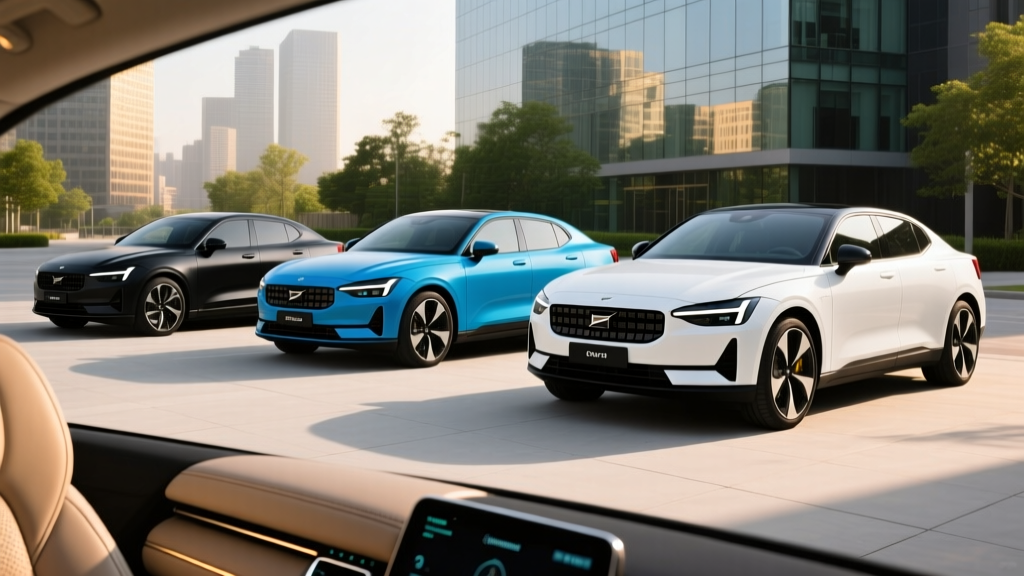
All Polestar 2 Colors for 2026
Exterior color choice is deeply personal, but it also affects resale value, heat absorption, and maintenance frequency. Polestar keeps the 2026 palette intentionally restrained — no wild chromatic flips, just confident, architectural tones that match the car's fastback silhouette.
| Color | Finish | Available Trims | Cost |
|---|---|---|---|
| Snow White | Solid | All trims | No charge |
| Midnight Black | Metallic | All trims | No charge |
| Magnesium Silver | Metallic | All trims | No charge |
| Space Black | Metallic | All trims | $600 |
| Jupiter Blue | Metallic | All trims | $600 |
| Thunder Gray | Metallic | All trims | $600 |
| Stealth Green | Metallic | BST Edition only | Included |
Interior color pairings: Polestar offers three interior schemes — a standard textile in Charcoal, an available Nappa leather in Charcoal or Zinc (light gray), and the animal-free MicroTech in Bio-attributed Black. The Plus and Pilot packages bundle Nappa leather with ventilated front seats, which is worth considering if you live in a warm climate.
Range, Efficiency, and Real-World Expectations
The 2026 Polestar 2 is available in three powertrain configurations, each with distinct range and efficiency profiles. Here's the official EPA data alongside what we've observed in real-world driving.
| Configuration | EPA Range | MPGe (Combined) | kWh/100 mi | Battery (Usable) |
|---|---|---|---|---|
| Standard Range Single Motor | 276 mi | 107 MPGe | 31 | 69 kWh (LFP) |
| Long Range Single Motor | 320 mi | 114 MPGe | 29 | 78 kWh (NMC) |
| Long Range Dual Motor (AWD) | 298 mi | 101 MPGe | 33 | 78 kWh (NMC) |
Charging Speed: DC Fast and Home Level 2
Charging speed is often the deciding factor for road-trip viability. The Polestar 2's DC fast-charging performance depends heavily on which battery pack you choose.
| Spec | Standard Range (LFP) | Long Range (NMC) |
|---|---|---|
| Max DC Fast Charge | 135 kW | 200 kW |
| 10–80% DC Time | ~30 min | ~26 min |
| Level 2 (Home/AC) | 11 kW / ~37 mi/hr | 11 kW / ~37 mi/hr |
| Level 1 (120V) | ~1.4 kW / ~4 mi/hr | ~1.4 kW / ~4 mi/hr |
| Charge Port | CCS (NACS adapter available) | |
Charging curve reality: The Long Range model peaks at 200 kW but sustains that rate only between roughly 10% and 35% state of charge. By 60% SoC, the rate tapers to approximately 120 kW, and above 80% it drops below 50 kW. This is normal lithium-ion behavior, but it means the advertised "26 minutes to 80%" is accurate while a 10–90% session will take closer to 42 minutes. The LFP pack in the Standard Range model has a flatter charge curve — it doesn't peak as high but holds a more consistent rate, making its 30-minute 10–80% claim fairly reliable.
For home charging, the onboard 11 kW AC charger is competitive. A full charge from empty takes roughly 7–8 hours on a Level 2 home station. You'll need a 48-amp or 60-amp dedicated circuit for optimal Level 2 performance — factor in $500–$1,500 for professional installation depending on your electrical panel's proximity to the garage.
Performance and Drivetrain
The Polestar 2 has always prioritized driving engagement over outright drag-strip numbers, and the 2026 lineup continues that philosophy with meaningful differentiation across trims.
| Configuration | Horsepower | Torque (lb-ft) | 0–60 mph | Drivetrain |
|---|---|---|---|---|
| Standard Range Single Motor | 299 hp | 361 | 5.9 sec | RWD |
| Long Range Single Motor | 299 hp | 361 | 5.9 sec | RWD |
| Long Range Dual Motor | 421 hp | 546 | 4.3 sec | AWD |
| BST Edition (Dual Motor + Performance) | 476 hp | 546 | 4.1 sec | AWD |
The switch to rear-wheel drive for single-motor models (introduced in the 2024 refresh) transformed the car's character. The RWD layout delivers more natural steering feel and better traction under acceleration than the old FWD setup. The Dual Motor's 4.3-second 0–60 time is quick without being absurd, and the torque-vectoring rear axle on the Performance Pack-equipped models gives the car genuine cornering poise.
The BST Edition adds Öhlins dampers (manually adjustable), a lowered ride height, 21-inch forged wheels, and Pirelli P Zero tires. It's the enthusiast's choice but sacrifices some ride comfort on rough pavement.
Pricing, Trims, and Federal Tax Credit Eligibility
The 2026 Polestar 2 is positioned as a premium compact electric sedan, competing directly with the Tesla Model 3, BMW i4, and Hyundai Ioniq 6. Here's how the pricing breaks down before incentives.
| Trim | Base MSRP | Destination | Total Before Incentives |
|---|---|---|---|
| Standard Range Single Motor | $49,900 | $1,400 | $51,300 |
| Long Range Single Motor | $53,400 | $1,400 | $54,800 |
| Long Range Dual Motor | $57,900 | $1,400 | $59,300 |
| BST Edition | $69,900 | $1,400 | $71,300 |
Does the Polestar 2 Qualify for the Federal EV Tax Credit?
As of 2026, the Polestar 2 does not qualify for the full $7,500 IRS §30D federal tax credit for new EV purchases. The primary reason is battery component and critical mineral sourcing — Polestar's battery supply chain does not yet meet the domestic-content thresholds required under the Inflation Reduction Act's strictest rules. However, buyers should verify current eligibility at fueleconomy.gov, as sourcing requirements shift and manufacturers occasionally achieve compliance mid-cycle.
- MSRP Cap: Sedars must be under $55,000 — the Standard Range at $51,300 qualifies on price; Long Range and above exceed the cap.
- Buyer Income Cap: Modified AGI must not exceed $150,000 (single), $225,000 (head of household), or $300,000 (joint).
- Battery Sourcing: Critical minerals and battery components must meet escalating domestic/North American content thresholds. Polestar 2 currently does not meet these thresholds.
- Point-of-Sale Transfer: If eligible, the credit can be transferred to the dealer as a price reduction at purchase.
Always confirm with a tax professional and check IRS.gov for the latest rules before purchasing.
Interior Space, Cargo, and Daily Practicality
The Polestar 2's fastback design gives it a distinctive profile but creates real trade-offs in rear-seat headroom and cargo flexibility compared to hatchback rivals like the Tesla Model 3 or Ioniq 5.
| Measurement | Polestar 2 | Tesla Model 3 | Hyundai Ioniq 6 |
|---|---|---|---|
| Front Legroom | 42.2 in | 42.7 in | 42.9 in |
| Rear Legroom | 34.0 in | 35.2 in | 35.4 in |
| Front Headroom | 40.4 in | 40.3 in | 39.7 in |
| Rear Headroom | 36.5 in | 37.4 in | 37.1 in |
| Cargo Volume (rear seats up) | 14.4 cu ft | 23.0 cu ft | 12.3 cu ft |
| Cargo Volume (rear seats folded) | 38.7 cu ft | — (no fold-flat) | — (limited) |
| Frunk | 1.4 cu ft (cables) | 3.1 cu ft | None |
The Polestar 2's liftgate-style trunk opening is genuinely useful — taller and wider than the Model 3's conventional trunk lid — but the 14.4 cu ft figure is modest. Tall adults will find the rear seat adequate for trips under an hour but will notice the low cushion height and limited headroom on longer journeys. If you regularly carry four adults, test-sit in the back before committing.
Technology, Safety, and Driver Assistance
Polestar was the first automaker to ship a car with Android Automotive OS natively built in, and the 2026 Polestar 2 continues with an updated 12.3-inch digital instrument cluster and a 11.2-inch center touchscreen running Google Maps navigation, Google Assistant, and the Google Play Store for third-party apps.
Standout tech features:
- Native Google Maps with real-time EV route planning and automatic battery preconditioning for DC fast charging
- Over-the-air (OTA) software updates that add features and improve performance
- Phone-as-key via Bluetooth LE (Polestar app)
- Available Harman Kardon 13-speaker audio with headrest speakers
- Pixel LED headlights with adaptive high-beam (standard on Plus and above)
Driver assistance (Pilot Pack): The Polestar 2 comes standard with adaptive cruise control, lane-keeping assist, blind-spot monitoring, and rear cross-traffic alert. The optional Pilot Pack adds Pilot Assist (SAE Level 2 semi-autonomous highway driving), which maintains speed, following distance, and lane centering. This is not a hands-off system — the driver must keep hands on the wheel and remain attentive at all times. It competes with Tesla Autopilot and Ford BlueCruise in capability but lacks the hands-free highway mode that BlueCruise and GM Super Cruise offer on mapped roads.
Warranty Coverage
| Coverage | Term |
|---|---|
| Basic / Bumper-to-Bumper | 4 years / 50,000 miles |
| Battery & Drive Unit | 8 years / 100,000 miles (min 70% capacity retention) |
| Corrosion Perforation | 12 years / unlimited miles |
| Roadside Assistance | 4 years / unlimited miles |
The 8-year/100,000-mile battery warranty with a 70% capacity retention floor is industry-standard and matches Tesla, Hyundai, and BMW. Polestar's basic warranty is average for the premium segment. One note: Polestar's service network is still growing, and many owners rely on Volvo dealership service bays (Polestar is a Volvo Cars/Geely brand). Check service-center proximity before buying if you live outside a major metro area.
Who the Polestar 2 Is For — And Who Should Look Elsewhere
Choose the Polestar 2 if:
- You want a premium EV sedan with distinctive Scandinavian design that doesn't look like every other EV on the road
- You value native Google integration and OTA updates that genuinely improve the car over time
- Your daily commute is under 100 miles round-trip and you have access to home Level 2 charging
- You prioritize driving dynamics and steering feel over maximum interior volume
- You want a liftgate-style trunk for easier cargo loading than a traditional sedan
Look elsewhere if:
- You regularly carry four adults — the rear seat is tight for tall passengers
- Federal tax credit eligibility is critical to your purchase math
- You need maximum DC fast-charging speed (the Hyundai Ioniq 5/6 charges at up to 350 kW on 800V architecture)
- You want hands-free highway driving (BlueCruise on the Mustang Mach-E or Super Cruise on the Cadillac Lyriq)
- You need a large frunk for charging cables and accessories
Pros
- Up to 320 mi EPA range (Long Range)
- Native Google Maps with EV route planning
- Liftgate trunk for versatile cargo access
- Sharp, understated design stands out subtly
- Standard RWD delivers engaging handling
- OTA updates keep software current
Cons
- Does not currently qualify for $7,500 federal tax credit
- Rear seat headroom and legroom are tight for tall adults
- DC charging peaks at 200 kW (below 800V competitors)
- Service network still expanding — may rely on Volvo dealers
- No hands-free driving mode in Pilot Assist
- Modest 1.4 cu ft frunk
Frequently Asked Questions
What is the real-world range of the 2026 Polestar 2?
The Long Range Single Motor achieves an EPA-estimated 320 miles, but expect approximately 265–280 miles at sustained highway speeds of 75 mph and 220–250 miles in cold weather below freezing. The Standard Range model delivers roughly 230–245 real-world highway miles from its 69 kWh LFP pack.
How fast does the Polestar 2 charge?
The Long Range model peaks at 200 kW on a DC fast charger, reaching 10–80% in approximately 26 minutes under ideal conditions. The Standard Range LFP model peaks at 135 kW with a 10–80% time of about 30 minutes. At home on a Level 2 (240V, 48A) charger, both versions add roughly 37 miles of range per hour.
How much does the Polestar 2 cost after incentives?
Without the federal tax credit, the Polestar 2 starts at $51,300 (Standard Range, including destination). Some states offer their own EV rebates — California's CVRP, for example, has offered up to $2,000 for income-qualified buyers, and Colorado offers a state credit. Check your state's energy office for current programs. Lease deals may also differ, as the commercial clean vehicle credit (§45W) sometimes allows lessors to pass savings through.
Is the Polestar 2 worth buying vs. the Tesla Model 3 or Hyundai Ioniq 6?
The Model 3 offers more rear-seat space, access to the Supercharger network (though Polestar now offers a NACS adapter), and currently qualifies for partial federal incentives depending on the variant. The Ioniq 6 offers 800V ultra-fast charging (10–80% in 18 minutes) and more interior room. The Polestar 2 wins on design distinctiveness, build quality feel, and Google-native integration. It's the choice for buyers who want something less ubiquitous than a Tesla and more premium-feeling than a Hyundai.
Does the Polestar 2 qualify for the federal EV tax credit?
As of early 2026, the Polestar 2 does not qualify for the $7,500 §30D federal tax credit due to battery component and critical mineral sourcing requirements. The Standard Range model at $51,300 falls under the $55,000 sedan MSRP cap, but the battery sourcing rules disqualify it. Always verify at fueleconomy.gov and consult a tax professional before finalizing your purchase.
What Polestar 2 color holds its value best?
Historically, Snow White and Midnight Black tend to have the broadest resale appeal in the premium sedan segment. Jupiter Blue and Stealth Green (BST only) may attract enthusiasts but narrow the buyer pool. If resale is a priority, stick with neutral metallics like Magnesium Silver or Space Black.