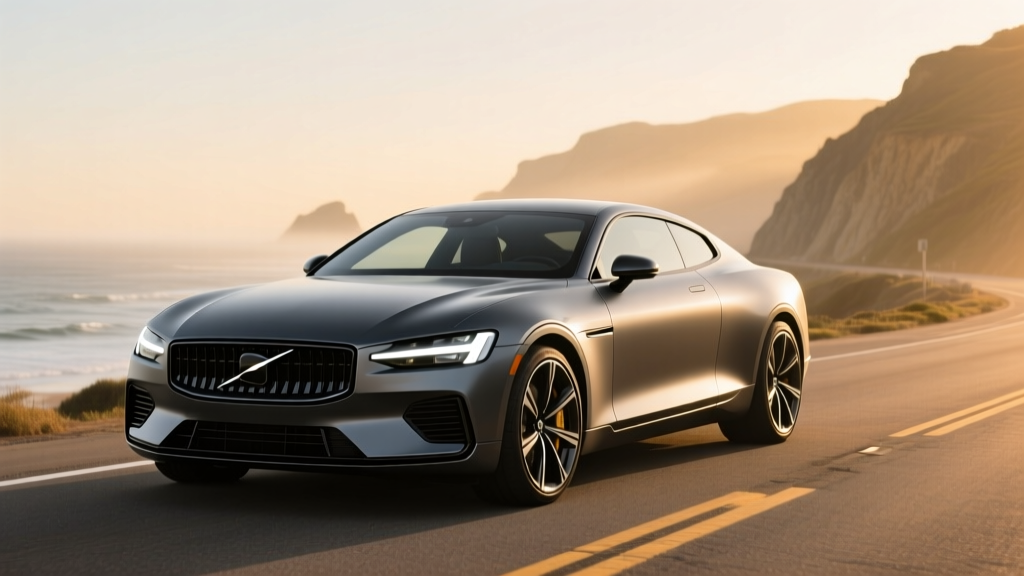
The Polestar 1 occupies a strange, fascinating corner of the electrified-vehicle world. Conceived as Volvo's halo project and launched under the Polestar brand in 2020, this plug-in hybrid grand tourer was always intended as a low-volume statement piece — only 1,500 units were planned over its three-year production run (2020–2022). With production now closed, the Polestar 1 has transitioned from new-car showrooms to the pre-owned and collector market, yet it still commands attention from buyers searching for a distinctive electrified GT with genuine performance credentials.
If you're researching the Polestar 1 today — whether as a prospective buyer on the secondary market, a current owner optimizing your driving experience, or an enthusiast evaluating its legacy — this profile gives you the exact numbers, real-world expectations, and ownership realities you need.
Polestar 1 Specs at a Glance
| Specification | Value |
|---|---|
| Powertrain | 2.0L turbo/supercharged I4 + twin rear electric motors (PHEV AWD) |
| Total System Output | 626 hp / 737 lb-ft torque |
| 0–60 mph | 4.1 seconds (manufacturer) |
| Battery Capacity | 34 kWh (NMC lithium-ion) |
| EPA Electric-Only Range | 52 miles |
| EPA Combined MPGe (EV mode) | 58 MPGe |
| EPA Combined MPG (gas mode) | 26 MPG |
| Total EPA Range (EV + gas) | ~470 miles |
| Max DC Fast Charge | 50 kW (CCS1) |
| Level 2 Charge Rate | 3.6 kW onboard charger |
| Cargo Volume | 4.4 cu ft (trunk) |
| Curb Weight | 5,184 lbs |
| Original Base MSRP (2022) | $156,500 |
| Production | 2020–2022 (1,500 units total — discontinued) |
Electric-Only Range and Real-World Efficiency
The Polestar 1's 34 kWh NMC battery delivers an EPA-estimated 52 miles of electric-only range — a figure that was class-leading among plug-in hybrids at launch and remains competitive today against PHEVs like the BMW i8 (discontinued, 18 mi EV range) or the Toyota RAV4 Prime (42 mi).
EPA Electric-Only: 52 miles
Real-world highway (65–75 mph, moderate climate): ~40–45 miles
Real-world city (stop-and-go, regen-heavy): ~48–52 miles
Cold weather (below 32°F / 0°C): ~30–38 miles (30–40% reduction typical for NMC chemistry without aggressive battery preconditioning)
The Polestar 1's electric motors drive the rear axle only, while the gasoline engine powers the front wheels. In Pure (EV-only) mode, the car operates as a rear-wheel-drive electric vehicle until the battery depletes or you demand hard acceleration, at which point the gas engine seamlessly engages.
When the battery is depleted, the 2.0-liter twin-charged four-cylinder takes over, delivering an EPA-estimated 26 MPG combined. That's respectable for a 5,184-pound grand tourer, though it trails lighter PHEVs. According to fueleconomy.gov, the Polestar 1 achieves 58 MPGe in charge-depleting (electric) mode and 26 MPG in charge-sustaining (gasoline) mode.
The combined gas + electric range of approximately 470 miles means genuine cross-country capability without range anxiety — fill the 15.8-gallon tank and charge the battery, and you're set for a full day's drive.
Charging Speed: DC Fast Charge and Home Level 2
Charging is where the Polestar 1 shows its age relative to modern EVs. The DC fast-charging and onboard AC charging specs are modest by 2026 standards, but they're typical for a PHEV architecture designed in the late 2010s.
| Charging Level | Power / Rate | Time (Approx.) | Notes |
|---|---|---|---|
| Level 1 (120V household) | ~1.4 kW | ~24 hours (0–100%) | Emergency/trickle only |
| Level 2 (240V home/public) | 3.6 kW | ~9 hours (0–100%) | Limited by 3.6 kW onboard charger |
| DC Fast Charge (CCS1) | 50 kW peak | ~45 min (10–80%) | Rarely needed for a 34 kWh battery |
The practical reality: Most Polestar 1 owners will charge exclusively at home on Level 2. With a 34 kWh battery and a 3.6 kW onboard charger, a full charge takes roughly 9 hours — easily achievable overnight. The 3.6 kW onboard charger is the bottleneck here; even if your Level 2 wallbox delivers 7.2 or 11.5 kW, the Polestar 1 will only accept 3.6 kW. This is a hardware limitation of the vehicle's onboard charger, not your charging equipment.
The 50 kW DC fast-charging capability exists but is largely unnecessary for a battery this small. A 10–80% charge in approximately 45 minutes at a DC fast charger is possible, but given that 52 miles of EV range is easily replenished overnight, most owners never use DC fast charging. The CCS1 connector is standard, compatible with Electrify America, EVgo, and other major networks.
Performance: 626 Horsepower Grand Tourer
The Polestar 1's powertrain is genuinely exotic. The front wheels are driven by a 2.0-liter four-cylinder engine that is both turbocharged and supercharged, producing 326 hp on its own. The rear axle gets two independent electric motors contributing a combined 232 hp (post-2020 software update; earlier models had 218 hp for a total of 609 hp). An integrated starter-generator adds another 68 hp to the front axle under certain conditions.
The result: 626 horsepower and 737 lb-ft of torque, with torque-vectoring rear electric motors that can independently vary power to each rear wheel. This gives the Polestar 1 a rear-biased, dynamic character unusual for a Volvo-derived platform.
0–60 mph in 4.1 seconds is quick but not supercar-quick by modern EV standards (a Tesla Model S Plaid hits 60 in under 2 seconds). However, the Polestar 1 was never designed as a drag racer. It's a grand tourer — built for high-speed, long-distance comfort with the ability to deploy serious power when needed. The 5,184-pound curb weight (heavier than a BMW M8) is noticeable in tight corners, but the Öhlins dampers, Akebono brakes, and 21-inch wheels keep things composed.
Driving modes include Pure (EV-only, rear-drive), Hybrid (default blended operation), AWD (full powertrain engagement), and Power (maximum performance). The Polestar Performance Engineered optimization software (available as an over-the-air update on later models) sharpens throttle response and shift mapping.
Interior, Cargo, and Daily Usability
The Polestar 1 is a 2+2 coupe, and its interior reflects its Volvo DNA: minimalist Scandinavian design, high-quality materials (crystal gear selector from Orrefors, available Nappa leather), and a portrait-oriented 9-inch touchscreen running a version of Volvo's Sensus infotainment system (not the newer Android Automotive OS found in the Polestar 2).
Cargo space is the Polestar 1's biggest practical compromise: just 4.4 cubic feet of trunk volume, split across two compartments due to the battery placement. The rear seats are best suited for children or luggage overflow — adult passengers will find legroom tight on anything beyond short trips.
| Dimension | Measurement |
|---|---|
| Front Headroom | 37.2 in |
| Front Legroom | 42.3 in |
| Rear Headroom | 34.6 in |
| Rear Legroom | 29.5 in |
| Trunk Volume | 4.4 cu ft |
The infotainment system supports Apple CarPlay, Android Auto, and a 14-speaker Bowers & Wilkins audio system. Pilot Assist (Volvo's Level 2 driver-assistance suite) includes adaptive cruise control, lane-centering steering, and automatic emergency braking. Note: Pilot Assist is a SAE Level 2 system — it requires continuous driver supervision and is not autonomous driving.
Pricing, Tax Credits, and Ownership Costs
The Polestar 1 was positioned as an ultra-premium product. The original MSRP was $156,500 (including destination) for all three model years, with no lower trims available. The only factory option was a Performance Pack (Öhlins dampers and Akebono brakes), which was standard on later production runs. A matte-finish paint option added approximately $5,000.
| Item | Amount |
|---|---|
| Original Base MSRP (2020–2022) | $156,500 |
| Federal EV Tax Credit (§30D) — New | Did NOT qualify (MSRP exceeds $80,000 sedan cap) |
| Used EV Tax Credit (§25E) — Pre-Owned | Up to $4,000 or 30% of sale price (max $4,000), if eligible |
| Current Pre-Owned Market (2026) | $95,000–$135,000 depending on mileage/condition |
However, if you purchase a pre-owned Polestar 1 from a dealer for $25,000 or more, you may qualify for the Used Clean Vehicle Credit (§25E) — up to $4,000 or 30% of the sale price, whichever is less. This credit has income caps ($75,000 single / $150,000 married filing jointly) and requires the vehicle to be at least two model years old. Consult IRS.gov §25E guidelines and a tax professional to confirm eligibility.
Insurance costs are significant. Expect annual premiums of $3,500–$5,500 depending on your profile, driven by the vehicle's value, carbon-fiber body panels (expensive to repair), and limited parts availability now that production has ended.
Maintenance is lighter than a comparable gas GT (no traditional transmission, regenerative braking saves pad wear), but the twin-charged gasoline engine still requires regular oil changes, and the complex hybrid powertrain demands Volvo/Polestar-certified service. Budget $1,200–$2,000 annually for scheduled maintenance outside warranty.
Warranty and Battery Longevity
Polestar backed the Polestar 1 with a solid warranty package, though it's important to note what's covered and for how long:
| Component | Coverage |
|---|---|
| Basic Vehicle Warranty | 4 years / 50,000 miles |
| Powertrain Warranty | 6 years / 70,000 miles |
| Hybrid Battery Warranty | 8 years / 100,000 miles (retains ≥70% capacity) |
| Corrosion Warranty | 12 years / unlimited miles |
| Roadside Assistance | 4 years / unlimited miles |
The 34 kWh NMC battery should age gracefully given its moderate size and the fact that most owners won't cycle it daily to 0%. NMC chemistry typically retains 85–90% capacity after 100,000 miles under normal use. The battery warranty guarantees at least 70% capacity retention over 8 years / 100,000 miles — a reasonable threshold, though some competitors (Hyundai/Kia) offer 10-year battery coverage.
For pre-owned buyers: check whether the original warranty is still active (a 2022 model with low miles may still have hybrid battery coverage through 2030). Also verify whether the vehicle received all over-the-air software updates, which improved power output and charging management on later builds.
Polestar 1 vs. the Competition
The Polestar 1's closest rivals during its production run were the BMW i8, the Lexus LC 500h, and the Acura NSX. Today on the pre-owned market, it competes with these same vehicles plus newer electrified GTs.
| Spec | Polestar 1 (2022) | BMW i8 (2020) | Lexus LC 500h (2022) |
|---|---|---|---|
| Powertrain | PHEV AWD | PHEV AWD | HEV RWD |
| Total HP | 626 hp | 369 hp | 354 hp |
| 0–60 mph | 4.1 sec | 4.2 sec | 4.7 sec |
| EV-Only Range | 52 mi | 18 mi | N/A (HEV) |
| Battery | 34 kWh NMC | 11.6 kWh | 1.1 kWh |
| Combined MPG/MPGe | 58 MPGe / 26 MPG | 69 MPGe / 27 MPG | 30 MPG |
| Cargo (cu ft) | 4.4 | 4.7 | 5.4 |
| Original MSRP | $156,500 | $148,495 | $99,050 |
The Polestar 1 offers the most electric-only range and the highest power output of the three, but at the highest original price and with the least cargo space. The BMW i8 is sportier and lighter but has a nearly useless 18-mile EV range. The Lexus LC 500h is a conventional hybrid (no plug), with the most refined interior but the least electrified experience.
Pros and Cons
- 52-mile EV range — longest of any PHEV GT in its class
- 626 hp with torque-vectoring rear electric motors
- Carbon-fiber body panels and striking Scandinavian design
- Öhlins dampers and Akebono brakes standard
- 470+ mile total range (gas + electric)
- Rare and collectible — only 1,500 built worldwide
- Genuine grand-touring comfort at high speed
- Only 4.4 cu ft of cargo space — impractical for travel
- 3.6 kW onboard charger limits Level 2 speed
- 5,184-lb curb weight blunts handling agility
- No federal tax credit on new purchase (MSRP cap)
- Outdated Sensus infotainment (not Android Automotive)
- Carbon-fiber repair costs are very high
- Production ended — parts availability may tighten
- Rear seats are essentially unusable for adults
Who Should Buy the Polestar 1?
- You want a rare, head-turning GT with genuine electric commuting capability (52 mi covers most daily commutes)
- You value design exclusivity and Scandinavian craftsmanship over infotainment technology
- You want PHEV flexibility — electric weekdays, gas-powered road trips on weekends
- You're a collector seeking a future-classic with limited production numbers
- You need practical cargo space or rear-seat usability
- You want cutting-edge infotainment or Level 3+ driver assist
- You want the latest fast-charging technology (200+ kW DC)
- You're looking for a pure EV — consider the Polestar 2 or Porsche Taycan instead
Frequently Asked Questions
What is the real-world electric range of the Polestar 1?
The EPA rates it at 52 miles electric-only. In real-world driving, expect 40–45 miles at highway speeds and up to 52 miles in city driving with regenerative braking. Cold weather (below freezing) can reduce this to 30–38 miles. The gasoline engine extends total range to approximately 470 miles.
How fast does the Polestar 1 charge?
On Level 2 (240V), it charges at 3.6 kW — a full charge takes about 9 hours overnight. DC fast charging peaks at 50 kW, achieving 10–80% in roughly 45 minutes via CCS1. The 3.6 kW onboard charger is the limiting factor on AC charging; upgrading your home charger beyond 16A won't speed things up.
Does the Polestar 1 qualify for the federal EV tax credit?
No — not as a new vehicle. The IRS §30D credit caps sedan eligibility at $80,000 MSRP, and the Polestar 1's $156,500 price far exceeded that. However, pre-owned buyers may qualify for the Used Clean Vehicle Credit (§25E) of up to $4,000, subject to income limits ($75,000 single / $150,000 joint) and a sale price at or below $25,000. Verify current rules at IRS.gov.
Is the Polestar 1 worth buying vs. a BMW i8 or Porsche Taycan?
It depends on your priorities. The Polestar 1 offers more EV range (52 vs. 18 miles for the i8) and far more power (626 vs. 369 hp). The Porsche Taycan is a pure EV with superior technology, faster charging, and better daily usability, but less exclusivity. The Polestar 1 is best for buyers who want a rare, design-forward PHEV GT and don't need cargo space or rear-seat practicality.
What's the biggest drawback of owning a Polestar 1 in 2026?
Parts availability and repair costs. With production ended since 2022 and only 1,500 units built globally, the carbon-fiber body panels, specialized hybrid components, and bespoke interior trim are not stocked at every Volvo dealer. Collision repair can be extremely expensive, contributing to high insurance premiums. Routine maintenance through Volvo/Polestar service networks is still supported, but plan for longer lead times on body or hybrid-system repairs.
What battery chemistry does the Polestar 1 use, and will it degrade?
The Polestar 1 uses an NMC (nickel manganese cobalt) lithium-ion battery pack rated at 34 kWh. NMC offers high energy density (important in a package this compact) but is more sensitive to sustained high temperatures and deep discharge cycles than LFP chemistry. Under normal ownership — charging to 80–90% daily, avoiding frequent 0% depletion — expect 85–90% capacity retention after 100,000 miles. The hybrid battery warranty covers 8 years / 100,000 miles with a 70% capacity retention guarantee.