The Quick Answer on the Polaris RZR Electric
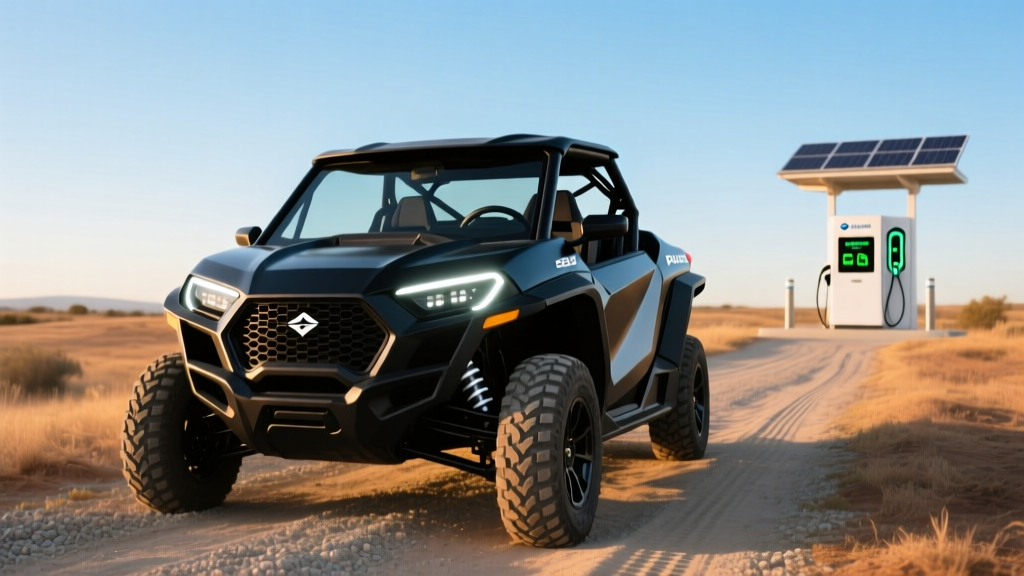
The Polaris RZR Electric (badged as the RZR Pro R Electric in initial announcements) is an all-electric off-road side-by-side targeting buyers who want instant torque, low trail noise, and minimal maintenance compared to gas-powered UTVs. Based on Polaris's published preliminary specs, the electric RZR packs a ~50 kWh usable battery (NMC lithium-ion), delivering an estimated 70–100 miles of mixed trail range depending on terrain and speed. Expect DC fast charging from 10–80% in approximately 30–40 minutes at a peak rate near 80 kW, and Level 2 home charging in roughly 4–5 hours. Pricing is anticipated in the $30,000–$40,000+ range depending on trim, though final MSRP and availability remain subject to confirmation as Polaris ramps production. This is a purpose-built trail vehicle, not a street-legal commuter — federal §30D EV tax credits generally do not apply to off-highway vehicles (OHVs).
What Is the Polaris RZR Electric and Who Is It For?
Polaris entered the electric off-road market with prototypes and concept vehicles as early as 2022, showcasing an electric RZR platform alongside its Ranger XP Kinetic — the production electric UTV that already ships. The RZR Electric extends that powertrain philosophy into the high-performance dune and trail segment. Unlike the Ranger XP Kinetic, which targets work and utility, the RZR Electric is built for aggressive recreation: desert running, rock crawling, and high-speed trail riding.
The target buyer is an existing UTV owner or an EV-curious off-roader weighing whether to go electric. Key motivations include:
- Instant torque delivery — electric motors provide full torque at zero RPM, critical for technical crawling and dune launches.
- Noise reduction — many trail systems enforce noise limits; electric UTVs run nearly silent.
- Reduced maintenance — no oil changes, air filters, spark plugs, or exhaust systems. Brake wear drops significantly with regenerative braking.
- Trail-side convenience — no fuel cans, no carburetor issues at altitude, no warm-up.
But the trade-offs are real: higher upfront cost, range limitations on long desert loops, and charging logistics in remote areas where public DC infrastructure doesn't exist.
Range, Battery, and Charging: The Numbers That Matter
Off-road range is far more variable than highway driving in a road car. Aggressive dune running at sustained high speeds can cut range by 40–60% compared to moderate trail cruising. Here's what to expect from the RZR Electric platform:
| Specification | Value |
|---|---|
| Battery Chemistry | NMC (Nickel Manganese Cobalt) |
| Usable Battery Capacity | ~50 kWh (est.) |
| Estimated Mixed Trail Range | 70–100 miles |
| Aggressive Dune/High-Speed Range | 40–60 miles (est.) |
| Peak DC Fast Charge Rate | ~80 kW |
| 10–80% DC Fast Charge Time | ~30–40 minutes |
| Level 2 Charge Rate (240V) | ~11 kW |
| Level 2 Full Charge Time | ~4–5 hours |
| Level 1 Charge Rate (120V) | ~1.4 kW |
| Level 1 Full Charge Time | ~35+ hours |
| Motor Output (est.) | ~200+ HP equivalent |
| Drivetrain | AWD with selectable modes |
Real-World Range Reality
Off-road range is terrain-dependent, not EPA-rated like a passenger car. Polaris's own testing of the Ranger XP Kinetic (which shares similar battery architecture) shows range varying from 45 miles on aggressive terrain to 110+ miles on light-duty trails. Expect the RZR Electric to follow a similar pattern. Cold weather (below 40°F) will further reduce usable range by 15–25% due to battery chemistry limitations and cabin/heater draw if equipped.
Charging Logistics for Off-Road Use
This is the single biggest ownership variable. Most trailheads, BLM land, and desert staging areas have zero public charging infrastructure. Realistic charging strategies include:
- Home base charging (Level 2): Install a 240V/50A circuit in your garage. A full overnight charge is standard. Budget $500–$2,000 for electrician installation depending on panel proximity and local permit costs.
- Generator charging (trail-side): Some owners tow a portable generator (3,500W+) to trickle-charge between runs. This partially defeats the emissions benefit but solves range logistics.
- Solar trickle: Polaris and aftermarket suppliers offer solar panel kits (~200–400W) that add 1–3 miles of range per hour of sun. Useful for multi-day camping, not for fast turnaround.
- Tow-vehicle charging: If your truck or RV has a high-output alternator or onboard inverter, you can Level 1 charge while towing between sites — adding ~5–8 miles per hour of driving.
Electric RZR vs Gas RZR: Cost and Performance Comparison
The core buying decision comes down to how you ride and what you're willing to spend upfront versus over time. Here's a data-driven comparison using the gas-powered RZR Pro R and the electric RZR platform:
| Factor | Electric RZR (Est.) | Gas RZR Pro R |
|---|---|---|
| Base MSRP | $30,000–$40,000+ | $28,999–$33,999 |
| Peak Power | ~200+ HP (instant) | 225 HP (at RPM) |
| Torque Delivery | Instant, 0 RPM | Peak at ~6,500 RPM |
| Range (mixed trail) | 70–100 miles | 150–200+ miles (12-gal tank) |
| Refuel/Recharge Time | 30–40 min (DC) / 4–5 hr (L2) | 3–5 min (gas can) |
| "Fuel" Cost per Hour Riding | ~$2–$5 (electricity) | ~$15–$25 (premium gas) |
| Annual Maintenance | $100–$300 (fluids, filters) | $800–$1,500 (oil, belts, plugs, air filter) |
| Noise Level | Near-silent | 85–95 dB |
| Altitude Performance | No power loss | ~3% power loss per 1,000 ft |
Five-Year Cost of Ownership Breakdown
Assuming 50 riding days per year (roughly weekend warrior usage), here's how the math works over five years:
| Cost Category | Electric RZR | Gas RZR Pro R |
|---|---|---|
| Purchase Price (est.) | $35,000 | $31,000 |
| Fuel/Energy (5 yrs) | $750–$1,250 | $3,750–$6,250 |
| Maintenance (5 yrs) | $500–$1,500 | $4,000–$7,500 |
| Home Charger Install | $1,000–$2,000 | $0 |
| Insurance (5 yrs, est.) | $3,500–$5,000 | $3,000–$4,500 |
| Total 5-Year Cost | $40,750–$44,750 | $41,750–$49,250 |
The electric RZR reaches cost parity around year 3–4 for frequent riders, and pulls ahead for anyone riding 60+ days annually. For casual riders (10–15 days/year), the gas model remains cheaper overall due to the lower purchase price.
Tax Credits, Incentives, and the OHV Complication
This is where many buyers get confused. The federal §30D Clean Vehicle Credit (up to $7,500) applies to on-road vehicles meeting specific MSRP caps, buyer income limits, and battery-sourcing requirements as outlined by the IRS. Off-highway vehicles like the RZR — whether gas or electric — do not qualify for §30D because they are not manufactured for primary on-road use and typically lack a VIN suitable for highway registration.
Does the RZR Electric Qualify for Federal EV Credits?
- ❌ §30D New Clean Vehicle Credit: No — OHVs are excluded regardless of powertrain.
- ⚠️ State/Local OHV Incentives: Some states (e.g., California's off-road equipment rebates) may offer partial incentives — check your state's OHV or air-quality district programs.
- ⚠️ Utility Company Rebates: Some rural electric co-ops offer rebates for electric off-road equipment to encourage off-peak charging load.
- ❌ Commercial/ Agricultural Credits: §45W (commercial clean vehicle credit) similarly targets on-road fleet vehicles.
Bottom line: budget for the full MSRP. Don't factor in a $7,500 credit that won't apply.
Common Misconceptions About Electric UTVs
| Myth | Fact |
|---|---|
| "Electric UTVs can't handle deep water crossings." | Polaris engineers sealed battery enclosures to IP67 ratings. The Ranger XP Kinetic is rated for water fording comparable to gas models. Always check your specific model's wading depth rating. |
| "The battery will need replacing every few years." | NMC batteries in UTV applications typically carry a 3–5 year warranty with 70%+ capacity retention thresholds. Real-world degradation for weekend-use vehicles is slow — expect 80%+ capacity at 5 years with proper care (avoiding prolonged 100% or 0% SoC storage). |
| "You'll get stranded on the trail with no way to refuel." | Range planning is essential, but a fully charged electric UTV covers most single-day trail loops (50–80 miles). For longer excursions, a tow-behind generator or staged charging plan is the standard solution. |
| "Electric means less power for dunes and hills." | Electric motors deliver full torque from zero RPM — an advantage over gas engines in technical climbing and sand. The RZR Electric is expected to match or exceed the Pro R's launch performance. |
| "Cold weather makes electric UTVs useless." | Cold reduces range by 15–25% and may limit peak charge speed, but the vehicle remains fully functional. Battery preconditioning (if equipped) mitigates charging slowdown. |
What First-Time EV Off-Road Buyers Should Know
If you've only owned gas UTVs, the transition to electric involves a few operational shifts:
- Plan rides around energy, not fuel stops. Map your typical loop distance. If your favorite trail system is 60 miles of mixed terrain, you'll want to start at 90%+ SoC and monitor consumption mid-ride.
- Install a Level 2 charger before the vehicle arrives. A NEMA 14-50 outlet on a dedicated 50A circuit is the standard setup. Budget $800–$2,000 for a licensed electrician, depending on panel capacity and conduit run length. A panel upgrade (to 200A service) may add $1,500–$3,000 if your home has older 100A service.
- Learn to read the charge curve. DC fast charging peaks at the stated kW rate only between roughly 10–50% SoC, then tapers significantly. The 50–80% portion may take as long as the first 40%. Plan charging stops accordingly.
- Store at partial charge. Unlike gas UTVs where you top off the tank before storage, NMC batteries last longest when stored at 40–60% SoC. Don't leave it at 100% for weeks between rides.
- Regenerative braking changes your riding style. Most electric UTVs offer adjustable regen levels. High regen enables one-pedal-style trail control, reducing brake wear on descents. Experiment with settings to match terrain.
Decision Framework: Should You Buy the Polaris RZR Electric?
Choose the Electric RZR If:
- You ride primarily on noise-restricted trails or near residential areas.
- Your typical ride loop is under 80 miles and you can charge at home overnight.
- You ride at altitude frequently (electric motors don't lose power in thin air).
- You want minimal maintenance and plan to keep the vehicle 5+ years.
- Instant torque for rock crawling or technical terrain is a priority.
- You already have or can install a 240V Level 2 charging circuit at home.
Stick With a Gas RZR If:
- You regularly ride 100+ mile desert loops with no staging-area power access.
- You need 3-minute refueling between competitive motos or guided tour stages.
- Your budget is firmly under $30,000 and you ride fewer than 20 days per year.
- You frequently ride in extreme cold (below 20°F) where range loss compounds terrain demands.
- You trailer long distances to remote trailheads and can't charge en route.
Frequently Asked Questions
Is the Polaris RZR Electric available to buy now?
As of early 2026, Polaris has announced and demonstrated the electric RZR platform, but final production availability and dealer inventory remain limited. The Ranger XP Kinetic is currently in production and available. Check with your local Polaris dealer for the latest RZR Electric ordering timeline.
How fast does the Polaris RZR Electric charge at home?
On a Level 2 (240V, ~11 kW) home charger, a full charge takes approximately 4–5 hours. On a standard 120V household outlet (Level 1, ~1.4 kW), expect 35+ hours for a full charge — making Level 1 impractical as a primary charging method.
Can I tow the RZR Electric and charge it from my truck?
You can Level 1 charge from a truck bed inverter or RV outlet while towing, adding roughly 5–8 miles of range per hour of driving. This is a useful supplemental strategy for multi-day trips, not a replacement for proper Level 2 or DC charging.
What happens if the battery degrades — can it be replaced?
Yes. Polaris designs its electric UTV batteries as serviceable modules. Replacement cost is estimated at $8,000–$12,000 depending on capacity and model year, though warranty coverage (typically 3–5 years with a capacity retention threshold) should protect against premature degradation. Most owners riding recreationally will not need a battery swap within the first 8–10 years.
Does the electric RZR have enough power for dunes?
Electric motors deliver peak torque instantly, which is an advantage in sand where maintaining momentum through soft patches matters. Estimated output of 200+ HP equivalent places the electric RZR in the same performance class as the gas Pro R for dune running, with faster initial launch response.
Is insurance more expensive for an electric UTV?
Typically 10–20% higher than an equivalent gas UTV, driven by higher replacement-cost valuations and battery-repair complexity. Get quotes from OHV-specialty insurers (e.g., Progressive, Safeco, or off-road-specific carriers) before purchasing to budget accurately.