Quick Answer: Should You Buy a Polaris EV in 2026?
Polaris offers electric utility and recreational vehicles — not highway-passenger cars. The Polaris Ranger XP Kinetic (their flagship electric UTV) delivers an EPA-estimated 45 miles of range from a 14.9 kWh usable lithium-ion battery, starts at $29,990, and produces 110 hp / 140 lb-ft of torque. The Polaris GEM neighborhood electric vehicle (NEV) offers ~30 miles of range at speeds up to 25 mph. These are purpose-built work and short-commute machines, not Tesla competitors. If you need a quiet, low-maintenance utility vehicle for a farm, ranch, large property, or gated community — and can charge at home on a standard 120V outlet — a Polaris EV makes strong economic sense. If you need highway speeds or daily commuting over 30 miles, look elsewhere.
What Is a Polaris EV? Understanding the Lineup
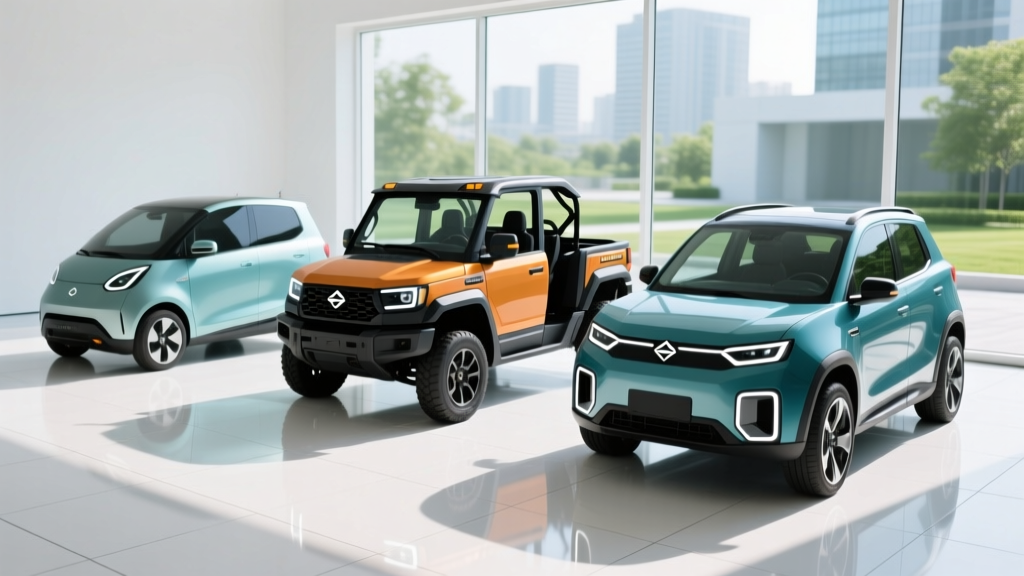
Polaris doesn't make road-going electric cars. Their EV portfolio serves distinct use cases that are fundamentally different from the BEV sedans and SUVs dominating headlines. Here's what's actually available for the 2026 model year:
| Model | Category | Top Speed | Use Case |
|---|---|---|---|
| Ranger XP Kinetic | Electric UTV (Side-by-Side) | ~60 mph | Farm, ranch, trail, work site |
| Sportsman EV (concept/limited) | Electric ATV | ~55 mph | Recreation, hunting, property |
| GEM e2 / e4 / e6 / eL XD | Neighborhood Electric Vehicle (NEV) | 25 mph | Campus, community, resort, short errands |
The Ranger XP Kinetic is the volume seller and the model most buyers research when searching for "Polaris EV." The GEM line serves institutional and low-speed community transport. The Sportsman EV remains in limited/concept availability as of 2026.
Critical distinction: None of these vehicles qualify for the federal §30D clean vehicle tax credit. The credit applies to on-road passenger vehicles meeting specific MSRP caps, battery sourcing, and income requirements. Off-road UTVs and NEVs fall outside the IRS definition of eligible vehicles. Do not factor a $7,500 credit into your Polaris EV budget.
Polaris Ranger XP Kinetic: Range, Battery & Real-World Performance
The Ranger XP Kinetic is where most Polaris EV buyer interest concentrates, and the specs reveal a vehicle optimized for torque and short-range work rather than distance.
| Spec | Ranger XP Kinetic (2026) |
|---|---|
| Battery Capacity | 14.9 kWh usable (27 kWh total pack, lithium-ion NMC) |
| EPA-Estimated Range | ~45 miles (combined work/trail) |
| Real-World Range (Heavy Load/Towing) | ~25–35 miles |
| Motor Output | 110 hp / 140 lb-ft torque |
| Towing Capacity | 2,500 lbs |
| Payload Capacity | 1,250 lbs (Premium trim) |
| Ground Clearance | 14 inches |
| Charge Time (120V Level 1) | ~5 hours (0–100%) |
| Charge Time (240V Level 2) | ~2 hours (0–100%) |
| Starting MSRP | $29,990 (Premium); $34,990 (Ultimate) |
| Warranty | 1 year factory; 6 months battery |
Real-World Range: What 45 Miles Actually Means
Polaris rates the Ranger XP Kinetic at roughly 45 miles under moderate use. But UTV range is highly load-dependent — more so than a highway EV. Here's what to expect in practice:
- Light trail riding, single occupant, flat terrain: 40–50 miles achievable
- Moderate work use (hauling feed, fencing supplies, 2 occupants): 30–40 miles
- Heavy towing near 2,500-lb capacity, hilly terrain: 20–30 miles
- Cold weather (below 32°F): Expect 15–25% range reduction due to increased battery internal resistance and cabin/accessory heater draw
Unlike highway EVs where range anxiety centers on charging infrastructure, Polaris EV range concerns center on workload planning. If your property loop is 15 miles and you charge nightly on 120V, you'll never think about range. If you're towing a loaded trailer across 400 acres, you need to plan mid-day charging.
EV vs. Gas: Polaris Ranger Kinetic vs. Ranger XP 1000
The natural comparison is the gas-powered Polaris Ranger XP 1000. Here's how the numbers stack up for a buyer weighing both options:
| Factor | Ranger XP Kinetic (EV) | Ranger XP 1000 (Gas) |
|---|---|---|
| Base MSRP | $29,990 | $17,599 |
| Fuel/Energy Cost per Mile | ~$0.03–0.05 (at $0.14/kWh avg) | ~$0.15–0.20 (at $3.80/gal, ~20 mpg) |
| Annual Energy Cost (2,000 mi/yr) | ~$60–100 | ~$300–400 |
| Oil Changes per Year | 0 | 2–3 ($50–80 each) |
| Air/Spark Plug Maintenance | None | $100–200/year |
| Noise Level | Near-silent (critical for hunting/wildlife) | Loud (75–85 dB at speed) |
| Instant Torque | 140 lb-ft from 0 RPM | Peak torque at higher RPM |
| Range per Tank/Charge | ~45 miles | ~150+ miles (11.5 gal tank) |
| Refuel/Recharge Time | 2–5 hours | 3 minutes |
| 5-Year Estimated Operating Cost | ~$400–600 | ~$2,000–3,000 |
The math: The Kinetic carries a ~$12,400 upfront premium over the gas Ranger. At roughly $250/year in fuel and maintenance savings, the break-even point is approximately 50 years on operating costs alone — meaning you will not recoup the price difference through savings.
So why buy the EV? The value proposition isn't economics. It's:
- Silence — essential for hunting, wildlife management, noise-restricted properties
- Zero exhaust — safe for indoor/barn use, no fumes around livestock
- Instant torque — superior low-speed crawling and towing response
- Minimal maintenance — no oil, filters, spark plugs, or exhaust systems
- On-site "fueling" — plug into any barn outlet, no gas can trips
Polaris GEM: The Neighborhood EV Option
The Polaris GEM fills a completely different niche. Classified as a Low-Speed Vehicle (LSV) under NHTSA FMVSS 500, GEMs are street-legal on roads with speed limits up to 35 mph in most jurisdictions.
| GEM Model | Seating | Est. Range | Top Speed | Approx. MSRP |
|---|---|---|---|---|
| e2 | 2 passengers | ~30 miles | 25 mph | $12,000–14,000 |
| e4 | 4 passengers | ~28 miles | 25 mph | $14,000–16,000 |
| e6 | 6 passengers | ~25 miles | 25 mph | $16,000–18,000 |
| eL XD (cargo) | 2 + bed | ~20 miles (loaded) | 25 mph | $17,000–20,000 |
GEMs use lead-acid or lithium battery packs depending on configuration. The lithium option adds roughly $3,000–5,000 but cuts weight by ~200 lbs and extends battery lifespan from 3–4 years (lead-acid) to 8–10 years (lithium). Charging is via standard 120V outlet, taking 6–8 hours for a full charge.
Real-world ownership note: GEM range drops significantly in cold weather (below 40°F). Lead-acid batteries in particular can lose 30–40% capacity in freezing temperatures. If you're in a northern climate, the lithium upgrade is strongly recommended.
Total Cost of Ownership: 5-Year Breakdown
Here's a practical 5-year cost projection for the Ranger XP Kinetic vs. the gas Ranger XP 1000, assuming 2,000 miles/year of mixed use:
| Cost Category | Ranger XP Kinetic (EV) | Ranger XP 1000 (Gas) |
|---|---|---|
| Purchase Price | $29,990 | $17,599 |
| Energy/Fuel (5 years) | $350–500 | $1,500–2,000 |
| Maintenance (5 years) | $200–400 | $1,000–1,500 |
| Insurance (5 years, est.) | $2,500–3,500 | $2,000–3,000 |
| Depreciation (est. 40%) | $12,000 | $7,000 |
| 5-Year Total Cost | $45,040–$46,390 | $29,099–$31,099 |
The EV costs approximately $15,000–17,000 more over five years. This gap is almost entirely the purchase premium. Operating costs genuinely favor the EV, but not enough to close the gap on a utility vehicle driven 2,000 miles/year.
Charging a Polaris EV: What You Actually Need
One advantage of Polaris EVs: charging infrastructure is simple and inexpensive compared to highway EVs.
Ranger XP Kinetic Charging
- Level 1 (120V standard outlet): ~5 hours for full charge. This is how most owners charge — plug into a barn, garage, or shed outlet overnight.
- Level 2 (240V): ~2 hours for full charge. Requires a 240V outlet (similar to a dryer outlet). An electrician can install a NEMA 14-50 for $300–800 depending on panel proximity.
- No DC fast charging: The Ranger XP Kinetic does not support DC fast charging. There is no CCS or NACS port.
GEM Charging
- 120V only: Built-in charger plugs into any standard outlet. 6–8 hours for full charge.
- No special infrastructure needed: If you have an outdoor outlet near where you park, you're set.
Electrical panel note: A 14.9 kWh battery charging at 120V draws roughly 12 amps continuously for 5 hours — well within a standard 15A or 20A circuit. You almost certainly do not need a panel upgrade for a Polaris EV, unlike a full-size highway EV charging at 48A on Level 2.
Common Misconceptions About Polaris EVs
| Myth | Fact |
|---|---|
| "Polaris makes an electric car for highway driving" | Polaris makes UTVs, ATVs, and NEVs. None are highway-capable passenger vehicles. |
| "The Ranger EV qualifies for the $7,500 tax credit" | Off-road UTVs and LSVs/NEVs are not eligible under IRS §30D. Only on-road passenger vehicles qualify. |
| "Electric UTVs have no power for real work" | The Kinetic produces 140 lb-ft of instant torque and tows 2,500 lbs — competitive with the gas Ranger for most tasks. |
| "I need a special charger installed" | A standard 120V outdoor outlet handles overnight charging for both the Ranger Kinetic and GEM. |
| "Battery replacement will cost a fortune" | Ranger Kinetic replacement battery pricing is not widely published, but Polaris dealer service networks handle warranty and replacement. Budget $3,000–6,000 for out-of-warranty replacement based on comparable UTV battery packs. |
| "Polaris EVs are silent, so they're safer" | Silence is a hazard around pedestrians and workers who expect engine noise. Many owners add aftermarket backup beepers or flags. |
Decision Framework: Is a Polaris EV Right for You?
Buy the Polaris Ranger XP Kinetic IF:
- You manage a farm, ranch, or large property where daily travel is under 30 miles
- Silence matters (hunting, wildlife observation, noise-restricted communities)
- You need zero-emission operation indoors or around livestock
- You have access to a 120V or 240V outlet near your parking area
- You value instant torque for towing and low-speed crawling
- You want to eliminate oil changes, spark plugs, and exhaust maintenance
Stick with a Gas Ranger (or look at other options) IF:
- You regularly travel more than 40 miles per day on your property
- You need quick refueling for all-day, continuous use with no charging breaks
- Upfront budget is under $20,000
- You operate in extreme cold (below 0°F) for extended periods
- You need highway-legal transportation — look at a proper on-road EV like the Ford F-150 Lightning or Rivian R1T instead
Buy a Polaris GEM IF:
- You live in a master-planned community, retirement community, or resort area with low-speed roads
- Your daily errand loop is under 15 miles
- You want car-free transportation for groceries, school drop-off, or campus transit
- Local laws permit LSVs on roads with speed limits up to 35 mph
Frequently Asked Questions
Can I drive a Polaris Ranger XP Kinetic on public roads?
In most states, no. The Ranger XP Kinetic is classified as an off-road utility vehicle (ORV/UTV) and is not street-legal for public road use. Some states allow limited ORV access on designated roads or with specific modifications (mirrors, horn, turn signals), but this varies widely. Check your state's OHV/UTV road-use laws before assuming you can drive it to town. The GEM, by contrast, is federally classified as an LSV and is street-legal on roads up to 35 mph in most jurisdictions.
How long does a Polaris EV battery last before needing replacement?
Polaris does not publish a specific cycle-life or year-based lifespan for the Ranger Kinetic battery. For lithium-ion packs in UTV applications, expect 8–12 years of service before capacity drops below 80%, assuming normal use and avoiding deep discharge storage. Lead-acid GEM batteries typically last 3–4 years; lithium GEM packs last 8–10 years. Store your Polaris EV at 40–60% state of charge if it will sit unused for weeks.
Does the Polaris Ranger EV have regenerative braking?
Yes. The Ranger XP Kinetic uses regenerative braking to recover energy during deceleration and downhill travel. This extends range modestly (roughly 5–10% in hilly terrain) and reduces brake wear. The regen level is not user-adjustable as it is on many highway EVs.
What's the real cost per mile to operate a Polaris Ranger Kinetic?
At the US average residential electricity rate of ~$0.16/kWh (EIA 2025 data), fully charging the 14.9 kWh usable battery costs roughly $2.38. Over 45 miles of rated range, that's approximately $0.053 per mile. In practice, with partial charges and regenerative braking, expect $0.03–0.05 per mile. Compare this to the gas Ranger XP 1000 at roughly 20 mpg and $3.80/gallon: $0.19 per mile. The EV is roughly 3.5–6x cheaper per mile to "fuel."
Can I tow with the Polaris Ranger XP Kinetic?
Yes. The Kinetic is rated for 2,500 lbs of towing capacity (with a braked trailer), matching the gas Ranger XP 1000. However, towing near maximum capacity will reduce range to 20–30 miles depending on terrain and speed. Plan your work routes accordingly and charge mid-day if necessary.
Is a Polaris EV a good first EV purchase?
As a first car, no — these aren't road vehicles. As a first electric utility vehicle for property work, absolutely. The charging requirements are minimal (a standard outlet), the maintenance is nearly zero, and the learning curve is essentially nonexistent. Many buyers use the Polaris EV as a gateway to understanding electric powertrains before committing to a full-size highway EV.