Quick Answer: Are Peterbilt Electric Trucks Worth It in 2026?
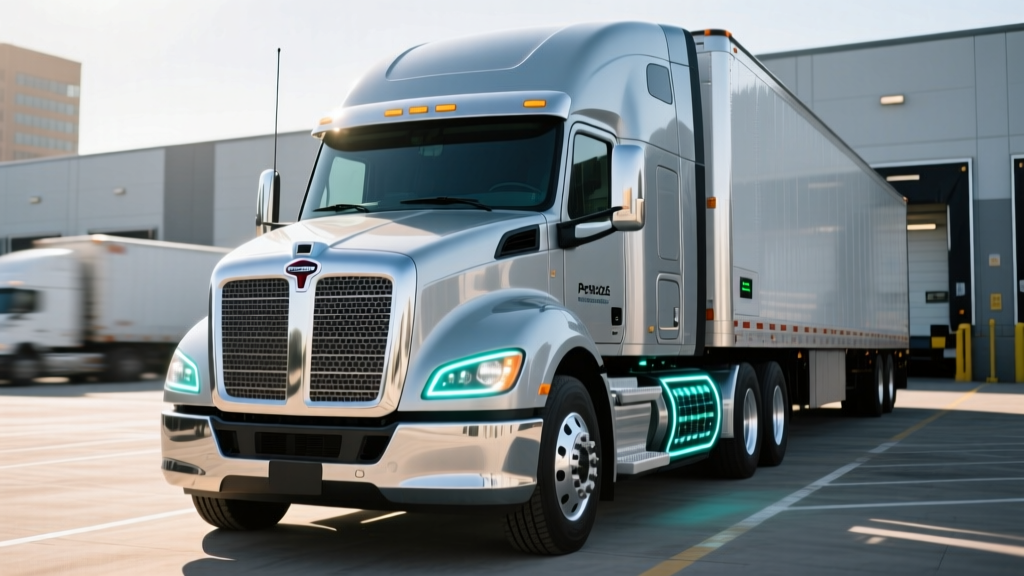
Peterbilt currently offers three battery-electric Class 8 and medium-duty models — the 520EV (refuse/vocational), 579EV (regional haul), and 220EV (medium-duty delivery). Expect real-world ranges of 80–150 miles depending on payload, terrain, and climate, with DC fast charging from 10–80% in roughly 60–90 minutes at 150+ kW. Purchase prices run $250,000–$400,000+ before incentives — roughly 2–3× a comparable diesel. However, the Commercial Clean Vehicle Credit (IRC §45W) can offset up to $40,000 per truck, and fuel plus maintenance savings of $0.40–$0.65 per mile can deliver payback in 5–8 years for high-utilization, return-to-base fleets with depot charging.
Peterbilt's Electric Lineup: Model-by-Model Breakdown
Peterbilt, a PACCAR division, has been delivering battery-electric trucks to fleets since 2021. The 2026 lineup targets specific duty cycles rather than trying to be a one-size-fits-all solution. Here's what each model actually delivers:
| Specification | 520EV (Refuse) | 579EV (Regional Haul) | 220EV (Medium-Duty) |
|---|---|---|---|
| GVWR Class | Class 8 | Class 8 | Class 5 |
| Battery Capacity | ~210–315 kWh (NMC) | ~396–590 kWh (NMC) | ~120–180 kWh (NMC) |
| EPA Est. Range | ~100–130 mi | ~150–200 mi | ~120–150 mi |
| Real-World Range* | 70–100 mi | 100–150 mi | 80–120 mi |
| Peak DC Charge Rate | ~150 kW | ~200 kW | ~150 kW |
| 10–80% DC Charge Time | ~75–90 min | ~90–120 min | ~45–60 min |
| Motor Power | ~400–500 HP | ~536–670 HP | ~250–350 HP |
| Typical Base Price | $300,000–$350,000 | $350,000–$400,000+ | $250,000–$300,000 |
| Warranty (Battery) | 5 yr / 300,000 mi | 5 yr / 300,000 mi | 5 yr / 300,000 mi |
*Real-world range reflects loaded operation, stop-and-go duty cycles, and moderate climate. Cold weather (below 32°F) can reduce range by 20–35% due to cabin heating and battery chemistry limitations.
Electric vs. Diesel: The Real Cost Comparison
The upfront price gap is real — but so are the operational savings. Here's a side-by-side for a Class 8 regional haul truck running 50,000 miles/year:
| Cost Factor | Peterbilt 579EV | Peterbilt 579 (Diesel) |
|---|---|---|
| Purchase Price (base) | ~$375,000 | ~$160,000 |
| IRC §45W Credit | −$40,000 | $0 |
| Effective Purchase | ~$335,000 | ~$160,000 |
| Energy Cost/Mile | $0.18–$0.25 (electricity) | $0.55–$0.70 (diesel @ ~$4.20/gal, 6.5 MPG) |
| Annual Fuel/Energy (50k mi) | $9,000–$12,500 | $27,500–$35,000 |
| Annual Maintenance | $3,000–$5,000 | $8,000–$12,000 |
| 5-Year Energy Cost | $45,000–$62,500 | $137,500–$175,000 |
| 5-Year Maintenance | $15,000–$25,000 | $40,000–$60,000 |
| 5-Year Total (Purchase + Energy + Maint.) | $395,000–$422,500 | $337,500–$395,000 |
Key insight: At 50,000 miles/year, the 579EV approaches cost parity with diesel within 5–6 years. At 75,000+ miles/year, payback accelerates to 3–4 years. Below 30,000 miles/year, the diesel remains cheaper on pure TCO unless local air-quality grants or utility rebates close the gap.
State and local incentives further shift the math. California's Hybrid and Zero-Emission Truck and Bus Voucher Incentive Project (HVIP) has historically offered $60,000–$120,000 per Class 8 BEV — check current voucher availability as funding fluctuates. Utility depot-charging rebates (PG&E, SCE, Con Edison) can cover $50,000–$150,000 of charger infrastructure.
Charging Infrastructure: The Make-or-Break Factor
Unlike consumer EVs that can rely on public networks, Peterbilt electric trucks live and die by depot charging. Here's what fleet operators need to plan for:
| Charging Level | Power | Miles Added/Hour (Class 8) | Use Case |
|---|---|---|---|
| Level 2 (AC) | 19.2 kW | ~8–12 mi/hr | Overnight top-off, light-duty only |
| DC Fast (50 kW) | 50 kW | ~25–35 mi/hr | Supplemental, smaller depots |
| DC Fast (150 kW) | 150 kW | ~70–100 mi/hr | Primary depot charger |
| DC Fast (250+ kW) | 250 kW | ~100–140 mi/hr | High-utilization, rapid turnaround |
Depot Charging Installation Cost Breakdown (Per Charger)
| Component | 150 kW DC Charger | 350 kW DC Charger |
|---|---|---|
| Charger Hardware | $50,000–$75,000 | $90,000–$130,000 |
| Electrical Infrastructure (transformer, switchgear, conduit) | $30,000–$80,000 | $60,000–$150,000 |
| Utility Service Upgrade | $20,000–$100,000 | $50,000–$200,000 |
| Permitting & Engineering | $10,000–$25,000 | $15,000–$35,000 |
| Total Per Stall | $110,000–$280,000 | $215,000–$515,000 |
Critical reality check: Utility service upgrades for a 10-truck depot can take 12–24 months to complete. Begin infrastructure planning before ordering trucks. Many fleets stagger deployment: start with 2–3 trucks on existing service, then scale as utility upgrades come online.
Connector standard: Peterbilt electric trucks use CCS1 (Combined Charging System) for DC fast charging. As of 2026, the North American market has not adopted NACS (Tesla's connector) for heavy-duty vehicles — CCS1 remains the standard per PACCAR and Daimler Truck specifications.
Real-World Ownership: What Fleet Operators Actually Face
Range Reality vs. EPA Sticker
Peterbilt publishes range estimates based on specific duty cycles, but real-world operations introduce variables that compress range significantly:
- Payload weight: A fully loaded 579EV at 80,000 lb GCW will see 25–40% less range than an empty bobtail.
- Route topography: Mountain routes (e.g., I-70 through Colorado) can cut range by 30–50% on sustained grades. Regenerative braking recovers some energy on descents, but net consumption increases substantially.
- Climate: Below-freezing operation with cabin and battery heating active reduces range 20–35%. Hot climates (100°F+) with aggressive cooling see 10–15% reduction.
- PTO/auxiliary loads: The 520EV refuse truck's hydraulic compactor draws significant energy — expect 70–100 miles of real range on a typical residential route day, not the 130-mile sticker.
Maintenance Savings: Where the Money Goes
Electric trucks eliminate diesel-specific maintenance: no engine oil changes ($400–$800 each, 4–6× per year), no DPF/SCR system service ($2,000–$5,000 events), no fuel filter replacements, and dramatically reduced brake wear thanks to regenerative braking. Fleets report 50–65% lower maintenance costs per mile on electric vs. diesel.
However, electric trucks introduce new cost centers:
- Battery replacement: Outside warranty, a Class 8 battery pack replacement runs $60,000–$120,000. Peterbilt's 5-year/300,000-mile warranty with a typical 70% capacity retention threshold provides coverage, but plan for eventual replacement at year 7–10.
- Charger maintenance: DC fast chargers require periodic service — budget $2,000–$5,000/year per unit.
- Software/connectivity: Fleet telematics and OTA update subscriptions add $50–$150/month per truck.
Driver Experience and Retention
One underreported benefit: drivers generally prefer electric trucks. Zero vibration, near-silent operation, instant torque, and no diesel exhaust make for a more comfortable shift. Fleets deploying Peterbilt EVs report measurable improvements in driver retention — a significant factor given the industry's chronic driver shortage.
Common Misconceptions About Peterbilt Electric Trucks
| Myth | Fact |
|---|---|
| "Electric trucks can't handle real work" | The 579EV delivers up to 670 HP and 1,800+ lb-ft of torque at zero RPM — it outperforms most diesels off the line and on grades under 6%. |
| "The battery will need replacing in 3 years" | NMC packs in Peterbilt EVs are warrantied for 5 years/300,000 miles at 70%+ capacity. Industry data shows 15–25% degradation at 500,000 miles with proper thermal management. |
| "Charging takes too long for fleet operations" | Return-to-base fleets charge overnight (8–10 hours on Level 2 or 3–4 hours on DC fast). For multi-shift operations, 90-minute DC fast charges during driver breaks keep trucks running. |
| "Electric trucks are heavier, so they carry less payload" | The 579EV battery pack adds ~4,000–6,000 lbs. Federal weight exemptions allow an additional 2,000 lbs for zero-emission vehicles (23 U.S.C. §127), partially offsetting the difference. Net payload reduction: ~2,000–4,000 lbs. |
| "There are no incentives for commercial EVs" | IRC §45W provides up to $40,000 for Class 8 BEVs. State programs (CARB HVIP, NY Truck Voucher, NJ ZEVDI) stack on top, sometimes covering 40–60% of the price premium. |
Decision Framework: Should Your Fleet Go Electric?
If-Then Fleet Electrification Guide
- IF your trucks run fixed, predictable routes under 120 miles/day AND return to a central depot nightly → Strong candidate. The 220EV or 579EV fits well. Depot charging is straightforward.
- IF your trucks run 200+ miles/day with variable routes → Wait or consider a mixed fleet. Current battery capacity and public DC charging infrastructure for Class 8 trucks aren't mature enough for long-haul, irregular routing.
- IF your fleet operates in California, New York, New Jersey, or other states with strong voucher programs → Accelerate deployment. Stacked incentives (federal + state + utility) can reduce effective purchase price to within $50,000–$80,000 of diesel.
- IF your depot lacks 480V three-phase electrical service → Budget $100,000–$300,000+ for utility upgrades and allow 12–24 months lead time before truck delivery.
- IF your operation involves heavy PTO use (refuse, concrete, dump) → Model energy consumption carefully. The 520EV handles residential refuse routes well, but high-PTO applications need detailed duty-cycle analysis with Peterbilt's engineering team.
- IF you need to meet municipal or corporate zero-emission mandates by 2027–2030 → Start pilot deployments now. Charging infrastructure lead times, not truck availability, are the bottleneck.
Tax Credits and Incentives for Commercial Electric Trucks
The IRC §45W Commercial Clean Vehicle Credit provides:
- Up to $40,000 for vehicles with GVWR over 14,000 lbs (all Peterbilt EV models qualify)
- Credit amount: 30% of the incremental cost over a comparable ICE vehicle, capped at $40,000 for Class 8
- No per-manufacturer cap (unlike the consumer §30D credit)
- Transferability: The credit can be transferred to the dealer/lender for a point-of-sale price reduction
Stack this with state programs — consult your state's clean transportation office and local utility for current rebate availability, as funding rounds open and close throughout the year.
Frequently Asked Questions
Can Peterbilt electric trucks operate in extreme cold?
Yes, but with range penalties. At 0°F, expect 30–35% range reduction due to battery heating and cabin HVAC load. Peterbilt's thermal management system includes battery preconditioning — schedule charging and departure times to optimize battery temperature. Fleets in Minnesota and Canada report successful winter operations with adjusted route planning.
What's the lifespan of a Peterbilt electric truck battery?
NMC lithium-ion packs in these trucks are designed for 10–15 years of service with 70–80% capacity retention at 500,000+ miles. The 5-year/300,000-mile warranty provides a baseline. Replacement cost outside warranty is $60,000–$120,000 depending on pack size, but costs are declining ~8–12% annually.
Do I need a special license to drive a Peterbilt electric truck?
No. A standard CDL-A (Class 8) or CDL-B (medium-duty) covers electric trucks identically to diesel. No additional EV-specific endorsement is required by FMCSA as of 2026.
How does regenerative braking affect brake maintenance?
Regenerative braking handles 70–90% of deceleration in normal driving, dramatically reducing friction brake wear. Fleets report brake pad replacement intervals extending from 100,000–150,000 miles (diesel) to 300,000+ miles (electric). However, friction brakes still require periodic inspection — regen doesn't eliminate them.
Can I charge a Peterbilt electric truck at a public charging station?
Technically yes — any CCS1-equipped DC fast station can charge these trucks. Practically, most public stations aren't designed for Class 8 vehicles (pull-through lanes, adequate turning radius, 800V architecture). Depot charging is the primary strategy. The National Renewable Energy Laboratory (NREL) tracks the growing network of heavy-duty-capable public chargers along freight corridors.
What happens if a truck runs out of charge on route?
Unlike a diesel truck that can be refueled in 15 minutes from a portable tank, a depleted electric truck requires a flatbed tow to a charger — a costly, hours-long event. This is why route-range planning with a 20–30% buffer is non-negotiable. Peterbilt's fleet telematics provides real-time range prediction with route and load integration.