The Short Answer
A personal electric vehicle makes financial sense for most drivers who can charge at home, drive 10,000–15,000 miles annually, and live in moderate climates. Expect to pay $35,000–$55,000 upfront (before incentives), spend roughly $500–$700/year on home electricity instead of $1,800–$2,400 on gasoline, and save $400–$600/year on maintenance. The break-even point versus a comparable gas car typically arrives in 4–6 years. If you lack reliable home or workplace charging, frequently drive in sub-20°F weather, or regularly tow heavy loads over long distances, a hybrid or PHEV may serve you better.
What Defines a Personal Electric Vehicle Today
The term "personal electric vehicle" covers any battery-electric car (BEV) designed for individual daily transportation — from the $29,990 Nissan Leaf to the $90,000+ BMW iX. What unites them is a traction battery (typically 58–100 kWh), one or more electric motors, and zero tailpipe emissions. Unlike e-bikes or scooters, these are full highway-capable vehicles subject to the same safety standards as any passenger car.
In the 2026 model year, the median EPA range across new BEVs sits around 280–310 miles, with efficiency ratings between 100–130 MPGe combined. Peak DC fast-charging speeds range from 100 kW on older-platform vehicles to 350 kW on 800-volt architectures like the Hyundai Ioniq 5 and Kia EV6.
EV vs Gas vs Hybrid: The Numbers Side by Side
Here's how a typical personal electric vehicle compares to a gas sedan and a plug-in hybrid over five years and 75,000 miles of ownership:
| Category | BEV (e.g., Tesla Model 3 RWD) | Gas Sedan (e.g., Honda Civic) | PHEV (e.g., Toyota Prius Prime) |
|---|---|---|---|
| Base MSRP | $38,990 | $24,950 | $33,445 |
| Fed. Tax Credit (§30D) | Up to $7,500* | $0 | Up to $3,750* |
| EPA Range / MPG | 341 mi / 132 MPGe | 35 MPG combined | 44 mi EV + 52 MPG |
| Annual Fuel/Energy Cost | ~$600 (home charging) | ~$2,100 ($3.50/gal) | ~$900 (mixed) |
| 5-Year Fuel Total | $3,000 | $10,500 | $4,500 |
| 5-Year Maintenance Est. | $1,500 | $3,500 | $3,000 |
| 5-Year Total Cost (purchase + fuel + maint.) | ~$43,490 (after credit) | ~$38,950 | ~$40,945 (after credit) |
*§30D credit eligibility depends on MSRP caps ($55,000 sedans, $80,000 SUVs/trucks), buyer income limits ($150K single / $300K joint), and battery critical-mineral sourcing rules. Check current rules at IRS.gov. Credit can be transferred to the dealer at point of sale as of 2024+.
Real Costs of EV Ownership: Beyond the Sticker Price
Purchase price is only the beginning. Here's what first-time EV buyers frequently underestimate:
Home Charging Installation
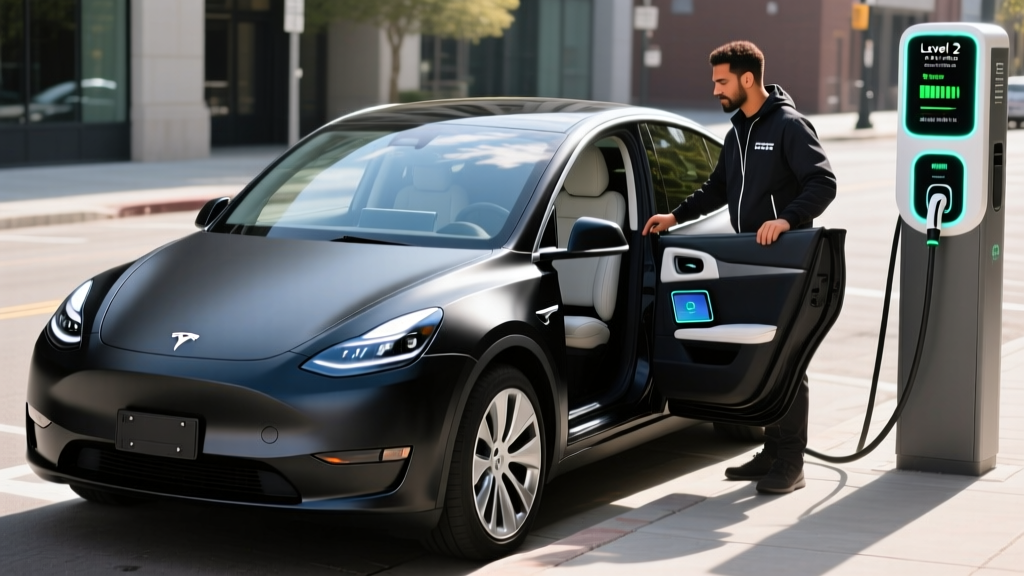
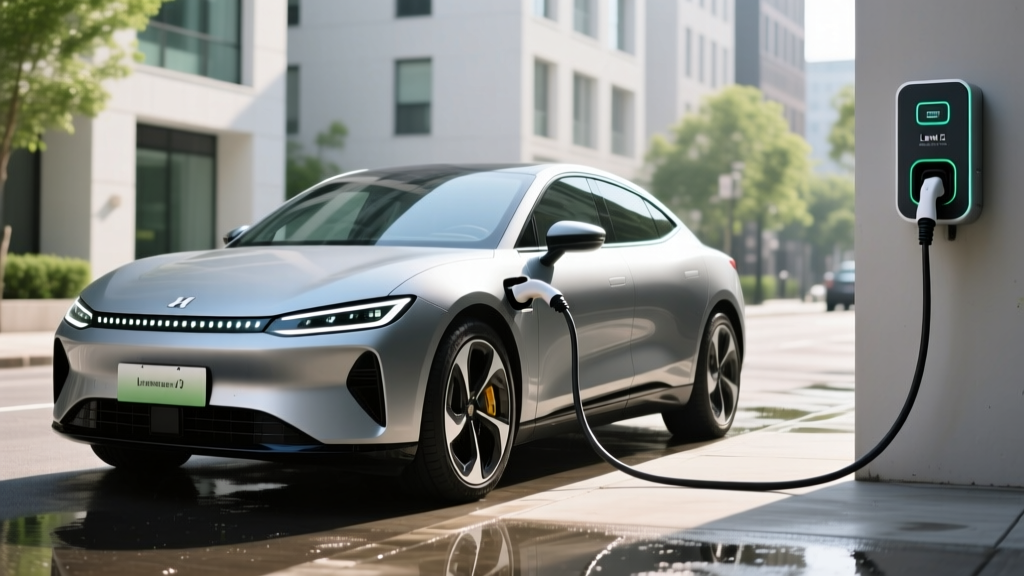
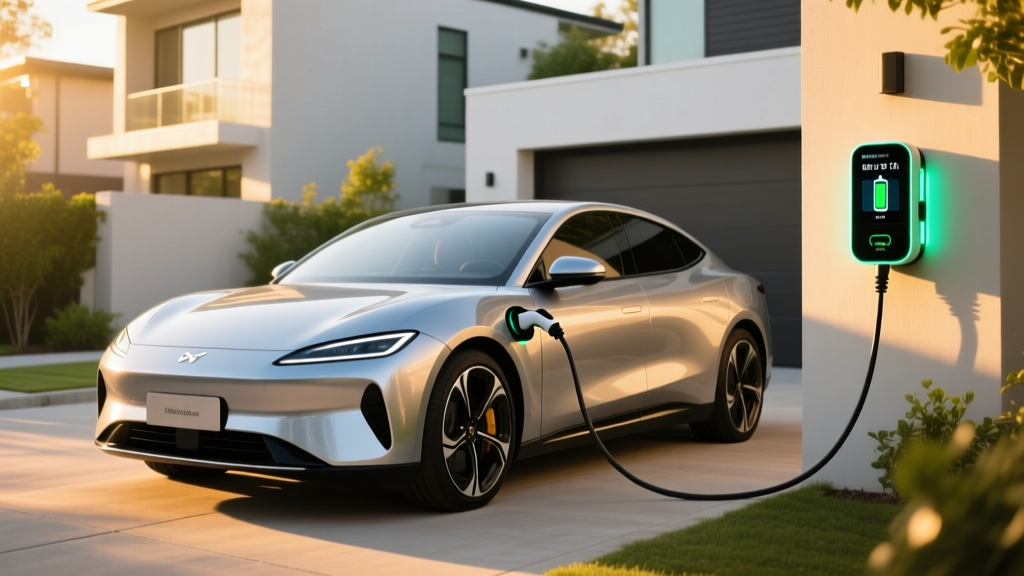
Most personal electric vehicle owners do 80%+ of their charging at home on a Level 2 (240V) circuit. Budget for:
| Item | Cost Range |
|---|---|
| Level 2 charger (hardware) | $300–$700 |
| Electrician (240V/50A circuit run) | $800–$2,500 |
| Panel upgrade (if needed, 200A) | $1,500–$4,000 |
| Permit & inspection | $50–$300 |
| Total (typical install) | $1,200–$3,500 |
If your electrical panel is already near capacity (common in older homes with 100A service), a panel upgrade adds significant cost. Have a licensed electrician assess your panel before committing to a vehicle.
Insurance Premiums
EV insurance typically runs 15–25% higher than comparable gas vehicles due to higher repair costs, specialized parts, and elevated purchase prices. A Model 3 might cost $1,800–$2,400/year to insure versus $1,400–$1,800 for a Civic. Always get quotes before purchasing.
Tires and Brakes
EVs are heavier and deliver instant torque, wearing tires 20–30% faster than gas equivalents. Budget $800–$1,400 for a set of EV-rated tires every 30,000–40,000 miles. The upside: regenerative braking means brake pads often last 80,000–100,000+ miles.
Range Reality: EPA Stickers vs What You'll Actually Get
The single biggest misconception about any personal electric vehicle is that the EPA range number equals what you'll experience. In practice:
- Highway driving (70–80 mph): Expect 80–88% of EPA range. An EPA 310-mile car delivers ~250–270 miles at sustained highway speed.
- Cold weather (below 30°F): Range drops 20–35% depending on whether the vehicle has a heat pump. A 310-mile EPA rating may yield only 200–240 real miles in a 15°F January commute.
- Combined real-world average: Most drivers see 85–95% of EPA in mixed suburban/highway conditions in temperate climates.
Efficiency data from fueleconomy.gov provides standardized comparisons, but your driving style, climate, and terrain all shift the actual number. If your daily round-trip commute is 60 miles and the nearest DC fast charger is 40 miles away, a 250-mile EPA rating provides ample buffer — even in winter.
Charging Speed and Infrastructure: What First-Time Buyers Must Know
Understanding charging requires separating kW (power — how fast energy flows) from kWh (energy — how much the battery holds). A 75 kWh battery charged at 150 kW doesn't fill in 30 minutes, because charge speed tapers as the battery approaches full.
| Charging Level | Power (kW) | Miles Added per Hour | Best For |
|---|---|---|---|
| Level 1 (120V outlet) | 1.2–1.8 kW | 3–5 mi/hr | Overnight top-ups, PHEVs |
| Level 2 (240V home/public) | 7.2–19.2 kW | 25–60 mi/hr | Daily home charging |
| DC Fast Charge | 50–350 kW | 150–1,000+ mi/hr (peak) | Road trips, quick stops |
The charge curve matters: A vehicle advertising "250 kW peak" may sustain that rate only between 10–40% state of charge, then taper to 100 kW by 60%, and drop below 50 kW past 80%. This is why manufacturers quote 10–80% charging times — typically 18–25 minutes on modern 800V platforms, or 30–40 minutes on older 400V architectures.
For public charging, the NACS (North American Charging Standard) connector is now dominant, with Ford, GM, Rivian, and most major brands adopting it. CCS1 chargers remain widely available but are being phased into secondary status. CHAdeMO is essentially legacy outside of the Nissan Leaf.
Common Misconceptions — Fact vs Fiction
| Myth | Fact |
|---|---|
| "EV batteries need replacing every 5 years" | Modern LFP and NMC batteries degrade roughly 1–2% per year. Federal warranty mandates 8 years/100,000 miles with at least 70% capacity retention. Most batteries outlast the vehicle. |
| "EVs are worse for the environment because of electricity generation" | Even on coal-heavy grids, BEVs produce 50–70% fewer lifecycle emissions than gas cars (per EPA/DOE analysis). On clean grids, the gap widens to 75%+. Source: EPA Green Vehicles. |
| "You can't take an EV on a road trip" | A 300-mile EPA range vehicle with 150+ kW DC charging adds ~200 miles in a 20-minute stop. Cross-country trips add 30–60 minutes per day vs. gas. |
| "All EVs qualify for the $7,500 tax credit" | Credit eligibility depends on MSRP caps, buyer AGI, and battery mineral sourcing. Many popular models qualify for partial or zero credit depending on the model year. Verify at fueleconomy.gov tax center. |
| "EVs are slow in the cold" | Performance remains strong; range drops. Preconditioning the battery while plugged in mitigates charging-speed loss in cold weather. |
Your Decision Framework: Should You Buy a Personal Electric Vehicle?
Choose a BEV if:
- You have a garage or driveway where a Level 2 charger can be installed
- Your daily driving is under 80 miles round-trip
- You want the lowest per-mile operating cost and minimal maintenance
- You qualify for federal or state incentives that narrow the upfront price gap
- You're willing to plan charging stops on road trips 2–3 times per year
Choose a PHEV (plug-in hybrid) if:
- You have limited charging access but want some electric-only driving (25–44 miles typical)
- You frequently drive 300+ miles in a day where charging infrastructure is sparse
- You want to reduce fuel consumption without range compromise
Choose a conventional hybrid if:
- You have zero charging access (apartment, street parking only)
- You want maximum fuel efficiency without any plug-in behavior change
- Your budget is under $30,000 and you need proven, low-risk ownership
Wait or reconsider if:
- You regularly tow 5,000+ lbs over long distances (towing cuts EV range 40–50%)
- You live in an area with no public DC fast chargers and cannot install home charging
- Your commute is under 10 miles daily — the fuel savings won't offset the purchase premium quickly
Frequently Asked Questions
How long does an EV battery actually last?
Data from fleet operators and manufacturer warranty claims shows most modern EV batteries retain 85–92% capacity after 100,000 miles. LFP (lithium iron phosphate) chemistries — used in standard-range Tesla Model 3/Y and some Ford and Hyundai models — offer longer cycle life (3,000+ cycles) but slightly lower energy density. NMC (nickel manganese cobalt) chemistries deliver more range per kWh but may degrade slightly faster. Federal law requires manufacturers to warrant the battery for at least 8 years/100,000 miles at 70%+ capacity.
Can I charge an EV from a regular wall outlet?
Yes, but slowly. A standard 120V outlet delivers roughly 1.4 kW, adding 3–5 miles of range per hour. For a PHEV with 30 miles of electric range, overnight Level 1 charging works fine. For a BEV with a 75 kWh battery, a full Level 1 charge takes 50+ hours — impractical as a primary strategy. Most BEV owners install a 240V Level 2 circuit.
What happens if I run out of charge on the road?
The same thing that happens when you run out of gas: you stop. However, EVs provide extensive range warnings, and navigation systems (Tesla, Hyundai, Ford) automatically route you through chargers. Roadside assistance services and some tow companies now offer mobile charging or flatbed towing to the nearest station. The key is the same as with gas: don't ignore the warning.
Do EVs cost more to insure?
Generally yes — 15–25% more than a comparable gas vehicle. Higher purchase prices, specialized repair requirements, and expensive replacement parts (especially battery packs) drive premiums up. However, some insurers now offer EV-specific discounts. Always compare quotes from at least three providers before purchasing.
Is a used EV a good idea?
A used EV can be excellent value, particularly 2–4 year-old models that have already absorbed steep depreciation. The used-EV tax credit (§25E) offers up to $4,000 on vehicles priced at $25,000 or less. Check the battery's State of Health (SoH) — most dealers can pull a diagnostic report showing remaining capacity percentage. Avoid vehicles with SoH below 85% unless priced accordingly.