The Quick Answer: Do Electric Vehicles Need Fewer Parts?
Yes — but with major caveats. Battery-electric vehicles eliminate roughly 20+ components found in internal combustion engines (no oil filters, spark plugs, timing belts, catalytic converters, or exhaust systems). According to Consumer Reports, EV owners spend approximately 50% less on maintenance over the vehicle's lifetime compared to gas-car owners. However, when EV-specific parts do fail — tires, suspension, thermal management components, or traction battery modules — the repair bills can be steep. A first-time EV buyer should budget $300–$500/year for routine maintenance versus $900–$1,200/year for a comparable gas vehicle, but set aside a contingency for tire replacement (EVs wear tires 20–30% faster due to instant torque and heavier curb weight).
What "Parts World" Means for Electric Vehicles
The aftermarket parts ecosystem for EVs looks fundamentally different from the gas-car world you may know. Walk into any auto parts store and you'll find aisles of oil filters, fuel pumps, and ignition coils — none of which an EV needs. Instead, the EV parts landscape centers on a smaller but more expensive set of components:
- Tires: EV-specific low-rolling-resistance tires (e.g., Michelin Pilot Sport EV, Hankook iON) cost $200–$350 per tire and wear faster under heavy regen and torque.
- Cabin air filters: HEPA-grade filters (Tesla's HEPA, Hyundai's bio-filter) run $30–$80 and are among the most frequently replaced EV consumables.
- Brake components: Thanks to regenerative braking, EV brake pads often last 100,000+ miles. However, brake calipers can seize from underuse, requiring $200–$400 per corner if neglected.
- 12V auxiliary battery: Yes, EVs still have a 12V battery for accessories and computers. These fail every 3–5 years at $150–$300 for an AGM or lithium replacement.
- Thermal management parts: Coolant pumps, heat pump compressors, and battery cooling plates are EV-specific and can cost $800–$2,500 to replace out of warranty.
- Reduction gear fluid: Most EVs use a single-speed reduction gear requiring fluid changes every 60,000–100,000 miles ($100–$200 service).
- Wiper blades, washer fluid, suspension bushings, wheel bearings: Shared with gas cars; identical replacement intervals and costs.
The key takeaway: the EV parts catalog is shorter but pricier per item. You'll visit the shop less often, but some visits will sting more than a gas-car equivalent.
EV vs Gas Car: 5-Year Maintenance & Parts Cost Comparison
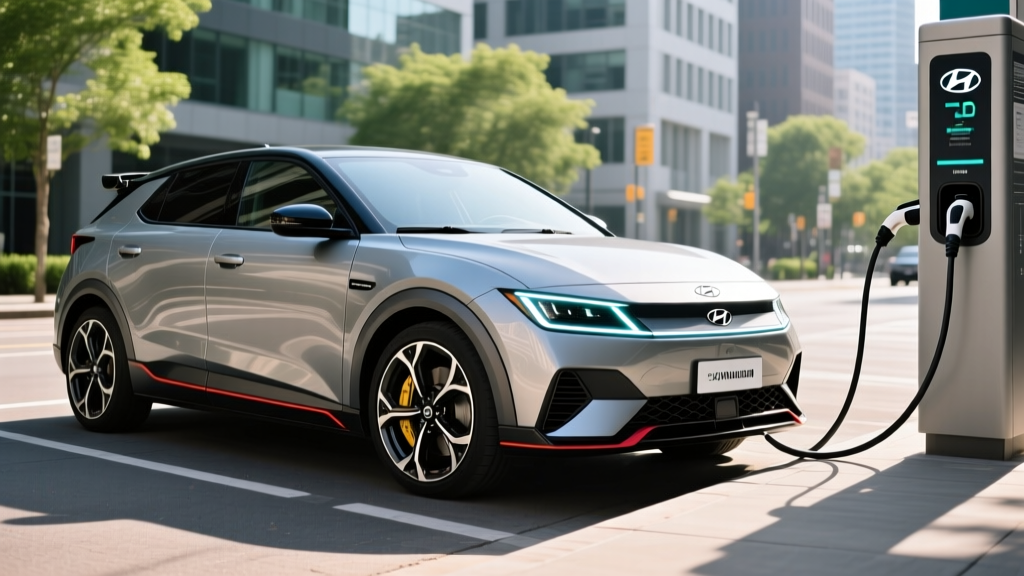
Let's put real numbers to the parts-world difference. The table below compares a representative 2026 EV (Hyundai Ioniq 6 SE, $38,650 MSRP, 342-mile EPA range) against a comparable gas midsize sedan (Toyota Camry LE, $29,495 MSRP, 32 MPG combined) over 5 years and 75,000 miles.
| Category | 2026 Hyundai Ioniq 6 (EV) | 2026 Toyota Camry LE (Gas) |
|---|---|---|
| Oil changes | $0 | $600 (10 changes × $60) |
| Engine air filter | $0 (no intake filter) | $100 (2–3 replacements) |
| Cabin air filter | $160 (4 replacements × $40) | $160 (4 replacements × $40) |
| Brake pads (front) | $0 (regen handles ~90% of braking) | $350 (1 replacement at ~45k mi) |
| Transmission fluid | $150 (reduction gear fluid at 60k) | $200 (ATF drain-and-fill at 60k) |
| Coolant service | $200 (battery + motor coolant at 60k) | $150 (engine coolant at 60k) |
| Spark plugs | $0 | $300 (at 60k mi) |
| Tires (2 sets) | $1,800 (EV-specific, faster wear) | $1,200 (standard touring tires) |
| 12V battery | $250 (1 replacement at ~yr 4) | $200 (1 replacement at ~yr 4) |
| Wiper blades & misc. | $200 | $200 |
| Total 5-Year Maintenance | $2,760 | $3,460 |
| Per-Mile Maintenance Cost | $0.037/mi | $0.046/mi |
Net 5-year maintenance savings with the EV: ~$700. That's meaningful but not transformative on its own. The real ownership-cost gap comes from fuel/energy savings, which we address below.
Energy & Fuel Costs: Where the Real Savings Live
Maintenance is a sideshow compared to what you spend on electrons versus gasoline. Here's the comparison at 15,000 miles/year (75,000 over 5 years):
| Metric | Ioniq 6 (EV) | Camry LE (Gas) |
|---|---|---|
| EPA efficiency | 140 MPGe / 24 kWh/100mi | 32 MPG combined |
| Energy cost (home charging @ $0.16/kWh) | $0.038/mi | — |
| Energy cost (gas @ $3.40/gal) | — | $0.106/mi |
| Annual fuel/energy (15k mi) | $576 | $1,594 |
| 5-Year Fuel/Energy Total | $2,880 | $7,969 |
5-year energy savings: $5,089. Combined with maintenance savings, the Ioniq 6 saves roughly $5,789 over 5 years in operating costs — enough to largely offset its higher purchase price. Data sourced from fueleconomy.gov.
Important caveat: If you rely exclusively on DC fast charging at public stations (averaging $0.35–$0.55/kWh), your per-mile cost rises to $0.084–$0.132/mi, narrowing the gap significantly. Home charging access is the single biggest variable in EV ownership economics.
What First-Time EV Buyers Should Know About Parts & Repairs
If you're coming from a gas car, the parts-world shift requires some mental recalibration. Here are the non-obvious realities:
Your Tires Are the New Oil Changes
EVs are 500–1,000 lbs heavier than equivalent gas cars, and instant electric torque accelerates tread wear — especially on the drive axle. Expect to replace tires every 25,000–35,000 miles instead of 40,000–60,000. Budget $1,000–$1,400 per set for EV-optimized rubber. Rotating every 5,000–7,500 miles is non-negotiable.
The Battery Is Warranted, Not Free to Replace
Federal law mandates that EV traction batteries carry a minimum 8-year/100,000-mile warranty (10 years/150,000 miles in CARB states like California). Most manufacturers warrant capacity retention above 70%. Out-of-warranty battery replacement remains expensive: $8,000–$22,000 depending on pack size and chemistry. However, data from Recurrent Auto shows that most modern NMC and LFP packs retain 90%+ capacity at 100,000 miles, making catastrophic failure rare.
Body Repair Costs More
EV-specific body panels, aluminum structures, and embedded sensor arrays (cameras, radar, ultrasonic) drive collision repair costs 20–40% higher than gas equivalents. This contributes to EV insurance premiums running 15–25% higher on average. Get insurance quotes before buying.
Not Every Mechanic Can Touch Your EV
Independent shops often lack high-voltage training and diagnostic tools. For anything involving the traction battery, motor, or power electronics, you'll likely need a dealer or EV-specialist shop. Routine work (tires, brakes, cabin filters, suspension) can be done anywhere.
Common EV Parts Myths — Fact-Checked
| Myth | Fact |
|---|---|
| "EV batteries need replacing every 5 years like a laptop." | Modern EV packs degrade ~1–2% per year. Most retain 85–92% capacity at 100k miles. Full replacement before 150k+ miles is uncommon. |
| "EVs never need brake work." | Regen handles most deceleration, but calipers can corrode/seize from underuse. Periodic brake inspections and occasional pad/rotor service are still required. |
| "You'll save thousands on maintenance every year." | Annual savings are typically $100–$200 on maintenance. The big savings are in fuel ($800–$1,200/year with home charging). |
| "EV parts are impossible to find." | Consumables (tires, wipers, filters, suspension) are widely available. EV-specific high-voltage parts are mostly dealer-only during the warranty period. |
| "Cold weather destroys EV batteries permanently." | Cold reduces range temporarily (15–30% loss below 20°F) but does not cause permanent degradation. Preconditioning and garage parking mitigate this. |
The Total Cost of Ownership Picture
Let's combine purchase price, federal incentives, energy, maintenance, and insurance into a 5-year TCO snapshot:
| Category | Ioniq 6 SE (EV) | Camry LE (Gas) |
|---|---|---|
| MSRP | $38,650 | $29,495 |
| Federal §30D tax credit (if eligible) | −$7,500* | $0 |
| Effective purchase price | $31,150 | $29,495 |
| 5-year energy/fuel | $2,880 | $7,969 |
| 5-year maintenance | $2,760 | $3,460 |
| 5-year insurance (est.) | $9,500 | $7,600 |
| 5-Year Total Cost | $46,290 | $48,524 |
*The §30D credit is subject to IRS eligibility rules including buyer income caps ($150k single / $300k joint), MSRP limits ($55k cars / $80k SUVs/trucks), and battery critical-mineral/component sourcing requirements. The Ioniq 6's credit eligibility varies by model year and battery sourcing — verify current status at the IRS link before purchasing. Point-of-sale transfer is available at participating dealers.
Even with higher insurance, the EV comes out ~$2,200 ahead over 5 years in this scenario — and that gap widens if gas prices rise or if you add solar-powered home charging.
Your Decision Framework: Is the EV Parts World Right for You?
Choose an EV if:
- You have access to home charging (Level 2, 240V) — this is the single biggest cost and convenience factor.
- Your daily commute is under 80 miles round-trip (covers 90%+ of US drivers without ever needing DC fast charging).
- You plan to keep the car 5+ years, capturing the full maintenance and energy savings.
- You live in a moderate or warm climate (cold-weather range loss is real but manageable with preconditioning and a heat pump).
- You qualify for the §30D credit or your state offers additional rebates, narrowing the upfront cost gap.
Choose a hybrid (HEV/PHEV) instead if:
- You lack reliable home or workplace charging access.
- You frequently drive 300+ miles between stops in rural areas with sparse DC fast-charging infrastructure.
- You want lower upfront cost with no range compromise (a Toyota RAV4 Hybrid at $33,425 and 39 MPG combined is a strong middle ground).
- You live in extreme cold (below 0°F regularly), where EV range loss of 25–40% makes a PHEV's gas backup reassuring.
Stick with gas for now if:
- Your annual mileage is below 6,000 miles — the fuel savings won't justify the EV premium within a reasonable payback period.
- You tow heavy loads regularly (trailers, boats) — EV range drops 40–50% under towing, and few public chargers accommodate trailers.
Frequently Asked Questions
Are EV parts more expensive than gas car parts?
Consumable parts (tires, wipers, cabin filters) cost roughly the same. EV-specific components — traction battery modules, power inverters, onboard chargers, heat pump compressors — are significantly more expensive ($1,000–$20,000+) but rarely fail during the warranty period. The net result: fewer parts replaced, but higher cost when they are.
Can I get EV parts at a regular auto parts store?
For consumables — yes. Tires, brake pads, cabin filters, wiper blades, washer fluid, and suspension components are available at AutoZone, Advance Auto, and similar retailers. High-voltage components (battery, motor, inverter) are dealer-only or specialist-only, and most are covered under the 8-year/100,000-mile federal warranty anyway.
How often do EV batteries actually need replacement?
Rarely before 150,000 miles. Data aggregated by Recurrent Auto across 15,000+ EVs shows median degradation of ~8–12% at 100,000 miles for liquid-cooled NMC packs, and even less for LFP chemistry. Outright battery failure requiring full replacement is statistically uncommon in modern EVs. If it does happen within the warranty period, the manufacturer covers it.
Do EVs need oil changes?
No. Battery-electric vehicles have no engine oil, no oil filter, and no combustion-related fluids. The only fluid services are coolant (for battery thermal management), reduction gear fluid, brake fluid, and windshield washer. This eliminates the most frequent and annoying gas-car maintenance task entirely.
What's the most expensive EV repair out of warranty?
Full traction battery replacement is the worst-case scenario at $8,000–$22,000 depending on the vehicle. However, individual battery modules can sometimes be replaced for $1,500–$4,000 if only a few cells have degraded. The second most expensive potential repair is the drive motor or power electronics inverter at $3,000–$6,000. These failures are uncommon but underscore the value of extended warranties for buyers who plan to keep their EV past 100,000 miles.