Quick Answer: Are PACCAR Electric Trucks Worth It in 2026?
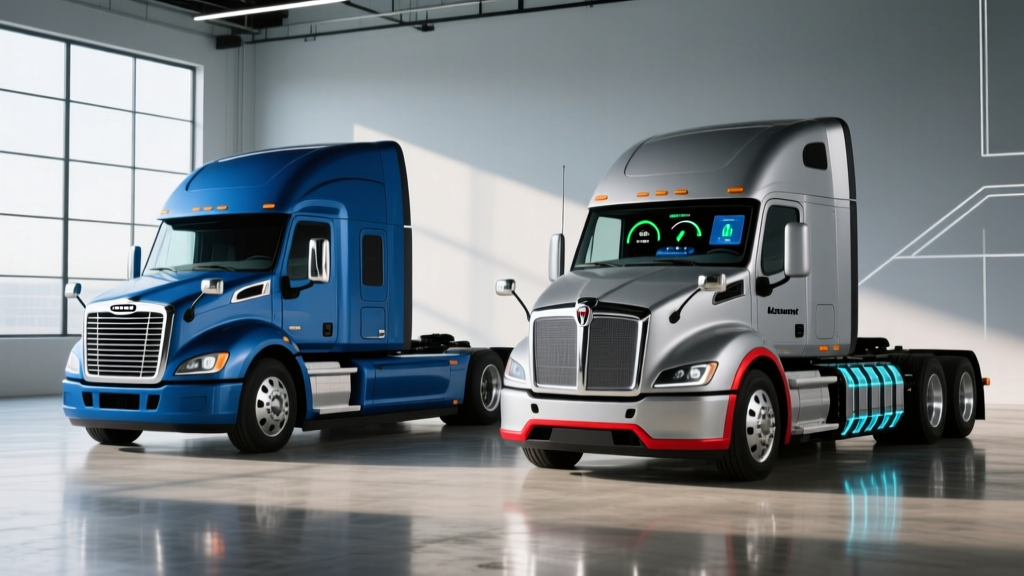
PACCAR's electric truck lineup — sold through its Peterbilt and Kenworth brands — currently includes Class 8 day-cab models like the Peterbilt 579EV and Kenworth T680E (regional haul), plus the Peterbilt 520EV and Kenworth T880E (refuse/vocational). These battery-electric trucks deliver 150–230 miles of real-world range depending on payload and duty cycle, use CCS1 DC fast charging up to 150–350 kW, and carry base pricing roughly between $350,000 and $450,000 before incentives. They are best suited for fleets with predictable, depot-based routes under 200 miles daily — regional drayage, refuse collection, and local delivery — where diesel fuel and maintenance savings can offset the higher upfront cost over 5–7 years. They are not a fit for long-haul OTR (over-the-road) operations exceeding 300+ miles between stops without mid-route charging infrastructure.
What PACCAR Electric Trucks Are Available in 2026?
PACCAR does not sell trucks under its own brand name. Instead, it manufactures and markets commercial vehicles through three subsidiaries: Peterbilt, Kenworth, and DAF (primarily European). In the North American market, the following battery-electric models are in production and available for order as of the 2026 model year:
| Model | Class | Application | Battery Capacity | Est. Range | Peak DC Charge | Est. Base Price |
|---|---|---|---|---|---|---|
| Peterbilt 579EV | Class 8 | Regional Haul / Drayage | ~396 kWh (NMC) | ~200 mi (EPA est.) | Up to 350 kW (CCS1) | ~$390,000 |
| Kenworth T680E | Class 8 | Regional Haul / Drayage | ~396 kWh (NMC) | ~200 mi (EPA est.) | Up to 350 kW (CCS1) | ~$400,000 |
| Peterbilt 520EV | Class 8 | Refuse / Vocational | ~396 kWh (NMC) | ~150 mi (duty-cycle dependent) | Up to 150 kW (CCS1) | ~$420,000 |
| Kenworth T880E | Class 8 | Vocational / Heavy Haul | ~396 kWh (NMC) | ~150 mi (duty-cycle dependent) | Up to 150 kW (CCS1) | ~$430,000 |
All models use lithium-ion NMC (nickel manganese cobalt) battery packs. PACCAR has not publicly adopted LFP chemistry for its heavy-duty lineup as of early 2026, though industry-wide shifts toward LFP for cost and cycle-life benefits continue. Battery warranties typically cover 5 years or 300,000 miles with a capacity retention threshold around 70–80%, depending on the specific model and contract terms.
Note: Pricing for Class 8 electric trucks is rarely published as a flat MSRP. Figures above reflect industry estimates and fleet-reporting sources. Actual transaction prices vary by spec, dealer, and volume order. Always request a formal quote from an authorized Peterbilt or Kenworth dealer.
PACCAR Electric Trucks vs. Diesel: Real Cost Comparison
The purchase-price premium for a PACCAR electric truck is significant — typically $200,000 to $250,000 more than a comparable diesel Class 8 tractor. But the total cost of ownership (TCO) equation shifts when you factor in fuel, maintenance, and available incentives over a 5–7 year operating window.
| Cost Factor | Kenworth T680E (Electric) | Kenworth T680 (Diesel) |
|---|---|---|
| Base Vehicle Price (est.) | $400,000 | $165,000 |
| Federal HVIP / IRA Credit (if eligible) | –$40,000 to –$100,000* | $0 |
| Fuel / Energy Cost per Mile | $0.14–$0.22 (electricity at $0.12–$0.18/kWh) | $0.55–$0.75 (diesel at ~$4.20/gal, 6.5 MPG) |
| Annual Fuel/Energy (60,000 mi/yr) | $8,400–$13,200 | $33,000–$45,000 |
| Annual Maintenance (est.) | $3,500–$5,000 | $8,000–$12,000 |
| 5-Year Energy/Fuel Total | $42,000–$66,000 | $165,000–$225,000 |
| 5-Year Maintenance Total | $17,500–$25,000 | $40,000–$60,000 |
| Estimated 5-Year TCO (vehicle + energy + maint.) | $359,500–$491,000 | $370,000–$450,000 |
*Incentive note: The federal IRC §30D and §45W clean vehicle credits have specific weight, sourcing, and entity-type rules for commercial vehicles. Heavy-duty trucks may qualify under the §45W Commercial Clean Vehicle Credit, which provides up to $40,000 for vehicles over 14,000 lbs GVWR (or 30% of cost, whichever is lower). Additionally, state-level programs like California's HVIP (Hybrid and Zero-Emission Truck and Bus Voucher Incentive Project) can stack on top, sometimes covering $60,000–$120,000 per unit. Eligibility depends on fleet size, domicile, and battery sourcing — always verify with a tax professional and your state's incentive administrator.
The takeaway: on a pure TCO basis, PACCAR electric trucks can break even or beat diesel within 5–7 years for high-utilization, depot-return routes — but only when incentives are captured and electricity costs remain below roughly $0.18/kWh. Fleets paying commercial electricity rates above $0.25/kWh or lacking access to depot charging will see a much longer payback.
Charging Infrastructure: What Fleet Buyers Need to Plan For
Unlike consumer EVs that can rely on public fast-charging networks, PACCAR electric trucks almost universally require depot-based charging infrastructure. Here's what that involves:
Charging Speeds and Times
| Charging Method | Power (kW) | Time to Full (396 kWh pack) | Use Case |
|---|---|---|---|
| Level 2 AC (J1772 / CCS1 AC) | 19.2 kW | ~20+ hours | Not practical for Class 8 |
| DC Fast (CCS1) — Standard | 150 kW | ~2.5 hours (10–100%) | Overnight depot top-off |
| DC Fast (CCS1) — High Power | 350 kW (peak) | ~1.2 hours (10–80%); taper above 80% | Opportunity charging / turnaround |
Critical detail on charge curves: The 350 kW peak rate is only sustained at low states of charge (roughly 10–40% SoC). Above 80%, the charge rate tapers significantly — often below 50 kW — to protect battery health. This means a "10–80% in ~60 minutes" claim does not translate to a full 0–100% charge in proportionally more time. Plan depot schedules around 80% daily charge targets unless full packs are operationally necessary.
Depot Charging Installation Costs
Installing commercial DC fast chargers at a fleet depot is a capital-intensive project. Based on industry data and utility interconnection filings:
- Single 150 kW DC charger (hardware + install): $120,000–$200,000
- Utility service upgrade (transformer, switchgear): $50,000–$500,000+ depending on existing capacity
- Permitting and engineering: $15,000–$40,000
- Software/fleet management integration: $5,000–$20,000/year
For a 10-truck fleet, expect total charging infrastructure investment of $1.5M–$3.5M before utility rebates. Many utilities offer make-ready programs that cover 50–100% of the infrastructure cost on the utility side of the meter — contact your local utility's EV fleet program early in the planning process.
Real-World Range: What the EPA Sticker Doesn't Tell You
PACCAR publishes estimated ranges for its electric trucks, but Class 8 range is far more sensitive to operating conditions than a passenger car. Here's how real-world factors affect a Peterbilt 579EV or Kenworth T680E with a ~396 kWh pack:
EPA-Estimated Range: ~200 miles (unloaded/light payload, mixed driving)
Real-World Expectations:
- Loaded (80,000 lbs GCW), flat terrain, 55 mph: ~150–175 miles
- Loaded, highway speeds 65+ mph: ~120–150 miles
- Cold weather (below 32°F), loaded: ~100–130 miles (30–40% range loss)
- Refuse / stop-and-go with PTO: ~100–140 miles (varies heavily by route density)
Regenerative braking helps significantly in stop-and-go vocational applications (refuse, local delivery), where energy recovery can extend effective range by 10–20% compared to steady-state highway driving. However, cold weather remains a major constraint: NMC batteries lose capacity and charge acceptance drops in freezing temperatures. Fleets operating in northern climates should spec battery thermal management systems and plan for 30–40% winter range derating.
Common Misconceptions About PACCAR Electric Trucks
| Myth | Fact |
|---|---|
| "Electric trucks can't handle heavy loads." | PACCAR's Class 8 EVs are rated for up to 80,000 lbs GCW (gross combination weight). Torque delivery is instant and often superior to diesel at low RPMs, which benefits gradeability and start-stop performance. |
| "You can fast-charge to 100% in under an hour." | Peak 350 kW rates apply only at low SoC. A 10–80% charge takes ~50–70 minutes; the final 20% tapers dramatically. Full charges take 1.5–2.5 hours depending on charger rating. |
| "Federal tax credits cover $40,000 automatically." | The §45W commercial credit has battery sourcing, MSRP-equivalent, and entity-structure requirements. Tax-exempt fleets may receive direct-pay, but eligibility varies. Always confirm with a tax advisor. |
| "Maintenance is zero." | EVs eliminate oil changes, DPF filters, and exhaust aftertreatment — but still require brake, suspension, tire, cooling system, and HVAC maintenance. Budget 40–60% of diesel maintenance costs, not zero. |
| "Public truck charging is widely available." | Public DC fast charging for Class 8 trucks is extremely limited as of 2026. WattEV, TeraWatt Infrastructure, and a few pilot corridors exist, but fleet operations should assume depot charging is required. |
Decision Framework: Should Your Fleet Go Electric with PACCAR?
Choose a PACCAR electric truck (Peterbilt 579EV / Kenworth T680E) if:
- Your daily routes are under 150–180 miles round-trip with depot return
- You operate in a state with strong HVIP or similar incentive programs (CA, NY, NJ, CO, OR)
- You can install depot charging (own or long-lease your yard) and your utility supports make-ready investment
- You face regulatory pressure (e.g., California's Advanced Clean Trucks rule) requiring zero-emission fleet transitions
- Your fleet runs high annual miles (50,000+) where per-mile energy savings compound quickly
Stick with diesel (or evaluate hydrogen fuel-cell options) if:
- Your routes regularly exceed 250+ miles without return-to-base
- You operate in extreme cold climates without heated depot storage
- You lack access to depot charging and public truck charging is unavailable on your corridors
- Your annual mileage is below 30,000 miles — the fuel savings won't offset the purchase premium within a reasonable payback window
- Your operation requires heavy PTO usage (concrete mixers, heavy wreckers) where battery drain from auxiliary systems significantly cuts range
First-Time EV Fleet Buyer Checklist
If this is your fleet's first electric truck purchase, here's what you need to address before signing a PO:
- Route analysis: GPS-log your trucks for 30+ days. Identify max daily miles, elevation change, payload weights, and idle/PTO time. Compare against the 150–180 mile real-world range envelope.
- Utility engagement: Contact your utility's commercial EV team at least 12–18 months before planned charger installation. Interconnection studies and transformer upgrades can take 12+ months.
- Incentive stacking: Layer federal §45W, state HVIP/voucher programs, and utility make-ready rebates. Some California fleets have covered 50–70% of total project cost (truck + charger) through stacked incentives.
- Charger selection: For overnight depot charging, 150 kW DC chargers are typically sufficient and more cost-effective than 350 kW units. Spec 350 kW only if you need mid-day opportunity charging.
- Driver training: Regenerative braking, one-pedal driving, and range-maximization techniques require training. Budget 1–2 days per driver.
- Telematics integration: Ensure your fleet management software (Geotab, Samsara, etc.) supports EV-specific data: SoC, energy consumption per route, charger utilization.
Frequently Asked Questions
Does PACCAR make its own electric motors and batteries?
PACCAR sources electric powertrain components from established suppliers. The company has announced in-house electric motor and battery pack assembly plans at its facilities, but as of 2026, key components (battery cells, in some cases complete e-axles) are sourced from partners including Cummins (Meritor), Dana, and major cell manufacturers. PACCAR's strategy mirrors its diesel approach: integrating best-in-class components rather than vertically manufacturing everything.
What is the battery replacement cost for a PACCAR electric truck?
Full battery pack replacement for a Class 8 truck with a ~396 kWh NMC pack is estimated at $120,000–$180,000 as of 2026, though prices are declining as cell costs fall. Most fleet operators will not need a full replacement within a first-owner lifecycle (5–7 years / 300,000–500,000 miles) if the battery is properly managed. The warranty covers premature degradation below the contracted retention threshold.
Can PACCAR electric trucks use Tesla Superchargers or public networks?
No. PACCAR electric trucks use the CCS1 (Combined Charging System) connector, which is the standard for North American commercial EVs. Tesla's Supercharger network uses the NACS connector and is designed for light-duty vehicles — the physical connector, cable weight, and stall layout are not compatible with Class 8 trucks. Public truck-specific charging is emerging (WattEV, TeraWatt, Greenlane) but remains limited to specific corridors, primarily in California.
How does cold weather affect PACCAR electric truck range?
NMC lithium-ion batteries experience reduced capacity and slower charge acceptance in cold temperatures. At 20°F, expect 25–40% range reduction compared to mild-weather performance. Battery thermal preconditioning systems (standard on most PACCAR EV models) mitigate this somewhat by warming the pack during charging and pre-departure, but energy used for cab heating and pack warming further reduces available range. Fleets in Minnesota, Montana, or New England should plan routes around a 100–130 mile winter envelope.
Are PACCAR electric trucks eligible for the federal $7,500 EV tax credit?
No — the $7,500 §30D credit applies to light-duty vehicles under 14,000 lbs GVWR. Class 8 trucks (80,000 lbs GCW) fall under the §45W Commercial Clean Vehicle Credit, which provides up to $40,000 (or 30% of the vehicle's incremental cost over a comparable ICE vehicle, whichever is less). Tax-exempt entities (municipalities, nonprofits) may be eligible for direct pay under the Inflation Reduction Act, receiving the credit as a refundable payment. Confirm eligibility with a qualified tax professional and reference IRS guidance on §45W.