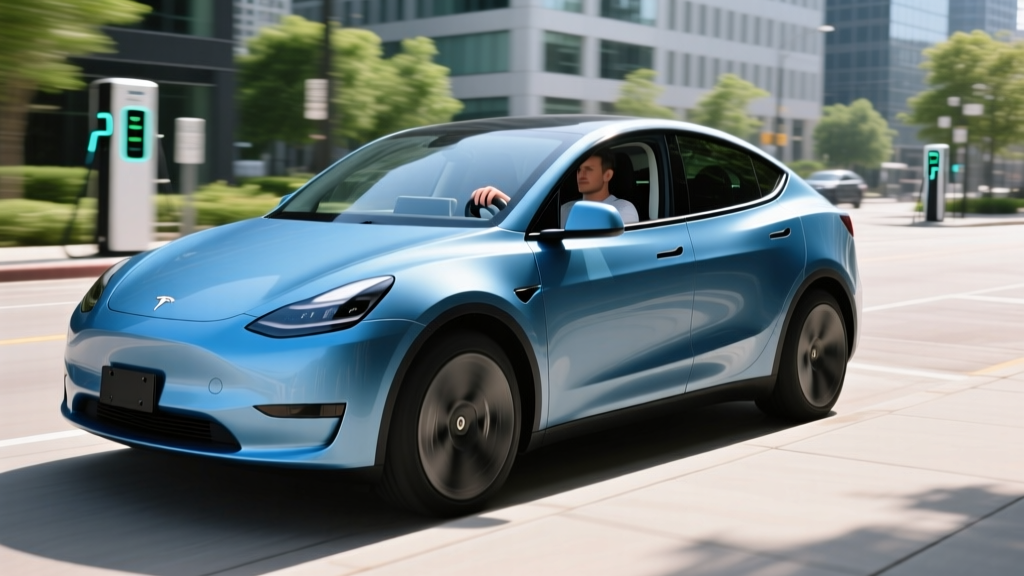
For many first-time EV buyers, the concept of one pedal driving in a Tesla is the single biggest adjustment — and the biggest delight — of ownership. Tesla's regenerative braking system is aggressive enough that, once mastered, you can decelerate to a complete stop without ever touching the brake pedal in normal traffic. But how does it actually work across the 2025 Tesla Model 3 lineup, and what does it mean for real-world efficiency and range? This deep-dive review covers the Model 3's specs, charging, one-pedal behavior, and whether it remains the default EV sedan to beat in 2025.
Quick Verdict: The One-Pedal Benchmark
The 2025 Tesla Model 3 (Highland refresh) remains the most refined implementation of one pedal driving among mass-market EVs. Its single-motor RWD and Long Range AWD trims pair strong regen with class-leading efficiency, while the Performance variant trades a bit of efficiency for 0-60 thrills. If you prioritize range, low running costs, and a true one-pedal experience, the Long Range AWD at $42,490 (before incentives) is the sweet spot.
| Spec | RWD (Base) | Long Range AWD | Performance AWD |
|---|---|---|---|
| EPA Range | 272 mi | 363 mi | 315 mi |
| Battery (usable, chemistry) | ~60 kWh, LFP | ~75 kWh, NMC | ~75 kWh, NMC |
| Drivetrain | RWD | Dual-Motor AWD | Dual-Motor AWD |
| Horsepower | 271 hp | 346 hp | 510 hp |
| 0-60 mph | 5.8 sec | 4.2 sec | 2.9 sec |
| Peak DC Fast Charge | 170 kW | 250 kW | 250 kW |
| 10-80% DC Time | ~25 min | ~25 min | ~25 min |
| Level 2 Home Rate | 11.5 kW (~44 mi/hr) | 11.5 kW (~44 mi/hr) | 11.5 kW (~44 mi/hr) |
| EPA Efficiency | 132 MPGe / 25 kWh/100mi | 134 MPGe / 25 kWh/100mi | 118 MPGe / 29 kWh/100mi |
| Base MSRP | $38,990 | $42,490 | $52,990 |
| Cargo (trunk + frunk) | 23 cu ft + 3.1 cu ft | 23 cu ft + 3.1 cu ft | 23 cu ft + 3.1 cu ft |
| Battery Warranty | 8 yr / 100,000 mi | 8 yr / 120,000 mi | 8 yr / 120,000 mi |
One Pedal Driving in a Tesla: How Regen Actually Works
Tesla's regenerative braking system converts the kinetic energy of a moving car back into electrical energy, feeding it into the battery whenever you lift off the accelerator. Unlike some competitors (Hyundai, BMW, Kia) that let you adjust regen strength or coast freely, Tesla removed user-selectable regen levels from the Model 3 starting with the 2021 software update. The result: a fixed, strong regen profile that is always on.
What this means in practice: Lifting your right foot triggers roughly 0.2g of deceleration immediately — comparable to moderate brake-pedal pressure in a gas car. In stop-and-go traffic at 25-45 mph, most drivers can modulate speed entirely with the accelerator, only reaching for the friction brakes in emergencies or for the final inch of a stop. Tesla's software holds the car stationary once stopped, so you don't need to keep your foot planted.
Real-World Range: Beyond the EPA Sticker
One pedal driving in a Tesla meaningfully improves city efficiency. EPA data from fueleconomy.gov shows the Model 3 Long Range achieves 134 MPGe combined, with city efficiency often beating highway figures — a direct result of regen recapturing energy in stop-and-go conditions that gas cars waste as brake heat.
Charging Speed: DC Fast and Home Level 2
The 2025 Model 3 Long Range and Performance trims support a peak DC fast-charge rate of 250 kW on V3 Superchargers, while the RWD (with its smaller LFP pack) peaks at 170 kW. Remember: kW is the charge rate (power), kWh is the battery capacity (energy). A 250 kW peak does not mean the car sustains that rate — the charge curve tapers significantly above 60% State of Charge (SoC) to protect the battery.
| Charging Level | Power / Rate | Miles Added Per Hour |
|---|---|---|
| Level 1 (120V household) | ~1.4 kW | ~5 mi/hr |
| Level 2 (240V, 48A home charger) | 11.5 kW | ~44 mi/hr |
| DC Fast (V3 Supercharger, peak) | 250 kW (LR/Perf) / 170 kW (RWD) | ~170-200 mi in 15 min (LR) |
| 10-80% DC Fast Time | ~25 min (LR/Perf) | ~25 min (RWD, smaller pack) |
Preconditioning matters. If you navigate to a Supercharger in the Tesla's built-in navigation, the car preheats the battery en route, allowing it to hit peak charge rates immediately upon arrival. Without preconditioning — for example, at a non-Tesla CCS station using the included adapter — you may see slower initial ramp-up, especially in cold weather.
Interior, Tech, and the Highland Refresh Upgrades
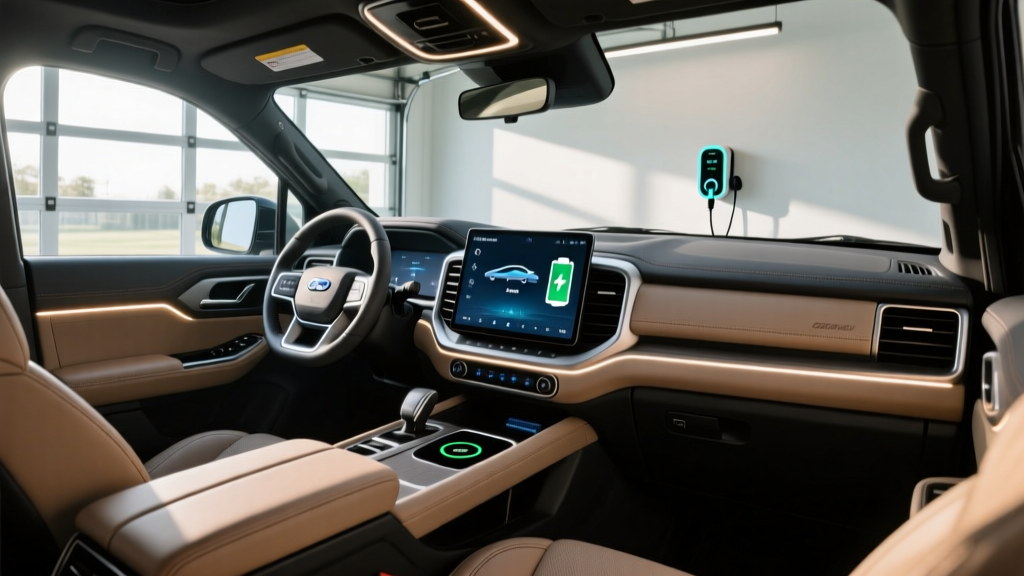
The 2025 Model 3 carries over the "Highland" redesign introduced for the 2024 model year. Notable improvements over the pre-2024 car include:
- Ventilated front seats (Long Range and Performance)
- Ambient interior lighting and redesigned dash materials
- Rear 8-inch touchscreen for rear-seat passengers
- Significantly improved cabin quietness (new acoustic glass, better sealing)
- Turn signal buttons on the steering wheel (replacing the stalks, controversial among owners)
- Standard front and rear cameras with a cleaner surround-view
Passenger space is competitive but not class-leading. Front legroom measures 42.7 inches; rear legroom is 35.2 inches — adequate for adults on shorter trips but tighter than a Hyundai Ioniq 6 or BMW i4. Cargo volume totals 26.1 cubic feet including the front trunk (frunk), enough for two large suitcases and a week of groceries.
Infotainment runs on Tesla's proprietary OS with a 15.4-inch central touchscreen. There is no Apple CarPlay or Android Auto — a dealbreaker for some buyers. Navigation, Spotify, Netflix (while parked), and a robust app ecosystem are built in. Over-the-air (OTA) updates continue to add features post-purchase.
Autopilot and FSD: Not Self-Driving
For daily commuting, basic Autopilot (included) handles highway lane-centering and adaptive cruise competently. FSD Supervised adds stop-light recognition, city-street navigation, and automatic lane changes, but its performance varies significantly by geography and road-marking quality. Most owners we've spoken to use FSD selectively rather than as a default.
Pricing, Trims, and Federal Tax Credit Eligibility
The 2025 Model 3 lineup spans three trims. As-tested prices with common options (FSD, premium paint, 19-inch wheels) can add $8,000-$15,000 to the base MSRP.
| Trim | Base MSRP | Federal §30D Credit | Effective Price (if eligible) |
|---|---|---|---|
| RWD | $38,990 | Up to $7,500 | ~$31,490 |
| Long Range AWD | $42,490 | Up to $7,500 | ~$34,990 |
| Performance AWD | $52,990 | Up to $7,500 | ~$45,490 |
IRS §30D eligibility is not automatic. Per current IRS rules, the buyer must meet modified adjusted gross income (MAGI) caps ($150,000 single / $300,000 joint), the vehicle MSRP must not exceed $55,000 for sedans (all Model 3 trims qualify), and the battery must meet critical-mineral and battery-component sourcing thresholds that tighten annually. As of 2025, Tesla's US-built Model 3 generally qualifies for the full $7,500, but buyers should verify current-year sourcing requirements before purchase. The credit can be transferred to the dealer at point of sale, reducing your out-of-pocket cost immediately.
Who the Model 3 Suits Best
Look Elsewhere If: You need three-across rear seating (consider the Model Y or Kia EV9), you depend on Apple CarPlay, you live in a region with sparse Supercharger coverage and need CCS-standard charging (though the NACS-to-CCS adapter helps), or you prefer adjustable regen strength.
Pros and Cons
- Best-in-class efficiency (134 MPGe Long Range)
- Strong, predictable one-pedal regen
- 250 kW DC fast charging (LR/Performance)
- Extensive Supercharger network access
- OTA updates add features over time
- Competitive pricing after §30D credit
- No Apple CarPlay / Android Auto
- Turn-signal buttons instead of stalks (love/hate)
- Rear seat space tighter than some rivals
- No adjustable regen — one-pedal or nothing
- FSD costs $8,000 extra and remains Level 2
- LFP RWD battery loses more range in extreme cold
Frequently Asked Questions
What is the real-world range of the Tesla Model 3?
The EPA rates the Long Range AWD at 363 miles, but expect 310-330 in mixed driving, 280-300 on sustained highway trips, and 240-270 in freezing weather. The RWD's 272-mile EPA rating translates to roughly 220-240 real-world in cold conditions.
How fast does the Model 3 charge at home and on DC fast chargers?
On a home Level 2 charger (240V, 48A), the Model 3 charges at 11.5 kW, adding roughly 44 miles of range per hour — a full overnight charge from 20-80% takes about 5 hours. On a V3 Supercharger, the Long Range and Performance trims peak at 250 kW and can add ~170 miles in 15 minutes; 10-80% takes about 25 minutes with battery preconditioning.
Does the 2025 Tesla Model 3 qualify for the $7,500 federal EV tax credit?
All three trims fall under the $55,000 sedan MSRP cap and are assembled in the US, making them generally eligible. However, buyer income limits ($150K single / $300K joint MAGI) and annual battery-sourcing rules apply. Verify your eligibility on IRS.gov or with a tax professional before purchase.
Can I turn off one pedal driving in a Tesla?
No. Since 2021, Tesla removed the "Low" regen option from the Model 3 in the US market. The car always operates in strong regen mode. Some owners initially find this jarring, but most adapt within a week and prefer it for city driving.
Is the Model 3 worth buying over the Hyundai Ioniq 6 or BMW i4?
If you prioritize efficiency, Supercharger access, and software, the Model 3 Long Range is hard to beat at ~$35,000 after the tax credit. The Ioniq 6 offers more rear-seat room, adjustable regen, and CarPlay at a similar price. The BMW i4 provides a more traditional luxury interior but at a $10,000-$15,000 premium. Test-drive all three — the steering-wheel turn-signal buttons alone are enough to make or break the Tesla for some buyers.
How does Tesla's battery warranty compare?
The Model 3 Long Range and Performance carry an 8-year / 120,000-mile battery and drive-unit warranty, with Tesla guaranteeing at least 70% capacity retention over that period. The RWD warranty is 8 years / 100,000 miles. This is in line with Hyundai's 10-year / 100,000-mile coverage and slightly less generous than some competitors on mileage, though real-world Tesla battery degradation data from high-mileage owners shows most packs retain 90%+ capacity after 100,000 miles.