Quick Answer: Is the Olinia Electric Car Worth Buying in Mexico?
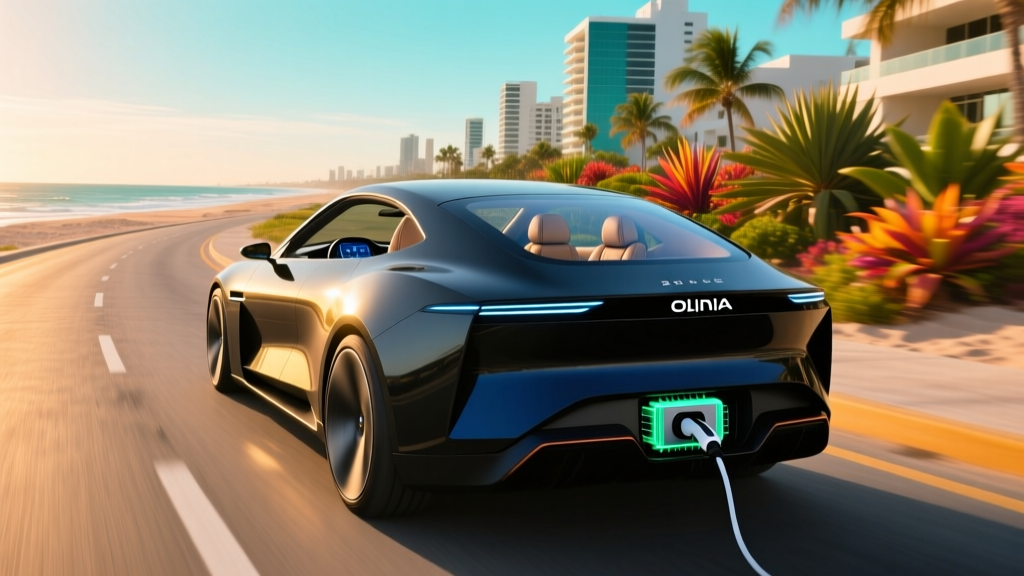
The Olinia electric car — a compact urban EV built by Giant Motors Latinoamérica and sold exclusively in Mexico — targets budget-conscious city drivers who need a short-range commuter vehicle. As of early 2026, Olinia models are priced starting around MXN $399,000 (~USD $22,000) before any incentives, offering an estimated 150–200 km (93–124 mi) of real-world range depending on the variant. The Olinia is best suited for drivers with home or workplace charging access who travel under 100 km daily in urban environments like Mexico City, Guadalajara, or Monterrey. It is not a road-trip vehicle, and Mexico's public DC fast-charging network remains limited outside major metros — a critical ownership reality buyers must plan around.
What Is the Olinia Electric Car?
Olinia is a Mexican-brand electric vehicle line produced by Giant Motors Latinoamérica, a company backed in part by Carlos Slim's Inbursa. The brand launched with compact, affordable EVs designed specifically for the Mexican market, where the average daily commute is under 40 km. Olinia vehicles are assembled locally and sold through a limited dealer network, primarily in Mexico City and surrounding states.
The lineup has historically included models like the Olinia E1 (a small sedan) and the Olinia E2 (a compact hatchback/crossover). These vehicles compete in a segment where few affordable EVs exist in Latin America. For 2026, Olinia continues to position itself as Mexico's homegrown electric option, though it faces increasing competition from imported Chinese EVs (BYD, JAC, Chirey) entering the Mexican market at aggressive price points.
Key characteristics of the Olinia lineup:
- Battery: Typically 30–45 kWh lithium-ion packs (chemistry details are not always publicly disclosed by the manufacturer — buyers should confirm whether cells are LFP or NMC before purchase, as this affects longevity and fast-charge tolerance)
- Range: Manufacturer-claimed figures often cite 200–250 km; real-world urban driving with A/C typically yields 150–200 km
- Charging: AC Level 2 charging via Type 1 or Type 2 connector (Mexico uses a mix); DC fast charging availability varies by model and is often limited to 30–50 kW peak
- Top speed: Electronically limited, typically around 120–130 km/h — adequate for highway merging but not performance-oriented
- Warranty: Generally 3 years / 100,000 km on the vehicle, with battery warranty terms that buyers should verify directly with the dealer (industry standard for budget EVs is 8 years / 160,000 km on the battery)
Olinia vs. Gas Car: Real Cost Comparison in Mexico
The strongest argument for the Olinia in Mexico is operating cost — specifically fuel savings. Mexico's gasoline prices (Magnas and Premium) have risen steadily, and urban stop-and-go driving destroys fuel economy. Here's how an Olinia stacks up against a comparable gas-powered compact like the Nissan Versa or Chevrolet Aveo, which dominate Mexican sales charts.
| Cost Factor | Olinia EV (Estimated) | Gas Compact (e.g., Nissan Versa) |
|---|---|---|
| Purchase Price (base) | ~MXN $399,000 | ~MXN $280,000–$320,000 |
| Fuel/Energy Cost per 100 km | ~MXN $30–$50 (home charging at CFE residential tariff) | ~MXN $120–$160 (at ~MXN $24/liter, 15 km/l urban) |
| Annual Fuel/Energy (15,000 km/yr) | ~MXN $4,500–$7,500 | ~MXN $18,000–$24,000 |
| Annual Maintenance | ~MXN $2,000–$4,000 (no oil changes, fewer brake replacements) | ~MXN $6,000–$10,000 (oil, filters, belts, more brake wear) |
| 5-Year Fuel + Maintenance Total | ~MXN $32,500–$57,500 | ~MXN $120,000–$170,000 |
| 5-Year Total Cost (purchase + operating) | ~MXN $431,500–$456,500 | ~MXN $400,000–$490,000 |
The takeaway: The Olinia costs more upfront (by roughly MXN $80,000–$120,000), but annual fuel and maintenance savings of MXN $15,000–$22,000 can close that gap within 4–6 years. The higher your annual mileage and the more stop-and-go your driving, the faster the Olinia pays for itself. If you drive less than 8,000 km per year, the payback period extends significantly, and a conventional gas car or hybrid may be more economical.
Charging the Olinia in Mexico: What You Actually Need
This is where many first-time EV buyers in Mexico encounter friction. Mexico's charging infrastructure is growing — the IEA's Global EV Outlook tracks this expansion — but it remains concentrated in Mexico City, the Bajío region, and along limited highway corridors. Here is the practical charging reality for an Olinia owner in 2026:
| Charging Level | Power (kW) | Speed (km added per hour) | Availability in Mexico | Typical Cost |
|---|---|---|---|---|
| Level 1 (120V household outlet) | 1.4–1.8 kW | 8–12 km/hr | Universal (any outlet) | CFE residential rate (~MXN $1.5–$3.0/kWh) |
| Level 2 (240V home/public AC) | 3.3–7.2 kW | 20–45 km/hr | Growing in cities; home install requires 240V circuit | CFE rate or ~MXN $4–$8/kWh at public stations |
| DC Fast Charging | 30–50 kW (Olinia limited) | 100–160 km/hr (theoretical) | Very limited; Evergo, CFE Electrolineras in select cities | ~MXN $5–$10/kWh |
Home charging is essential. If you live in a house or ground-floor apartment where you can install a 240V outlet (or even rely on a standard 120V outlet for overnight charging), the Olinia works well as a daily commuter. A full overnight charge on Level 1 (10–12 hours) replenishes the battery for the next day's urban driving. Level 2 cuts this to 4–6 hours.
Apartment dwellers face a real challenge. If you park on the street or in a building without EV charging provisions, relying solely on Mexico's still-sparse public charging network is impractical for daily use. The CFE (Comisión Federal de Electricidad) has installed public "Electrolineras" in some cities, and private networks like Evergo are expanding, but coverage is nowhere near the density needed for apartment-only EV ownership.
Cold-weather note: Mexico City's altitude (2,240 m) and mild climate are actually favorable for EV range. You won't see the 20–30% winter range loss that EV owners in freezing climates experience. However, Mexico City's heavy traffic and frequent hill climbs will reduce range below the manufacturer's optimistic claims.
Common Olinia Misconceptions — Corrected with Facts
| Myth | Fact |
|---|---|
| "The Olinia has 250 km of range, so I can drive 250 km anytime." | Manufacturer claims are based on ideal conditions. Expect 150–200 km in real urban driving with A/C, passengers, and hills. Highway driving at 100+ km/h reduces range further due to aerodynamic drag. |
| "I don't need home charging; I'll use public stations." | Mexico's public charging network in 2026 is insufficient for daily reliance outside major business districts. Home or workplace charging is practically mandatory. |
| "EVs have no maintenance costs." | EVs have lower maintenance — no oil changes, fewer brake replacements (regenerative braking saves pads), but tires, cabin filters, suspension, and the 12V auxiliary battery still require service. Budget MXN $2,000–$4,000/year. |
| "The Olinia qualifies for the US $7,500 federal tax credit." | The US IRS §30D credit applies only to vehicles purchased for use in the United States and meeting specific MSRP, income, and battery-sourcing requirements. IRS rules do not apply to vehicles bought and registered in Mexico. Mexico has its own incentive structures (exemption from ISAN new-car tax and tenencia in some states), but these vary by jurisdiction. |
| "The battery will need replacement in 5 years." | Modern lithium-ion EV batteries are designed to retain 70–80% of original capacity after 8–10 years or 160,000+ km. Olinia's battery warranty terms should be confirmed with the dealer, but catastrophic early failure is rare. The real concern is gradual degradation reducing your already-limited range over time. |
Mexico's EV Incentives: What Olinia Buyers Actually Get
Unlike the United States, where the IRS §30D federal tax credit provides up to $7,500 USD for qualifying new EVs, Mexico's incentive landscape is different and more fragmented:
- ISAN exemption: Mexico's Impuesto Sobre Automóviles Nuevos (new car tax) is waived for electric vehicles — this can save buyers 5–17% depending on the vehicle price bracket.
- Tenencia exemption: Many Mexican states (including CDMX, Estado de México, and others) exempt EVs from the annual tenencia vehicle ownership tax for several years.
- No-verificación exemption: EVs are exempt from Mexico City's verificación (emissions testing) program and the Hoy No Circula driving restrictions — a significant daily convenience benefit in the capital.
- CFE DAC tariff consideration: If your home electricity consumption pushes you into CFE's DAC (high-consumption) tariff, your charging costs will be significantly higher. Some EV owners apply for CFE's separate EV meter to maintain lower residential rates.
These incentives are meaningful but vary by state and municipality. Always confirm current local rules with your dealer or a tax professional before purchasing.
Decision Framework: Should You Buy the Olinia?
Buy the Olinia IF:
- Your daily driving is under 100 km, mostly urban
- You have reliable home or workplace charging (120V minimum, 240V preferred)
- You live in Mexico City or another metro area where Hoy No Circula exemptions and ISAN savings apply
- You plan to keep the car 5+ years (to recoup the higher purchase price through fuel savings)
- You value lower operating costs and reduced local emissions over highway range and performance
Do NOT buy the Olinia IF:
- You regularly drive more than 150 km per day or take frequent highway road trips
- You live in an apartment without charging access and your area has sparse public chargers
- You need a vehicle for towing, heavy cargo, or 5+ passengers
- You plan to sell within 3 years (higher upfront cost won't be recovered, and resale values for budget EV brands in Mexico are uncertain)
- You want DC fast charging for quick top-ups — the Olinia's limited fast-charge capability means road-trip stops are impractical
Consider a hybrid (HEV) or PHEV instead IF:
- You want fuel savings without range limitations — a Toyota Prius HEV delivers 22–25 km/l with zero charging infrastructure needs
- Your budget is under MXN $350,000 and you can't stretch to the Olinia's price
- You frequently drive between cities where charging is unreliable
First-Time EV Buyer Checklist for Mexico
If the Olinia is your first EV, here is what you need to verify before signing:
- Confirm battery chemistry and warranty: Ask the dealer whether the pack is LFP (lithium iron phosphate — longer cycle life, slower degradation, but heavier) or NMC (higher energy density but more degradation-sensitive). Get the battery warranty in writing — specifically the capacity retention guarantee (e.g., 70% after 8 years).
- Assess your electrical setup: A standard Mexican household outlet (120V, 15A) will charge the Olinia overnight. If you want faster Level 2 charging, consult a licensed electrician about installing a 240V circuit — budget MXN $5,000–$15,000 for the electrical work, plus the cost of a Level 2 EVSE unit.
- Calculate your real electricity cost: Check your CFE bill. If you're on the basic residential tariff (tarifa 1, 1A, 1B, etc.), charging is cheap. If you're on DAC, costs roughly double. Consider applying for a separate CFE EV meter.
- Test-drive in real conditions: Drive the Olinia on your actual commute with A/C running. Watch the range estimator drop — this is your real-world number, not the brochure figure.
- Research resale value: The Mexican used-EV market is still immature. Olinia's long-term resale value is uncertain compared to established brands like Nissan (Leaf) or Tesla. Factor this into your 5-year cost calculation.
- Verify insurance availability and cost: Some Mexican insurers are still developing EV-specific policies. Get quotes before purchasing — EV insurance can be 10–25% higher than equivalent gas vehicles due to battery replacement cost concerns.
Frequently Asked Questions
Where can I buy the Olinia electric car in Mexico?
Olinia vehicles are sold through Giant Motors' limited dealer network, primarily in Mexico City and the State of Mexico. Availability in other states is restricted. Contact Giant Motors Latinoamérica directly or check their official dealer locator for the nearest showroom. As of 2026, Olinia does not have the nationwide dealer footprint of Nissan, Chevrolet, or Volkswagen in Mexico.
Can I take the Olinia on highway road trips?
Technically yes, but practically it's difficult. With 150–200 km of real-world range and Mexico's sparse DC fast-charging network outside major cities, intercity travel requires meticulous planning and long charging stops. The Olinia is designed as an urban commuter, not a road-trip vehicle. If you need one car for both city and highway use, a PHEV (plug-in hybrid) or a conventional hybrid is a more practical choice.
How long does it take to charge the Olinia at home?
On a standard 120V Mexican household outlet (Level 1, ~1.5 kW), a full charge from empty takes approximately 20–30 hours depending on battery size. Most owners charge partially each night rather than from zero. On a 240V Level 2 charger (~6.6 kW), a full charge takes roughly 5–7 hours — easily achievable overnight. Actual times depend on the specific battery capacity (kWh) of your Olinia variant.
Is the Olinia made in Mexico?
Yes. Olinia vehicles are assembled by Giant Motors Latinoamérica at their facility in Hidalgo, Mexico. The company has positioned Olinia as a domestically produced EV brand, though some components (including battery cells) are sourced internationally, often from Chinese suppliers.
How does the Olinia compare to the Nissan Leaf or Chevrolet Bolt in Mexico?
The Nissan Leaf and Chevrolet Bolt (when available) offer more range (240–400 km EPA), more established dealer networks, proven battery longevity data, and better DC fast-charging capability. However, they typically cost MXN $600,000–$800,000+, significantly more than the Olinia. If your budget allows and you need more range, these are stronger choices. If budget is the primary constraint and your driving is strictly urban, the Olinia fills a gap that no other affordable EV currently occupies in Mexico.
What happens if the Olinia battery degrades?
All lithium-ion batteries degrade over time and with charge cycles. Expect 10–20% capacity loss over 8–10 years under normal use. For an Olinia with an already modest range, a 20% loss means your 180 km range drops to roughly 144 km — still usable for short urban commutes but increasingly limiting. Battery replacement costs are rarely published by Olinia; ask the dealer for a written estimate before purchase. In the broader EV market, battery replacements for compact EVs typically range from USD $5,000–$12,000 depending on pack size and chemistry.