Quick Answer: Is the Olina Electric Car Right for You?
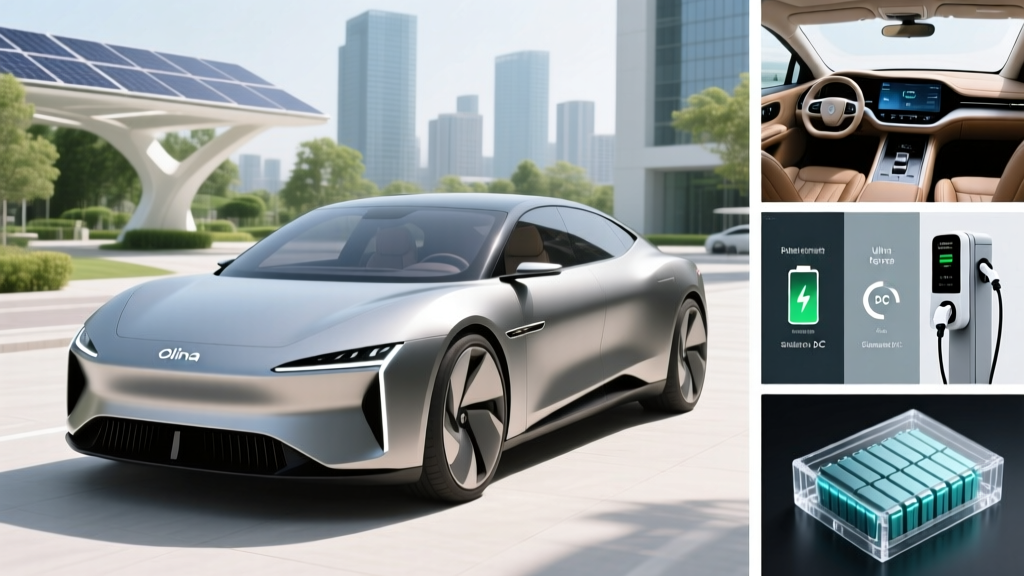
The Olina electric car is a compact urban EV positioned for budget-conscious buyers seeking an affordable daily commuter. Based on currently available information, the Olina targets a sub-$30,000 MSRP with an estimated EPA range of approximately 150–200 miles, making it best suited for city driving and shorter commutes. However, as of early 2026, the Olina has not yet entered full-scale U.S. production or distribution, and detailed EPA-certified specifications remain unconfirmed. If you need a proven, widely available EV today with verified range and charging data, alternatives like the Chevrolet Equinox EV, Nissan Leaf, or Hyundai Kona Electric offer confirmed specs and dealer availability now.
What Is the Olina Electric Car?
The Olina electric car is an emerging EV nameplate that has generated interest among budget-focused EV shoppers. The brand positions itself in the affordable compact EV segment — a space that includes vehicles like the Chevrolet Equinox EV (starting around $33,000), the Hyundai Kona Electric (starting near $32,975), and the Nissan Leaf (starting around $28,140 for 2025 model year).
For buyers searching for the Olina electric car, the key consideration is availability and verified specifications. Unlike established models with EPA-certified range and efficiency data on fueleconomy.gov, the Olina's final production specs — including battery chemistry, usable kWh capacity, DC fast-charge peak kW, and official EPA range — have not been independently confirmed as of this writing. Buyers should treat any pre-launch range or pricing claims as preliminary until the manufacturer publishes certified data.
Estimated Specs: What We Know (and Don't Know)
When evaluating any EV — especially a new entrant — these are the critical data points you need before committing. Here's what's been indicated versus what remains unconfirmed for the Olina:
| Specification | Estimated / Claimed | Confirmed (EPA/Manufacturer) |
|---|---|---|
| Base MSRP | ~$25,000–$30,000 | Unconfirmed |
| Battery Capacity (usable kWh) | ~45–60 kWh | Unconfirmed |
| Battery Chemistry | Likely LFP (lithium iron phosphate) | Unconfirmed |
| EPA Range | ~150–200 miles | Unconfirmed |
| Peak DC Fast Charge Rate | ~80–120 kW (estimated) | Unconfirmed |
| 10–80% DC Charge Time | ~30–40 minutes (estimated) | Unconfirmed |
| Level 2 AC Charge Rate | ~7–11 kW (estimated) | Unconfirmed |
| Horsepower | ~130–200 hp | Unconfirmed |
| 0–60 mph | ~7–9 seconds (estimated) | Unconfirmed |
| Battery Warranty | Likely 8 yr / 100,000 mi (industry standard) | Unconfirmed |
| Federal §30D Tax Credit Eligibility | Unknown — depends on battery sourcing and MSRP caps | Unconfirmed |
Why this matters: Without EPA certification, claimed range figures can differ significantly from real-world results. For reference, established EVs in this price range typically deliver 200–260 miles EPA. Real-world highway range at 70 mph often drops 10–15% below the EPA sticker, and cold-weather driving (below 32°F) can reduce range by 20–30% depending on whether the vehicle has a heat pump.
Olina vs. Gas Car vs. Hybrid: Cost Comparison
Even without Olina's final pricing confirmed, we can model what a compact EV in the $25,000–$30,000 range costs to own versus a comparable gas car or hybrid. This comparison assumes 15,000 miles driven annually, $3.50/gallon regular gasoline, and $0.16/kWh average residential electricity (national average as of 2026).
| Cost Category | Compact EV (~$28K) | Gas Sedan (30 MPG) | Hybrid (50 MPG) |
|---|---|---|---|
| Purchase Price (MSRP) | $28,000 | $24,000 | $27,000 |
| Est. Federal Tax Credit | $0–$7,500* | $0 | $0–$3,750** |
| Effective Purchase Price | $20,500–$28,000 | $24,000 | $23,250–$27,000 |
| Fuel/Energy (5 years) | $3,360 (home charging) | $8,750 | $5,250 |
| Maintenance (5 years) | ~$1,500 | ~$3,500 | ~$2,800 |
| Insurance (5 years, avg.) | ~$7,500 | ~$6,000 | ~$6,500 |
| 5-Year Total (approx.) | $32,860–$40,360 | $42,250 | $37,800–$41,550 |
*Federal §30D EV credit eligibility depends on battery component sourcing, critical mineral requirements, MSRP caps ($55,000 for sedans), and buyer income limits. Per IRS guidelines, not every EV qualifies for the full $7,500 — and some qualify for $3,750 or $0. Always verify current-year eligibility before purchase.
**PHEV/hybrid partial credit eligibility varies by battery capacity and sourcing requirements.
Real-World Ownership: What First-Time EV Buyers Must Know
Whether you're considering the Olina or any compact EV, these practical factors determine whether EV ownership works for your situation:
Home Charging Access
Home charging is the single biggest ownership advantage. A Level 2 home charger (240V, typically 7.2–11.5 kW) adds roughly 25–40 miles of range per hour of charging — enough to fully replenish a compact EV overnight. Installation costs typically range from $500–$2,500 depending on your electrical panel's capacity and the distance from panel to charger location. If your panel needs an upgrade from 100A to 200A, expect an additional $1,500–$3,000.
If you lack home charging access (apartment living, street parking), EV ownership becomes significantly less convenient. You'll rely on public Level 2 chargers ($0.20–$0.40/kWh typical) or DC fast chargers ($0.30–$0.60/kWh), which raises your per-mile energy cost and adds time to your routine. A hybrid or PHEV may be a better fit in this scenario.
Climate and Range Reality
If you live in a region with harsh winters, plan for 20–30% range reduction in sustained cold (below 32°F). A 200-mile EPA-rated EV might deliver only 140–160 miles of usable range on a cold January commute. Vehicles with a heat pump (standard on many newer EVs) mitigate this loss somewhat. For buyers in the Sun Belt, range degradation from cold is minimal, but extreme summer heat can accelerate long-term battery degradation if the vehicle lacks active thermal management.
Driving Patterns
Compact EVs with 150–200 miles of range are ideal for daily commutes under 60 miles round-trip with home charging. If you regularly drive 200+ miles in a single day or take frequent road trips, you'll need either a longer-range EV (300+ miles), a willingness to plan DC fast-charging stops, or a PHEV that provides gas backup.
Common Misconceptions About Budget EVs
| Myth | Fact |
|---|---|
| "All EVs qualify for the $7,500 tax credit" | Federal §30D credit has strict battery-sourcing, MSRP, and income requirements. Many EVs qualify for $3,750 or $0. Check fueleconomy.gov for current eligibility lists. |
| "EV batteries need replacing every few years" | Modern EV batteries are warrantied for 8 years/100,000 miles and typically retain 85–90% capacity at 100K miles based on industry degradation data. LFP chemistry batteries often show even slower degradation. |
| "Charging an EV takes hours" | Level 2 home charging takes 6–10 hours (overnight). DC fast charging at 80–150 kW can add 100+ miles in 15–20 minutes for most compact EVs. The 10–80% charge is relatively fast; charging slows significantly above 80% to protect battery health. |
| "EVs cost more to insure" | EV insurance premiums are typically 10–25% higher than equivalent gas cars due to higher repair costs and battery replacement expense, but the gap is narrowing as the EV fleet grows. |
| "A budget EV is all you need" | A 150-mile EV works well for city commuting but falls short for road trips or cold-climate drivers with long commutes. Match the vehicle to your worst-case driving day, not your average day. |
Decision Framework: Should You Buy the Olina or an Alternative?
If-Then EV Buying Guide
- IF you want the lowest possible purchase price and can wait for an emerging brand with unconfirmed specs → THEN monitor the Olina for official EPA certification and production timelines before committing a deposit.
- IF you need a verified, available-now compact EV under $35,000 → THEN consider the Chevrolet Equinox EV (EPA 315 mi, ~$33,000), Hyundai Kona Electric (EPA 261 mi, ~$32,975), or Nissan Leaf (EPA 149–212 mi depending on battery, ~$28,140).
- IF you lack reliable home charging → THEN a PHEV like the Toyota Prius Prime (44 mi electric-only, 52 MPG combined on gas) may serve you better than any pure EV.
- IF you regularly drive in sub-freezing temperatures with a commute over 50 miles one-way → THEN target an EV with 250+ miles EPA range and a heat pump, or choose a PHEV for gas-engine backup.
- IF federal tax credit eligibility is critical to your budget → THEN verify the specific vehicle's §30D status on the IRS clean vehicle credit page before purchasing — eligibility can change mid-year based on battery sourcing updates.
What to Watch for Before Committing to Any New EV Brand
When a new EV brand enters the market, savvy buyers should verify the following before placing a deposit:
- EPA Certification: Range, MPGe, and efficiency figures must be EPA-certified and listed on fueleconomy.gov. Manufacturer "estimates" are not a substitute.
- Charging Standard: Does the vehicle use NACS (Tesla's standard, now widely adopted by Ford, GM, Hyundai, and others for 2025+) or CCS1? NACS adoption is rapidly expanding Supercharger network access, which is a significant practical advantage as of 2026.
- Service Network: Can you get the vehicle serviced within 50 miles of your home? New brands often lack established dealer and service infrastructure.
- Battery Chemistry: LFP (lithium iron phosphate) batteries offer slower degradation and can be charged to 100% regularly without harm, but have lower energy density (heavier for the same range). NMC (nickel manganese cobalt) offers higher energy density but benefits from keeping charge between 20–80% for daily use.
- Resale Value: New brands carry higher depreciation risk. Established EVs from Hyundai, Tesla, and Chevrolet have more predictable resale trajectories.
Frequently Asked Questions
Is the Olina electric car available to buy in the U.S. right now?
As of early 2026, the Olina electric car has not been confirmed for widespread U.S. retail availability with EPA-certified specifications. Interested buyers should verify production status and delivery timelines directly with the manufacturer before committing funds.
How much does it cost to charge a compact EV at home versus fueling a gas car?
At the national average electricity rate of $0.16/kWh and a compact EV consuming roughly 3.5 miles per kWh, home charging costs about $0.045 per mile. A gas sedan getting 30 MPG at $3.50/gallon costs about $0.117 per mile. That's roughly $1,080/year in savings on energy for a 15,000-mile driver — or $5,400 over five years.
What's the difference between kW and kWh, and why does it matter?
kW (kilowatts) measures power — the rate at which energy flows. Think of it like the width of a water hose. kWh (kilowatt-hours) measures energy capacity — how much electricity the battery stores. Think of it like the size of a water tank. A 60 kWh battery storing energy, charging at 80 kW, will charge faster than one limited to 50 kW — but the kWh determines how far you can drive.
Will a budget EV with ~150–200 miles of range be enough for me?
If your daily round-trip commute is under 80 miles and you can charge at home every night, yes — a 150–200 mile EV covers most daily needs with a comfortable buffer. However, factor in cold-weather range loss (20–30% in freezing temps), highway driving inefficiency (10–15% less than EPA at sustained 70+ mph), and battery degradation over time (roughly 10–15% over 8 years). Your "worst-case" usable range might be 100–130 miles in winter. Plan accordingly.
Do I qualify for the federal EV tax credit?
Under current IRS §30D rules, eligibility depends on multiple factors: your modified adjusted gross income (caps of $150K single / $300K joint filers), the vehicle's MSRP (under $55,000 for sedans), battery component manufacturing location, and critical mineral sourcing. The credit can be $0, $3,750, or $7,500 depending on how many sourcing requirements the vehicle meets. As of 2026, the credit can be transferred to the dealer at point of sale as an immediate discount. Consult a tax professional for your specific situation.
Should I buy an EV or a plug-in hybrid?
Choose a full EV if you have home charging, a predictable commute, and want the lowest per-mile operating cost. Choose a PHEV if you lack reliable home charging, frequently take long road trips, or live in an area with limited public charging infrastructure. PHEVs like the Toyota Prius Prime or Hyundai Tucson PHEV offer 30–45 miles of electric-only range for daily errands plus a gas engine for longer trips — eliminating range anxiety entirely.