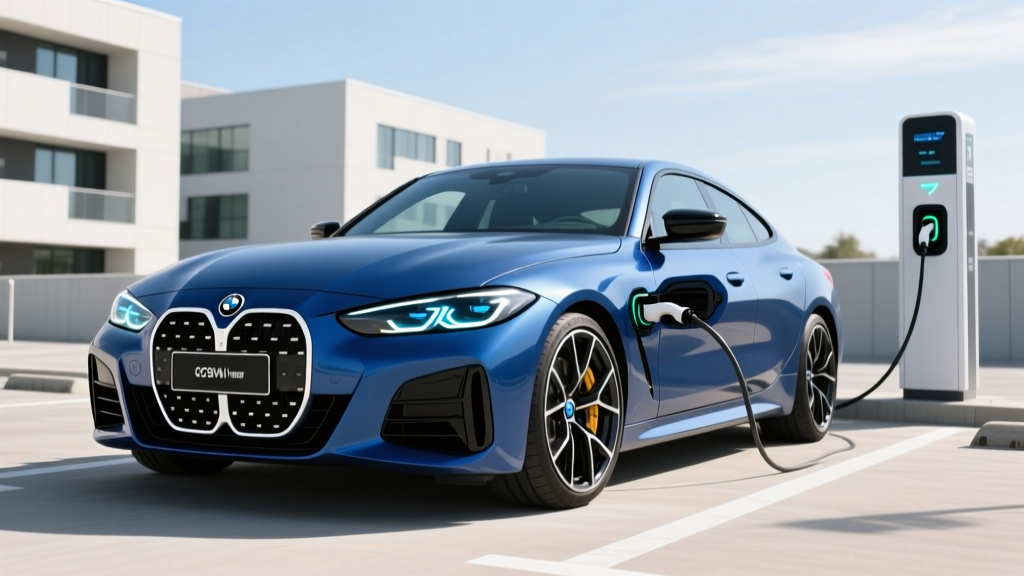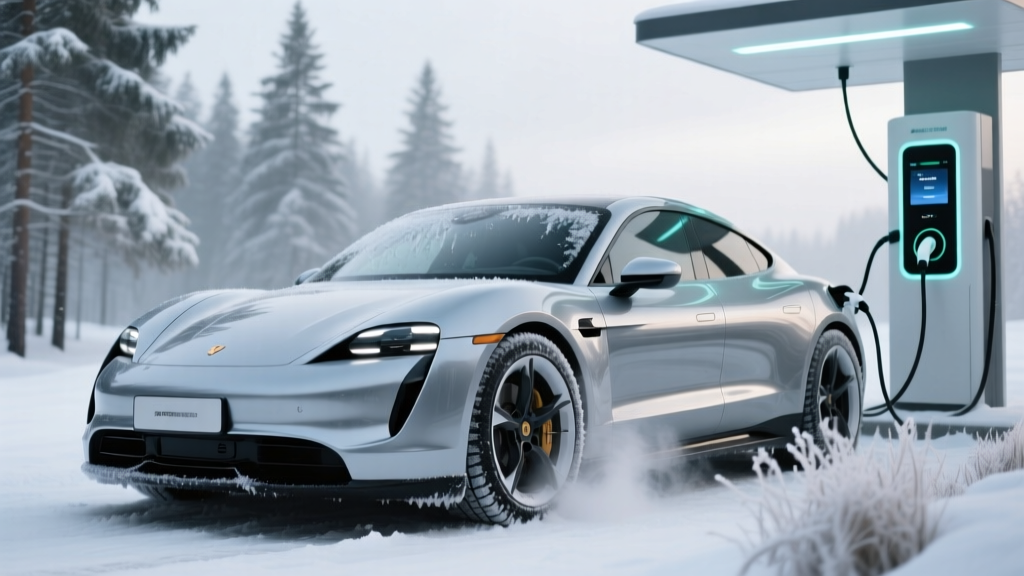
Electric cars lose between 15% and 30% of their EPA-rated range in freezing temperatures, with the exact figure depending on whether the vehicle uses a heat pump, battery preconditioning, and cabin heating demand. A 300-mile EPA-rated EV might realistically deliver 210–255 miles at 20°F, while a comparable gas car loses roughly 12% of its fuel economy under the same conditions. Cold also slows DC fast charging by 20–40% unless the battery is preconditioned. These aren't deal-breakers — they're manageable with the right vehicle choice and habits — but they are real physics that every cold-climate buyer must factor in before signing a lease or purchase agreement.
The Bottom Line on Cold-Weather EV Range
Expect 15–30% range loss below freezing compared to EPA stickers. Vehicles with heat pumps (Tesla Model Y, Hyundai Ioniq 5, BMW iX) lose closer to 15–20%. Vehicles relying on resistive heating lose 25–30%. Always precondition your battery before DC fast charging in cold weather, or your charge time can nearly double.
The Physics: Why Cold Weather Hits EVs Harder Than Gas Cars
Lithium-ion batteries operate through chemical reactions that slow down in cold temperatures. Below roughly 40°F, internal resistance increases, which means the battery can neither deliver nor accept energy as efficiently. The electrolyte becomes more viscous, lithium ions move more sluggishly between the anode and cathode, and some energy that would normally go to the wheels is instead consumed by the battery thermal management system to keep the pack within a safe operating window.
Simultaneously, cabin heating becomes a massive energy draw. A gasoline engine produces enormous waste heat — roughly 60–70% of the energy in a gallon of gas becomes heat, which is essentially "free" for warming the cabin. An electric motor is roughly 85–90% efficient, meaning very little waste heat is available. The EV must generate cabin heat from the traction battery, consuming 2–6 kW continuously depending on outside temperature and whether the vehicle uses a resistive heater or a heat pump.
A heat pump works like a reversed air conditioner, extracting thermal energy from outside air (even cold air contains extractable heat energy) and compressing it into the cabin. Heat pumps typically use 1–2 kW to produce 3–4 kW of heating output — a coefficient of performance (COP) of 2.5 to 4.0. Resistive heaters, by contrast, produce exactly 1 kW of heat per 1 kW of electricity consumed (COP of 1.0). That difference is the single biggest variable in cold-weather EV efficiency.
Real-World Range Loss: What the Data Shows
Multiple independent tests — including recurring studies by Recurrent Auto, which aggregates real-world data from thousands of EVs in its fleet — confirm a consistent pattern. Here's what to expect based on ambient temperature:
| Ambient Temp | Range Loss (No Heat Pump) | Range Loss (With Heat Pump) | Example: 300-mi EPA EV |
|---|---|---|---|
| 40–50°F | 5–10% | 3–7% | 270–285 mi real |
| 20–40°F | 15–22% | 10–15% | 234–270 mi real |
| 0–20°F | 25–30% | 15–22% | 210–255 mi real |
| Below 0°F | 30–40% | 22–30% | 180–234 mi real |
For comparison, the U.S. Department of Energy notes that conventional gasoline vehicles see fuel economy drop roughly 12% in short-trip cold-weather driving at 20°F, with the loss increasing for very short trips where the engine never fully warms up. Hybrids and PHEVs fall somewhere in between — the engine waste heat helps, but electric-only mode still suffers the same battery limitations.
Real-World Range Reality Check
EPA Sticker: 300 miles
Real highway (70 mph, 70°F): ~265–280 miles
Real winter (30°F, mixed driving, heat pump): ~240–255 miles
Real deep cold (10°F, short trips, resistive heat): ~195–225 miles
Cold weather compounds with highway speeds and short-trip cycling. Plan your worst-case route around the lowest number, not the EPA sticker.
Cold-Weather Charging: Why Your DC Fast Charge Slows Down
Cold batteries cannot accept charge at their rated peak power. If you pull up to a 250 kW DC fast charger with a battery pack at 25°F, the vehicle's battery management system (BMS) will severely limit the charge rate — often to 50 kW or less — to protect the cells from lithium plating, a condition where metallic lithium deposits on the anode and can cause permanent damage.
This is why battery preconditioning matters enormously. When you navigate to a charger using the vehicle's built-in navigation (Tesla, Rivian, Hyundai/Kia with route-based preconditioning), the car begins warming the battery 10–30 minutes before arrival. A preconditioned battery at a DC fast charger can hit its peak charge rate within minutes. An un-preconditioned cold battery might take 15–20 minutes just to ramp up, effectively adding 20–40% to your total charge time.
| Condition | Peak kW Achieved | 10–80% Time | Notes |
|---|---|---|---|
| 70°F, preconditioned | ~235 kW | ~18 minutes | Optimal — near advertised rate |
| 30°F, preconditioned | ~200 kW | ~22 minutes | Slight taper, still fast |
| 30°F, NOT preconditioned | ~80–120 kW | ~35–45 minutes | BMS limits rate to protect cells |
| 10°F, NOT preconditioned | ~40–70 kW | ~55–70 minutes | Severely limited — feels like Level 2 |
The practical takeaway: in winter, always use the vehicle's native navigation to route to a DC fast charger, even if you know the way. This triggers preconditioning automatically on most modern EVs. If your vehicle doesn't support route-based preconditioning (some older models and certain brands), plan to arrive at chargers after at least 30 minutes of highway driving, which passively warms the pack.
EV vs. Gas vs. Hybrid: Winter Ownership Costs Compared
Range loss is only part of the winter ownership equation. Let's look at what cold weather actually costs across vehicle types for a driver in a northern climate (Minneapolis, Chicago, Boston) covering 12,000 miles per year with 4 months of freezing temperatures.
| Cost Factor | BEV (300-mi, heat pump) | Gas Sedan (32 MPG) | PHEV (30-mi EV range) |
|---|---|---|---|
| Energy/Fuel Cost | $240–$360 (home L2 @ $0.14/kWh) | $480–$560 ($3.40/gal, 12% winter loss) | $360–$440 (blended) |
| Winter Tire Set (mounted) | $800–$1,200 (one-time, amortized ~$200/yr) | $800–$1,200 (~$200/yr) | $800–$1,200 (~$200/yr) |
| Cold-weather maintenance | $0–$50 (washer fluid, wipers) | $150–$300 (oil, coolant, battery check) | $100–$200 |
| Block heater / preconditioning | $0 (built-in, uses ~1 kWh) | $0–$100 (block heater install/electricity) | $0–$50 |
| Estimated 4-month winter total | $440–$610 | $830–$1,160 | $660–$890 |
EVs still win on operating costs in winter, but the margin narrows. A BEV charging at home at $0.14/kWh with a heat pump spends roughly half what a gas car spends on fuel during winter months. However, if you're relying on public DC fast charging at $0.40–$0.60/kWh, the EV's winter energy cost can climb to $400–$600 for those 4,000 miles — nearly matching the gas car. Home charging access is the single biggest variable in cold-climate EV economics.
Insurance premiums for EVs also tend to run 10–20% higher than comparable gas vehicles, according to industry analyses, due to higher repair costs and battery replacement expenses. Factor an additional $150–$300/year into your total cost of ownership.
Heat Pump vs. Resistive Heater: Which Vehicles Handle Winter Best?
Not all EVs are created equal in cold weather. The presence or absence of a heat pump is the most impactful hardware differentiator. Here's how popular 2025–2026 models stack up:
- Tesla Model Y / Model 3 (2025+): Octovalve heat pump standard. Among the best cold-weather performers — typically 10–15% range loss at 20°F. Battery preconditioning for Superchargers is automatic via navigation.
- Hyundai Ioniq 5 / Kia EV6 (2025+): Heat pump available (standard on most US trims). Excellent preconditioning integration. Real-world tests show 12–18% loss at 20°F.
- Ford Mustang Mach-E (2025+): Heat pump standard on extended-range trims. ~15–20% loss at 20°F. Preconditioning available via FordPass app scheduling.
- Chevrolet Equinox EV (2025+): Uses a heat pump on higher trims. ~18–22% range loss at 20°F.
- Nissan Ariya: Resistive heating on most trims (heat pump available on some markets but not standard in US). Expect 25–30% loss at 20°F.
- Rivian R1T / R1S (2025+): Heat pump standard on Dual-Motor and newer. Large 106+ kWh pack offsets range loss with sheer capacity — still delivers 250+ real winter miles on Max Pack.
If you live in a climate where temperatures regularly drop below 30°F for months at a time, prioritize a heat pump and route-based preconditioning above almost every other feature. A 250-mile EV with a heat pump will outperform a 320-mile EV with resistive heating in sustained winter conditions.
Cold-Weather EV Charging at Home: Setup and Costs
Home charging is where cold-climate EV ownership either succeeds or fails. If you can plug in overnight in a garage (even an unheated one), you solve three problems at once: the battery stays warmer than ambient, you can precondition the cabin using grid power rather than battery power, and you wake up every morning with a full charge regardless of range loss.
Here's what a realistic Level 2 home charging installation looks like in 2026:
| Component | Typical Cost Range | Notes |
|---|---|---|
| Level 2 EVSE (40A–48A, 240V) | $350–$700 | ChargePoint Home Flex, Emporia Level 2, Wall Connector |
| Electrician labor (run 240V line) | $500–$1,500 | Depends on panel proximity, conduit run length |
| Permit & inspection | $50–$200 | Varies by municipality |
| Panel upgrade (if needed, 200A) | $1,500–$3,500 | Required if existing panel is maxed out — common in older homes |
| Total (no panel upgrade) | $900–$2,400 | Most common scenario |
| Total (with panel upgrade) | $2,400–$5,900 | Older homes, larger installs |
At a 48A Level 2 charger (11.5 kW), a 77 kWh battery charges from 10% to 100% in roughly 7 hours — perfect for overnight. In cold weather, you should schedule charging to finish 30–60 minutes before departure and enable preconditioning so the battery and cabin are warm using grid power, not battery energy. Most EVs and smart chargers support this via app scheduling.
The federal Alternative Fuel Vehicle Refueling Property Credit (IRC §30C) covers 30% of home charger equipment and installation costs, up to $1,000, if you live in an eligible census tract. Check irs.gov for current eligibility maps — this credit is separate from the §30D vehicle purchase credit.
Common Cold-Weather EV Myths, Corrected
| Myth | Fact |
|---|---|
| "EVs can't handle winter — they'll strand you." | A 300-mile EPA EV with a heat pump delivers 240+ real winter miles. Most daily commutes are under 40 miles round-trip. You'd need to drive 5+ hours in deep cold without charging to risk stranding. |
| "Batteries degrade permanently from cold." | The BMS actively protects the pack. Cold causes temporary range loss, not permanent degradation. Modern EVs have robust thermal management. Long-term degradation is driven more by high temperatures and high SoC storage than by cold exposure. |
| "You can't charge an EV in freezing rain." | EV charge ports and connectors (NACS, CCS) are weather-sealed to IP67 or equivalent. Charging in rain, snow, or sleet is safe and routine. Just keep the connector face clear of ice buildup. |
| "Regenerative braking doesn't work in the cold." | Regen is limited on a cold battery — the BMS restricts it to prevent lithium plating. After 5–10 minutes of driving (or preconditioning), regen returns to normal. Plan for reduced regen on the first few minutes of a cold-weather trip and use friction brakes. |
| "EVs are worse than gas cars in winter overall." | EVs offer instant cabin heat (no waiting for engine warm-up), no cold-start issues, no frozen fuel lines, and the ability to "idle" (run the heater) safely in an enclosed garage without carbon monoxide risk. Range loss is real but manageable. |
Decision Framework: Should You Buy an EV in a Cold Climate?
If-Then Guide for Cold-Climate EV Buyers
- IF you have a garage or dedicated parking spot where you can install a Level 2 charger AND your daily round-trip commute is under 80 miles → An EV is an excellent winter choice. You'll precondition on grid power, wake up "full" every morning, and spend roughly half what a gas car costs on winter energy.
- IF you have home charging but regularly drive 200+ miles one-way in winter (rural commutes, mountain passes) → Choose an EV with 320+ EPA miles, a heat pump, and route-based preconditioning. The Tesla Model Y Long Range, Hyundai Ioniq 5 Long Range, or Rivian R1S Max Pack are strong candidates. Plan charging stops using A Better Routeplanner with cold-weather derating enabled.
- IF you live in an apartment or lack reliable home charging access AND winter temperatures regularly drop below 20°F → A PHEV is likely the smarter choice. You get 25–40 miles of electric-only range for short trips (charged via a standard 120V outlet overnight) plus a gas engine for longer trips. Cold-weather range loss on a PHEV's small battery is less impactful because the engine provides backup and waste heat. Consider the Toyota RAV4 Prime (42 mi EV range) or Jeep Wrangler 4xe (22 mi EV range).
- IF you rely entirely on public DC fast charging in a region with sparse infrastructure (rural Montana, northern Maine, Upper Peninsula Michigan) → Wait on a full BEV. Cold-weather charging slowdowns combined with limited station density create genuine inconvenience. A hybrid or PHEV is the practical choice until infrastructure improves.
- IF you want an EV and have home charging but your budget is under $35,000 → Look at the used EV market. The §25E used clean vehicle credit offers up to $4,000 (30% of sale price, capped) on qualifying used EVs under $25,000 from a dealer. A 2022–2023 Tesla Model 3 or Hyundai Ioniq 5 with a heat pump can be found in this range and still delivers strong winter performance with 80–90% battery health.
Frequently Asked Questions
Do EV batteries permanently lose capacity from cold weather exposure?
No. Cold weather causes temporary range reduction due to increased internal resistance and heating demand, but the battery's long-term State of Health (SoH) is not meaningfully impacted by cold exposure alone. In fact, heat is far more damaging to lithium-ion cells than cold. EVs in cold climates often show slower long-term degradation than those in hot climates like Arizona or Texas. The BMS prevents charging at rates that could cause lithium plating, which is the one cold-related mechanism that could cause permanent damage.
Should I buy an LFP or NMC battery EV for cold weather?
NMC (nickel manganese cobalt) batteries generally perform better in extreme cold than LFP (lithium iron phosphate). LFP chemistry has higher internal resistance at low temperatures, leading to slightly greater range loss and slower cold-weather charging. If you live where winters regularly hit below 10°F, NMC is the preferable choice. LFP is excellent for moderate climates and offers longer cycle life and lower cost. Tesla offers LFP in the Model 3 Standard Range — fine for Virginia winters, less ideal for Minnesota.
How much does preconditioning cost in electricity?
Preconditioning the battery and cabin for 20–30 minutes typically uses 2–5 kWh of energy, costing roughly $0.28–$0.70 at the national average residential rate of $0.14/kWh. This is energy well spent: it preserves more range than it consumes by reducing the heating load during your drive and enabling faster DC charging if you're heading to a fast charger.
Are winter tires necessary on an EV?
Winter tires are strongly recommended on any vehicle in sustained freezing temperatures, but they're especially important on EVs. EVs are 500–1,000 lbs heavier than comparable gas cars due to the battery pack, and instant electric torque can overwhelm all-season tires on ice. The additional mass means longer stopping distances. A set of dedicated winter tires (Nokian Hakkapeliitta, Michelin X-Ice, Bridgestone Blizzak) transforms cold-weather safety and confidence on any EV.
Can I use a standard 120V outlet to charge in winter?
Yes, but slowly. A 120V Level 1 charger delivers roughly 1.0–1.4 kW, adding about 3–5 miles of range per hour. In winter, some of that energy goes to battery thermal management, reducing effective charging speed further. Level 1 is adequate for PHEVs (smaller batteries) and for BEV owners who drive under 30 miles per day and can charge for 10+ hours overnight. For anything beyond that, a 240V Level 2 installation is effectively mandatory for cold-climate BEV ownership.