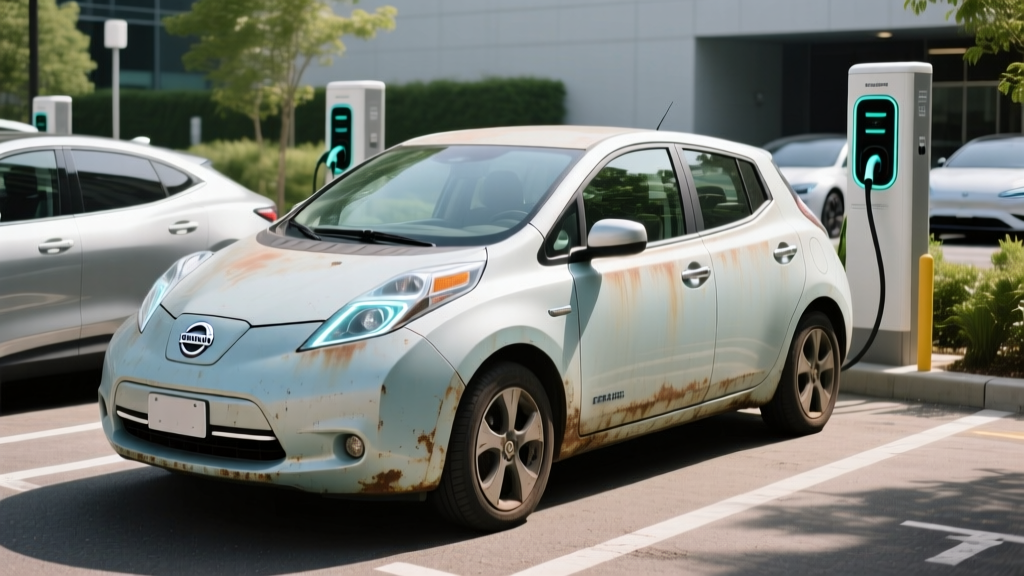
The Nissan Leaf holds a unique place in electric vehicle history. Launched for the 2011 model year, it was the first mass-market, affordable battery-electric vehicle sold in the United States — proving that everyday drivers could live with a plug-in car. Over two generations (2011–2017 and 2018–2025), Nissan sold hundreds of thousands of Leafs worldwide. But with Nissan discontinuing the Leaf after the 2025 model year and the used EV market now flooded with ex-leases, the question for budget-minded shoppers in 2026 is practical: Is an old Nissan Leaf still a smart buy?
The short answer is yes — but only for specific use cases, and only if you understand the battery degradation realities, the CHAdeMO charging connector's shrinking public network, and the quirks of passive air-cooled battery thermal management. This guide covers everything you need to evaluate a used Leaf, from first-gen 24 kWh models to the final 2025 Leaf SV Plus with its 62 kWh pack.
Quick Verdict: Who Should Buy an Old Nissan Leaf?
Choose a used Nissan Leaf if: You need a low-cost commuter EV for city and suburban driving under 60 miles round-trip, can charge at home overnight, live in a moderate climate, and want the cheapest possible entry into EV ownership (often under $8,000 for early models).
Look elsewhere if: You need road-trip capability, rely on public DC fast charging, live in extreme cold or heat, or want a modern infotainment and driver-assist suite. Consider a used Chevrolet Bolt EV/EUV, Hyundai Kona Electric, or Tesla Model 3 instead.
Old Nissan Leaf Specs: Two Generations at a Glance
| Spec | Gen 1 (2011–2017) 24/30 kWh | Gen 2 Standard (2018–2025) 40 kWh | Gen 2 Plus (2019–2025) 62 kWh |
|---|---|---|---|
| Usable Battery Capacity | ~21–27 kWh (NMC) | ~37 kWh (NMC) | ~58 kWh (NMC) |
| EPA Range (when new) | 73–107 miles | 149–151 miles | 212–226 miles |
| Motor Output | 80 kW (107 hp) / 107 kW (147 hp, 30 kWh) | 110 kW (147 hp) | 160 kW (214 hp) |
| 0–60 mph | ~9.9 sec (24 kWh) / ~8.5 sec (30 kWh) | ~7.9 sec | ~6.5 sec |
| Drivetrain | FWD | FWD | FWD |
| Max DC Fast Charge | 50 kW (CHAdeMO) | 50 kW (CHAdeMO) | 100 kW (CHAdeMO) |
| Level 2 Charge Rate | 3.3 kW (early) / 6.6 kW (2013+) | 6.6 kW | 6.6 kW |
| EPA Efficiency | 99–114 MPGe | 111–112 MPGe | 104–108 MPGe |
| Cargo Volume | 24.0 cu ft (rear seats up) | 23.6 cu ft | 23.6 cu ft |
| Battery Warranty (orig.) | 8 yr / 100,000 mi (capacity) | 8 yr / 100,000 mi | 8 yr / 100,000 mi |
Note: All Leaf models use NMC (nickel manganese cobalt) lithium-ion chemistry. Nissan never offered LFP in the Leaf. Battery chemistry and passive cooling significantly affect long-term degradation — more on that below.
Real-World Range: What to Actually Expect
EPA Sticker vs. Reality
A 2019–2025 Leaf SV Plus carries an EPA-estimated 212–226 miles of range depending on wheel size. In real-world mixed driving at moderate temperatures (60–80°F), expect 180–200 miles. On sustained highway driving at 70+ mph, that drops to roughly 155–175 miles. In freezing weather (below 32°F), range loss of 25–40% is typical — meaning a Plus model may deliver only 125–155 miles in a cold Midwestern winter.
For a 2013–2017 Leaf with the original 24 kWh pack, the picture is starker. Originally rated at 75–84 miles EPA, battery degradation over 10+ years commonly reduces usable capacity to 60–75% of original. Expect 40–60 real-world miles in moderate weather, and as little as 30–45 miles in cold conditions. The 30 kWh variant (2016–2017) fares slightly better at roughly 55–75 miles real-world when degraded.
The Leaf's lack of active thermal management — it relies on passive air cooling for the battery pack — is the root cause of both accelerated degradation and cold-weather range loss. Unlike Tesla, Hyundai, and GM packs that use liquid cooling loops, the Leaf's battery cannot precondition itself for extreme temperatures. This matters enormously if you live in Phoenix, Houston, or Minneapolis.
Battery Degradation: The Critical Used-Leaf Variable
When evaluating any old Nissan Leaf, battery State of Health (SoH) is the single most important data point. Here's what owner communities and testing data show:
- Gen 1 (24 kWh, 2011–2015): Average SoH after 8–12 years ranges from 55% to 80%, heavily dependent on climate. Phoenix and Tucson Leafs often show the worst degradation (55–65% SoH) due to sustained high ambient heat. Pacific Northwest and coastal California Leafs tend to retain 70–80%.
- Gen 1 (30 kWh, 2016–2017): Slightly better chemistry but still passively cooled. Expect 65–82% SoH after 7–9 years.
- Gen 2 (40 kWh, 2018–2023): Improved cell chemistry but same passive cooling. Typical SoH: 80–92% after 3–7 years.
- Gen 2 Plus (62 kWh, 2019–2025): The newest models still under factory battery warranty. SoH typically 88–96% after 1–5 years. Nissan's warranty covers replacement if capacity drops below 9 bars (out of 12) on the dashboard capacity gauge within 8 years/100,000 miles.
How to check SoH before buying: Use an OBD-II dongle with the Leaf Spy Pro app (approximately $20 for the dongle + app). This reads the actual battery health percentage, cell voltage differentials, and Hx (internal resistance) value — far more accurate than the dashboard "capacity bars." A healthy Gen 2 pack should show cell differentials under 50 mV at rest. Avoid any Leaf showing over 150 mV differential, which signals weak cells.
Charging: CHAdeMO's Shrinking Network
| Charging Level | Gen 1 (24/30 kWh) | Gen 2 Standard (40 kWh) | Gen 2 Plus (62 kWh) |
|---|---|---|---|
| Level 1 (120V, 12A) | ~1.4 kW / ~5 mi/hr | ~1.4 kW / ~4 mi/hr | ~1.4 kW / ~3 mi/hr |
| Level 2 (240V, 3.3 kW, early Gen 1) | 3.3 kW / ~12 mi/hr | — | — |
| Level 2 (240V, 6.6 kW) | 6.6 kW / ~22 mi/hr (2013+) | 6.6 kW / ~20 mi/hr | 6.6 kW / ~18 mi/hr |
| DC Fast Charge (CHAdeMO) | 50 kW peak / ~30 min 10–80% | 50 kW peak / ~40 min 10–80% | 100 kW peak / ~45 min 10–80% |
The Leaf uses the CHAdeMO DC fast-charging connector — and this is the single biggest ownership concern in 2026. The North American charging industry has standardized on NACS (Tesla's connector, now adopted by Ford, GM, Rivian, Hyundai, and most others) and, to a lesser extent, CCS1. CHAdeMO was always the minority standard, and its public infrastructure is actively shrinking.
As of early 2026, PlugShare data shows that fewer than 15% of public DC fast-charger stalls in the U.S. still offer CHAdeMO connectors. Electrify America has phased out CHAdeMO on most new stations. EVgo maintains some legacy CHAdeMO stalls but is prioritizing NACS/CCS builds. In many metro areas, you may find only 2–4 CHAdeMO stations within a 20-mile radius.
What this means practically: If you plan to rely on public DC fast charging for road trips or daily top-ups, the Leaf is a poor choice in 2026. If you charge exclusively at home on Level 2 (which 85%+ of EV owners do, per fueleconomy.gov data), the CHAdeMO issue is largely irrelevant for daily use — but it still limits resale value and road-trip flexibility.
The Leaf Plus's 100 kW peak DC charge rate sounds competitive, but the charge curve tapers aggressively. In real-world testing, the Plus sustains roughly 70–80 kW from 10–40% SoC, then drops to 40–50 kW from 40–60%, and further to 20–30 kW above 70%. A 10–80% charge typically takes 40–50 minutes at a capable CHAdeMO station — slower than a Hyundai Ioniq 5 (18 min on a 350 kW CCS/NACS charger) or Tesla Model 3 (15–20 min on a Supercharger).
Driving Experience, Tech, and Interior
The Leaf drives like a competent compact hatchback. The Gen 2 Plus, with 214 hp and 250 lb-ft of instant torque, is genuinely quick off the line — the 6.5-second 0–60 time beats many gas-powered hot hatches. Ride quality is comfortable, and the low center of gravity from the under-floor battery pack keeps body roll reasonable.
Notable tech features (Gen 2, 2018–2025):
- ProPilot Assist (2019+): SAE Level 2 driver assist combining adaptive cruise control and lane-centering. Competent for highway use but requires hands on wheel and does not handle complex merges or construction zones. This is not self-driving.
- e-Pedal: Nissan's one-pedal driving mode that uses aggressive regenerative braking to bring the car to a full stop without touching the brake pedal. Well-implemented and a favorite feature among Leaf owners.
- 8-inch touchscreen (SV/SL trims) with Apple CarPlay and Android Auto (2018+).
- Around View Monitor (360° camera) on SL trims — useful for tight parking.
Notable drawbacks:
- No active battery thermal management — the defining limitation of the Leaf platform.
- Gen 1 models (2011–2017) have dated interiors with small screens, limited connectivity, and no Apple CarPlay/Android Auto.
- Rear legroom is tight at 33.5 inches (Gen 2) — adequate for children but cramped for tall adults on long trips.
- No frunk (front trunk) — the power electronics occupy the space under the hood.
- CHAdeMO connector limits road-trip charging options as detailed above.
Pricing, Used Market Values, and Tax Credits
Because Nissan discontinued the Leaf after 2025, you will only find used or certified pre-owned examples in 2026. There is no new Leaf to buy, and therefore the §30D new-vehicle federal tax credit does not apply. However, the Used Clean Vehicle Credit (§25E) may apply:
| Model / Year | Typical Used Price (2026) | §25E Used EV Credit Eligible? | Effective Net Price |
|---|---|---|---|
| 2011–2015 Leaf (24 kWh) | $4,500–$7,500 | Yes, if sold by dealer for ≤$25,000; buyer income caps apply | As low as ~$2,500–$5,500 |
| 2016–2017 Leaf (30 kWh) | $7,000–$10,500 | Yes | ~$5,000–$8,500 |
| 2018–2020 Leaf (40 kWh) | $10,000–$15,000 | Yes | ~$8,000–$13,000 |
| 2021–2025 Leaf Plus (62 kWh) | $15,000–$23,000 | Yes, if ≤$25,000 sale price | ~$13,000–$21,000 |
§25E Used Clean Vehicle Credit rules (per IRS.gov):
- Credit equals 30% of the sale price, up to a maximum of $4,000.
- Vehicle must be purchased from a licensed dealer (private-party sales do not qualify).
- Sale price must be $25,000 or less.
- Vehicle must be at least 2 model years old (so 2024 or older for a 2026 purchase).
- Buyer income caps: Modified AGI cannot exceed $75,000 (single), $112,500 (head of household), or $150,000 (married filing jointly).
- The credit can be transferred to the dealer at point of sale as a price reduction (as of 2024+).
- You can only claim the used-EV credit once every 3 years.
This makes a dealer-sold 2018–2020 Leaf at $12,000 potentially eligible for a $3,600 credit (30% of $12,000), dropping your net cost to $8,400 — arguably the cheapest way to get into a modern-ish EV in 2026.
Pros and Cons of Buying an Old Nissan Leaf
Pros
- Extremely low entry cost: Gen 1 Leafs from $4,500; Gen 2 from ~$10,000.
- Cheap to operate: Electricity cost of ~$0.04–$0.06/mile (national average), vs. ~$0.12–$0.16/mile for a comparable gas car.
- Low maintenance: No oil changes, no spark plugs, minimal brake wear thanks to regen.
- Comfortable commuter: Quiet, smooth, easy to park, good visibility.
- §25E used-EV credit eligible: Up to $4,000 off at point of sale.
- e-Pedal one-pedal driving: Excellent for stop-and-go traffic.
- Huge used inventory: Easy to find and compare examples nationwide.
Cons
- Battery degradation risk: Passive air cooling accelerates capacity loss, especially in hot climates.
- CHAdeMO connector: Public DC fast-charging infrastructure is shrinking rapidly in 2026.
- Limited range (Gen 1): 40–60 real-world miles on a degraded 24 kWh pack restricts use to short commutes.
- No road-trip practicality: Slow DC charging + CHAdeMO scarcity = painful long-distance travel.
- Dated tech (Gen 1): No CarPlay, small screens, basic driver assists.
- Resale value declining: NACS-connector EVs are pulling buyers away from CHAdeMO vehicles.
- No active thermal preconditioning: Cannot optimize battery temp for fast charging or cold-weather efficiency.
Old Nissan Leaf vs. Key Used-EV Competitors
| Attribute | Nissan Leaf Plus (2019–2023) | Chevrolet Bolt EV (2017–2023) | Hyundai Kona Electric (2019–2023) | Tesla Model 3 SR+ (2018–2021) |
|---|---|---|---|---|
| EPA Range (new) | 212–226 mi | 238–259 mi | 258 mi | 250–263 mi |
| Battery kWh | 62 (NMC) | 60–65 (NMC) | 64 (NMC) | 50–55 (NMC/LFP) |
| DC Fast Connector | CHAdeMO (100 kW) | CCS1 (55 kW) | CCS1 (77 kW) | NACS (170–250 kW) |
| Thermal Mgmt | Passive air | Active liquid | Active liquid | Active liquid |
| Typical Used Price | $14,000–$20,000 | $12,000–$18,000 | $15,000–$21,000 | $17,000–$25,000 |
| Charging Network | Shrinking (CHAdeMO) | Growing (CCS→NACS adapter avail.) | Growing (CCS→NACS adapter avail.) | Best (Supercharger + NACS) |
| 0–60 mph | ~6.5 sec | ~6.5 sec | ~6.4 sec | ~5.3 sec |
The Bolt EV and Kona Electric both offer liquid-cooled batteries (slower degradation), CCS1 connectors (with NACS adapters now available from Hyundai and GM), and longer range. The Tesla Model 3 provides the best charging network access by far. The Leaf's advantage is pure cost — early Gen 1 models are cheaper than any competitor, and the §25E credit applies equally.
Frequently Asked Questions
What is the real-world range of an old Nissan Leaf?
It depends heavily on the model year, battery size, and current State of Health. A 2019–2025 Leaf Plus (62 kWh) in good health delivers roughly 180–200 miles in mixed driving, 155–175 on the highway, and 125–155 in freezing weather. A 2013–2015 Leaf (24 kWh) with typical degradation may only manage 40–60 miles in moderate conditions. Always check SoH with Leaf Spy before buying.
How fast does an old Nissan Leaf charge?
At home on a 240V Level 2 charger (6.6 kW), a Gen 2 Leaf adds roughly 18–22 miles of range per hour — a full overnight charge takes 6–9 hours. On DC fast charge (CHAdeMO), the Gen 1 peaks at 50 kW (10–80% in ~30 minutes) and the Plus at 100 kW (10–80% in ~45 minutes with taper). Note that CHAdeMO stations are increasingly rare.
Does an old Nissan Leaf qualify for any EV tax credit?
The §30D new-vehicle credit does not apply since the Leaf is discontinued. However, the §25E Used Clean Vehicle Credit may provide up to $4,000 (30% of sale price) if you buy from a licensed dealer for $25,000 or less, and your income falls under IRS caps ($75K single / $150K joint). Confirm current-year eligibility at IRS.gov.
Is an old Nissan Leaf worth buying vs. a Bolt or Model 3?
If your priority is the absolute lowest purchase price and you only need 40–80 miles of daily range with home charging, a Gen 1 Leaf at $5,000–$8,000 is hard to beat on cost. For anything beyond that — road trips, cold climates, long-term battery reliability, or access to modern DC fast-charging networks — the Chevrolet Bolt EV (liquid-cooled, CCS1) or Tesla Model 3 (Supercharger access) are stronger choices, even at slightly higher used prices.
Should I worry about the Leaf's CHAdeMO connector?
Yes, if you plan to use public DC fast charging regularly. CHAdeMO infrastructure is declining in 2026 as the industry consolidates on NACS. If you charge 90%+ at home, it matters less day-to-day — but it will hurt resale value and make road trips frustrating. Adapters from CHAdeMO to NACS/CCS do not currently exist in any certified form.
How long will an old Leaf battery last?
Nissan's original battery warranty covers 8 years / 100,000 miles against capacity loss below 9 bars (of 12). For Gen 1 models, that warranty has mostly expired. Real-world data shows Gen 1 packs often reach 55–75% SoH after 10 years, while Gen 2 packs retain 85–95% after 3–5 years. A battery replacement costs approximately $6,500–$9,000 (plus labor) at a Nissan dealer — often exceeding the car's value for Gen 1 models. Factor this into your purchase decision.
Can I install a home charger for a Nissan Leaf?
Yes. The Leaf uses a standard J1772 connector for Level 1 and Level 2 AC charging, which is universal across all non-Tesla EVs. Any quality Level 2 home charger (ChargePoint Home Flex, Emporia Vue, Wallbox Pulsar Plus) will work. Expect $500–$800 for the charger unit and $500–$2,000 for electrician installation, depending on your panel capacity and run distance. A licensed electrician should evaluate whether your panel needs an upgrade to support a 40A/50A circuit.
Bottom line: An old Nissan Leaf remains one of the cheapest ways to go electric in 2026 — and for a short-commute, home-charging, moderate-climate driver, it's a rational and economical choice. But go in with eyes open about the battery degradation trajectory, the dying CHAdeMO ecosystem, and the Leaf's fundamental unsuitability for road trips. Check battery health with Leaf Spy, buy from a dealer to preserve §25E credit eligibility, and budget for the possibility that a Gen 1 pack may need replacement within your ownership window.