The Short Answer: Ola Electric Is Not Selling Cars in the USA
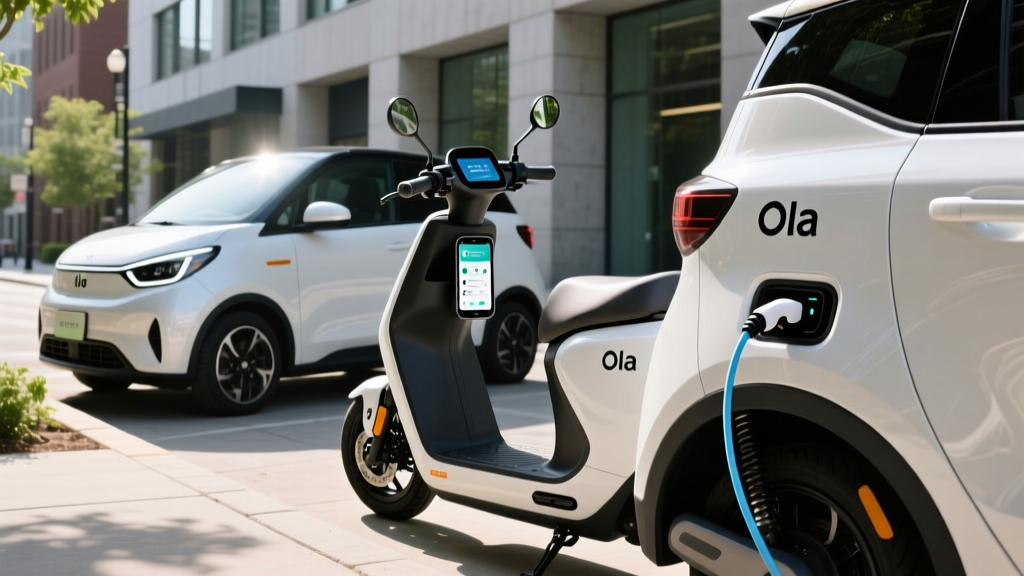
As of 2026, Ola Electric — the Indian EV company best known for its S1 electric scooter line — does not sell vehicles or operate consumer mobility services in the United States. Ola's operations remain concentrated in India, where it manufactures scooters at its Tamil Nadu gigafactory and runs limited fleet services. If you're an American EV shopper who encountered the Ola name and wondered whether it's an option for your next purchase or commute, the practical answer is no. However, understanding why Ola matters globally — and what US-based alternatives exist for both EV ownership and electric mobility services — is worth your time.
Who Is Ola Electric and Why Are US Shoppers Searching for It?
Ola Electric was spun out of Ola Cabs, India's largest ride-hailing platform (similar to Uber), and launched its first product — the Ola S1 electric scooter — in 2021. By 2025, Ola Electric had become India's best-selling electric two-wheeler brand, with annual sales exceeding 350,000 units and a publicly traded listing on Indian exchanges. The company has announced ambitions to build electric motorcycles and eventually a compact electric car, but none of these products are homologated for US sale, nor has Ola filed with NHTSA for US market entry.
The US search interest in "Ola Electric or mobility services in USA" likely stems from three factors:
- Global EV news coverage of Ola's aggressive factory expansion and IPO
- Confusion with Ola Cabs, which did operate a brief, now-defunct ride-hailing pilot in a few US cities before 2020
- General curiosity about whether affordable Indian-market EVs might disrupt the US market the way Hyundai and Kia did decades ago
For now, American EV buyers need to look elsewhere. Here's what that landscape actually looks like.
What US EV Buyers Should Focus On Instead
If you're researching EVs for personal purchase in 2026, the US market offers a mature and competitive lineup across price segments. Rather than waiting for speculative entrants like Ola, consider what's available now with full EPA certification, NHTSA safety ratings, dealer support, and federal tax credit eligibility under IRS §30D rules.
| Vehicle | Type | EPA Range / MPG | Base MSRP | Est. Annual Fuel/Energy Cost | Federal Credit Eligible? |
|---|---|---|---|---|---|
| Chevrolet Equinox EV LT | BEV | 319 mi (85 kWh, NMC) | $33,600 | ~$580 (home charging) | Yes (up to $7,500, income/sourcing rules apply) |
| Toyota RAV4 (gas AWD) | ICE | 29 MPG combined | $31,425 | ~$1,950 | N/A |
| Hyundai Ioniq 5 SE | BEV | 303 mi (77.4 kWh, NMC) | $42,600 | ~$620 | Partial (varies by battery sourcing) |
| Honda CR-V (gas AWD) | ICE | 29 MPG combined | $33,350 | ~$1,950 | N/A |
| Toyota RAV4 Prime (PHEV) | PHEV | 42 mi electric + 38 MPG | $44,590 | ~$900 (mixed) | Yes (up to $7,500) |
Annual fuel/energy costs based on 15,000 miles/year, $0.14/kWh national average for home charging, and $3.40/gallon regular unleaded. Source: fueleconomy.gov estimates. Actual costs vary by electricity rate and driving mix.
The Real Cost of EV Ownership vs. Gas in 2026
One of the most common questions first-time EV buyers ask is whether the higher sticker price is offset by lower running costs. The answer depends heavily on your driving volume, home charging access, and local electricity rates.
| Cost Category | Equinox EV LT | RAV4 LE AWD (Gas) |
|---|---|---|
| Purchase Price (MSRP) | $33,600 | $31,425 |
| Federal Tax Credit (§30D) | -$7,500 (if eligible) | $0 |
| Effective Purchase Price | $26,100 | $31,425 |
| Home Level 2 Charger Install | $800–$2,000 | $0 |
| 5-Year Fuel/Energy (75,000 mi) | $2,900 | $9,750 |
| 5-Year Maintenance | $1,200 | $3,500 |
| 5-Year Insurance (avg) | $8,500 | $7,200 |
| Estimated Depreciation | $12,000 | $11,500 |
| 5-Year Total (approx.) | $51,500–$52,700 | $63,375 |
Assumes full §30D eligibility via point-of-sale transfer. Insurance premiums for EVs run 10–18% higher on average per IIHS industry data. Maintenance savings reflect no oil changes, fewer brake replacements (regen braking), and no transmission service.
Mobility Services in the USA: Electric Options That Actually Exist
If your interest in "Ola mobility services" was really about ride-hailing or car-sharing with electric vehicles, the US has several operational alternatives:
- Uber Green / Lyft Green: Both platforms let you request EV or hybrid rides in major metro areas. Uber has committed to a zero-emission fleet by 2040 and offers driver incentives for EV adoption.
- Waymo One (Level 4 Robotaxi): Operating fully driverless commercial service in Phoenix, San Francisco, Los Angeles, and Austin as of 2026. Rides are priced comparably to UberX. This is the only SAE Level 4 service available to US consumers at scale.
- Zipcar / Evo Car Share: Traditional car-sharing platforms increasingly include EVs (typically Tesla Model 3, Hyundai Ioniq 5, Ford Mustang Mach-E) in urban fleets.
- Turo: Peer-to-peer car rental where you can filter specifically for EVs — a practical way to test-drive an EV for a weekend before committing to purchase.
SAE Automation Level Reminder
Waymo's driverless service is SAE Level 4 — the vehicle handles all driving in a defined geographic zone with no human backup required. Consumer features like Tesla Autopilot, GM Super Cruise, and Ford BlueCruise are SAE Level 2 — you must remain alert, eyes on road (or ready to resume), at all times. These are driver-assist systems, not self-driving.
Common EV Misconceptions — Addressed with Data
| Myth | Fact |
|---|---|
| "EV batteries need replacing every 5 years" | Federal law mandates EV battery warranties of at least 8 years/100,000 miles. Real-world data from Tesla and Nissan shows average degradation of 10–12% after 150,000 miles. LFP chemistry batteries (as in base Tesla Model 3 RWD) degrade even slower — typically under 8% over the same distance. |
| "You can't road-trip an EV" | The US DC fast-charging network exceeded 55,000 ports in 2025. A 300-mile EV with 150+ kW peak charging (e.g., Ioniq 5, Tesla Model Y) adds ~200 miles in 18 minutes at a functioning station. The real bottleneck is charger reliability, not availability — Electrify America and non-Tesla networks average 85–90% uptime. |
| "EVs are worse in cold weather" | Cold reduces range 20–30% in freezing temps due to battery chemistry and cabin heating demands. A 300-mile EPA EV may deliver 210–240 real-world winter miles. Vehicles with heat pumps (standard on Hyundai/Kia EVs, Tesla Model Y) recover 5–10% of that loss. Preconditioning while plugged in mitigates further. |
| "Charging at home is too expensive to install" | A basic Level 2 (240V, 48-amp) hardwired charger costs $500–$700 for equipment plus $500–$1,500 for electrician labor, assuming your panel has capacity. Total: $1,000–$2,200. If a panel upgrade (100A to 200A) is needed, add $1,500–$3,000. Many utilities offer $250–$750 rebates. |
| "The $7,500 tax credit applies to everyone" | The §30D credit has strict caps: buyer AGI ≤$150K single / $300K joint, vehicle MSRP ≤$55K (sedans) or $80K (SUVs/trucks), and the battery must meet critical-mineral and component sourcing thresholds that tighten annually. Always verify current eligibility at irs.gov and consult a tax professional. |
Decision Framework: Should You Buy an EV, PHEV, or Stick with Gas?
If-Then EV Buying Guide
- If you have home charging (garage/driveway with 240V access) AND drive under 250 miles/day: A BEV like the Equinox EV, Tesla Model 3, or Hyundai Ioniq 5 will deliver the lowest cost per mile and minimal daily hassle. Plug in at night, wake up "full."
- If you lack home charging but have reliable DC fast charging within 10 minutes: A BEV is still viable, but budget for $0.30–$0.48/kWh public charging (roughly double home rates). Consider whether the time cost (20–30 min stops, 1–2x/week) fits your schedule.
- If you regularly drive 400+ miles in rural areas or tow frequently: A PHEV like the RAV4 Prime (42 mi electric, 38 MPG gas) or a diesel/gas truck may be more practical until charging infrastructure matures along your routes.
- If you live in extreme cold (below 0°F regularly) and lack a garage: A PHEV or HEV avoids the worst cold-weather range penalties. If you still want a BEV, prioritize models with heat pumps and LFP batteries for better cold resilience.
- If your primary goal is lowest total cost of ownership over 5+ years: A tax-credit-eligible BEV charged primarily at home beats gas on TCO in most scenarios — typically saving $8,000–$14,000 over five years despite higher insurance and upfront cost.
What First-Time EV Buyers Should Know Before Signing
Beyond the numbers, here are the practical ownership realities that spec sheets don't capture:
- Charging speed is measured in kW (power), battery capacity in kWh (energy). A 250 kW peak charge rate doesn't mean sustained speed — batteries taper above 80% state of charge to protect longevity. Expect the 10–80% time to be the meaningful metric (typically 18–35 minutes for modern BEVs).
- EPA range is a blended estimate. Highway-only driving at 75+ mph typically yields 85–90% of EPA range. Add cold weather and you may see 65–75%. Plan road trips around the lower number.
- NACS is winning the connector war. Tesla's North American Charging Standard has been adopted by Ford, GM, Rivian, Hyundai, and most major automakers for 2025+ models. CCS1 remains on legacy models and most public non-Tesla chargers. CHAdeMO is effectively dead for new vehicles.
- Insurance costs more for EVs. Higher repair costs (specialized body shops, battery-safe procedures) push premiums 10–18% above equivalent gas cars. Shop quotes before purchasing — the delta varies significantly by insurer and model.
- Home charging is the make-or-break factor. Over 80% of EV charging happens at home. If you can't install Level 2, seriously evaluate whether public charging logistics will frustrate you within six months.
Frequently Asked Questions
Will Ola Electric ever sell cars in the United States?
There is no announced timeline or NHTSA filing for Ola Electric vehicles in the US market. Ola's stated priorities through 2027 remain India and select Southeast Asian markets for its scooters. An eventual compact car is in development but unconfirmed for export. Treat any US availability claims as speculative.
Is Ola Cabs the same company as Ola Electric?
They share a parent founder (Bhavish Aggarwal) but operate as separate entities. Ola Cabs (ride-hailing) ceased most international operations by 2020 and does not operate in the US. Ola Electric is the manufacturing arm focused on EVs. Neither is a current US mobility option.
What's the cheapest new EV I can buy in the US in 2026?
The Chevrolet Equinox EV LT starts at $33,600 MSRP, and with the full $7,500 §30D point-of-sale credit (if eligible), the effective price drops to ~$26,100 — making it the most affordable long-range (319 mi EPA) BEV on the market. The Nissan Leaf S ($28,140, 149 mi range) is cheaper but offers limited range and CHAdeMO charging, which limits DC fast-charging options.
How do I know if I qualify for the $7,500 federal EV tax credit?
Key requirements under §30D: your adjusted gross income must be ≤$150K (single) or $300K (joint); the vehicle MSRP must be ≤$55K for sedans or ≤$80K for SUVs/pickups; the battery must meet escalating critical-mineral and North American component sourcing thresholds; and the vehicle must undergo final assembly in North America. Since these rules tighten annually and vary by model/battery, verify at fueleconomy.gov and consult a tax professional before relying on the credit in your purchase decision.
Are electric mobility services (robotaxis) cheaper than owning an EV?
It depends on volume. Waymo One rides in Phoenix and San Francisco average $1.10–$1.50 per mile — competitive with UberX but more expensive than personal EV ownership at ~$0.04–$0.06 per mile (home charging). If you drive under 5,000 miles/year in a robotaxi-served city, ride-hailing may cost less than owning. Above 8,000 miles/year, personal EV ownership almost always wins on cost.