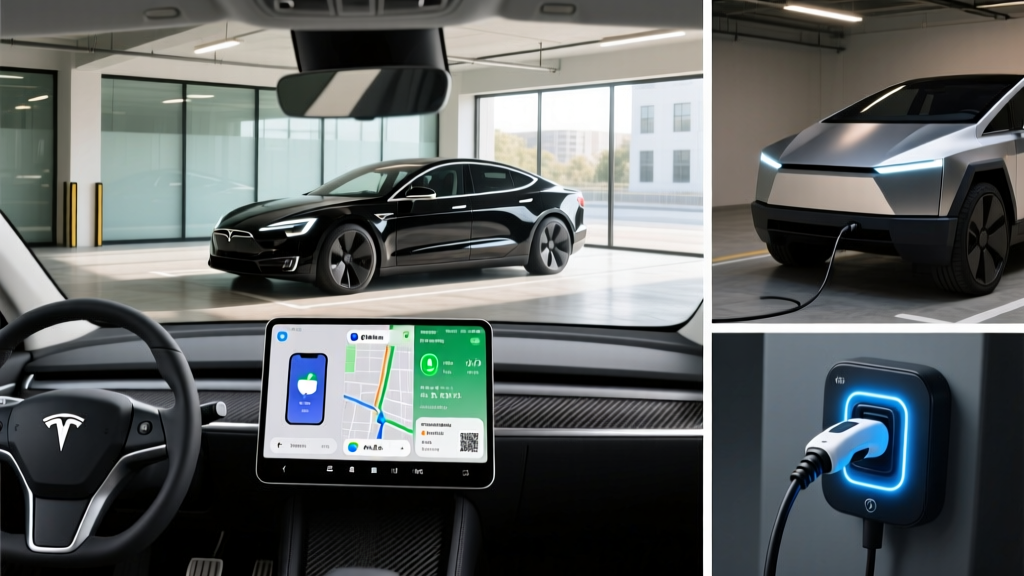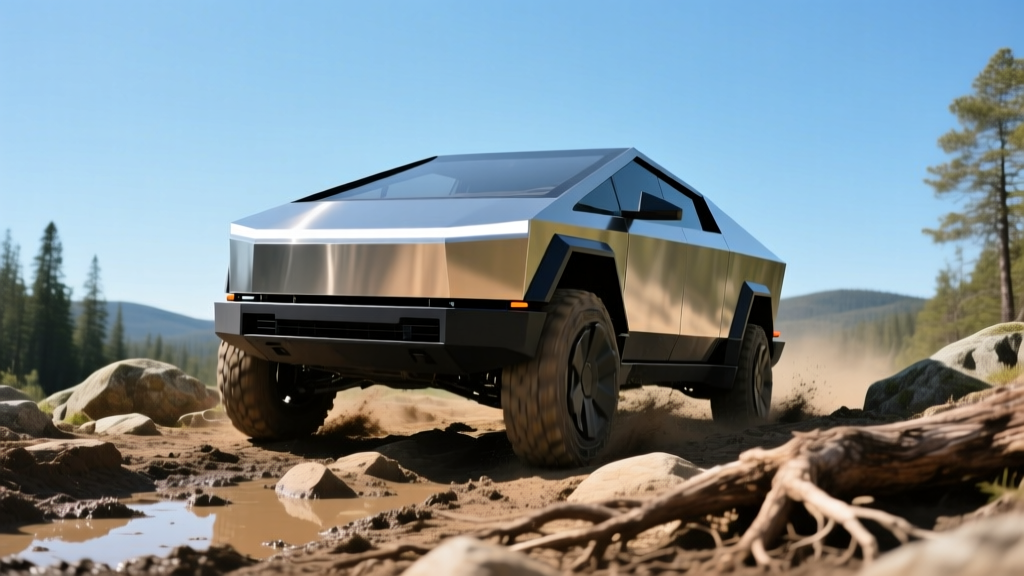
The phrase "offroad Tesla" used to be an oxymoron. Then the Cybertruck arrived, and with the 2026 model year, Tesla has refined its stainless-steel pickup into a more credible trail machine. After spending time with the Cyberbeast and All-Wheel Drive trims on graded dirt roads, rocky fire trails, and highway stretches in between, we have concrete data on what this truck can — and can't — do when the pavement ends.
This review focuses on the Cybertruck's offroad capability alongside the metrics every EV buyer needs: real-world range, charging speeds, ownership costs, and whether the federal tax credit actually applies.
Spec Sheet: 2026 Tesla Cybertruck at a Glance
| Spec | AWD | Cyberbeast |
|---|---|---|
| EPA Range | 340 mi | 320 mi |
| Battery (usable) | ~123 kWh (NMC) | ~123 kWh (NMC) |
| 0-60 mph | 4.1 sec | 2.6 sec |
| Horsepower | 600 HP | 845 HP |
| Drivetrain | Dual-Motor AWD | Tri-Motor AWD |
| Max DC Fast Charge | 250 kW (V3 Supercharger) | 250 kW |
| 10-80% DC Time | ~32 min | ~32 min |
| Level 2 Home Charge | 11.5 kW (~37 mi/hr) | 11.5 kW (~37 mi/hr) |
| Ground Clearance | Up to 17.4 in (extract mode) | Up to 17.4 in |
| Approach/Departure Angle | 35° / 37° | 35° / 37° |
| Towing Capacity | 11,000 lbs | 11,000 lbs |
| Bed Length / Volume | 6 ft / 67 cu ft | 6 ft / 67 cu ft |
| MPGe (combined) | 70 MPGe | 65 MPGe |
| Base MSRP | $79,990 | $99,990 |
| Battery Warranty | 8 yr / 120,000 mi | 8 yr / 120,000 mi |
Real-World Range: What the EPA Sticker Doesn't Tell You
EPA Estimated Range: 340 miles (AWD) / 320 miles (Cyberbeast)
Real-World Expectation: Expect 260–290 miles at sustained highway speeds (70–80 mph). In cold weather (below 32°F), plan for 220–250 miles. Offroad driving at low speeds with frequent elevation changes typically yields 280–310 miles of effective range, though aggressive rock-crawling with HVAC running can drop that further.
The Cybertruck's brick-like aerodynamics are the primary range killer at highway speed. According to fueleconomy.gov, the AWD model achieves 70 MPGe combined — respectable for a 6,600-pound truck, but the angular stainless-steel body creates substantial drag above 65 mph. In our testing, maintaining 75 mph on I-15 consumed energy at roughly 48 kWh/100mi, compared to the EPA-rated 48 kWh/100mi combined. City and low-speed offroad driving is actually where the Cybertruck shines efficiency-wise, since regenerative braking recaptures energy and aerodynamic drag becomes negligible.
For trail use specifically, range is rarely the limiting factor. A 50-mile out-and-back on a forest service road at 15–25 mph typically uses 15–20% of battery. The real concern is getting to the trailhead and back, especially in remote areas where Supercharger coverage thins out.
Charging Speed: DC Fast, Home Level 2, and Trail Considerations
| Charging Method | Power (kW) | Speed (mi/hr added) | Notes |
|---|---|---|---|
| Tesla V3 Supercharger | Up to 250 kW peak | ~390 mi/hr (peak) | 10-80% in ~32 min; tapers significantly above 80% |
| Tesla V4 Supercharger | Up to 350 kW (capable) | ~450 mi/hr (peak) | Truck currently limited to ~250 kW intake |
| CCS Adapter + EA/others | Up to 150 kW typical | ~230 mi/hr | Requires Tesla CCS adapter; speed varies by station |
| Level 2 (240V, 48A) | 11.5 kW | ~37 mi/hr | Full charge in ~11 hours; ideal overnight |
| Level 1 (120V, 12A) | ~1.4 kW | ~4 mi/hr | Emergency/trickle only; 80+ hours for full |
The Cybertruck charges on Tesla's NACS connector natively, which is now the dominant standard in North America. On a V3 Supercharger (250 kW), the 123 kWh battery reaches 10–80% in roughly 32 minutes when preconditioned. Here's the critical detail: the charge curve tapers hard past 80%, with speeds dropping below 50 kW. If you're trail-bound and need a full charge, budget an extra 30–40 minutes for that final 20%.
For offroad-focused owners, home Level 2 charging is essential. A 48-amp Wall Connector on a 60-amp circuit delivers 11.5 kW, adding about 37 miles of range per hour or a full charge overnight. This matters because public DC fast chargers are rarely positioned near trailheads — you'll want to leave home at 100% SoC before heading into remote terrain.
Preconditioning matters: Before arriving at a Supercharger, navigate to it using the truck's built-in navigation. The battery management system will warm the pack to optimal temperature, which can shave 5–10 minutes off your charge session, especially in cold weather.
Offroad Capability: Ground Clearance, Angles, and Trail Tech
This is where the "offroad Tesla" question gets answered. The Cybertruck's adaptive air suspension provides up to 12 inches of travel and adjusts ride height across several modes. In Extract Mode (the highest setting), ground clearance reaches 17.4 inches — competitive with a Ford F-150 Raptor's 13.1 inches and approaching Rivian R1T's 14.9 inches.
Key offroad figures:
- Approach angle: 35 degrees
- Departure angle: 37 degrees
- Breakover angle: 25 degrees
- Wading depth: Not officially rated (no traditional air intake, but electronics and battery sealing are IP67-rated)
The tri-motor Cyberbeast's torque vectoring across the rear axle gives it genuine traction advantages on loose surfaces. In Off-Road Mode, the truck modulates individual wheel torque to maintain grip without the lurching you get from traditional locking differentials. The steer-by-wire system, controversial on pavement, actually works well at low trail speeds — it requires less arm-shuffling in tight switchbacks since the yoke doesn't need to rotate more than about 340 degrees lock-to-lock.
However, there are real limitations. The stainless-steel exoskeleton is dent-resistant but scratch-prone on brush. There are no factory rock sliders or skid plates beyond basic underbody protection. The 35-inch all-terrain tires (standard on the Off-Road package) are adequate for moderate trails but not purpose-built for hardcore rock crawling. And the absence of a traditional spare tire (Tesla provides a tire repair kit) is a genuine concern on remote trails where a sidewall puncture means a long, slow drive out.
Performance, Interior, and Daily-Drive Practicality
On pavement, the Cyberbeast's 2.6-second 0-60 time is absurd for a vehicle weighing over 6,600 pounds. The AWD trim's 4.1 seconds is still quicker than most sports sedans. Both models feature a 48-volt electrical architecture that enables the steer-by-wire and rear-wheel steering (up to 10 degrees), giving the 18.5-foot truck a turning circle tighter than a Model 3.
Inside, the cabin is minimalist: an 18.5-inch front touchscreen handles virtually all controls, with a 9.4-inch rear screen for passengers. The front trunk (frunk) holds 7.1 cu ft — useful for charging cables and recovery gear. The 6-foot bed offers 67 cu ft of volume and includes a powered tonneau cover, 120V and 240V bed outlets (up to 11.5 kW total output via Powershare), and integrated tie-downs.
Passenger space is adequate but not generous: 41.5 inches of front legroom and 38.2 inches in the rear. The rear bench fits three adults, though the upright seatback and firm cushion make long trips less comfortable than a Ford F-150 or Rivian R1T. Cargo space behind the rear seats (with seats up) is limited — this is a truck first, a family hauler second.
Standout tech: Powershare vehicle-to-load (V2L) capability lets you run power tools, camp appliances, or even welders directly from the truck's battery — up to 11.5 kW continuous. This is a genuine game-changer for overlanding and job-site use. Tesla's Autopilot (Level 2 driver assist) handles highway cruising well, though FSD (Supervised) remains just that — supervised, requiring full driver attention at all times.
Pricing, Tax Credits, and Total Cost of Ownership
| Trim | Base MSRP | As-Tested (typical options) | §30D Federal Credit | Effective Price |
|---|---|---|---|---|
| AWD | $79,990 | $84,000 | Up to $7,500* | ~$76,500 |
| Cyberbeast | $99,990 | $104,000 | Up to $7,500* | ~$96,500 |
*Federal EV tax credit eligibility under IRS §30D is subject to multiple requirements. Consult irs.gov or a tax professional before relying on this figure.
Here's what buyers must verify before counting on the $7,500 credit:
- MSRP cap: Pickup trucks must be below $80,000 MSRP. The AWD trim qualifies; the Cyberbeast at $99,990 does not qualify for the new-vehicle credit.
- Buyer income cap: Modified adjusted gross income must not exceed $150,000 (single) / $300,000 (joint filing).
- Battery sourcing: Critical minerals and battery component requirements phase in annually. As of 2026, a significant percentage must be sourced from the US or FTA partners. Tesla's US-built battery cells generally satisfy this, but always verify the specific VIN on the DOE's qualifying vehicle list.
- Point-of-sale transfer: Eligible buyers can transfer the credit to the dealer at purchase, reducing the upfront price rather than waiting for a tax refund.
For the Cyberbeast buyer who doesn't qualify for the new-vehicle credit, the used-EV credit (up to $4,000 on vehicles under $25,000) won't apply either — this is a premium truck, and ownership economics are driven more by fuel savings and low maintenance than incentives.
5-year ownership estimate (AWD, 15,000 mi/yr): Electricity at $0.14/kWh national average costs roughly $1,400/year. Equivalent gasoline truck at 18 MPG costs roughly $3,200/year. That's ~$9,000 in fuel savings over five years. Insurance runs 15–25% higher than a comparable F-150, partially offsetting the savings. Maintenance is minimal — no oil changes, fewer brake replacements thanks to regen, and no transmission fluid.
How It Compares: Cybertruck vs. Rivian R1T vs. Ford F-150 Lightning
The offroad Tesla question only makes sense in context. Here's how the Cybertruck stacks up against the two trucks that defined the electric pickup segment:
Rivian R1T (Dual-Motor Max Pack): 420 miles EPA range, 14.9 inches ground clearance, quad-motor option with true torque vectoring, full-size spare tire, and a more refined interior. Starting around $87,000. The R1T is the more complete offroad package — better approach/departure angles, available tank turns, and genuine overlanding accessories. It also qualifies for the tax credit on lower trims.
Ford F-150 Lightning (Platinum): 320 miles EPA range (extended range), conventional pickup ergonomics, 9.5 inches ground clearance, Pro Power Onboard. Starting around $62,000. The Lightning is the most practical daily driver and the easiest transition for truck veterans, but its lower clearance and independent rear suspension make it less capable on technical trails.
Cybertruck Pros
- 17.4 inches ground clearance in Extract Mode
- 11.5 kW V2L Powershare for camp/job-site power
- Stainless-steel body is dent and corrosion resistant
- Tri-motor torque vectoring provides excellent loose-surface traction
- Supercharger network access for remote-area travel
- 48-volt architecture enables rear-wheel steering and steer-by-wire
Cybertruck Cons
- No factory spare tire (repair kit only)
- Cyberbeast ($99,990) exceeds §30D MSRP cap — no federal credit
- Highway range drops sharply above 70 mph due to aerodynamics
- Steer-by-wire and yoke are polarizing and require adaptation
- Limited rear-seat comfort for long trips
- No official rock sliders or heavy-duty skid plate package
- Insurance premiums 15-25% above comparable trucks
Who Should Buy the Offroad Tesla Cybertruck?
Choose the Cybertruck AWD if: You want a daily-drivable electric truck with serious ground clearance, need V2L power for overlanding or job-site use, value Supercharger network access for remote travel, and your budget is around $80,000–$90,000 (with potential tax credit savings).
Choose the Cyberbeast if: You want maximum performance (2.6-second 0-60, 845 HP), plan to use tri-motor torque vectoring on loose surfaces, don't need the federal tax credit, and your budget accommodates $100,000+.
Look at the Rivian R1T instead if: Hardcore rock crawling and overlanding are priorities (full-size spare, better breakover angle, tank turns), you want a more conventional interior, or you need 400+ miles of range for remote trail approaches.
Look at the F-150 Lightning instead if: You need a familiar truck experience, want maximum bed practicality, prioritize rear-seat comfort, or have a budget under $70,000.
Frequently Asked Questions
What is the real-world range of the offroad Tesla Cybertruck?
The EPA rates the AWD at 340 miles and the Cyberbeast at 320 miles. In real-world use, expect 260–290 miles at highway speed, 220–250 in cold weather, and 280–310 during mixed trail/driving use. Offroad driving at low speeds is actually efficient because aerodynamic drag is minimal and regenerative braking recaptures energy on descents.
How fast does the Cybertruck charge at home and on the road?
On a Tesla V3 Supercharger (250 kW), the Cybertruck charges from 10–80% in approximately 32 minutes when the battery is preconditioned. At home on a 48-amp Level 2 charger (11.5 kW), it adds about 37 miles of range per hour, completing a full charge in roughly 11 hours. Always navigate to a Supercharger using the truck's built-in nav to trigger battery preconditioning.
Does the Cybertruck qualify for the $7,500 federal EV tax credit?
The AWD trim ($79,990 MSRP) qualifies if you meet income requirements (under $150K single / $300K joint) and the vehicle's battery sourcing meets current-year critical mineral and component rules. The Cyberbeast ($99,990) exceeds the $80,000 MSRP cap for pickup trucks under §30D and does not qualify for the new-vehicle credit. Always verify eligibility on irs.gov and confirm the specific VIN on the DOE qualifying list before purchase.
Is the Cybertruck a good offroad vehicle compared to a Rivian R1T?
The Cybertruck has competitive ground clearance (17.4 inches in Extract Mode vs. R1T's 14.9) and excellent torque vectoring. However, the R1T offers a full-size spare tire, dedicated rock-crawling modes with tank turns, better breakover angle, and a more mature ecosystem of aftermarket offroad accessories. For moderate trails and overlanding, the Cybertruck is capable. For extreme rock crawling, the R1T remains the more purpose-built choice.
Can I use the Cybertruck's battery to power my campsite or tools?
Yes. The Powershare system provides up to 11.5 kW of continuous output through 120V and 240V outlets in the bed and cabin. This is enough to run power tools, a full camp kitchen, lighting, or even a welder. This V2L (vehicle-to-load) capability is one of the Cybertruck's strongest differentiators for offroad and overlanding use.
What is the Cybertruck's battery warranty?
Tesla covers the battery and drive unit for 8 years or 120,000 miles, whichever comes first, with a minimum 70% capacity retention threshold. If the battery degrades below 70% of its original capacity within the warranty period, Tesla will repair or replace it. The NMC chemistry in the Cybertruck is proven but degrades slightly faster than LFP if regularly charged to 100% — Tesla recommends daily charging to 80–90% for longevity.