What New York EV Buyers Actually Save in 2026
Between the federal §30D credit, the NY state electric car tax credit (officially the Drive Clean Rebate), and utility incentives from Con Edison or National Grid, New York remains one of the most incentive-rich states for going electric. But stacking rebates doesn't automatically make an EV cheaper than a gas car — higher insurance premiums, upfront MSRPs, and uneven depreciation can eat into your savings fast.
This guide walks through the real 5-year cost of owning an EV in New York, with exact numbers for fuel, maintenance, insurance, and depreciation, plus the eligibility caveats that determine whether you actually pocket that $7,500 federal credit or walk away with zero.
The 5-Year Total Cost of Ownership Breakdown
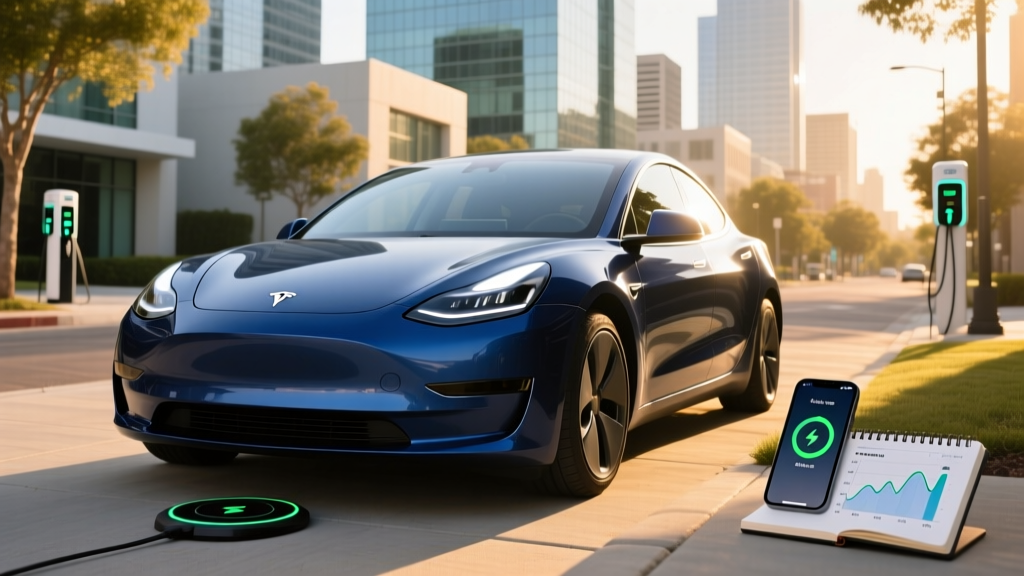
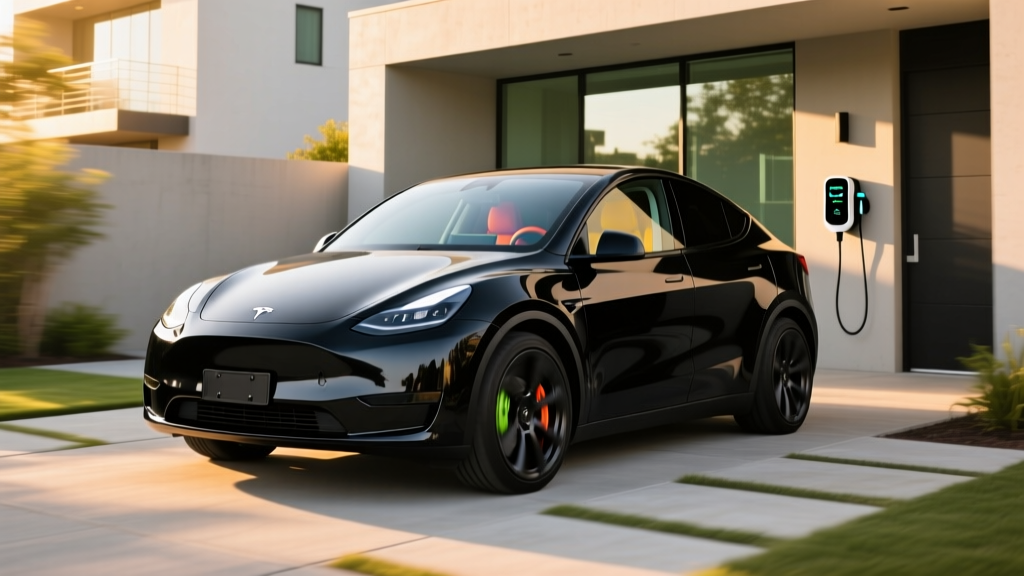
To make this concrete, we'll compare two popular New York vehicles over 60 months and 75,000 miles (the national average of ~15,000 miles/year): the 2026 Tesla Model Y Long Range AWD (base MSRP ~$44,990, EPA 320 miles, 75 kWh usable NMC battery, 250 kW peak DC fast charge, 0-60 in 4.8 seconds, 346 HP) versus the 2026 Toyota RAV4 XLE AWD (base MSRP ~$32,000, EPA 30 MPG combined, 203 HP).
| Category | Tesla Model Y LR AWD | Toyota RAV4 XLE AWD |
|---|---|---|
| Purchase price (MSRP + dest.) | $45,990 | $32,500 |
| Federal §30D credit | –$7,500 (if eligible) | $0 |
| NY Drive Clean Rebate | –$2,000 (point-of-sale) | $0 |
| Net acquisition | $36,490 | $32,500 |
| Fuel / electricity (75k mi) | $3,525 | $9,375 |
| Maintenance (5 yrs) | $1,400 | $3,800 |
| Insurance (5 yrs) | $12,600 | $8,400 |
| Depreciation (est.) | $18,245 | $11,375 |
| Total 5-year cost | $72,260 | $65,455 |
| Cost per mile (all-in) | $0.96 | $0.87 |
The Model Y's operating costs (fuel + maintenance) are roughly $8,250 lower over five years, but higher insurance (+$4,200) and steeper depreciation (+$6,870) mean the gas RAV4 still comes out ~$6,800 ahead in total cost. Your mileage — literally — will vary based on home electricity rates, insurance profile, and how long you hold the vehicle.
Federal Tax Credit: IRS §30D Rules That Actually Matter
The federal clean vehicle credit under Internal Revenue Code §30D offers up to $7,500, but most buyers don't qualify for the full amount. The credit is split into two $3,750 halves, each with its own battery-sourcing requirement, and it's wrapped in income and MSRP caps.
- Income caps (MAGI): $150,000 single / $225,000 head of household / $300,000 joint — applies to the tax year of delivery or the prior year, whichever is lower.
- MSRP caps: $80,000 for SUVs, pickups, and vans; $55,000 for sedans and other body styles.
- Battery components: Must be manufactured or assembled in North America (phased-in percentage thresholds by year).
- Critical minerals: Must be sourced from the U.S. or a free-trade-agreement partner, or recycled domestically.
- FEOC exclusion: No battery components from a "foreign entity of concern" (primarily targeting Chinese supply chains) — phases in for critical minerals in 2027.
- Point-of-sale transfer: You can assign the credit to the dealer at purchase to reduce the cash price, even if you owe less than $7,500 in taxes — but you still must file IRS Form 8936 and reconcile on your return.
- One credit per vehicle, one transfer per four years per buyer.
For a New York buyer eyeing the Model Y, the SUV MSRP cap is $80,000 — so the Long Range AWD qualifies on price. Income is the usual disqualifier: many dual-income NYC households exceed $300,000 MAGI. Confirm current sourcing rules at IRS.gov, because eligible-vehicle lists shift as automakers reshuffle supply chains.
New York State Incentives: Drive Clean Rebate & Utility Perks
The NY Drive Clean Rebate, administered by NYSERDA, is a point-of-sale rebate (not a tax credit) of up to $2,000 for new BEVs and PHEVs with a base MSRP under $60,000. It stacks with §30D and is applied directly at the dealer — no tax filing required. PHEVs with less than 20 miles of electric range typically receive a reduced rebate.
Beyond the state rebate, New York utilities offer their own perks:
- Con Edison: Smart charging rebates and time-of-use rates that push off-peak electricity to ~$0.14/kWh overnight — critical for minimizing home-charging cost.
- National Grid (upstate): EV Make-Ready Program covers up to 100% of the utility-side infrastructure cost for Level 2 charger installation in eligible locations.
- Rochester Gas & Electric / NYSEG: Periodic $250-$500 rebates on Level 2 home chargers.
- Municipal tolls: Some NY bridges and tunnels offer green-vehicle E-ZPass discounts (program-dependent; verify with the MTA/TBTA).
New York City also exempts BEVs from the annual MTA Surcharge that applies to gas vehicles registered in the MTA district — a small but recurring saving.
Charging vs Gas: The Per-Mile Math in New York
Electricity pricing varies wildly across New York. Downstate (Con Edison territory) averages ~$0.24/kWh on standard residential rates; upstate (Niagara Mohawk, National Grid) often sits closer to $0.16/kWh. DC fast charging at Electrify America or Tesla Superchargers typically runs $0.40-$0.55/kWh in the state.
| Scenario | Cost / kWh or Gal | Efficiency | $/Mile |
|---|---|---|---|
| Model Y — home L2 (upstate) | $0.16/kWh | 3.5 mi/kWh (286 Wh/mi) | $0.046 |
| Model Y — home L2 (NYC) | $0.24/kWh | 3.5 mi/kWh | $0.069 |
| Model Y — DC fast charge | $0.48/kWh | 3.5 mi/kWh | $0.137 |
| RAV4 AWD — gas ($3.50/gal) | $3.50/gal | 30 MPG | $0.117 |
| RAV4 AWD — gas ($4.20/gal, NYC) | $4.20/gal | 30 MPG | $0.140 |
Home-charged upstate EV owners pay roughly one-third the per-mile fuel cost of a 30-MPG gas car. In NYC with high retail electricity, the gap narrows — and if you rely heavily on DC fast charging, the EV can actually cost more per mile than gas. This is why home Level 2 access is the single biggest predictor of EV fuel savings.
Real-world note: the Model Y's EPA 320-mile range drops to roughly 260-280 miles at sustained 75-mph highway speeds, and 20-30% further in a New York January. Plan road trips on I-87 or I-90 around charging-curve taper, too — the Model Y peaks at 250 kW but sustains ~150 kW average from 10-80%, taking roughly 22-25 minutes on a V3 Supercharger.
Maintenance Savings: Where EVs Quietly Win
EVs eliminate the maintenance items that dominate gas-car service bays: no engine oil, no transmission fluid, no spark plugs, no timing belts, no oxygen sensors, no catalytic converters. Regenerative braking also dramatically extends brake pad life — many EV owners report original pads at 80,000+ miles.
| Service Item | EV (Model Y) | Gas (RAV4) |
|---|---|---|
| Oil changes | $0 | $600 (8 changes) |
| Transmission fluid | $0 | $180 |
| Brake pads (front + rear) | $0 (regen-saved) | $900 |
| Engine air filter | $0 | $150 |
| Cabin air filter | $200 | $200 |
| Tire rotation + replacement | $1,200 (heavier wear) | $1,000 |
| Coolant / misc. | $0 | $220 |
| Total | $1,400 | $3,800+ |
The one maintenance cost that's higher on EVs: tires. Instant torque and the ~4,400-lb curb weight of a Model Y wear tires faster than a 3,600-lb RAV4. Budget for one extra set over five years.
Insurance Reality: The Line Item That Stings
EVs cost more to insure — typically 15-30% higher premiums than comparable gas vehicles, according to industry data. The reasons are structural, not arbitrary:
- Higher repair costs: Battery packs are expensive and often require specialized high-voltage technicians after collision damage.
- Total-loss thresholds: Insurers more readily declare EVs totaled when battery integrity is in question, driving up claim payouts.
- Purchase price: A $45,000 Model Y simply costs more to replace than a $32,000 RAV4.
- Parts availability: Tesla's direct-repair network and proprietary parts can lengthen claim cycles.
In New York, expect Model Y comprehensive + collision premiums around $210-$250/month for a 35-year-old driver with a clean record, versus $140-$170/month for the RAV4. Shop quotes from Geico, Progressive, State Farm, and Tesla Insurance (where available) — spreads of $50+/month between carriers are common.
Depreciation and Resale Value: The Moving Target
EV depreciation has been volatile. Tesla's aggressive price cuts in 2023-2024 cratered used-EV values across the market, and early 2025 data showed 3-year retention rates for mainstream EVs around 55-65%, versus 65-75% for gas counterparts like the RAV4.
For the Model Y in our scenario, expect roughly 40% retention at 5 years / 75,000 miles — meaning ~$18,245 in depreciation from a $36,490 net acquisition. The RAV4 historically holds closer to 65%, yielding ~$11,375 in depreciation from $32,500.
Three factors could narrow this gap:
- Battery health data maturation: As more 100,000+ mile EVs prove minimal degradation (LFP packs in particular routinely retain 90%+ capacity at 100k miles), used buyers gain confidence.
- Federal used-EV credit (§25E): Up to $4,000 for qualifying pre-owned EVs under $25,000 expands the buyer pool.
- Stabilized new-EV pricing: If automakers stop the price-war whiplash, used values stop getting undercut by new ones.
Do the Savings Justify the Switch? A Decision Framework
- You can install a Level 2 home charger (essential for the $/mile advantage).
- Your household MAGI is under the §30D income caps.
- You plan to keep the vehicle 7+ years, spreading out the depreciation hit.
- You drive 15,000+ miles/year, where fuel savings compound fastest.
- You rent or live in a building without charging access.
- You're over the income caps and can't capture §30D.
- You trade vehicles every 3-4 years — depreciation will dominate your cost.
- Your daily commute is under 20 miles — a PHEV like the RAV4 Prime (42 miles EV range, 38 MPG gas) may deliver most of the savings without the insurance/depreciation penalty.
Frequently Asked Questions
How much does it really cost to own an EV over 5 years in New York?
For a mainstream midsize EV like the Tesla Model Y LR AWD, expect roughly $70,000-$75,000 all-in over 5 years / 75,000 miles when you include net acquisition, electricity, maintenance, insurance, and depreciation. That's typically 5-15% higher than an equivalent gas crossover — but the gap shrinks significantly with higher annual mileage, lower upstate electricity rates, and longer ownership horizons.
Do I qualify for the federal §30D tax credit?
Eligibility hinges on three gates: (1) your modified adjusted gross income is under $150k single / $300k joint; (2) the vehicle's MSRP is under $80k for SUVs or $55k for cars; and (3) the vehicle meets North American battery-component and critical-mineral sourcing thresholds. The IRS publishes the current eligible-vehicle list at IRS.gov — it updates periodically as supply chains shift.
How much do I actually save on fuel and maintenance?
With home Level 2 charging in upstate New York, expect ~$0.05/mile in electricity versus ~$0.12/mile for gas at $3.50/gal and 30 MPG — roughly $5,250 saved over 75,000 miles. Maintenance savings add another ~$2,400 over five years. Combined: ~$7,650 in operating savings before accounting for higher insurance.
Are EVs more expensive to insure in New York?
Yes, typically 15-30% higher than comparable gas vehicles. For a Model Y vs. RAV4 in the NYC metro, that translates to roughly $60-$90/month more. The gap is driven by higher repair costs, battery-related total-loss risk, and higher vehicle MSRPs. Always pull quotes from multiple carriers before committing.
How well do EVs hold their value compared to gas cars?
Currently, not as well. Mainstream EVs retain roughly 40-50% of value at 5 years, versus 60-70% for popular gas crossovers. This gap is driven by rapid new-EV price changes, battery-health uncertainty in the used market, and still-evolving consumer confidence. Long-term holders (7+ years) feel this less, since depreciation flattens after year 4.
Does the NY Drive Clean Rebate stack with the federal credit?
Yes. The Drive Clean Rebate is a state point-of-sale rebate, not a tax credit, and it stacks with §30D. On a qualifying $45,000 SUV, a buyer meeting all eligibility requirements could see $7,500 (federal) + $2,000 (state) = $9,500 off the effective purchase price at signing.
What if I can't install a home charger?
Public DC fast charging at $0.40-$0.55/kWh erases most of the fuel-cost advantage over gas, and the inconvenience of 20-30 minute charging stops 2-3 times per week adds real friction. If you can't charge at home or work, a PHEV (which reverts to a gas hybrid after its electric range is used) is often the more practical electrified choice in NYC apartment living.