The Real Math Behind New York's EV Incentives
New York's transition to electric mobility is backed by a specific financial tool: the NY Drive Clean Rebate. For 2026, this point-of-sale rebate provides up to $2,000 for eligible new battery-electric and plug-in hybrid vehicles. However, the true financial picture for a New York buyer isn't just about the sticker price reduction; it's about stacking this state incentive with federal credits and calculating the long-term operational savings.
To understand the value of the NY state EV rebate, we have to look at the Total Cost of Ownership (TCO). A $2,000 rebate at the dealership is significant, but it is only one part of a five-year equation involving electricity rates, insurance premiums, and depreciation curves.
Stacking Incentives: Federal, State, and Utility
One of the most common questions we get is whether the NY state EV rebate can be combined with federal incentives. The answer is yes. The state rebate is a point-of-sale reduction that does not affect your eligibility for the federal IRS §30D Clean Vehicle Credit.
Federal §30D Credit Requirements (2026)
- Maximum Credit: Up to $7,500 ($3,750 for critical minerals + $3,750 for battery components).
- MSRP Caps: Vans/SUVs/Pickups must be under $80,000; sedans/other vehicles under $55,000.
- Income Limits (AGI): $300k (joint), $225k (head of household), $150k (individual).
- Battery Sourcing: Strict requirements for North American assembly and critical mineral sourcing from FTA partners.
- Transferability: You can transfer the credit to the dealer for an immediate down payment reduction.
Source: IRS.gov
New York Specifics: Drive Clean and Utility Rebates
The Drive Clean Rebate is tiered based on the vehicle's MSRP and your income level. Lower-income residents may qualify for higher rebate amounts on more affordable models. Additionally, New York residents should check with Con Edison, National Grid, or NYSEG for "Make-Ready" programs, which can cover up to 100% of the infrastructure costs for installing a Level 2 home charger in certain income brackets.
5-Year Total Cost of Ownership (TCO) Breakdown
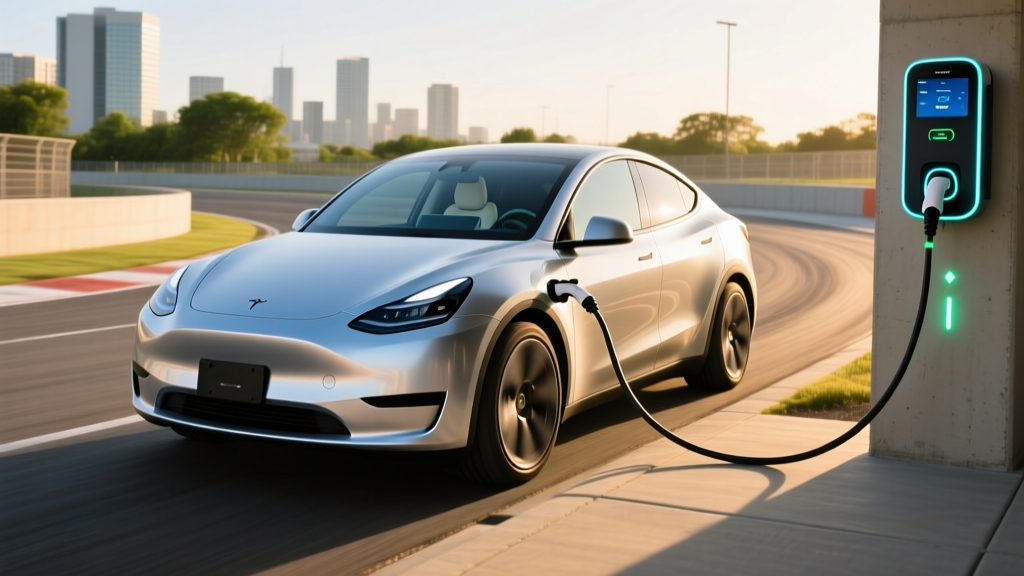
Below is a comparison of a typical 2026 EV (like the Tesla Model Y or Hyundai Ioniq 5) versus a comparable internal combustion engine (ICE) crossover. This model assumes 15,000 miles driven annually in the New York metro area.
| Category | EV (New York) | Gas Crossover | 5-Year Difference |
|---|---|---|---|
| Purchase Price (MSRP) | $46,000 | $38,000 | EV +$8,000 |
| Initial Incentives | -$9,500 ($7.5k Fed + $2k NY) | $0 | EV Advantage: $9,500 |
| Energy/Fuel (5 Yrs) | $4,800 ($0.16/kWh) | $12,300 ($3.40/gal @ 27 MPG) | EV Saves: $7,500 |
| Maintenance (5 Yrs) | $1,800 | $3,600 | EV Saves: $1,800 |
| Insurance (5 Yrs) | $10,200 | $8,200 | EV Cost: +$2,000 |
| Depreciation (Est.) | 48% | 42% | EV Cost: +$1,380 |
| Net 5-Year Cost | $53,300 | $62,100 | EV Savings: $8,800 |
Fuel vs. Electricity: The New York Cost Per Mile
New York's electricity rates are higher than the national average, but the efficiency of modern EVs still results in significant savings against gasoline.
Gasoline Vehicle (27 MPG Combined): At $3.40 per gallon, the cost is roughly $0.126 per mile.
Electric Vehicle (3.5 miles/kWh): At the NY average residential rate of $0.23/kWh, the cost is roughly $0.065 per mile. If you charge overnight on a Time-of-Use (TOU) plan or use free workplace charging, this drops further.
For a driver covering 15,000 miles a year, the annual energy savings in New York typically range between $900 and $1,500, depending on how much of your charging is done at home versus public DC fast chargers.
The Insurance Reality and Maintenance Savings
Insurance is the "hidden" cost of EV ownership. In New York, EV insurance premiums are typically 15–25% higher than equivalent gas cars. This is due to higher repair costs for specialized high-voltage components and the fact that minor collisions can sometimes necessitate a full battery-pack replacement due to safety protocols.
However, maintenance provides a reliable offset. An EV has no engine oil, no transmission fluid to flush, no spark plugs, and no exhaust system. More importantly, regenerative braking means your physical brake pads may last 100,000 miles or more, as the electric motor handles most of the deceleration.
Depreciation Trends and Resale Value
Historically, EVs depreciated faster than gas cars due to rapid tech obsolescence and battery health concerns. In 2026, this gap is narrowing as the market matures and battery longevity is proven. However, the NY state EV rebate is a "point-of-sale" incentive; it lowers your initial basis. When you sell the car in five years, the buyer will not receive the rebate again, which can slightly impact your resale value compared to the original MSRP. Always factor in the post-incentive price when calculating your long-term equity.
Frequently Asked Questions (FAQ)
Do I have to pay taxes on the NY Drive Clean Rebate?
No, the rebate is a point-of-sale price reduction and is not considered taxable income by the state or federal government.
Can I get the rebate on a used EV?
No, the NY Drive Clean Rebate is for new vehicles only. However, the federal government offers a separate "Used Clean Vehicle Credit" of up to $4,000 for eligible pre-owned models.
Does the rebate apply to Plug-in Hybrids (PHEVs)?
Yes, but the rebate amount is usually lower than for full Battery Electric Vehicles (BEVs) and depends on the vehicle's EPA-rated electric-only range.