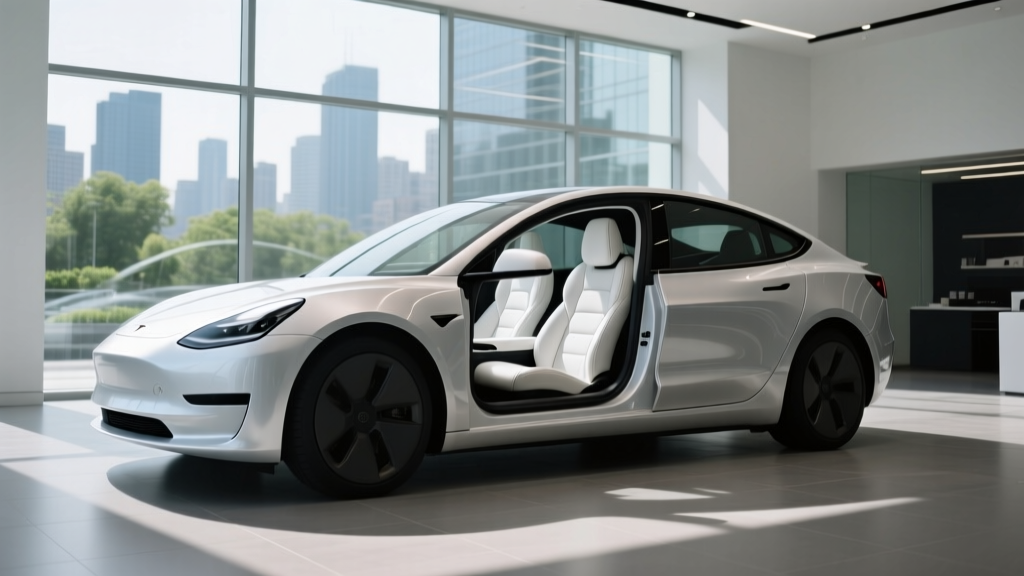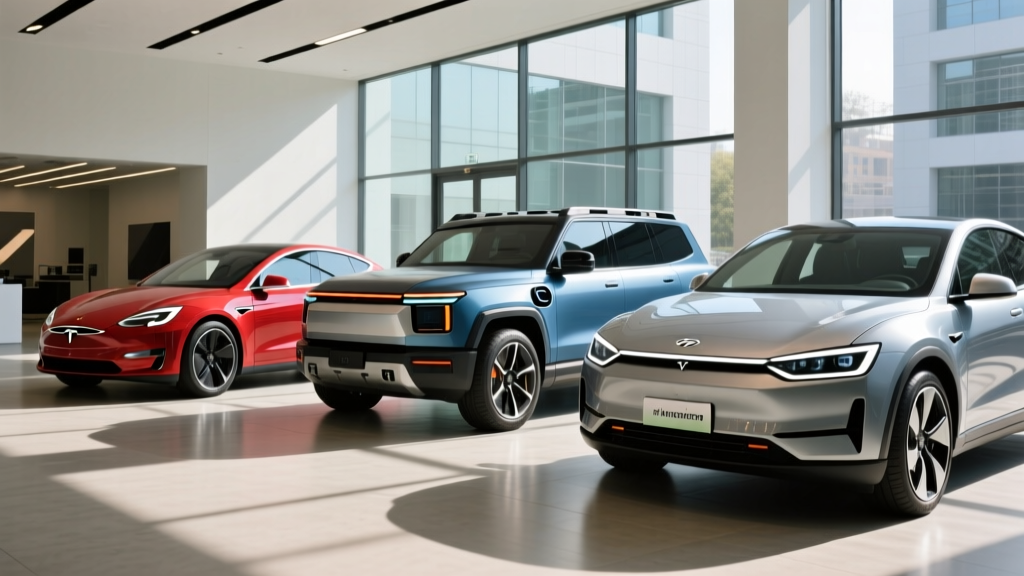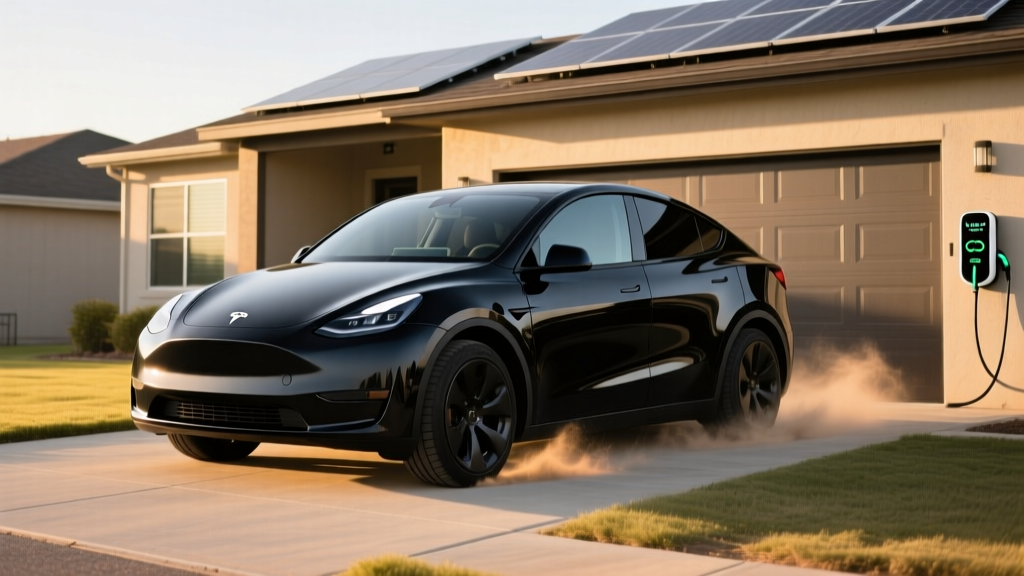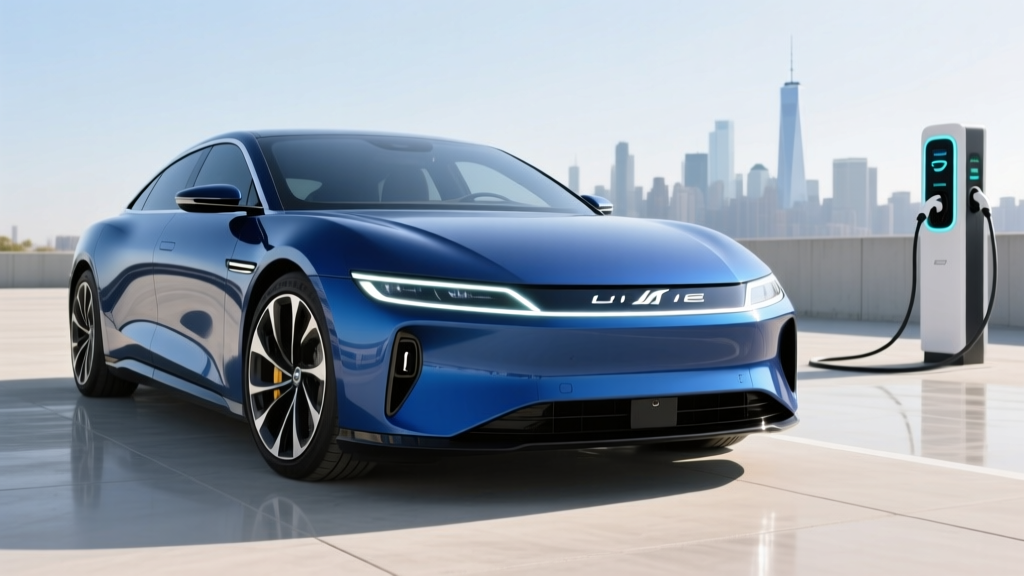
The Lucid Air Sapphire, finished in the brand's signature Sapphire Blue, is not simply a luxury sedan with a big battery. It is a 1,234-horsepower, 516-mile-range engineering statement that competes simultaneously with the Tesla Model S Plaid, the Porsche Taycan Turbo GT, and ultra-luxury flagships like the Mercedes-Benz EQS. For 2026, the Air Sapphire remains Lucid's halo performance variant — a car that posts hypercar acceleration numbers while delivering more EPA-rated range than any production sedan on the market.
This review breaks down every number a prospective buyer needs: real-world range versus the EPA sticker, the charging curve at 300 kW DC fast chargers, Level 2 home charging realities, the §30D federal tax credit eligibility (spoiler: the Sapphire doesn't qualify), and the ownership economics of a $250,000+ EV. If you're researching a "blue Lucid" — whether that's the Sapphire or a Pure/Touring/Grand Touring in Fathom Blue or Stellar White with a blue accent — the data below anchors on the Sapphire but flags where lower trims diverge.
Spec Snapshot: 2026 Lucid Air Sapphire
| Specification | Value |
|---|---|
| EPA Range | 427 miles (Sapphire); up to 516 mi (Grand Touring) |
| Battery Capacity | 118 kWh usable (NMC lithium-ion) |
| Drivetrain | Tri-motor AWD (1 front, 2 rear) |
| Horsepower | 1,234 hp |
| 0–60 mph | 1.89 seconds (manufacturer) |
| Top Speed | 205 mph |
| Max DC Fast Charge | 300 kW (peak) |
| 10–80% DC Charge | ~20 minutes |
| Level 2 Home Charge | 19.2 kW onboard (~75 mi/hr) |
| EPA Efficiency | 131 MPGe combined (Sapphire) |
| Cargo (Trunk + Frunk) | 32.0 cu ft total |
| Base MSRP | $249,000 (excl. destination) |
| Battery Warranty | 8 years / 100,000 miles |
EPA Range vs. Real-World Expectations
Real-World Highway (70 mph, 72°F): ~340–370 miles
Real-World Cold (30°F, highway): ~280–310 miles
Note: The Grand Touring trim with 19" wheels achieves an EPA 516 miles — the highest of any production sedan. The Sapphire's tri-motor drivetrain, wider 20" rear tires, and performance tuning reduce efficiency by roughly 17% compared to the dual-motor Grand Touring.
Lucid's efficiency advantage is structural. The Air uses a 900-volt architecture with silicon-carbide inverters and miniaturized drive units that reduce parasitic losses. On fueleconomy.gov, the Air Grand Touring posts 131 MPGe combined — roughly 25 kWh/100mi — making it the most efficient large luxury sedan in its class. The Sapphire trades some of that efficiency for 1,234 hp and a 1.89-second 0–60 time.
For road trips, plan conservatively around 300 miles between stops in moderate weather. In winter, preconditioning the battery (which the Air does automatically when a DC fast charger is set as your navigation destination) recovers some of the cold-weather range loss by warming the NMC cells to their optimal charging temperature.
Charging Speed: DC Fast, Level 2, and the 900V Advantage
The Air's 900V+ electrical architecture is one of the highest-voltage platforms in production, allowing it to accept up to 300 kW at compatible DC fast chargers while keeping current (amps) lower — which reduces heat and cable weight. At Electrify America's newest 350 kW stalls or Tesla Superchargers (via Lucid's included NACS adapter, standard on 2025+ models), the charge curve looks like this:
| Charging Level | Power / Rate | Miles Added per Hour | Notes |
|---|---|---|---|
| Level 1 (120V / 12A) | ~1.4 kW | ~5 mi/hr | Emergency / trickle only |
| Level 2 (240V / 48A) | 11.5 kW | ~46 mi/hr | Typical home Wall Connector |
| Level 2 (240V / 80A) | 19.2 kW (max onboard) | ~75 mi/hr | Requires hardwired 100A circuit |
| DC Fast (peak) | 300 kW | ~1,200+ mi/hr (at peak) | 10–80% in ~20 min |
| DC Fast (sustained 10–80%) | ~200 kW avg | — | Curve tapers above 80% SoC |
A critical nuance for new EV buyers: kW is power (how fast energy flows into the battery), while kWh is energy (the battery's total capacity — 118 kWh usable in the Air). The 300 kW peak only holds briefly at low state of charge. Expect the curve to taper from ~300 kW around 15% SoC to roughly 150 kW by the time you hit 70%, and below 50 kW past 90%. This is normal for NMC chemistry and is managed by the battery management system to protect long-term cell health.
For home charging, Lucid's Connected Home Wallbox is a 48A unit that adds roughly 46 miles of range per hour — enough to fully replenish a Sapphire overnight in about 10 hours. If your electrical panel supports a 100-amp dedicated circuit, you can install an 80A hardwired EVSE to unlock the Air's full 19.2 kW onboard charger, cutting that to roughly 6.5 hours. Budget $1,200–$2,800 for professional installation depending on panel proximity and local permit fees.
Performance: Tri-Motor AWD and 1.89-Second 0–60
The Sapphire's tri-motor layout places one permanent-magnet motor on the front axle and two on the rear, with torque vectoring across the rear wheels. The result is 1,234 hp and a manufacturer-verified 0–60 mph time of 1.89 seconds — placing it among the quickest production cars ever tested. The quarter-mile passes in roughly 9.2 seconds at 158 mph.
Beyond straight-line speed, the Sapphire distinguishes itself from the Tesla Model S Plaid with a more sophisticated adaptive damper system, carbon-ceramic brakes standard (10-piston front calipers), and a chassis tuned with input from Lucid's engineering team in Arizona. The steering feel and body control in Sport+ mode rival the Porsche Taycan Turbo GT, though the Lucid is notably heavier at approximately 5,200 lbs curb weight.
The dual-motor Grand Touring (620 hp, 0–60 in 3.0 seconds) and Touring (620 hp) trims offer more than enough performance for daily driving at a fraction of the Sapphire's price. The Pure RWD trim (430 hp, 0–60 in 5.0 sec) provides the best efficiency and lowest entry price.
Interior, Cargo, and Technology
The Air's cabin is minimalist-modern, dominated by a 34-inch curved glass cockpit display (5K resolution) that floats above the dashboard, plus a lower 17-inch retractable center touchscreen for climate and media controls. The software runs Lucid's proprietary EV platform with native navigation, OTA updates, and a 16-speaker Surreal Sound Pro audio system (standard on Sapphire, optional lower trims).
Passenger space is generous for a sedan: 41.3 inches of front legroom and 37.1 inches rear — competitive with the Mercedes EQS and noticeably more rear room than the Taycan. The glass canopy roof (standard on Sapphire, electrochromic dimming available) contributes to an airy cabin feel.
Cargo: The trunk holds 22.0 cu ft behind the rear seats (with a powered liftgate), and the front trunk (frunk) adds 10.0 cu ft — a total of 32.0 cu ft. That's substantially more than the Model S (28 cu ft combined) and the Taycan (14.3 cu ft combined, as it lacks a frunk).
Driver assistance: The Air ships with DreamDrive Pro, Lucid's SAE Level 2 driver-assistance suite. It includes adaptive cruise control, lane-centering, automatic emergency braking, blind-spot monitoring, and a 360-degree camera system. DreamDrive uses 32 sensors including lidar (a Luminar unit mounted in the front bumper). Importantly, this is not autonomous driving — the driver must remain attentive with hands on the wheel. Lucid has not yet released a hands-free highway system comparable to GM's Super Cruise or Ford's BlueCruise, though an OTA update adding hands-free capability on mapped highways has been announced for late 2026.
Pricing, Trim Levels, and Federal Tax Credit
| Trim | Base MSRP | §30D Federal Credit | Effective Price |
|---|---|---|---|
| Pure (RWD, 410 mi) | $69,900 | Up to $7,500* | ~$62,400 |
| Touring (AWD, 419 mi) | $87,400 | Up to $7,500* | ~$79,900 |
| Grand Touring (AWD, 516 mi) | $125,600 | $0 (exceeds MSRP cap) | $125,600 |
| Sapphire (Tri-motor, 427 mi) | $249,000 | $0 (exceeds MSRP cap) | $249,000 |
*The IRS §30D clean vehicle credit has strict eligibility rules for 2026:
- MSRP cap: Sedans must have a base MSRP of $55,000 or less (SUVs/trucks: $80,000). This eliminates the Grand Touring and Sapphire immediately.
- Buyer income cap: Modified AGI must not exceed $150,000 (single), $225,000 (head of household), or $300,000 (joint).
- Battery sourcing: Critical minerals and battery components must meet escalating domestic/free-trade-agreement sourcing percentages (80% minerals, 100% components for 2026).
- Point-of-sale transfer: Eligible buyers can transfer the credit to the dealer at purchase, reducing the out-of-pocket price immediately rather than waiting for tax filing.
The Pure trim at $69,900 exceeds the $55,000 sedan cap in most configurations, meaning only a base Pure with no options might approach eligibility — and even then, the battery-sourcing requirements must be verified on the specific VIN at the time of purchase. Consult the IRS portal and your tax professional before counting on the credit.
For the Sapphire specifically, the as-tested price with destination ($1,800) and any dealer-installed accessories typically lands around $252,000–$255,000. There is no federal purchase incentive at this price point, though some states (California, Colorado, Massachusetts) offer their own rebates that may apply — check your local DMV and energy office for current programs.
Warranty, Battery Longevity, and Ownership Costs
Lucid provides the following coverage on the 2026 Air:
- Basic vehicle: 4 years / 50,000 miles
- Battery & drive unit: 8 years / 100,000 miles (capacity retention threshold: 70%)
- Roadside assistance: 4 years / 50,000 miles
The 118 kWh NMC battery pack is liquid-cooled with an advanced thermal management system. NMC chemistry offers higher energy density than LFP (lithium iron phosphate), which is why the Air achieves its class-leading range in a relatively compact pack. However, NMC cells are more sensitive to sustained high SoC and extreme temperatures. Best practices for longevity: charge to 80% for daily use, use the scheduled charging feature to avoid sitting at 100%, and precondition before DC fast charging.
Battery replacement cost, should it be needed out of warranty, is estimated at $20,000–$28,000 based on current NMC pack pricing and Lucid's service structure — though no widespread degradation issues have been reported in Air models since the 2022 launch. Lucid's service network is still expanding; as of early 2026, there are approximately 25 service centers and 60+ mobile service vans nationwide. This is a real consideration for buyers outside major metro areas.
Insurance for the Sapphire is substantial — expect $4,500–$6,500 annually depending on your driving record and state. The Grand Touring runs $2,800–$4,000, and the Pure is closer to $2,200–$3,200. Always get a quote before purchasing.
How the Sapphire Blue Lucid Compares to Key Rivals
| Metric | Lucid Air Sapphire | Tesla Model S Plaid | Porsche Taycan Turbo GT |
|---|---|---|---|
| EPA Range | 427 mi | 359 mi | 305 mi |
| Horsepower | 1,234 hp | 1,020 hp | 1,019 hp |
| 0–60 mph | 1.89 sec | 1.99 sec | 2.1 sec |
| Max DC Charge | 300 kW | 250 kW | 320 kW |
| Cargo (total) | 32.0 cu ft | 28.0 cu ft | 14.3 cu ft |
| Base MSRP | $249,000 | $89,990 | $230,700 |
| Supercharger / Network | NACS adapter (Tesla network) | Native NACS (Tesla) | CCS (EA, Ionity) |
- You want the highest range of any performance sedan (427 mi EPA, ~340+ real-world highway)
- Interior space and cargo capacity matter (32 cu ft vs. Taycan's 14.3)
- You value a quieter, more luxury-oriented ride over track-focused dynamics
- You can access Tesla Superchargers via the NACS adapter for road trips
- Budget is a primary concern ($160K less than the Sapphire)
- You want native Supercharger access and the most mature charging network
- You prioritize software features and OTA update frequency
- Track performance, handling precision, and brand prestige are your top priorities
- You prefer Porsche's build quality and dealer service network
Pros, Cons, and the Verdict on the Blue Lucid Air
- Class-leading EPA range (427 mi Sapphire, 516 mi Grand Touring)
- 300 kW DC fast charging with 10–80% in ~20 minutes
- 1,234 hp with 1.89-sec 0–60 — genuine hypercar acceleration
- Spacious cabin with 32 cu ft cargo (best in class)
- 900V architecture future-proofs charging compatibility
- NACS adapter unlocks Tesla Supercharger network
- Sapphire at $249,000 with no federal tax credit eligibility
- Service network still limited (~25 centers nationwide)
- No hands-free driving system yet (DreamDrive is Level 2 only)
- Insurance costs are high ($4,500–$6,500/yr for Sapphire)
- Infotainment learning curve; no Apple CarPlay or Android Auto
- Brand resale value is unproven vs. Porsche/Tesla
The verdict: The Lucid Air Sapphire in blue is the most compelling combination of range, performance, and luxury space in the EV sedan segment — if you can absorb the quarter-million-dollar price tag and the still-growing service infrastructure. For buyers whose budget aligns with the Touring or Grand Touring trims, the Air offers an even more compelling value proposition with 516 miles of EPA range and available §30D credit on the lowest trims. The Sapphire is a statement car; the Grand Touring is the smart buy.
Frequently Asked Questions
What is the real-world range of the Lucid Air Sapphire?
Expect roughly 340–370 miles on the highway at 70 mph in moderate temperatures, and 280–310 miles in cold weather (below freezing). The EPA rates it at 427 miles, but real-world highway driving, climate control use, and elevation changes reduce that figure by 10–25% depending on conditions.
How fast does the Lucid Air charge at home and on the road?
On a DC fast charger, the Air Sapphire peaks at 300 kW and charges from 10–80% in approximately 20 minutes. At home on a Level 2 48A charger (11.5 kW), you'll add about 46 miles of range per hour, fully recharging overnight in roughly 10 hours. With an 80A hardwired EVSE, you can unlock the full 19.2 kW onboard charger for ~75 mi/hr.
Does the Lucid Air qualify for the federal EV tax credit?
The Grand Touring ($125,600) and Sapphire ($249,000) exceed the IRS §30D MSRP cap of $55,000 for sedans and do not qualify. The Pure and Touring trims may qualify if the buyer meets income caps ($150K single / $300K joint) and the vehicle's battery meets 2026 critical-mineral and component sourcing requirements. Always verify eligibility on the specific VIN via the IRS portal before purchase.
Is the Lucid Air worth buying over the Tesla Model S or Porsche Taycan?
If range, interior space, and a luxury ride are your top priorities, the Air (especially the Grand Touring at 516 mi EPA) is the strongest option in its class. The Model S Plaid offers 90% of the performance at a third of the Sapphire's price. The Taycan Turbo GT delivers the sharpest handling but sacrifices range and cargo space. The Air's main disadvantage is Lucid's still-developing service network.
What battery chemistry does the Lucid Air use, and how long will it last?
The Air uses NMC (nickel-manganese-cobalt) lithium-ion cells, chosen for their high energy density. The battery is warranted for 8 years or 100,000 miles with a 70% capacity retention threshold. With proper care (daily charging to 80%, avoiding prolonged 100% SoC, preconditioning before fast charging), NMC packs typically retain 85–90% capacity after 100,000 miles based on industry data.
Can I charge a Lucid Air at Tesla Superchargers?
Yes. All 2025+ Lucid Air models ship with a NACS charge port adapter that provides access to Tesla's Supercharger network (V3 and V4 stalls). The adapter supports up to 250 kW at V3 Superchargers. Lucid has also announced a native NACS port option for future model years.