The Quick Answer: Should You Buy the Nissan N7 EV?
The Nissan N7 EV is a midsize electric sedan announced by Nissan primarily for the Chinese market, built on a new modular EV architecture developed with Dongfeng. As of early 2026, Nissan has not confirmed U.S. availability. If it does arrive stateside, expect an EPA-estimated range in the 250–300 mile bracket, a starting MSRP likely between $32,000–$38,000, and DC fast charging at up to ~150 kW. For U.S. buyers considering this segment, the Hyundai Ioniq 6, Tesla Model 3, and Chevrolet Equinox EV remain confirmed alternatives with known specs and federal tax credit eligibility. Bottom line: the N7 is worth watching, but don't delay a purchase waiting on unconfirmed U.S. arrival.
What Is the Nissan N7 EV?
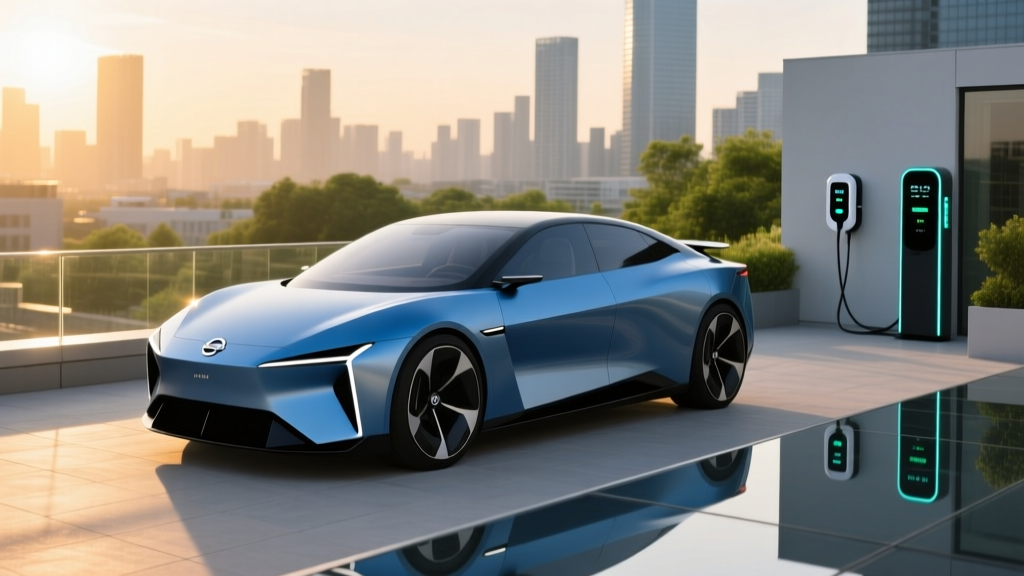
The Nissan N7 is an all-electric sedan unveiled in late 2024 and launched in China in 2025 through Nissan's joint venture with Dongfeng Motor. It represents Nissan's most significant EV push in the competitive Chinese market, sitting below the Ariya in price but targeting a similar midsize-sedan footprint. The N7 rides on a new platform that Nissan has indicated could underpin future global models — which is why U.S. buyers are paying attention.
Key known specifications from the Chinese launch include:
- Battery: ~65–75 kWh usable capacity (LFP chemistry in base trims, NMC in higher trims)
- CLTC range: Up to ~500 km (~310 miles) — note that CLTC ratings run 15–20% higher than EPA equivalents
- Estimated EPA-equivalent range: 250–270 miles (pending official U.S. certification)
- Motor output: ~160–200 kW (215–268 hp), single-motor front-wheel drive
- DC fast charging: Up to ~150 kW peak (estimated 10–80% in ~28–32 minutes)
- Level 2 AC charging: ~7–11 kW onboard charger
- ADAS: Nissan ProPILOT assist system (SAE Level 2 — driver supervision required)
Real-World Range Expectations
If the N7 earns an EPA sticker of 265 miles, plan for ~210–230 miles of real-world highway range at 70 mph in moderate temperatures. In freezing conditions (below 32°F), expect an additional 20–30% reduction, dropping effective range to roughly 170–190 miles before needing to charge. LFP-equipped trims may see slightly steeper cold-weather losses than NMC variants.
Nissan N7 EV vs. Gas Sedans: The Cost Comparison
The strongest argument for any EV in this segment is operating cost. Here's how the N7 would stack up against a comparable gas sedan like the Nissan Altima or Toyota Camry over five years and 75,000 miles:
| Cost Factor | Nissan N7 EV (Est.) | Nissan Altima 2.5 SV (Gas) |
|---|---|---|
| Base MSRP | ~$34,000 | ~$28,500 |
| Fuel/Energy (5 yr, 75k mi) | ~$3,400 (home charging @ $0.14/kWh) | ~$9,400 (30 MPG avg @ $3.50/gal) |
| Maintenance (5 yr) | ~$1,200 | ~$3,800 |
| Federal Tax Credit (§30D) | $0–$7,500 (eligibility uncertain) | $0 |
| Insurance (5 yr avg) | ~$9,500 | ~$7,800 |
| Est. 5-Year Total Cost | ~$40,600 – $48,100 | ~$49,500 |
Sources: fueleconomy.gov for efficiency data; IRS §30D credit rules.
The N7's energy cost advantage is dramatic — roughly $6,000 in fuel savings over five years with home charging. Maintenance savings add another ~$2,600 (no oil changes, fewer brake replacements due to regenerative braking, no transmission fluid). However, higher EV insurance premiums (~$1,700 more over 5 years) and a potentially higher MSRP partially offset those gains. The federal tax credit, if the N7 qualifies, is the swing factor.
Federal Tax Credit: Will the N7 Qualify?
This is the biggest unknown for U.S. buyers. Under current IRS §30D rules, a new EV can qualify for up to $7,500, but must clear multiple hurdles:
- MSRP cap: Sedans must be under $55,000 (the N7 likely clears this easily)
- Buyer income cap: AGI ≤ $150,000 single / $300,000 joint
- Battery component sourcing: Increasingly strict requirements for North American assembly of battery components — a China-built N7 faces significant barriers here
- Critical minerals: Must be sourced from the U.S. or FTA partners — Chinese-sourced LFP/NMC materials may disqualify part or all of the credit
- Final assembly: Must occur in North America — if the N7 remains China-only, it will not qualify
- FEOC restriction: Vehicles with battery components from a "foreign entity of concern" (including many Chinese suppliers) are excluded entirely
Realistic assessment: If Nissan imports the N7 from China, it almost certainly will not qualify for the federal credit under current rules. If Nissan manufactures a variant at its Smyrna, Tennessee or Canton, Mississippi plant, eligibility becomes possible but depends on battery supply chain details. Consult a tax professional before making purchase decisions based on credit assumptions.
Charging the N7: What to Expect at Home and on the Road
Charging speed determines daily usability more than range does. Here's what the N7's charging profile likely looks like based on known specifications:
| Charging Level | Power (kW) | Miles Added per Hour | Typical Use Case |
|---|---|---|---|
| Level 1 (120V outlet) | ~1.4 kW | ~4–5 mi/hr | Emergency / overnight trickle |
| Level 2 (240V home) | ~7–11 kW | ~25–35 mi/hr | Daily home charging |
| DC Fast Charge | Up to ~150 kW peak | ~250+ mi/hr (peak) | Road trips, 10–80% in ~30 min |
Charging curve reality check: That 150 kW peak rate won't be sustained for the entire session. Expect the N7 to hold peak rate from roughly 10–50% State of Charge, then taper to ~80–100 kW through 70%, and drop further to ~40–50 kW above 80%. A 10–80% session will take approximately 28–32 minutes at a capable DC fast charger. Charging from 80–100% can add another 20+ minutes — plan accordingly on road trips and charge only to 80% unless you need the full battery.
Home charging setup: A Level 2 home charger (240V, 40–48 amp circuit) will fully replenish the N7's battery overnight in roughly 7–9 hours. Installation costs typically run $800–$2,500 depending on your electrical panel's capacity and the distance from panel to charging location. If your home has a 200-amp panel with available capacity, expect the lower end. Older homes with 100-amp panels may need a $1,500–$3,000 panel upgrade — get a quote from a licensed electrician before purchasing.
Real-World Ownership: What First-Time EV Buyers Must Know
The N7 could be an appealing entry point into EV ownership, but first-time buyers should go in with eyes open. Here are the practical realities that spec sheets don't highlight:
Home Charging Access Is Non-Negotiable for Most Owners
Public DC fast charging costs roughly 2–3× more per kWh than home charging ($0.35–$0.55/kWh at Electrify America or EVgo vs. $0.12–$0.18/kWh at home). If you can't install a Level 2 charger at home or at your workplace, the N7's cost advantage over a gas sedan shrinks dramatically. An apartment dweller relying entirely on public charging might pay $6,000–$8,000 in energy costs over five years — erasing most of the EV savings.
Cold Weather Changes the Math
If you live in northern climates with sustained sub-freezing winters, the N7's effective range will drop meaningfully. LFP batteries (likely in base trims) are more susceptible to cold-weather range loss than NMC chemistry. Preconditioning the battery while plugged in mitigates this — the N7 should offer scheduled preconditioning through its app — but you'll still lose 20–30% of range on the coldest days. A 265-mile EPA rating becomes a ~180-mile car in a Minnesota January.
Insurance Costs Are Higher
EV insurance premiums run 15–25% higher than comparable gas vehicles due to higher repair costs (specialized body shop requirements, battery replacement risk, sensor recalibration after collisions). Budget an extra $300–$500/year for the N7 vs. a similarly priced Altima. Shop quotes from multiple insurers — some (like State Farm and USAA) have narrower EV premium gaps than others.
| Common Misconception | Fact |
|---|---|
| "EV batteries need replacing every 5 years" | Modern EV batteries are warrantied for 8 years/100,000 miles and typically retain 85–90% capacity at that point. Full replacement (rare) costs $8,000–$15,000. |
| "The N7 qualifies for the $7,500 tax credit" | Credit eligibility depends on final assembly location, battery sourcing, and buyer income. A China-built N7 almost certainly would not qualify under current §30D rules. |
| "150 kW charging means 150 kW the whole time" | Peak charge rate is sustained only in a narrow SoC window. Average rate across a 10–80% session is typically 60–70% of the peak figure. |
| "EVs are worse in winter" | EVs start instantly in cold weather (no cold-crank issues), and preconditioning warms the cabin using grid power. Range loss is real but manageable with planning. |
Decision Framework: Is the Nissan N7 EV Right for You?
Consider the N7 (or wait for U.S. confirmation) if:
- You want a midsize EV sedan under $40,000 and can wait for potential 2027 U.S. availability
- You have reliable Level 2 home charging and drive under 200 miles daily
- You're in a moderate climate where cold-weather range loss is minimal
- You value Nissan's dealer network for service over Tesla's direct-to-consumer model
Look at confirmed alternatives now if:
- You need a vehicle in the next 6 months — the Hyundai Ioniq 6 (EPA 361 mi, ~$38,000), Tesla Model 3 (EPA 341 mi, ~$39,000), or Chevrolet Equinox EV (EPA 319 mi, ~$33,000) are available today
- Federal tax credit eligibility is essential to your budget — the Equinox EV and certain Model 3 trims currently qualify
- You frequently road-trip in charging-desert regions where Tesla's Supercharger network remains the most reliable option
- You live in a cold climate and want a proven heat-pump-equipped platform with verified winter range data
Battery Longevity and Warranty Expectations
Nissan's track record on battery durability is mixed — early Leaf models (passive air-cooled batteries) suffered notable degradation, but the Ariya and newer platforms use liquid-cooled thermal management that dramatically improves longevity. The N7 is expected to use liquid-cooled battery packs.
If Nissan follows its current U.S. warranty structure, expect:
- Battery warranty: 8 years / 100,000 miles (capacity retention above 70–75% of original, consistent with industry standard)
- Powertrain warranty: 5 years / 60,000 miles
- Bumper-to-bumper: 3 years / 36,000 miles
LFP battery trims (if offered in the U.S.) generally offer longer cycle life — 3,000+ full charge cycles before significant degradation — versus ~1,500–2,000 cycles for NMC. For a 265-mile-range vehicle, 3,000 cycles translates to roughly 795,000 miles of theoretical battery life, far exceeding any other vehicle component. The practical concern is calendar aging, which degrades all lithium-ion cells regardless of use, typically at 1.5–2.5% per year.
Frequently Asked Questions
Is the Nissan N7 EV available in the United States?
As of early 2026, Nissan has not confirmed U.S. sales of the N7. It is currently sold in China through the Dongfeng-Nissan joint venture. Nissan executives have hinted at global expansion of the platform, but no U.S. timeline has been announced. U.S. buyers should monitor Nissan's press releases and consider confirmed alternatives if they need a vehicle soon.
How does the N7 compare to the Nissan Ariya?
The Ariya is a crossover SUV priced from ~$40,000 with up to 304 miles of EPA range and available AWD. The N7 is a sedan positioned at a lower price point (~$32,000–$38,000 estimated). The Ariya is confirmed for the U.S. market with known specs and tax credit eligibility; the N7 is not. If you need a Nissan EV today, the Ariya is the option.
Will the N7 use NACS (Tesla) or CCS charging connectors?
This is unknown for the U.S. market. Nissan's current U.S. EVs (Ariya, Leaf) use CCS1 or CHAdeMO. However, with nearly every major automaker committing to NACS for 2025+ models, a future U.S.-spec N7 would likely adopt the NACS connector — giving it native access to Tesla Superchargers. Until Nissan confirms U.S. specs, this remains speculative.
What is the estimated 0–60 mph time for the N7?
Based on the ~215–268 hp single-motor configuration, expect a 0–60 mph time in the 6.5–7.5 second range. This is adequate for daily driving and highway merging but won't match the Tesla Model 3 RWD (5.8 seconds) or Ioniq 6 SE (5.1 seconds). AWD performance variants, if offered, would be quicker.
How much does it cost to charge the N7 at home?
Assuming a ~70 kWh usable battery and a national average electricity rate of $0.14/kWh, a full home charge costs approximately $9.80, yielding roughly 250+ miles of range. That works out to about $0.04 per mile — compared to $0.12–$0.14 per mile for a 30 MPG gas sedan at $3.50/gallon. Over 15,000 miles per year, home charging saves approximately $1,200–$1,500 annually.
Can the N7 tow or use vehicle-to-load (V2L) power?
Nissan has not published towing ratings or V2L capability for the N7. Given its sedan form factor and front-wheel-drive layout, any towing capacity would likely be modest (1,000–1,500 lbs if rated at all). V2L — using the car's battery to power external devices — is increasingly common on Hyundai/Kia and Ford EVs but has not been confirmed for the N7.