Quick Verdict: The 2022 Mercedes-Benz EQS as a Used Luxury EV
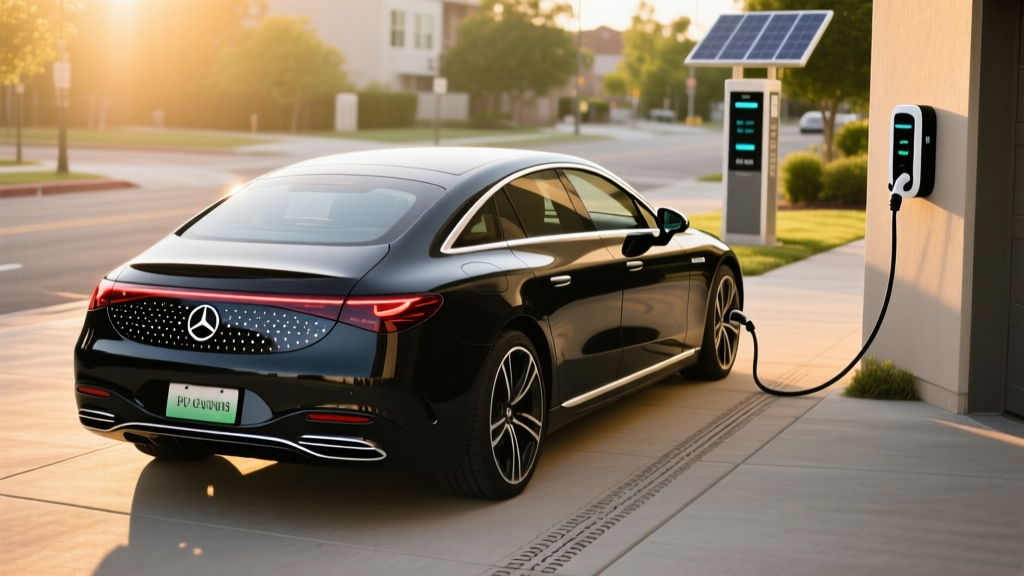
The 2022 Mercedes-Benz EQS launched as the brand's flagship electric sedan, built on a dedicated EVA2 platform rather than a modified combustion chassis. With an EPA-estimated 350 miles of range on the EQS 450+, it set a benchmark for luxury EV efficiency that few competitors have matched. Now available exclusively on the used market, the 2022 EQS represents a compelling value proposition for buyers seeking S-Class-caliber comfort with zero tailpipe emissions — provided you understand the charging-curve realities, the hyperscreen quirks, and the current federal tax credit landscape for pre-owned electric vehicles.
This review covers the 2022 model year specifically, including the EQS 450+ (single-motor RWD) and EQS 580 4MATIC (dual-motor AWD) sedan variants. We'll examine real-world range, charging behavior, ownership economics, and how this generation holds up against newer competitors in 2026.
| Spec | EQS 450+ | EQS 580 4MATIC |
|---|---|---|
| EPA Range | 350 mi | 340 mi |
| Battery (Usable) | 107.8 kWh (NMC) | 107.8 kWh (NMC) |
| Drivetrain | RWD (single motor) | AWD (dual motor) |
| Horsepower | 329 hp | 516 hp |
| Torque | 406 lb-ft | 631 lb-ft |
| 0–60 mph | 5.5 sec | 4.1 sec |
| Peak DC Charge Rate | 200 kW | 200 kW |
| 10–80% DC Fast Charge | ~31 min | ~31 min |
| Level 2 Charge Rate | 9.6 kW | 9.6 kW |
| MPGe (Combined) | 97 MPGe | 92 MPGe |
| Efficiency | 34 kWh/100 mi | 36 kWh/100 mi |
| Cargo Volume | 22.0 cu ft | 22.0 cu ft |
| Original Base MSRP | $102,310 | $125,900 |
Range & Efficiency: EPA Numbers vs. Real-World Driving
The 2022 EQS 450+ carries an EPA-estimated 350 miles of range, making it one of the longest-range luxury EVs ever sold in the United States. The dual-motor EQS 580 4MATIC drops slightly to 340 miles. These figures are enabled by the 107.8 kWh usable battery pack (120 kWh gross capacity with top and bottom buffers) using NMC (nickel manganese cobalt) lithium-ion chemistry, combined with an exceptionally low drag coefficient of 0.20 — among the slipperiest production cars ever built.
EPA 350 mi (450+) / 340 mi (580). Expect approximately 280–310 miles on sustained highway driving at 70–75 mph. In cold weather (below 32°F), range drops 15–25%, yielding roughly 250–280 miles. City driving with regenerative braking recovers more energy and can approach or slightly exceed the EPA figure. The EQS's heat pump (standard) mitigates cold-weather losses compared to EVs without one, but physics still applies.
The EQS achieves 97 MPGe combined (450+) and 92 MPGe (580) per fueleconomy.gov. Translated to energy consumption, that's 34–36 kWh per 100 miles — remarkably efficient for a 5,600-pound luxury sedan. For context, the BMW i7 xDrive60 consumes roughly 38–40 kWh/100 mi, and the Tesla Model S Long Range sits around 30–32 kWh/100 mi but in a smaller, lighter package.
One critical note on the battery: the NMC chemistry in the 2022 EQS offers high energy density (enabling that massive 107.8 kWh usable capacity in a sedan footprint) but requires more careful state-of-charge management than LFP. Mercedes recommends daily charging to 80% and only charging to 100% when you need the full range for a trip. The battery management system includes robust thermal management with liquid cooling and heating to preserve long-term health.
Charging Performance: DC Fast Charging & Home Setup
The EQS supports a peak DC fast-charge rate of 200 kW via its CCS1 connector. On paper, that's competitive but not class-leading — the Lucid Air peaks at over 250 kW, and newer 800V architectures from Hyundai/Kia and Porsche sustain higher rates longer. The real story is the charge curve.
| Charging Level | Power / Voltage | Speed (Miles Added/Hour) | Notes |
|---|---|---|---|
| Level 1 (120V household) | ~1.4 kW | ~3–4 mi/hr | Emergency/trickle only; full charge in 70+ hours |
| Level 2 (240V home/public) | 9.6 kW (40A) | ~25–28 mi/hr | Full charge in ~11 hours; ideal overnight |
| DC Fast Charge (CCS1) | Up to 200 kW peak | ~700+ mi/hr at peak | 10–80% in ~31 min; tapers significantly above 80% |
At a 350 kW-rated Electrify America or similar station, the EQS will ramp up to approximately 190–200 kW between 10–30% state of charge, then gradually taper. By 60% SoC, you're typically seeing 120–140 kW; by 80%, the rate drops to roughly 60–70 kW. This taper is why Mercedes quotes 31 minutes for 10–80%. Charging from 80–100% adds another 25–30 minutes — plan accordingly on road trips and avoid charging past 80% unless necessary.
For home Level 2 charging, the onboard 9.6 kW charger delivers roughly 25–28 miles of range per hour of charging. An overnight session of 10 hours on a 48-amp Level 2 home charger (like a ChargePoint Home Flex or Tesla Wall Connector with J1772 adapter) will replenish the full battery. Installation costs for a Level 2 home charger typically range from $800 to $2,500 depending on panel proximity and whether a 200-amp service upgrade is needed.
Preconditioning tip: The EQS will precondition its battery for faster DC charging when you set a DC fast-charger as your navigation destination. Always use this feature in cold weather — an un-preconditioned battery in winter can see peak charge rates cut by 40–50%.
Performance & Driving Dynamics
The EQS 450+ sends 329 horsepower and 406 lb-ft of torque to the rear wheels via a single permanently excited synchronous motor. The 0–60 mph sprint takes 5.5 seconds — brisk but not supercar territory. The EQS 580 4MATIC adds a front induction motor for 516 hp and 631 lb-ft, dropping the 0–60 time to 4.1 seconds.
Neither variant is a sports sedan. The EQS prioritizes isolation, comfort, and effortless highway cruising over corner-carving agility. The standard AIRMATIC air suspension with adaptive damping absorbs road imperfections with S-Class composure. Rear-axle steering (standard, up to 10 degrees on equipped models) shrinks the turning circle to an astonishing 35.8 feet — comparable to a compact hatchback — making this large sedan surprisingly maneuverable in parking lots and tight city streets.
Regenerative braking offers three levels via steering-wheel paddles (D+, D, D−) plus an intelligent D-Auto mode that uses radar and map data to modulate regen based on traffic and terrain. One-pedal driving is possible in D− mode but isn't as aggressive as Tesla or Nissan implementations. The brake pedal feel is notably linear for an EV — a common complaint in competitors that blend friction and regenerative braking poorly.
Interior, Tech & the Hyperscreen Experience
The cabin is where the 2022 EQS makes its strongest case. Standard equipment includes heated and ventilated front seats, 64-color ambient lighting, a Burmester 3D surround sound system, and wireless Apple CarPlay/Android Auto. Rear-seat legroom measures 42.2 inches — limousine-grade space that exceeds the Tesla Model S (39.6 inches) and rivals the traditional S-Class.
The available MBUX Hyperscreen spans 56 inches across the entire dashboard, integrating three displays (12.3-inch instrument cluster, 17.7-inch central OLED, 12.3-inch passenger screen) under a single glass panel. It's visually stunning but divisive: some owners love the seamless look, while others find the touchscreen-heavy interface distracting compared to physical controls. The center console eliminates nearly all hard buttons — climate, seat adjustments, and even the glovebox release live in the screen. There is a learning curve.
Cargo space measures 22.0 cubic feet via the liftback trunk — generous for a sedan and more practical than a traditional trunk opening. However, there is no front trunk (frunk); the space under the hood houses HVAC components and electronics. For comparison, the Tesla Model S offers 28 cu ft rear plus a small frunk.
Driver assistance: The EQS comes with Mercedes-Benz's Driver Assistance Package, including Active Distance Assist DISTRONIC (adaptive cruise), Active Steering Assist, Active Lane Change Assist, and Active Brake Assist. This is a SAE Level 2 system — the driver must remain attentive with hands on the wheel at all times. It is not autonomous driving. The system is smooth and confidence-inspiring on highways but cannot navigate complex urban intersections or construction zones without intervention.
Pricing, Trims & Federal Tax Credit Eligibility
The 2022 EQS launched with two sedan trims:
- EQS 450+ (RWD): Original MSRP from $102,310
- EQS 580 4MATIC (AWD): Original MSRP from $125,900
Options like the Hyperscreen ($8,500), Executive Rear Seat Package ($5,000+), and AMG Line exterior package pushed well-equipped examples past $135,000. As of 2026, used 2022 EQS sedans typically list between $52,000 and $78,000 depending on mileage, trim, and condition — a steep depreciation curve that benefits second owners.
| Factor | Details |
|---|---|
| New-Vehicle §30D Credit | Not eligible — the 2022 EQS exceeds the $55,000 sedan MSRP cap and battery sourcing requirements likely disqualify it |
| Used EV Credit (§25E) | Up to $4,000 or 30% of sale price (whichever is less) if purchased from a dealer, sale price ≤$25,000, buyer income ≤$75K single/$150K joint |
| Typical Used Price (2026) | $52,000–$78,000 — exceeds the $25,000 used-credit cap in most cases |
| Estimated Annual Charging Cost | ~$600–$900/yr (home charging at $0.14/kWh, 12,000 mi/yr) |
| Insurance (avg.) | $2,400–$3,200/yr (luxury EV premium) |
Tax credit reality check: The IRS §30D new clean vehicle credit does not apply to the 2022 EQS purchased new today (it's no longer sold new). For the §25E used EV credit, the vehicle must sell for $25,000 or less from a licensed dealer. Given that most used 2022 EQS examples trade well above $25,000, the majority of buyers will not qualify for any federal credit. Some state and utility incentives may still apply — check your local jurisdiction and energy provider. Always consult a tax professional before claiming any credit.
Warranty, Battery Longevity & Ownership Costs
Mercedes-Benz backs the 2022 EQS with:
- New-Vehicle Limited Warranty: 4 years / 50,000 miles
- High-Voltage Battery Warranty: 8 years / 100,000 miles (capacity retention guaranteed above 70%)
- Powertrain Warranty: 4 years / 50,000 miles
- Corrosion Perforation: 4 years / 50,000 miles
The 8-year/100,000-mile battery warranty with a 70% capacity retention floor is standard for the industry. Real-world degradation data from early EQS owners suggests roughly 3–5% capacity loss over the first two years and 30,000–40,000 miles — in line with NMC chemistry expectations. The large 120 kWh gross pack provides a substantial buffer; even at 70% state of health, you'd still have approximately 245 miles of real-world range.
Long-term ownership considerations include higher-than-average insurance premiums (luxury EV classification), tire replacement costs (the EQS uses specific low-rolling-resistance tires that run $250–$400 per corner), and out-of-warranty repair risk for the Hyperscreen and air suspension — both expensive components. Extended warranty coverage is worth considering for buyers keeping the vehicle past 50,000 miles.
Competitive Comparison: EQS vs. BMW i7, Lucid Air & Tesla Model S
The 2022 EQS competes with several luxury electric sedans, each with distinct trade-offs:
- BMW i7 xDrive60 (2023+): More traditional luxury execution with physical controls, but shorter range (~318 mi EPA) and higher starting price. No used 2022 examples available.
- Lucid Air Grand Touring: Superior range (516 mi EPA), faster charging (800V architecture), and more rear-seat space — but at a significantly higher price point and with a less established service network.
- Tesla Model S Long Range: Faster, lighter, with Supercharger network access and a frunk — but the interior quality, ride comfort, and cabin isolation don't match the EQS. The Model S is a performance sedan; the EQS is a luxury limousine.
- Class-leading 350-mile EPA range (450+)
- Exceptional cabin quietness and ride comfort
- Rear-axle steering for tight turning circle
- Strong efficiency (34 kWh/100 mi)
- Generous rear-seat legroom (42.2 in)
- Heat pump standard for cold-weather efficiency
- Significant used-market depreciation = buyer value
- Hyperscreen is polarizing and eliminates physical controls
- No frunk (front trunk)
- 200 kW peak DC charging lags 800V competitors
- Not eligible for federal tax credits at typical used prices
- Heavy at 5,600+ lbs — tire and brake wear costs
- Complex electronics increase out-of-warranty risk
- CCS1 connector (NACS transition may require adapter)
Who Should Buy the 2022 Mercedes-Benz EQS?
The 2022 EQS is best suited for:
- Executive commuters who prioritize cabin silence, ride quality, and back-seat comfort over sporty driving dynamics
- High-mileage drivers (20,000+ miles/year) who benefit from the 350-mile range and low per-mile electricity costs
- Used luxury-EV buyers who want S-Class presence at roughly half the original MSRP
- Home chargers with reliable Level 2 access who rarely need public DC fast charging
Look elsewhere if you need a frunk for cargo flexibility, want the fastest possible road-trip charging (consider Lucid Air or a Hyundai Ioniq 5), require three rows of seating, or want the latest NACS (Tesla) connector without adapter dependency.
Frequently Asked Questions
What is the real-world range of the 2022 Mercedes-Benz EQS?
The EPA estimates 350 miles for the EQS 450+ and 340 miles for the 580 4MATIC. In real-world highway driving at 70–75 mph, expect 280–310 miles. Cold weather (below freezing) can reduce range to 250–280 miles. City driving with regenerative braking often approaches or slightly exceeds the EPA figure.
How fast does the 2022 EQS charge at home and on DC fast chargers?
On a Level 2 home charger (9.6 kW / 48A), the EQS adds roughly 25–28 miles of range per hour, fully charging in about 11 hours. On a DC fast charger, it peaks at 200 kW and charges from 10–80% in approximately 31 minutes. Charging past 80% slows dramatically — plan to unplug at 80% on road trips.
Does the 2022 EQS qualify for the federal EV tax credit?
The new-vehicle §30D credit does not apply, as the EQS is no longer sold new and originally exceeded the $55,000 sedan MSRP cap. The used EV credit (§25E) offers up to $4,000 but requires a sale price of $25,000 or less from a dealer, plus income caps ($75K single / $150K joint). Most used 2022 EQS examples sell for $52,000–$78,000, exceeding the price cap. Consult a tax professional for your specific situation.
Is the 2022 EQS worth buying vs. the BMW i7 or Lucid Air?
Choose the EQS if you want the best combination of range, cabin comfort, and used-market value. Choose the Lucid Air for maximum range and charging speed. Choose the BMW i7 if you prefer traditional luxury controls and don't need 350+ miles of range. The EQS's steep depreciation makes it the best value of the three for used buyers.
What battery chemistry does the EQS use, and how long will it last?
The 2022 EQS uses NMC (nickel manganese cobalt) lithium-ion chemistry with 107.8 kWh usable capacity. Mercedes warranties the battery for 8 years / 100,000 miles with guaranteed capacity retention above 70%. Real-world data suggests 3–5% degradation in the first two years, with the large buffer meaning meaningful range loss won't be noticeable for well over 100,000 miles under normal use.
Does the EQS have a frunk (front trunk)?
No. The space under the hood is occupied by HVAC components, power electronics, and the windshield washer fluid reservoir. All cargo must go in the 22.0 cu ft rear liftback area.
Can the 2022 EQS use Tesla Superchargers?
The 2022 EQS has a CCS1 charge port. As of 2026, Tesla has opened portions of its Supercharger network to non-Tesla EVs via the built-in Magic Dock adapter at select stations, or you can use a third-party NACS-to-CCS adapter (such as the Lectron or A2Z adapter). Verify adapter compatibility and Supercharger access in your area before relying on this for road trips.