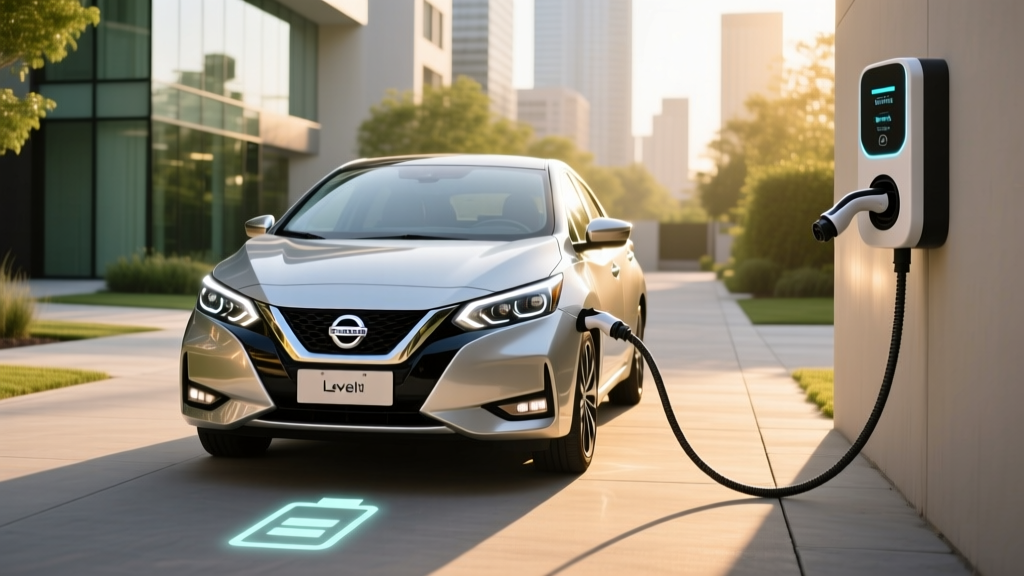
The Nissan Leaf remains one of the most recognizable names in the affordable electric vehicle segment, and for 2026, Nissan continues to offer it in a streamlined trim structure that targets budget-conscious EV buyers. If you're researching Nissan Leaf trim levels, you're likely weighing whether the entry-level S or the better-equipped SV Plus delivers the right combination of range, charging speed, and value. This profile breaks down every specification that matters for real ownership — from EPA range and battery chemistry to DC fast-charge curves and §30D tax credit eligibility.
2026 Nissan Leaf Trim Levels at a Glance
Nissan keeps the 2026 Leaf lineup simple with two primary trims. Here's how the core specifications stack up side by side:
| Specification | Leaf S | Leaf SV Plus |
|---|---|---|
| Base MSRP | $28,140 | $36,140 |
| EPA Range | 149 miles | 212 miles |
| Battery (usable) | 40 kWh | 60 kWh |
| Chemistry | NMC (laminated) | NMC (laminated) |
| Motor Output | 147 hp / 236 lb-ft | 214 hp / 250 lb-ft |
| 0–60 mph | ~7.9 sec | ~6.5 sec |
| Drivetrain | FWD | FWD |
| Max DC Fast Charge | 50 kW (CHAdeMO) | 100 kW (CHAdeMO) |
| Level 2 Home Charging | 6.6 kW (~22 mi/hr) | 6.6 kW (~22 mi/hr) |
| MPGe (combined) | 111 MPGe | 104 MPGe |
| Cargo Volume | 23.6 cu ft (rear seats up) | 23.6 cu ft (rear seats up) |
Sources: EPA fueleconomy.gov, Nissan USA specifications.
Real-World Range: What to Actually Expect
Leaf S: EPA 149 miles — expect ~120–130 miles on sustained highway driving at 70+ mph; as low as 100–110 miles in sub-30°F winter conditions.
Leaf SV Plus: EPA 212 miles — expect ~175–190 miles highway; approximately 150–165 miles in freezing temperatures with cabin heat running.
The Leaf's laminated NMC battery pack lacks active liquid thermal management — it relies on passive air cooling. This design choice has real consequences. In summer heat during repeated DC fast charging, the battery can heat-soak, causing the car to throttle charge speeds to protect the cells. In winter, the absence of a heat pump (resistance heating is standard) draws more energy from the pack for cabin warmth, cutting range by 20–35% depending on severity.
For city commuters doing stop-and-go driving with frequent regenerative braking, the Leaf's real-world range tracks closer to its EPA estimate. Highway drivers covering 60+ miles each way should treat the SV Plus's 212-mile sticker as a ~180-mile usable buffer in moderate weather.
Charging Speeds: The CHAdeMO Reality
Charging is where prospective Leaf buyers need to pay close attention. The Leaf uses the CHAdeMO DC fast-charging connector — a standard that has been steadily losing ground in North America to the CCS and NACS (Tesla Supercharger) ecosystems.
| Charging Level | Leaf S | Leaf SV Plus |
|---|---|---|
| Level 1 (120V, 12A) | ~1.4 kW / ~4 mi/hr | ~1.4 kW / ~4 mi/hr |
| Level 2 (240V, 27.5A) | 6.6 kW / ~22 mi/hr | 6.6 kW / ~22 mi/hr |
| DC Fast (Peak) | 50 kW | 100 kW |
| 10–80% DC Time (est.) | ~40 minutes | ~45 minutes* |
*The SV Plus's larger 60 kWh pack takes longer to fill from 10–80% despite the higher peak kW rate. Charge speed tapers significantly above 80% SoC to protect battery health.
On a home Level 2 charger, both trims replenish at 6.6 kW, adding roughly 22 miles of range per hour. A full overnight charge from 20% to 100% takes about 7 hours for the S and roughly 9 hours for the SV Plus.
The CHAdeMO connector limits your public fast-charging options. While Electrify America and some regional networks still maintain CHAdeMO plugs, the industry's shift toward NACS means new station deployments overwhelmingly favor Tesla's standard. If your daily routine relies heavily on public DC fast charging, verify CHAdeMO availability along your routes using PlugShare or the DOV Alternative Fuels Station Locator.
Performance and Driving Dynamics
The Leaf is a front-wheel-drive hatchback, and neither trim offers all-wheel drive. The S trim's 147 hp electric motor delivers adequate city acceleration, while the SV Plus bumps output to 214 hp — enough to merge onto highways with confidence and achieve a 0–60 mph time of approximately 6.5 seconds.
Both trims feature Nissan's e-Pedal mode, which enables one-pedal driving by maximizing regenerative braking when you lift off the accelerator. The system can bring the car to a complete stop and hold it without touching the brake pedal — a feature that reduces fatigue in heavy traffic.
Ride quality is comfortable and compliant, though the Leaf's platform dates back to its original 2011 architecture. Steering is light and numb, body roll is noticeable in corners, and the overall driving feel is competent rather than engaging. This is a practical commuter, not a performance EV.
Interior, Tech, and Cargo
Both Leaf trims seat five passengers, though the rear bench is best suited for two adults. Key interior dimensions:
- Front legroom: 42.1 inches
- Rear legroom: 33.5 inches
- Cargo (rear seats up): 23.6 cu ft
- Cargo (rear seats folded): 38.5 cu ft
The SV Plus upgrades the infotainment system to an 8-inch touchscreen with wireless Apple CarPlay and wired Android Auto (the S trim includes a smaller display with wired smartphone integration). Navigation, a Bose premium audio system, and a 360-degree camera are available on the SV Plus through option packages.
Nissan's ProPILOT Assist — a Level 2 driver-assistance system combining adaptive cruise control and lane-centering — is standard on the SV Plus and available as an option on the S. This system requires active driver supervision at all times; it does not enable hands-off or eyes-off driving.
Pricing, Trims, and Federal Tax Credit Eligibility
| Trim | Base MSRP | Est. Max §30D Credit | Effective Price |
|---|---|---|---|
| Leaf S | $28,140 | Up to $3,750–$7,500* | ~$20,640–$24,390 |
| Leaf SV Plus | $36,140 | Up to $3,750–$7,500* | ~$28,640–$32,390 |
*Credit amount depends on battery component and critical mineral sourcing compliance under IRS §30D rules. The Leaf qualifies for at least the $3,750 battery-components half credit; full $7,500 eligibility depends on current-year sourcing requirements. Buyer income caps apply ($150K single / $300K joint). Point-of-sale transfer is available at participating dealers.
Both Leaf trims fall well under the §30D MSRP cap of $55,000 for sedans/hatchbacks. The Leaf's battery is manufactured with significant Japanese and North American sourcing, which has historically helped it meet critical mineral thresholds — but the IRS updates sourcing requirements periodically, so confirm eligibility with your dealer at the time of purchase or consult a tax professional.
The point-of-sale transfer option allows qualifying buyers to apply the credit as an immediate price reduction at the dealership rather than waiting to claim it on their tax return.
Battery Warranty and Longevity
Nissan provides an 8-year/100,000-mile battery capacity warranty on both Leaf trims. The warranty guarantees the battery will retain at least 9 bars out of 12 on the battery capacity gauge (roughly 70–75% of original capacity). If degradation drops below that threshold within the warranty period, Nissan will repair or replace the pack.
Long-term degradation data from Leaf owners is mixed. The passively cooled battery pack is more susceptible to heat-related degradation in hot climates (Arizona, Texas, the Southeast) compared to liquid-cooled competitors. Owners in moderate climates routinely report 85–90% capacity retention after 5 years and 60,000 miles. Hot-climate owners may see faster decline, particularly if the vehicle is regularly DC fast-charged or parked in direct sun at high state of charge.
The standard vehicle warranty covers 3 years/36,000 miles bumper-to-bumper and 5 years/60,000 miles for the powertrain.
Pros and Cons
✓ Pros
- Low entry price, especially after tax credit
- Comfortable ride quality for daily commuting
- e-Pedal one-pedal driving is well-implemented
- Good cargo space for a compact hatchback (23.6 cu ft)
- ProPILOT Assist standard on SV Plus
- Proven platform with widely available service
✗ Cons
- CHAdeMO connector limits public DC fast-charging access
- No active liquid battery thermal management
- No heat pump — significant winter range loss
- Older platform: no frunk, dated interior feel
- FWD only — no AWD option for snow-belt buyers
- 50 kW DC cap on base S trim is slow by modern standards
Who Should Buy the 2026 Nissan Leaf?
Choose the Leaf S if: You need an affordable second car for a commute under 40 miles round-trip, you charge at home every night, and you want the lowest possible entry price into EV ownership after the tax credit.
Choose the Leaf SV Plus if: Your commute exceeds 60 miles, you occasionally take highway trips of 100+ miles, you want ProPILOT Assist as standard, and you need range headroom for cold-weather driving.
Look elsewhere if: You rely on public DC fast charging (CHAdeMO availability is shrinking), you live in an extreme-heat climate and want active battery cooling, or you need AWD for winter traction.
Frequently Asked Questions
What is the real-world range of the 2026 Nissan Leaf?
The Leaf S delivers approximately 120–130 miles on the highway in moderate weather (EPA rated 149 miles). The SV Plus achieves roughly 175–190 miles highway (EPA rated 212 miles). In sub-freezing temperatures, subtract 20–35% from those figures due to resistance heating and reduced battery efficiency.
How fast does the Nissan Leaf charge at home and on DC fast chargers?
At home on a 240V Level 2 charger, both trims charge at 6.6 kW, adding about 22 miles of range per hour. The Leaf S peaks at 50 kW on DC fast chargers (CHAdeMO), while the SV Plus peaks at 100 kW. Expect 10–80% charging in roughly 40–45 minutes depending on trim and ambient temperature.
Does the 2026 Nissan Leaf qualify for the $7,500 federal EV tax credit?
The Leaf qualifies for at least $3,750 under the battery-components prong of IRS §30D. Full $7,500 eligibility depends on critical-mineral sourcing compliance, which the IRS updates periodically. Both trims are under the $55,000 MSRP cap, and buyer income limits apply ($150K single / $300K joint). Verify current-year eligibility at irs.gov or with your tax professional.
Is the Nissan Leaf worth buying vs. the Chevrolet Bolt EV or Hyundai Kona Electric?
The Leaf's main advantages are its low price and comfortable ride. However, both the Bolt EV (CCS connector, liquid-cooled battery) and Kona Electric (CCS, faster DC charging) offer more future-proof charging compatibility. If CHAdeMO availability is strong in your area, the Leaf remains competitive on value. If you travel frequently and need broad public charging access, a CCS or NACS-equipped rival is the safer long-term bet.
Why does the Leaf still use CHAdeMO instead of CCS or NACS?
Nissan co-developed the CHAdeMO standard with TEPCO and other Japanese automakers in the early 2010s. The current Leaf platform was designed around this connector, and transitioning to NACS or CCS would require significant re-engineering. Nissan has signaled future models will adopt NACS, but the current-generation Leaf retains CHAdeMO through its production run.
How long will the Leaf's battery last?
Nissan warrants the battery for 8 years/100,000 miles at 70–75% capacity retention. Real-world data shows moderate-climate owners retaining 85–90% capacity after 5 years. Hot-climate owners and those who frequently DC fast-charge may see faster degradation due to the passively cooled pack design.