Quick Verdict: The Leaf SV Plus in 2026
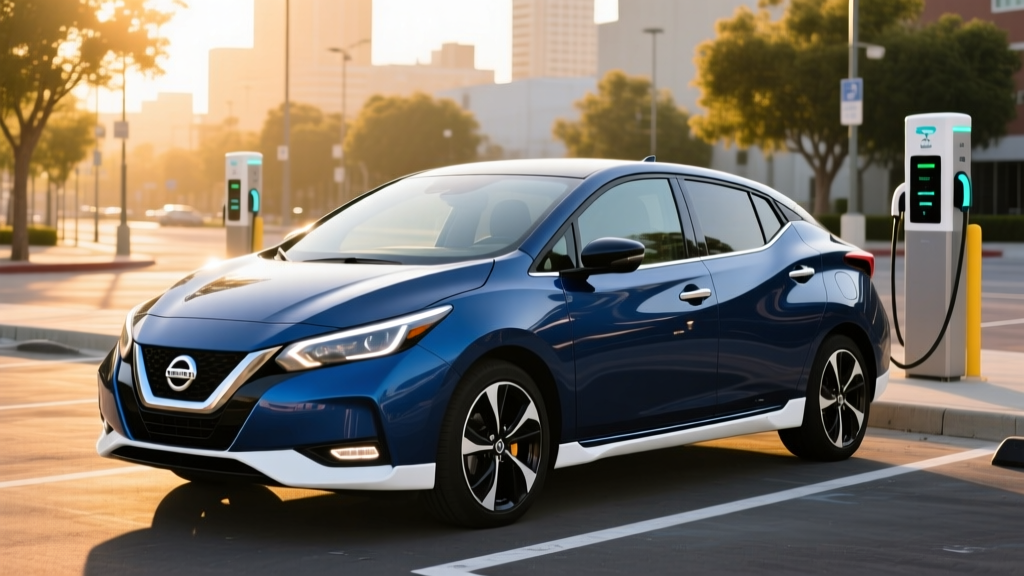
The Nissan Leaf SV Plus remains one of the most affordable long-range electric vehicles on the US market, starting at $30,190 before incentives. Its 212-mile EPA range, 60 kWh battery, and practical hatchback layout make it a strong commuter and city car. However, its CHAdeMO DC fast-charging connector — increasingly orphaned as the industry standardizes on NACS — and passive air-cooled battery thermal management limit its appeal for road-trippers and those in extreme climates. If your driving is mostly local and you can charge at home, the Leaf SV Plus delivers genuine value. If you need frequent DC fast charging or plan highway road trips, competitors with NACS/CCS access and liquid-cooled batteries serve you better.
| Spec | Value |
|---|---|
| EPA Range | 212 miles |
| Battery (usable) | 60 kWh (NMC lithium-ion) |
| Motor / Drivetrain | 160 kW (214 hp) / FWD |
| 0–60 mph | ~6.5 seconds |
| Max DC Fast Charge | ~100 kW peak (CHAdeMO) |
| 10–80% DC Charge Time | ~45 minutes (estimated) |
| Level 2 Onboard Charger | 6.6 kW (J1772) |
| MPGe (city / hwy / combined) | 123 / 99 / 111 MPGe |
| Cargo Volume (rear seats up / folded) | 23.6 / 38.5 cu ft |
| Base MSRP (SV Plus) | $30,190 (excl. destination) |
| Battery Warranty | 8 years / 100,000 miles |
Range and Efficiency: EPA Sticker vs. Real-World Miles
The Leaf SV Plus carries an EPA-estimated 212 miles of range, which places it comfortably above the 150-mile threshold most buyers consider practical for daily use. Its 111 MPGe combined rating translates to roughly 30 kWh per 100 miles — competitive with other compact EVs, though less efficient than lighter rivals like the Chevrolet Bolt EV.
Real-World Range Expectations (Leaf SV Plus):
- City / moderate driving (65°F): ~200–215 miles — regenerative braking recovers energy in stop-and-go traffic, often matching or slightly exceeding EPA.
- Highway (70–75 mph sustained): ~170–190 miles — aerodynamic drag and the single-speed reduction gear reduce efficiency at speed.
- Cold weather (20–30°F, heater on): ~145–170 miles — the Leaf lacks a heat pump, relying on resistive PTC heating, which draws significant energy from the traction battery.
The absence of a heat pump is the Leaf SV Plus's biggest efficiency drawback in northern climates. Owners in cold regions should budget 25–30% range loss in winter and plan charging stops accordingly.
Nissan's battery thermal management relies on passive air cooling rather than the active liquid cooling found in Hyundai, Tesla, and GM platforms. This means sustained high-speed driving or repeated DC fast charging in hot weather can cause the battery to thermally throttle — reducing charge speed and, over years, potentially accelerating degradation. For mild-climate commuters who charge at home overnight, this is a minor concern. For Arizona or Texas drivers making frequent fast-charge stops, it matters.
Charging Speed: The CHAdeMO Problem
Charging capability is where the 2026 Leaf SV Plus faces its most serious competitive disadvantage. Nissan continues to use the CHAdeMO DC fast-charging standard, while virtually every other major automaker has adopted or committed to the NACS (Tesla) connector, with the CCS standard also widely deployed.
| Charging Level | Power / Rate | Time or Miles Added |
|---|---|---|
| Level 1 (120V household) | ~1.2 kW | ~3–4 miles per hour |
| Level 2 (240V home / public) | 6.6 kW (J1772) | ~22 miles per hour; full charge ~9–10 hrs |
| DC Fast Charge (CHAdeMO) | Peak ~100 kW | 10–80% in ~45 min; tapers significantly above 80% |
The ~100 kW peak DC charge rate is modest by 2026 standards — rivals like the Hyundai Kona Electric and Kia Niro EV charge at up to 100–130 kW on CCS, while the Tesla Model 3 and 800V platforms from Hyundai/Kia reach 200–350 kW. More critically, the Leaf's air-cooled battery exhibits a pronounced charge-curve taper: you may see 80–100 kW briefly at low state of charge, but speeds drop to 40–50 kW by 60% SoC and further above 80%. This makes the 10–80% time slower than the peak kW figure implies.
The CHAdeMO connector network is shrinking in the US. Electrify America stations are predominantly CCS. Tesla Superchargers are NACS (with some CCS Magic Dock adapters, but no CHAdeMO). CHAdeMO remains available at some older EVgo and independent stations, but coverage is thinning. If you rely on public DC fast charging, verify CHAdeMO availability along your routes using PlugShare or ChargeHub before purchasing.
For home charging, the 6.6 kW Level 2 onboard charger is adequate. A standard 240V/30A circuit delivers roughly 22 miles of range per hour — an overnight session easily replenishes a full day's driving. We recommend a Level 2 home charger installation (typically $500–$1,500 including equipment and electrician labor) as the primary charging strategy for Leaf owners.
Performance and Driving Dynamics
The SV Plus trim equips a front-mounted electric motor producing 160 kW (214 horsepower) and 250 lb-ft of torque, driving the front wheels through a single-speed reduction gear. The result is a 0–60 mph time of approximately 6.5 seconds — genuinely quick for a compact hatchback and responsive for highway merging and passing.
Ride quality is comfortable and compliant over rough pavement, with a compliant suspension tuned for comfort over sportiness. Steering is light and direct, typical of Nissan's electric-assist calibration. The low center of gravity from the under-floor battery pack keeps body roll modest in corners, though the Leaf is not a performance-oriented EV.
Nissan's e-Pedal mode enables one-pedal driving by increasing regenerative braking aggressiveness — lift off the accelerator and the car decelerates strongly, though it does not always come to a complete stop without brake application. It's useful in city traffic but less seamless than the one-pedal implementations in Chevrolet or Hyundai EVs.
Interior, Cargo, and Technology
The Leaf SV Plus interior is functional and well-assembled, if not class-leading in materials. The 8-inch touchscreen infotainment system supports Apple CarPlay and Android Auto (wired), along with NissanConnect services. A 7-inch digital driver display shows range, energy flow, and charge status.
Cargo and passenger space:
- Cargo (rear seats up): 23.6 cu ft — generous for a compact hatchback, outperforming most sedans and rivaling small crossovers.
- Cargo (rear seats folded): 38.5 cu ft — flat load floor accommodates furniture, bikes, or large grocery hauls.
- Rear legroom: 33.5 inches — adequate for adults on shorter trips; taller passengers may find it snug compared to crossover EVs.
- Front legroom: 42.1 inches — comfortable for most drivers.
Notable technology includes Nissan ProPILOT Assist, a Level 2 driver-assistance system combining adaptive cruise control with lane centering. ProPILOT is competent for highway cruising but requires hands-on-wheel supervision at all times — it is not a hands-free system like GM's Super Cruise or Ford's BlueCruise. The Leaf also includes automatic emergency braking, blind-spot warning, rear cross-traffic alert, and lane departure warning as standard on the SV Plus.
Key drawbacks: the infotainment system lacks wireless CarPlay/Android Auto, the charging port is located on the front fascia (inconvenient for nose-in parking at charge stations), and there is no front trunk (frunk) — the space under the hood houses conventional drivetrain components.
Pricing, Trims, and Federal Tax Credit Eligibility
The 2026 Nissan Leaf is offered in two trims. The SV Plus is the higher-spec, longer-range model:
| Trim | Base MSRP | As-Tested (typical) | Potential §30D Credit | Effective Price |
|---|---|---|---|---|
| S (149 mi range, 40 kWh) | $28,140 | ~$29,500 | Up to $3,750* | ~$25,750 |
| SV Plus (212 mi range, 60 kWh) | $30,190 | ~$32,500 | Up to $3,750* | ~$28,750 |
*Federal tax credit amount depends on battery component and critical mineral sourcing compliance under IRS §30D rules. The Leaf's battery is assembled in Japan, and critical mineral sourcing may not meet full $7,500 thresholds. Verify current eligibility with your tax professional. Income caps apply: $150,000 single / $300,000 joint MAGI. MSRP cap for cars: $55,000. Point-of-sale transfer available at participating dealers.
Destination charges add approximately $1,095. Options on the SV Plus are limited — a Premium Package (around $1,500) adds a Bose audio system, leather seats, and a 360-degree camera. A well-equipped SV Plus typically lands near $32,000–$33,000 before any incentives.
Several US states offer additional rebates or tax credits (California's CVRP, Colorado's state credit, etc.), which can stack with the federal credit. Check your state energy office for current programs, as these change frequently.
Battery Longevity, Warranty, and Ownership Costs
Nissan provides an 8-year / 100,000-mile battery warranty covering defects and capacity loss below 9 bars (out of 12) on the battery health gauge — roughly equivalent to 70–75% state of health. The general vehicle warranty is 3 years / 36,000 miles, and the powertrain is covered for 5 years / 60,000 miles.
The Leaf's passive air-cooled battery is more susceptible to long-term degradation in hot climates compared to liquid-cooled competitors. Historical data from earlier Leaf generations (24 kWh and 30 kWh packs) showed notable capacity loss in Arizona and Southern California. The current 60 kWh pack uses improved NMC chemistry with better cycle life, but the thermal management limitation remains. Owners in hot climates should:
- Avoid routinely charging to 100% — target 80% for daily use.
- Minimize DC fast charging in extreme heat.
- Park in shade or garages when possible.
A full battery replacement (out of warranty) costs approximately $6,500–$9,000 including labor, based on current Nissan dealer pricing — a figure worth considering for long-term ownership planning.
How the Leaf SV Plus Compares to Key Rivals
At roughly $30,000, the Leaf SV Plus competes with several strong compact EVs. Here's how the critical specs stack up:
| Model | EPA Range | DC Connector | Peak DC kW | Base MSRP |
|---|---|---|---|---|
| Nissan Leaf SV Plus | 212 mi | CHAdeMO | ~100 kW | $30,190 |
| Hyundai Kona Electric SEL | 261 mi | NACS | ~100 kW | $32,975 |
| Chevrolet Bolt EV 2LT | 259 mi | CCS (NACS adapter avail.) | ~115 kW | $29,800 |
| Tesla Model 3 RWD | 272 mi | NACS | ~170 kW | $38,990 |
The Leaf SV Plus undercuts most rivals on price but trails on range, charging speed, and connector availability. The Bolt EV offers more range at a slightly lower price with CCS/NACS adapter access. The Kona Electric provides significantly more range and NACS Supercharger access. The Tesla Model 3 leads on range, charging, and software but costs substantially more.
Pros
- Low starting price — one of the cheapest 200+ mile EVs available
- Comfortable ride quality and compliant suspension
- Generous hatchback cargo space (23.6 cu ft)
- Comprehensive standard safety suite (ProPILOT Assist, AEB, BSW)
- Strong city efficiency with regenerative braking
- Proven, simple platform — lower repair complexity
Cons
- CHAdeMO connector — shrinking public DC fast-charge network
- No liquid battery thermal management — heat degradation risk
- No heat pump — significant cold-weather range loss (~25–30%)
- Modest DC fast-charge speed with pronounced taper
- Dated infotainment (wired-only CarPlay/Android Auto)
- No frunk; front charge port awkward at some stations
Who Should Buy the Nissan Leaf SV Plus?
Choose the Leaf SV Plus if:
- You primarily commute and drive locally (under 100 miles/day)
- You have reliable home Level 2 charging and rarely need DC fast charging
- You live in a mild climate (Pacific Northwest, coastal California, Southeast)
- Budget is a top priority and you want the lowest-cost 200+ mile EV
- You value hatchback cargo practicality over crossover styling
Look elsewhere if:
- You take frequent road trips requiring DC fast charging
- You live in an extreme-heat climate (Arizona, Texas, inland SoCal)
- You need cold-weather range reliability (Upper Midwest, Northeast winters)
- You want NACS/Supercharger or CCS network access for public charging
- You want the latest infotainment, OTA updates, or hands-free driving assist
Frequently Asked Questions
What is the real-world range of the 2026 Nissan Leaf SV Plus?
The EPA rates it at 212 miles. In real-world driving, expect approximately 200–215 miles in moderate city conditions, 170–190 miles on the highway at 70+ mph, and 145–170 miles in cold weather (below 30°F) due to the lack of a heat pump.
How fast does the Leaf SV Plus charge at home and on the road?
On a 240V Level 2 home charger, the 6.6 kW onboard charger adds about 22 miles of range per hour — a full charge takes roughly 9–10 hours. On a CHAdeMO DC fast charger, it peaks at approximately 100 kW and charges from 10–80% in about 45 minutes, though the charge curve tapers significantly above 60% SoC.
Does the Nissan Leaf SV Plus qualify for the federal EV tax credit?
Potentially, but likely not the full $7,500. Under current IRS §30D rules, eligibility depends on battery component manufacturing and critical mineral sourcing requirements. The Leaf's Japan-built battery may qualify for a partial credit (estimated $3,750). Buyer income caps ($150K single / $300K joint) and the $55,000 MSRP cap for cars apply. The credit can be transferred to the dealer at point of sale. Always verify with a tax professional before purchase.
Is the Leaf SV Plus worth buying over the Chevrolet Bolt EV or Hyundai Kona Electric?
If price is your primary concern and you charge at home, the Leaf SV Plus offers solid value at $30,190. However, the Bolt EV ($29,800, 259 mi, CCS with NACS adapter access) and Kona Electric ($32,975, 261 mi, NACS) both offer more range and better public charging network access. For most buyers who use public charging, the Bolt or Kona is the stronger long-term choice.
How long will the Leaf SV Plus battery last?
Nissan warranties the battery for 8 years / 100,000 miles against capacity loss below approximately 70–75% state of health. With proper care (avoiding routine 100% charges, minimizing DC fast charging in heat), many owners report 85–90% capacity retention at 100,000 miles. The passive air-cooling system makes hot-climate longevity a greater concern than in liquid-cooled competitors.
Can the Leaf SV Plus use Tesla Superchargers?
Not directly. Tesla Superchargers use the NACS connector, while the Leaf uses CHAdeMO for DC fast charging. There is no widely available CHAdeMO-to-NACS adapter. Some Tesla destination chargers (Level 2) can be used with a J1772 adapter, but DC fast charging on the Supercharger network is not possible with the Leaf.