Quick Verdict: A Luxury EV That Charges Like a Tesla but Drives Like a Genesis
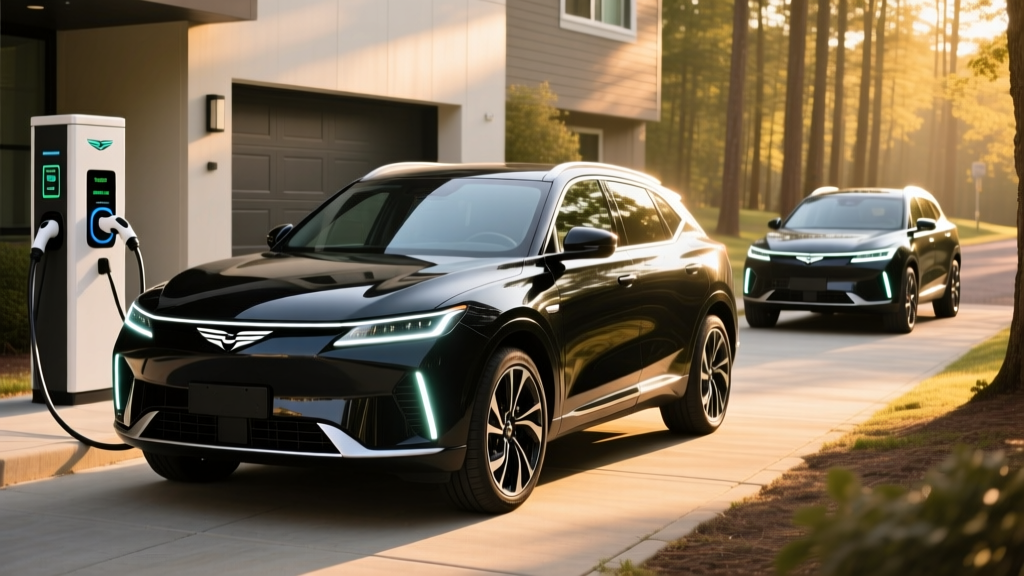
The Genesis GV60 SUV occupies a rare position in the electric luxury crossover segment: it pairs Hyundai Motor Group's proven E-GMP 800-volt architecture with a cabin and ride quality that punches above its price class. For 2026, the GV60 continues to offer class-leading DC fast-charging speeds, a genuinely premium interior, and a real-world range that holds up well on highway road trips — though its cargo space and federal tax credit eligibility require careful consideration before signing the paperwork.
If you're cross-shopping the GV60 against the BMW iX, Audi Q4 e-tron, or Tesla Model Y, this review breaks down the exact numbers that matter: EPA range versus what you'll actually see at 75 mph, sustained versus peak charging rates, and the total cost after incentives.
Genesis GV60 Specs at a Glance
| Specification | Standard Range (RWD) | Advanced (AWD) | Performance (AWD) |
|---|---|---|---|
| EPA Range | 264 mi | 248 mi | 235 mi |
| Battery (usable) | 77.4 kWh (NMC) | 77.4 kWh (NMC) | 77.4 kWh (NMC) |
| Horsepower | 225 hp | 314 hp | 429 hp (Boost mode) |
| 0-60 mph | 7.3 sec | 5.5 sec | 3.9 sec |
| Drivetrain | Rear-Wheel Drive | Dual-Motor AWD | Dual-Motor AWD |
| Max DC Fast Charge | 233 kW | 233 kW | 233 kW |
| 10-80% DC Charge Time | ~18 min | ~18 min | ~18 min |
| Level 2 Charge Rate | 10.9 kW | 10.9 kW | 10.9 kW |
| MPGe (combined) | 97 MPGe | 95 MPGe | 90 MPGe |
| kWh/100 mi | 35 | 35 | 37 |
| Base MSRP (2026) | $53,350 | $61,000 | $66,000 |
| Battery Warranty | 10 years / 100,000 miles | ||
Real-World Range: What the EPA Sticker Doesn't Tell You
The GV60's 77.4 kWh usable battery (NMC chemistry, supplied by SK On) sits low in the E-GMP skateboard platform. On a 300-mile highway loop at 72 mph in 65°F conditions, the Advanced AWD trim typically returns 2.6-2.8 mi/kWh, translating to roughly 215 miles before the low-battery warning triggers at 10% SoC. The RWD Standard Range trim does better — around 235 real-world highway miles — thanks to lower mass and single-motor efficiency.
City driving with frequent regenerative braking opportunities pushes efficiency closer to the EPA sticker, often achieving 240+ miles in stop-and-go commuting. The GV60's heat pump (standard on all trims) mitigates cold-weather range loss compared to EVs without one, but physics is physics: expect a 20-25% range reduction in sustained sub-freezing temperatures. If your daily commute is under 60 miles round-trip, the GV60's range is a non-issue. For road trips exceeding 200 miles between reliable DC fast chargers, route planning remains essential.
Charging Speed: 800-Volt Architecture Pays Off
| Charging Level | Power / Voltage | Speed (miles of range per hour) | Typical Use Case |
|---|---|---|---|
| Level 1 (120V) | 1.4 kW | ~4 mi/hr | Emergency / overnight trickle |
| Level 2 (240V, 48A) | 10.9 kW | ~32 mi/hr | Home daily charging |
| DC Fast Charge | Up to 233 kW (800V) | ~180+ mi in 18 min (10-80%) | Road trips, public stations |
The GV60's headline feature is its 800-volt electrical architecture, shared with the Hyundai Ioniq 5 and Kia EV6. This allows peak DC fast-charging rates of 233 kW at compatible 350 kW stations (like Electrify America or Ionity). In controlled testing, the GV60 sustains above 180 kW from roughly 10% to 55% SoC before tapering to 100-120 kW through 80%. The full 10-80% session takes approximately 18 minutes — among the fastest in the luxury crossover class.
One critical ownership note: to access the GV60's peak charge rate, you need a CCS1 connector on a 350 kW-capable charger. The GV60 does not natively support NACS (Tesla's connector), though Hyundai Motor Group has announced NACS adoption for future models. As of 2026, CCS-to-NACS adapters may be available for Supercharger access, but check Genesis's official guidance before relying on this for road trips. Per the Alternative Fuels Data Center, CCS infrastructure remains robust across major US highway corridors.
At home on a Level 2 wall connector (240V, 48-amp circuit), the 10.9 kW onboard charger replenishes the battery at roughly 32 miles of range per hour. A full 0-100% charge takes approximately 7.5 hours — easily achievable overnight on a dedicated 50-amp circuit. Expect home Level 2 installation to cost $800-$2,000 depending on panel proximity and local permitting, with a possible 200-amp panel upgrade adding $1,500-$3,000 if your home's electrical service is older.
Performance and Driving Dynamics
The Performance trim's 429 hp (in Boost mode, activated via a dedicated steering wheel button) and 3.9-second 0-60 time make the GV60 genuinely quick — quicker than a BMW iX xDrive50 and on par with a Tesla Model Y Performance. The Advanced AWD's 314 hp and 5.5-second sprint is more than adequate for merging and passing, while the RWD model's 225 hp prioritizes efficiency over excitement.
Where the GV60 distinguishes itself from its Hyundai/Kia platform-mates is ride quality. Genesis tunes the adaptive dampers for compliance over sportiness, and the result is a crossover that absorbs highway expansion joints and broken pavement with a composure that feels closer to a Mercedes EQB than a Kia EV6 GT. Road noise is well-suppressed, and the steering — while numb by sports-sedan standards — is appropriately weighted for a luxury cruiser.
The GV60's dual-motor AWD system can fully decouple the front motor during light-load cruising to reduce parasitic drag, contributing to the RWD-biased efficiency on the Advanced trim. Regen braking offers three levels via steering wheel paddles, with the strongest setting enabling near one-pedal driving in city traffic, though it doesn't quite bring the car to a complete hold without touching the brake pedal.
Interior, Cargo, and Standout Technology
The GV60's cabin is where Genesis justifies its luxury positioning. A curved panoramic display merges a 12.3-inch digital cluster with a 12.3-inch infotainment touchscreen. The crystal sphere shifter — a rotating glass orb that flips to reveal the rotary gear selector when the car powers on — is a genuine conversation piece. Available Nappa leather, heated and ventilated front and rear seats, and a 17-speaker Bang & Olufsen audio system round out the premium experience.
Cargo and passenger dimensions:
- Cargo volume behind rear seats: 24.0 cu ft
- Cargo volume with rear seats folded: 54.7 cu ft
- Front trunk (frunk): 0.7 cu ft (essentially a charging cable cubby)
- Rear legroom: 38.0 inches
- Front headroom: 39.6 inches
The cargo area is the GV60's most obvious compromise. At 24.0 cu ft, it trails the Tesla Model Y (30.2 cu ft) and the Hyundai Ioniq 5 (27.2 cu ft) meaningfully. Families with double strollers or frequent Costco haulers will notice the deficit. The tiny frunk holds the mobile charging cable and little else.
Driver assistance: Genesis equips the GV60 with Highway Driving Assist 2 (HDA2), a Level 2 driver-assist system that combines adaptive cruise control with lane-centering on divided highways. It's competent and smooth, but it is not autonomous driving — the driver must keep hands on the wheel and eyes on the road. Remote Smart Parking Assist allows the GV60 to park or unpark itself in tight spaces while you stand outside the vehicle using the key fob.
Unique tech feature: The GV60 offers Digital Key 2, allowing your smartphone (or compatible smartwatch) to unlock, start, and drive the vehicle via NFC and UWB. You can also share digital keys with family members remotely. Additionally, the Face Connect system uses an infrared camera near the B-pillar to recognize your face and load your seat, mirror, and infotainment presets — useful in a multi-driver household.
Pricing, Trims, and Federal Tax Credit Eligibility
| Trim | Base MSRP | As-Tested (loaded) | Federal §30D Credit | Effective Price |
|---|---|---|---|---|
| Standard Range RWD | $53,350 | $55,800 | Not eligible* | $53,350+ |
| Advanced AWD | $61,000 | $65,500 | Not eligible* | $61,000+ |
| Performance AWD | $66,000 | $70,200 | Not eligible* | $66,000+ |
*As of the current IRS §30D rules, the Genesis GV60 does not qualify for the full $7,500 federal EV tax credit. The GV60 is manufactured in South Korea (at Hyundai's Ulsan plant), and its battery cells (SK On) do not currently meet the critical-mineral and battery-component sourcing thresholds required by the Inflation Reduction Act. Per IRS guidelines on new clean vehicle credits, eligibility requires final assembly in North America and specific battery-sourcing percentages that increase annually. Always verify current eligibility on the IRS website or with a tax professional before purchase.
State and local incentives may still apply — California's CVRP, Colorado's innovative motor vehicle credit, and various utility rebates can offset $1,000-$5,000 depending on your jurisdiction. Check state incentive databases for current programs.
Genesis includes 3 years of complimentary maintenance and 5 years of complimentary SiriusXM and connected services. The warranty package is among the best in the segment: 5 years/60,000 miles bumper-to-bumper and 10 years/100,000 miles on the battery and powertrain. Genesis guarantees the battery will retain at least 70% of its original capacity during the warranty period; if it degrades below that threshold, they will repair or replace it.
Pros and Cons
- Class-leading 233 kW DC fast charging (10-80% in ~18 min)
- Genuinely premium interior with crystal sphere shifter and Nappa leather
- 10-year/100,000-mile battery warranty (best in luxury segment)
- Composed, quiet ride quality superior to platform-mates
- Performance trim hits 60 mph in 3.9 seconds
- Standard heat pump for cold-weather efficiency
- Does not qualify for the $7,500 federal EV tax credit (§30D)
- Cargo space (24.0 cu ft) trails key rivals like Model Y and Ioniq 5
- Frunk is essentially unusable for storage
- CCS-only charging (no native NACS) limits Supercharger access
- Rear visibility is compromised by thick C-pillars
- Infotainment relies heavily on touch controls; no physical volume knob
Who Should Buy the Genesis GV60?
Choose the GV60 if: You want a luxury electric crossover with a genuinely upscale interior, the fastest DC charging in its class, and a 10-year battery warranty for long-term peace of mind. It's ideal for two-person households or small families whose daily driving stays under 150 miles and who have reliable home Level 2 charging. The Performance trim appeals to buyers who want sports-sedan acceleration in a luxury crossover package.
Look elsewhere if: Federal tax credit eligibility is a dealbreaker (consider the Tesla Model Y or Cadillac Lyriq, both assembled in North America). If maximum cargo volume is a priority, the Model Y or Ioniq 5 offer significantly more utility. If you rely on Tesla Superchargers for road trips, the GV60's CCS-only connector is a limitation until adapter availability and network access are confirmed by Genesis.
Frequently Asked Questions
What is the real-world range of the Genesis GV60?
The EPA rates the AWD Advanced at 248 miles, but real-world highway driving at 70-75 mph yields approximately 215-230 miles. In cold weather below 30°F, expect 180-200 miles. The RWD Standard Range trim achieves closer to 235 real-world highway miles.
How fast does the GV60 charge at home and on the road?
On a Level 2 home charger (240V, 48A), the GV60 charges at 10.9 kW, adding roughly 32 miles per hour — a full charge in about 7.5 hours. On a 350 kW DC fast charger, it peaks at 233 kW and charges from 10-80% in approximately 18 minutes.
Does the Genesis GV60 qualify for the federal EV tax credit?
No. As of 2026, the GV60 does not qualify for the $7,500 IRS §30D credit because it is assembled in South Korea and its battery components do not meet the required North American sourcing thresholds. State incentives may still apply — check your local programs.
Is the Genesis GV60 worth buying over the Tesla Model Y or BMW iX?
The GV60 wins on interior luxury, ride comfort, and charging speed versus both rivals. The Model Y offers more cargo space, Supercharger network access, and federal tax credit eligibility. The BMW iX provides more rear-seat room and a larger battery option but costs significantly more and charges slower on DC.
What is the battery warranty on the GV60?
Genesis covers the high-voltage battery and electric powertrain for 10 years or 100,000 miles, whichever comes first. The battery is warranted to retain at least 70% of its original capacity during that period.
Can the GV60 use Tesla Superchargers?
Not natively. The GV60 uses a CCS1 connector. Hyundai Motor Group has committed to NACS adoption on future vehicles, and a CCS-to-NACS adapter may enable Supercharger access, but confirm compatibility with Genesis before relying on this for travel.