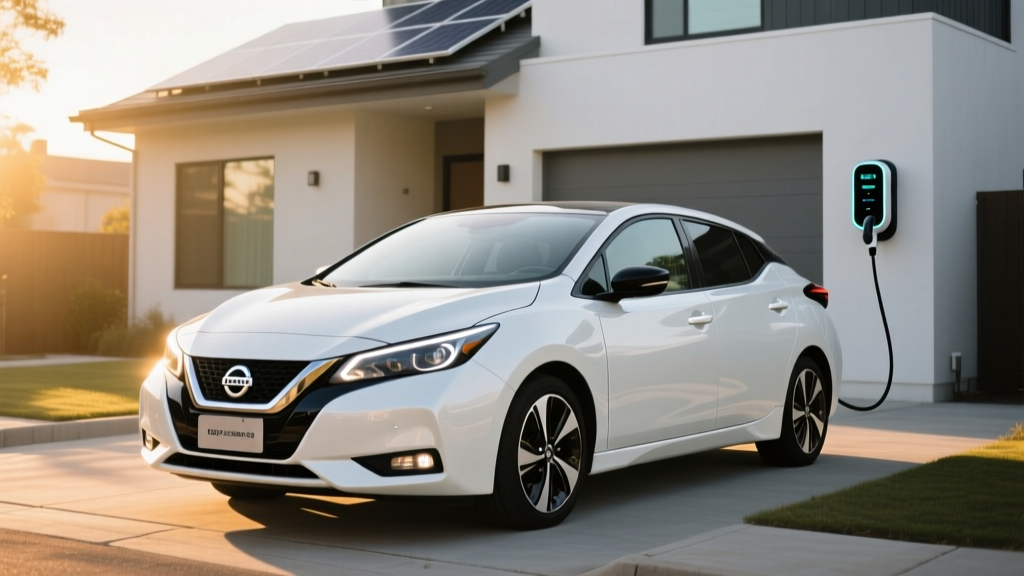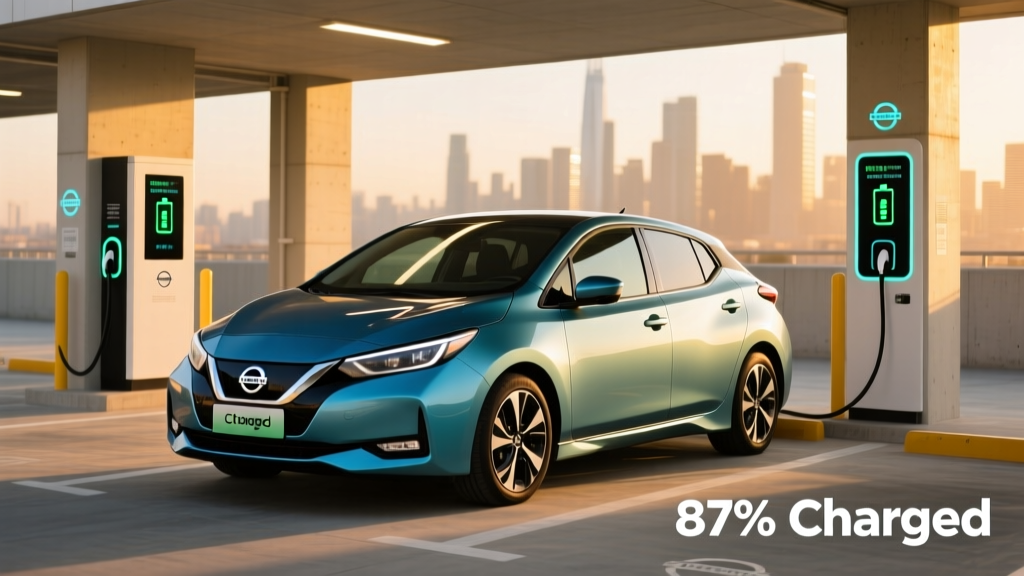
The Nissan Leaf was the electric vehicle that started it all for the mass market. When it launched in the U.S. for the 2011 model year, it was the only affordable, purpose-built EV you could buy. Over a decade later, the landscape has shifted dramatically — and the Nissan Leaf sales collapse is one of the clearest signals of how far the competition has leapfrogged the original pioneer.
Through the first half of the 2025 calendar year, Nissan moved fewer than 5,000 Leaf units in the United States — a pace that would put full-year volume well below the roughly 14,000 units sold in 2023, itself a steep decline from the 2018 peak of nearly 14,700 units in a much smaller EV market. Meanwhile, the broader EV market has expanded more than fivefold. The Leaf's market share has evaporated not because buyers abandoned EVs, but because they found dramatically better options.
This review examines the 2025 Nissan Leaf as it stands today — specs, real-world usability, pricing, and tax credit eligibility — and explains exactly why sales have cratered and whether the remaining value proposition makes sense for the right buyer.
2025 Nissan Leaf: Core Specifications at a Glance
| Specification | Leaf S (40 kWh) | Leaf SV Plus (62 kWh) |
|---|---|---|
| EPA Range | 149 miles | 212 miles |
| Usable Battery Capacity | ~39 kWh (NMC) | ~60 kWh (NMC) |
| Motor Output | 110 kW / 147 hp | 160 kW / 214 hp |
| 0–60 mph | ~7.9 sec | ~6.5 sec |
| Drivetrain | FWD (single motor) | FWD (single motor) |
| Peak DC Fast-Charge Rate | ~50 kW (CHAdeMO) | ~100 kW (CHAdeMO) |
| 10–80% DC Fast Charge | ~40 min | ~45 min |
| Level 2 Onboard Charger | 6.6 kW (~22 mi/hr) | 6.6 kW (~22 mi/hr) |
| EPA Efficiency | 111 MPGe (29 kWh/100 mi) | 104 MPGe (32 kWh/100 mi) |
| Cargo Volume | 23.6 cu ft (rear seats up) | 23.6 cu ft (rear seats up) |
| Base MSRP | $28,140 | $36,190 |
Source: fueleconomy.gov, Nissan USA specifications.
Range and Efficiency: The Real-World Picture
EPA sticker: 212 miles (SV Plus).
Real-world highway (70 mph, 75°F): Expect ~165–180 miles.
Cold-weather (30°F, mixed driving): Expect ~130–150 miles — a 25–35% reduction typical for NMC packs without a heat pump.
City/regenerative driving (mild temps): Close to EPA or slightly above, ~210–220 miles.
The Leaf SV Plus carries a 62 kWh gross (~60 kWh usable) NMC (nickel manganese cobalt) lithium-ion battery. Nissan has not transitioned the Leaf to LFP (lithium iron phosphate) chemistry, which competitors like Tesla (Model 3 Standard Range) and Ford (Mustang Mach-E Standard Range) have adopted for lower-cost trims to improve cycle life and reduce critical-mineral sourcing concerns.
The Leaf's efficiency is respectable — 104 MPGe combined for the SV Plus, translating to roughly 32 kWh per 100 miles. The problem isn't efficiency; it's the combination of a modest battery capacity and the absence of a heat pump. Nissan uses resistive PTC heating for cabin warmth, which draws heavily from the traction battery in cold weather. Vehicles equipped with heat pumps — such as the Hyundai Ioniq 5 and Tesla Model Y — typically lose only 15–20% of range in freezing conditions, versus the Leaf's 25–35%.
For the 40 kWh Leaf S, the 149-mile EPA range is functionally limiting. In practice, highway and cold-weather driving compresses that to roughly 100–115 miles of usable range before you need to find a charger — a figure that made the S trim difficult to recommend even before the market evolved around it.
Charging: Where the Leaf Falls Hardest Behind
| Charging Level | Connector | Max Power (kW) | Rate (mi/hr added) | Notes |
|---|---|---|---|---|
| Level 1 (120V) | J1772 | ~1.4 kW | ~4–5 mi/hr | Standard household outlet |
| Level 2 (240V) | J1772 | 6.6 kW | ~22 mi/hr | Full charge in ~9.5 hrs (SV Plus) |
| DC Fast Charge | CHAdeMO | ~100 kW (SV Plus) | ~150 mi/hr (peak) | 10–80% in ~45 min; CHAdeMO network shrinking |
This is the single biggest structural reason behind the Nissan Leaf sales collapse. The Leaf remains the last mainstream EV in the U.S. market using the CHAdeMO DC fast-charging connector. The rest of the industry — led by Tesla's NACS and adopted by Ford, GM, Hyundai, Rivian, and virtually every other automaker — has standardized on either CCS1 or, increasingly, NACS (North American Charging Standard).
What this means in practice: Electrify America, the largest open DC fast-charging network in the U.S., operates CHAdeMO connectors at only a shrinking subset of its stations. Tesla Superchargers — over 25,000 stalls in North America — are entirely inaccessible to the Leaf without a third-party adapter, and Nissan has not announced a NACS adapter program for existing Leaf owners. The public charging ecosystem is consolidating around NACS, and CHAdeMO vehicles are being stranded on the wrong side of that transition.
The 100 kW peak charge rate on the SV Plus is also uncompetitive. The Hyundai Ioniq 5 peaks at 240 kW (10–80% in ~18 minutes on a 350 kW charger). The Tesla Model Y peaks at 250 kW. Even the Chevrolet Equinox EV manages 150 kW. The Leaf's ~45-minute 10–80% charge time means road-trip stops are significantly longer than in competing EVs, and the taper above 80% SoC is aggressive due to the passive air-cooling system Nissan uses for battery thermal management.
Air cooling vs. liquid cooling: The Leaf's battery pack is passively air-cooled, not liquid-cooled. This means sustained high-speed driving or repeated fast-charging sessions in warm weather can cause the battery to heat-soak, triggering charge-rate throttling (sometimes called "Rapidgate" by Leaf owners). Liquid-cooled packs in competitors maintain more consistent charge speeds and long-term battery health.
Performance and Driving Dynamics
The Leaf SV Plus delivers 214 horsepower and 250 lb-ft of torque from a single front-mounted motor. The 0–60 mph time of approximately 6.5 seconds is adequate for daily driving and highway merging, though it trails the dual-motor AWD options in the Tesla Model Y (4.8 sec), Hyundai Ioniq 5 (5.1 sec AWD), and Ford Mustang Mach-E (3.5 sec GT).
The Leaf is exclusively front-wheel drive — no AWD option exists. For buyers in snow-belt states, this is a meaningful limitation compared to the dual-motor AWD configurations now standard or optional on nearly every compact electric crossover.
Driving dynamics are comfort-oriented. The ride is soft, the steering is light, and the Leaf is an easy, low-stress commuter. Regenerative braking via the e-Pedal mode enables one-pedal driving in most city conditions, though the regen blending is less seamless than in newer EVs from Hyundai/Kia and Tesla. There is no frunk (front trunk); the charge port is located in the hood, which is a practical layout for reaching cables in tight parking spaces.
Interior, Technology, and Safety
The Leaf's cabin reflects its age. The platform dates to 2017 (with a 2018 refresh), and the interior shows it:
- Infotainment: 8-inch touchscreen with wireless Apple CarPlay and wired Android Auto. No wireless Android Auto. The interface is functional but dated compared to the 12.3-inch+ screens and native navigation in competitors.
- Instrument cluster: Partially digital with a small configurable display between analog-style gauges — not a full digital cluster.
- Driver assistance: Nissan's ProPILOT Assist (SAE Level 2) is available on SV Plus trims. It combines adaptive cruise control with lane-centering and is competent for highway use but lacks the hands-free capability of GM's Super Cruise or Ford's BlueCruise. The driver must keep hands on the wheel at all times.
- Safety ratings: The Leaf earned a 5-star overall rating from NHTSA and has historically performed well in IIHS testing, though its headlight ratings and crash-avoidance tech scores have fallen behind as competitors add more advanced systems.
Cargo space: 23.6 cubic feet behind the rear seats, expanding to 30.0 cubic feet with the 60/40 rear seatbacks folded. Rear legroom is 33.5 inches — adequate for adults on shorter trips but tighter than the Ioniq 5 (39.4 in) or Model Y (41.6 in). The Leaf is a compact hatchback, not a crossover, and that form factor limits its appeal in a market that has shifted decisively toward SUVs.
Pricing, Tax Credits, and Total Value
| Trim | Base MSRP | Destination | Total Before Credit | §30D Federal Credit | Effective Price |
|---|---|---|---|---|---|
| Leaf S (40 kWh) | $28,140 | $1,195 | $29,335 | $3,750* | ~$25,585 |
| Leaf SV Plus (62 kWh) | $36,190 | $1,195 | $37,385 | $3,750* | ~$33,635 |
*Federal tax credit amount reflects the Leaf's partial compliance with IRS §30D battery component and critical-mineral sourcing requirements as of 2025. The Leaf qualifies for $3,750 (half-credit) because it meets one of the two sourcing thresholds but not both. Credit eligibility is subject to change as supply chains evolve. Buyer income caps apply: modified AGI must not exceed $150,000 (single), $225,000 (head of household), or $300,000 (joint). The Leaf's MSRP is well under the $55,000 cap for cars. The credit can be transferred to the dealer at point of sale as an upfront discount under current IRS rules.
The Leaf S at roughly $25,500 after credit is one of the least expensive new EVs available in the U.S. — that's its strongest remaining argument. However, consider what $33,000–$38,000 (after credit) buys in the SV Plus segment:
- Hyundai Ioniq 5 SE Standard Range: ~$42,000 MSRP, 220-mile range, 240 kW NACS charging, liquid-cooled battery, 10-yr/100,000-mi warranty, eligible for $7,500 credit → ~$34,500 effective.
- Tesla Model 3 RWD: ~$38,990 MSRP, 272-mile range, 250 kW NACS Supercharger access, heat pump, eligible for $7,500 → ~$31,490 effective.
- Chevrolet Equinox EV LT: ~$33,600 MSRP, 315-mile range, 150 kW CCS charging, eligible for $7,500 → ~$26,100 effective.
When a Chevy Equinox EV with 315 miles of range and modern charging infrastructure access costs less after credits than a Leaf SV Plus with 212 miles and a shrinking connector standard, the sales collapse explains itself.
Warranty and Battery Longevity
Nissan provides the following coverage for the 2025 Leaf:
- Limited vehicle warranty: 3 years / 36,000 miles
- Powertrain warranty: 5 years / 60,000 miles
- Battery capacity warranty: 8 years / 100,000 miles — guarantees the battery will retain at least 9 bars out of 12 on the capacity gauge (roughly 70–75% of original capacity)
The 8-year/100,000-mile battery warranty is standard for the industry, but the 9-bar threshold is a point of frustration for owners. A Leaf that drops to 9 bars still has ~75% of its original range — meaning a 212-mile SV Plus would be down to roughly 159 miles. That's a significant loss, and the warranty does not trigger until degradation passes this threshold.
The air-cooled battery design is a longevity concern. Data from fleets and long-term owners shows that Leafs in hot climates (Arizona, Texas, Southern California) experience measurably faster degradation than liquid-cooled competitors. Nissan's own battery replacement cost is estimated at $6,500–$9,000 for the 40 kWh pack and $9,000–$14,000 for the 62 kWh pack, depending on dealer and model year — a substantial out-of-pocket expense once the warranty expires.
Why the Nissan Leaf Sales Collapse Happened
The decline isn't mysterious when you map the Leaf's specs against the 2025 EV landscape:
- CHAdeMO obsolescence: The charging standard is being phased out across North America. New public chargers are overwhelmingly NACS or CCS. Leaf owners face a shrinking network.
- Range stagnation: 212 miles max was competitive in 2019. In 2025, the median EV range exceeds 270 miles, with several models surpassing 300+ miles at similar or lower prices.
- No heat pump: Cold-weather range loss of 25–35% is a dealbreaker in northern states where competitors lose only 15–20%.
- Hatchback form factor: U.S. buyers have moved to crossovers. The Leaf is a compact hatchback with no AWD option and limited ground clearance.
- Air-cooled battery: Limits fast-charge consistency, accelerates degradation in heat, and constrains the charge rate to 100 kW max — half or less of what competitors achieve.
Nissan has confirmed that a next-generation Leaf is in development, expected to ride on a new platform with NACS charging, a liquid-cooled battery, and crossover styling. Until that vehicle arrives — likely for the 2027 or 2028 model year — the current Leaf is a legacy product being sold on price alone.
Pros and Cons: The Honest Scorecard
- Lowest entry price for a new EV after $3,750 credit (~$25,585 for S trim)
- Comfortable, quiet ride ideal for city commuting
- Proven reliability with over a decade of real-world data
- e-Pedal one-pedal driving is intuitive
- Compact hatchback footprint easy to park
- 5-star NHTSA overall safety rating
- CHAdeMO connector — shrinking fast-charge network
- 100 kW max DC charge rate; ~45 min 10–80%
- No heat pump — severe cold-weather range loss
- Air-cooled battery — degradation risk in hot climates
- No AWD option; FWD only
- Dated interior tech and partial-digital cluster
- Only 212 miles max range in a 270+ mile market
- End-of-generation product with no major updates expected
Who Should Still Consider the Nissan Leaf?
Buy the Leaf S if: You need the cheapest possible new EV, drive under 80 miles round-trip daily, charge at home every night, live in a mild climate, and have access to a remaining CHAdeMO station for occasional longer trips.
Buy the Leaf SV Plus if: Your budget is strictly capped near $34,000 after credits, you value hatchback practicality over crossover ride height, you primarily drive in moderate temperatures, and you are comfortable with CHAdeMO's uncertain future.
Look elsewhere if: You take regular road trips, live in a cold or hot climate, need AWD, want access to Tesla Superchargers, plan to keep the vehicle 8+ years, or want a vehicle with strong resale value.
Frequently Asked Questions
What is the real-world range of the 2025 Nissan Leaf?
The Leaf SV Plus is EPA-rated at 212 miles. In real-world highway driving at 70 mph in moderate temperatures, expect approximately 165–180 miles. In cold weather (below freezing), that drops to roughly 130–150 miles due to the lack of a heat pump. The base Leaf S is EPA-rated at 149 miles and realistically delivers 100–120 miles in mixed highway/cold conditions.
How fast does the Nissan Leaf charge?
On a DC fast charger, the SV Plus peaks at approximately 100 kW via CHAdeMO, reaching 10–80% in about 45 minutes. The base S model peaks at ~50 kW. At home on a Level 2 (240V) charger, both trims use a 6.6 kW onboard charger, adding roughly 22 miles of range per hour. A full Level 2 charge of the SV Plus takes approximately 9.5 hours. The CHAdeMO connector limits access to the growing NACS and CCS charging networks.
Does the 2025 Nissan Leaf qualify for the federal EV tax credit?
Yes, partially. Under current IRS §30D rules, the Leaf qualifies for $3,750 — half of the maximum $7,500 credit — because it meets one of the two battery-sourcing requirements (components or critical minerals) but not both. Buyer income caps apply ($150K single / $300K joint modified AGI), and the credit can be transferred to the dealer at point of sale. Credit amounts are subject to change as sourcing rules tighten. Consult a tax professional for your specific eligibility.
Is the Nissan Leaf still worth buying vs. competitors?
For a narrow use case — budget-first, city commuting, mild climate, home charging — the Leaf S at ~$25,500 after credit is a genuine bargain. For nearly everyone else, competitors offer significantly more range, faster charging, modern connectors (NACS/CCS), heat pumps, and better long-term battery management at comparable effective prices. The Chevrolet Equinox EV, Hyundai Ioniq 5, and Tesla Model 3 all represent stronger value propositions for most buyers in 2025–2026.
Will Nissan replace the CHAdeMO port with NACS?
Nissan has confirmed that the next-generation Leaf will adopt the NACS charging standard. However, the current-generation Leaf will not receive a retrofit or factory NACS port. Third-party CHAdeMO-to-NACS adapters exist but are expensive ($400–$600), add bulk, and may void warranty provisions. If NACS access is important to you, the current Leaf is not the right vehicle.
How long will the Leaf battery last?
Nissan warranties the battery for 8 years / 100,000 miles against dropping below 9 of 12 capacity bars (~70–75% SoH). Real-world data shows liquid-cooled competitors retain 90%+ capacity over the same period. The Leaf's air-cooled design means hotter climates accelerate degradation. Out-of-warranty replacement costs range from $6,500 to $14,000 depending on pack size. Many first-generation Leafs (2011–2017) have required battery replacements or significant range loss at 80,000–120,000 miles, particularly in southern states.