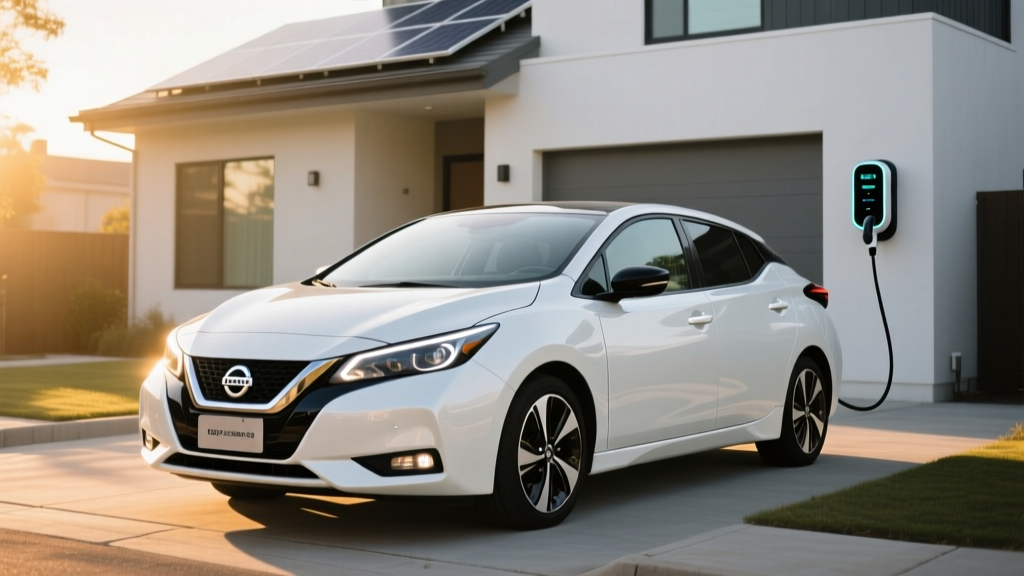
The Nissan Leaf occupies a unique position in the electric vehicle market. As one of the original mass-market EVs, it remains one of the most affordable new electric cars you can buy — or lease. For 2026, Nissan continues the Leaf with its two-battery strategy: a 40 kWh pack in the S trim and a larger 60 kWh pack in the SV Plus, delivering up to 212 miles of EPA-estimated range. But with the EV market shifting rapidly toward NACS connectors, liquid-cooled batteries, and 200+ kW charging, where does the Leaf stand for buyers considering a lease?
We've analyzed the 2026 Nissan Leaf's specifications, real-world efficiency, charging behavior, and total lease economics to help you decide whether it's the right electrified vehicle for your garage — or whether competitors offer more for similar money.
2026 Nissan Leaf: Quick Spec Overview
| Spec | Leaf S (40 kWh) | Leaf SV Plus (60 kWh) |
|---|---|---|
| EPA Range | 149 miles | 212 miles |
| Battery Capacity (usable) | 40 kWh | 60 kWh |
| Battery Chemistry | NMC (laminated) | NMC (laminated) |
| Battery Cooling | Passive (air-cooled) | Passive (air-cooled) |
| Motor Output | 110 kW (147 hp) | 160 kW (214 hp) |
| 0–60 mph | ~7.9 sec | ~6.5 sec |
| Drivetrain | FWD | FWD |
| Max DC Fast Charge | 50 kW (CHAdeMO) | 100 kW (CHAdeMO) |
| 10–80% DCFC Time | ~45 min | ~45 min |
| Level 2 Onboard Charger | 6.6 kW | 6.6 kW |
| EPA Efficiency | 111 MPGe (30 kWh/100mi) | 109 MPGe (31 kWh/100mi) |
| Base MSRP | $28,140 | $36,190 |
| Cargo Volume (rear seats up) | 23.6 cu ft | 23.6 cu ft |
| Cargo Volume (rear seats folded) | 50.0 cu ft | 50.0 cu ft |
| Battery Warranty | 8 yr / 100,000 mi | 8 yr / 100,000 mi |
Real-World Range: What the EPA Number Doesn't Tell You
The 2026 Leaf SV Plus carries an EPA-estimated 212 miles of range. The base Leaf S is rated at 149 miles. However, real-world results vary significantly based on driving conditions:
- Highway driving (70+ mph): Expect ~165–180 miles in the SV Plus, ~115–125 miles in the S. The Leaf's boxy shape and lack of a heat pump increase consumption at speed.
- Cold weather (below 32°F): Range drops 20–35% due to the passive thermal management system and resistive cabin heating. A 212-mile SV Plus may deliver as little as 140–160 miles in winter conditions.
- City/commuter driving (moderate temps): You'll see results closest to — or even slightly exceeding — the EPA sticker, particularly with regenerative braking engaged. The Leaf's e-Pedal mode enables effective one-pedal driving in stop-and-go traffic.
The Leaf's passive air-cooled battery is the primary factor limiting both real-world range consistency and charging performance. Unlike liquid-cooled competitors (Hyundai Ioniq 5, Tesla Model 3, Chevrolet Equinox EV), the Leaf's battery temperature rises during fast driving or fast charging, triggering power-reduction safeguards. Nissan calls this thermal management approach adequate for the Leaf's commuter mission, and for moderate-climate daily driving, it is. But if you live in Phoenix, Las Vegas, or anywhere with sustained summer heat, the passive cooling becomes a genuine limitation.
According to EPA data at fueleconomy.gov, the SV Plus achieves 109 MPGe combined, translating to 31 kWh per 100 miles. That's competitive with other compact EVs, though slightly behind the most efficient rivals.
Charging Speed: The Leaf's Biggest Compromise
Charging is where the 2026 Leaf diverges most sharply from the modern EV market. Two issues define the experience: the CHAdeMO connector and passive battery cooling.
| Charging Level | Power / Rate | Leaf S (40 kWh) | Leaf SV Plus (60 kWh) |
|---|---|---|---|
| Level 1 (120V household) | ~1.4 kW | ~3–4 mi/hr | ~3–4 mi/hr |
| Level 2 (240V home/public) | 6.6 kW (max onboard) | ~22 mi/hr, full in ~7 hr | ~22 mi/hr, full in ~10 hr |
| DC Fast Charge | 50 kW (S) / 100 kW (SV Plus) | 10–80% in ~45 min | 10–80% in ~45 min |
The CHAdeMO problem: The Leaf is the last remaining mainstream EV sold in the U.S. that uses the CHAdeMO DC fast-charging connector. Nearly every other automaker has adopted either CCS1 or the Tesla NACS standard, and the public charging infrastructure has followed. Electrify America, the largest U.S. DC fast-charging network, has CHAdeMO connectors at many stations — but newer installations increasingly prioritize CCS and NACS. Before committing to a Leaf lease, verify that CHAdeMO-equipped stations exist along your regular routes using apps like PlugShare or ChargeHub.
The charging curve reality: While the SV Plus is rated for up to 100 kW peak DC charging, that peak is rarely sustained. The passive battery cooling system causes the Leaf to throttle charge speed as the battery warms — a phenomenon known as "rapidgate" in earlier Leaf generations. In practice, a 10–80% session takes roughly 45 minutes regardless of trim, because the charging curve tapers aggressively after ~60% state of charge to protect battery health. On a hot day, you may see peak speeds closer to 60–70 kW even on the SV Plus.
For home Level 2 charging, the 6.6 kW onboard charger is adequate for overnight replenishment. A full charge of the 60 kWh pack takes roughly 10 hours from near-empty — perfectly fine for commuters who plug in each evening. Installation of a 240V Level 2 home circuit typically costs $500–$2,000 depending on your electrical panel's proximity to the charging location (source: U.S. Department of Energy).
Performance and Driving Dynamics
The 2026 Leaf isn't a performance EV, but the SV Plus offers respectable acceleration for its class. The 160 kW (214 hp) front-mounted motor delivers 250 lb-ft of instant torque, propelling the car to 60 mph in approximately 6.5 seconds. That's quick enough for confident highway merging and passing. The base S trim's 110 kW (147 hp) motor manages a 7.9-second 0–60 time — adequate for city and suburban driving but less enthusiastic on highway on-ramps.
Ride quality is a Leaf strength. The suspension tuning prioritizes comfort, absorbing road imperfections with a softness that many competitors (particularly the stiffer-sprung Hyundai Kona Electric) don't match. Cabin noise is well-controlled at city speeds, though wind noise becomes noticeable above 65 mph. The low center of gravity from the floor-mounted battery gives the Leaf planted handling for a front-drive compact, though it's no sports sedan through corners.
The Leaf's ProPILOT Assist system provides SAE Level 2 driver assistance — adaptive cruise control combined with lane-centering steering. It works competently on well-marked highways but requires continuous driver supervision. This is not a "hands-free" system in the manner of GM's Super Cruise; your hands must remain on the wheel. ProPILOT is standard on SV Plus and available on S trims.
Pricing, Lease Economics, and Federal Tax Credit Eligibility
The 2026 Nissan Leaf starts at $28,140 for the S trim (40 kWh) and $36,190 for the SV Plus (60 kWh), including destination charges. These prices keep the Leaf among the least expensive new EVs available in the U.S. market.
| Trim | Base MSRP | §30D Credit Eligibility | Effective Price (if eligible) |
|---|---|---|---|
| S (40 kWh) | $28,140 | Up to $3,750* | ~$24,390* |
| SV Plus (60 kWh) | $36,190 | Up to $3,750* | ~$32,440* |
Federal tax credit details (§30D): The Leaf qualifies for a partial federal tax credit — currently estimated at $3,750 — based on meeting some but not all critical-mineral and battery-component sourcing requirements under current IRS rules. To be eligible, buyers must also meet income caps ($150,000 single / $300,000 married filing jointly) and the vehicle's MSRP must not exceed $55,000 (which both Leaf trims satisfy). The credit can be applied at the point of sale as a purchase discount or transferred to the dealer. However, credit amounts and sourcing requirements change periodically — always verify current eligibility with your tax professional and the IRS before purchasing.
Leasing a Nissan Leaf can sidestep some tax-credit complications. Under current IRS guidance, the commercial clean vehicle credit (§45W) may allow the leasing company (the legal owner) to claim a credit and pass savings to the lessee through reduced monthly payments — even if the lessee's income exceeds §30D caps or the vehicle's battery sourcing would not qualify for the full consumer credit. This "lease loophole" makes leasing particularly attractive for the Leaf. Typical 36-month Leaf SV Plus leases in early 2026 range from $299–$399/month depending on region, money-down amount, and dealer incentives. Always compare the total lease cost (monthly payments × term + down payment + disposition fee) against the purchase price minus applicable credits to determine which path saves more.
Interior, Cargo, and Daily Practicality
The Leaf's interior reflects its price point. Materials are durable hard plastics with cloth upholstery on S and SV trims; leatherette is available on higher equipment packages. The 8-inch touchscreen infotainment system supports wireless Apple CarPlay and wired Android Auto. It's functional but dated compared to the large-format screens in the Hyundai Kona Electric or Volkswagen ID.4.
Passenger space is generous for a compact hatchback:
- Front legroom: 42.1 inches
- Rear legroom: 33.5 inches
- Front headroom: 41.2 inches
- Rear headroom: 37.3 inches
Cargo capacity stands at 23.6 cubic feet behind the rear seats and 50.0 cubic feet with the 60/40-split rear seats folded. That's competitive with the Chevrolet Bolt EV (though the Bolt is now discontinued) and sufficient for weekly groceries, luggage for two, or a weekend's worth of camping gear. There is no front trunk (frunk); the space under the hood houses the motor and power electronics.
Notable daily-livability features include available heated front seats and steering wheel (valuable in cold climates given the range-saving benefit of heated surfaces vs. cabin air heating), a 360-degree Around View Monitor for parking, and a BOSE premium audio system on upper trims.
Pros and Cons at a Glance
- Among the lowest MSRP of any new EV in the U.S.
- Comfortable ride quality and quiet cabin at city speeds
- Strong standard safety suite (Nissan Safety Shield 360)
- Hatchback practicality with 23.6 cu ft cargo area
- Lease pricing often undercuts competitors significantly
- Proven, simple powertrain with 8-year/100,000-mi battery warranty
- CHAdeMO connector limits DC fast-charging access as infrastructure shifts to NACS/CCS
- Passive air-cooled battery causes charging throttling and reduced range in extreme heat/cold
- No liquid battery thermal management — long-term degradation concern in hot climates
- 100 kW max DC charge rate trails competitors (Ioniq 5: 240 kW, Model 3: 250 kW)
- Dated interior design and infotainment vs. newer rivals
- No all-wheel-drive option
- FWD only limits traction in heavy snow without winter tires
How the Leaf Compares to Key Rivals
If you're considering a Nissan Leaf lease, you're likely cross-shopping these alternatives:
- Hyundai Kona Electric: More range (261 mi EPA), faster CCS charging (100+ kW sustained), modern interior — but higher MSRP (~$33,000+).
- Tesla Model 3 (Standard Range): Vastly superior Supercharger network access, 272+ mi range, faster charging — but significantly more expensive and no hatchback utility.
- Chevrolet Equinox EV: Newer platform with NACS connector, 319 mi range option, liquid-cooled battery — but starts around $33,000+ and availability varies.
- Volkswagen ID.4: More spacious crossover with 275 mi range and CCS charging — but starts near $40,000.
The Leaf's advantage remains pure affordability — particularly on lease deals where monthly payments can undercut every competitor. If your use case is a predictable daily commute under 80 miles round-trip with overnight home charging, the Leaf's limitations matter far less than its price advantage.
Who Should Lease the Nissan Leaf?
- Your daily commute is under 80 miles round-trip (SV Plus) or under 50 miles (S)
- You can charge at home every night on Level 2
- You live in a moderate climate (not extreme heat or prolonged sub-freezing winters)
- You want the lowest possible monthly lease payment on a new EV
- CHAdeMO DC fast chargers are accessible near you for occasional longer trips
- You value hatchback cargo flexibility over crossover ride height
Look elsewhere if:
- You regularly drive 150+ miles between charges or take frequent road trips
- You live in a hot climate where passive battery cooling will limit range and charging
- You need reliable, fast DC charging on the NACS or CCS networks
- You want the latest infotainment, driver-assist tech, or interior design
- You need all-wheel drive for snow or mountain driving
Warranty and Long-Term Battery Outlook
Nissan provides an 8-year/100,000-mile battery capacity warranty on the Leaf, guaranteeing that the battery will retain at least 66% of its original capacity (9 bars out of 12 on the dashboard capacity gauge) during the warranty period. The basic vehicle warranty is 3 years/36,000 miles, and the powertrain warranty covers 5 years/60,000 miles.
Long-term battery degradation has been the Leaf's historical concern. First- and second-generation Leafs (2011–2017) with smaller 24 and 30 kWh packs showed notable capacity loss, particularly in hot climates, because the passive air-cooling system couldn't adequately manage battery temperature. The current-generation Leaf with its 40 and 60 kWh packs has shown improved degradation curves, but the fundamental thermal management limitation remains. Owners in temperate climates report 5–10% capacity loss over 5 years; those in hot climates (Arizona, Texas) may see 10–15% or more. A replacement battery pack currently costs approximately $6,500–$9,000 installed — a significant out-of-pocket expense after warranty expiration.
For lease customers, this is largely a non-issue: you'll return the vehicle before the battery warranty expires and before significant degradation typically manifests. This is arguably the strongest argument for leasing a Leaf rather than buying one.
Frequently Asked Questions
What is the real-world range of the 2026 Nissan Leaf?
The SV Plus (60 kWh) is EPA-rated at 212 miles, but expect 165–180 miles on the highway, 140–160 miles in freezing weather, and up to 220+ miles in mild-temperature city driving with regenerative braking. The base S (40 kWh) is rated at 149 miles EPA, with real-world results proportionally lower.
How fast does the Nissan Leaf charge at home and on the road?
On a Level 2 home charger (240V, 6.6 kW), the SV Plus gains roughly 22 miles of range per hour and fully charges in about 10 hours. On DC fast charge (CHAdeMO), the SV Plus peaks at 100 kW and reaches 10–80% in approximately 45 minutes, though passive battery cooling can slow this in hot weather.
Does the 2026 Nissan Leaf qualify for the federal EV tax credit?
The Leaf qualifies for a partial federal tax credit under IRS §30D rules — estimated at $3,750 based on current battery-sourcing requirements. Eligibility depends on buyer income (≤$150K single / ≤$300K joint), and the MSRP must not exceed $55,000. The credit can be transferred to the dealer at point of sale. Always verify current eligibility at irs.gov and consult a tax professional.
Is leasing the Nissan Leaf a better deal than buying?
Leasing can be advantageous for the Leaf because: (1) the leasing company may pass through commercial clean vehicle credit savings, (2) you avoid long-term battery degradation risk by returning the car within the warranty period, and (3) monthly payments are often among the lowest of any new EV. Compare total lease cost (payments + down + fees) against the purchase price minus credits to determine the better financial path for your situation.
Why does the Leaf still use CHAdeMO instead of CCS or NACS?
Nissan was an early CHAdeMO adopter (the standard was co-developed by Japanese automakers) and has not transitioned the Leaf to CCS or NACS. This limits DC fast-charging compatibility as U.S. infrastructure increasingly standardizes on NACS (Tesla's connector, now adopted by Ford, GM, Hyundai, and others) and CCS. Nissan's next-generation EVs are expected to use NACS, but the current Leaf retains CHAdeMO.
Is the Nissan Leaf a good EV for road trips?
The Leaf is not ideal for road trips. Its 212-mile max range, 45-minute DC fast-charge times, CHAdeMO connector scarcity on newer charging stations, and passive battery cooling (which further slows charging on long drives) make it better suited to daily commuting and local driving. For road-trip capability, consider the Hyundai Ioniq 5, Tesla Model 3, or Kia EV6.