Quick Verdict: A Proven Commuter EV With Caveats
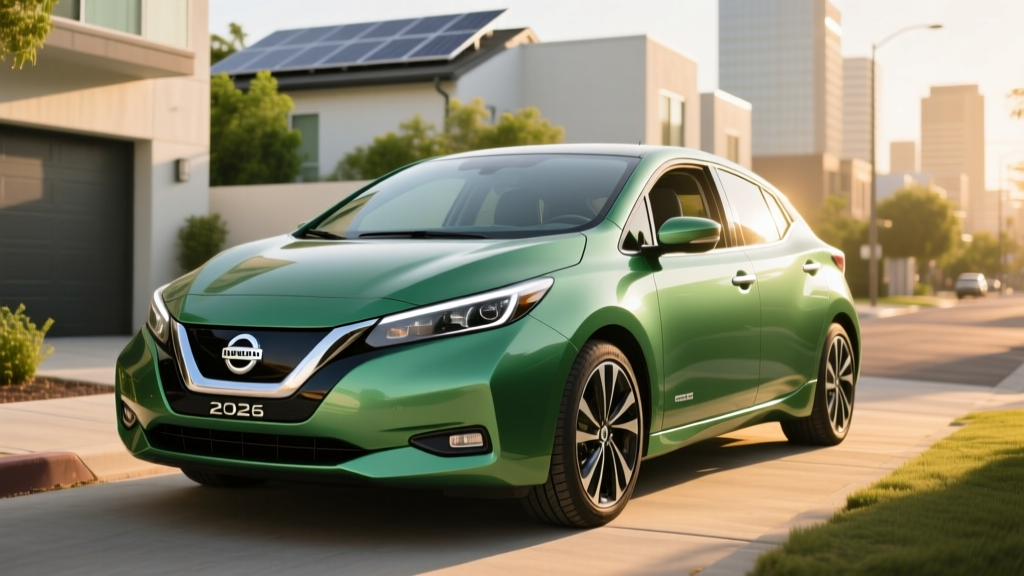
The Nissan Leaf holds a unique place in EV history. As one of the first mass-market electric vehicles sold globally, it has accumulated more long-term reliability data than almost any competitor. For 2026, the Leaf continues in two battery configurations — the standard-range S trim with a 40 kWh pack and the longer-range SV Plus with a 60 kWh pack — offering a practical, no-nonsense entry point into EV ownership starting at $28,140 before incentives.
But reliability is only part of the ownership equation. The Leaf's passive air-cooled battery thermal management, its CHAdeMO DC fast-charging connector (in a market that has overwhelmingly adopted NACS/CCS), and real-world range that falls notably short of its EPA sticker all demand honest scrutiny. If you're researching Nissan Leaf reliability as a prospective buyer or current owner, this profile covers what the data actually shows — from battery degradation curves to charging infrastructure compatibility in 2026.
| Spec | Leaf S (40 kWh) | Leaf SV Plus (60 kWh) |
|---|---|---|
| EPA Range | 149 miles | 212 miles |
| Battery Capacity | 40 kWh (usable ~38 kWh) | 60 kWh (usable ~57 kWh) |
| Battery Chemistry | NMC (lithium-ion) | NMC (lithium-ion) |
| Thermal Management | Passive air cooling | Passive air cooling |
| Motor Output | 110 kW (147 hp) | 160 kW (214 hp) |
| 0–60 mph | ~7.9 seconds | ~6.5 seconds |
| Drivetrain | FWD | FWD |
| DC Fast Charge Peak | 50 kW (CHAdeMO) | 100 kW (CHAdeMO) |
| 10–80% DCFC Time | ~40 minutes | ~45 minutes |
| Level 2 Charge Rate | 6.6 kW (~22 mi/hr) | 6.6 kW (~25 mi/hr) |
| EPA Efficiency | 111 MPGe (30 kWh/100 mi) | 104 MPGe (32 kWh/100 mi) |
| Cargo Volume | 23.6 cu ft (rear seats up) | 23.6 cu ft (rear seats up) |
| Base MSRP | $28,140 | $36,190 |
Real-World Range: What the EPA Sticker Doesn't Tell You
Leaf S (40 kWh): EPA 149 miles — Expect 120–135 miles in mixed driving; 95–110 miles sustained highway at 70+ mph; as low as 85–100 miles in freezing temperatures with cabin heat.
Leaf SV Plus (60 kWh): EPA 212 miles — Expect 175–195 miles mixed; 145–165 miles highway; 120–140 miles in sub-32°F conditions.
The Leaf's EPA range figures are derived from a standardized city/highway test cycle that doesn't fully capture the energy penalty of sustained highway speeds or cold-weather operation. According to fueleconomy.gov, the SV Plus achieves 104 MPGe combined, which translates to 32 kWh per 100 miles. In practice, highway driving at 70–75 mph pushes consumption closer to 36–38 kWh/100 mi, reducing effective range by 15–20%.
The bigger concern is winter. Unlike EVs equipped with heat pump HVAC systems (such as the Hyundai Ioniq 5 or Tesla Model Y), the Leaf uses a resistive PTC heater that draws heavily from the traction battery. In our experience and consistent with owner-reported data, cabin heating in sub-freezing temperatures can cut range by 30–40%. A Leaf SV Plus owner in Minnesota should plan for roughly 125–140 usable miles on a full charge in January — adequate for commuting, but a serious constraint for any unplanned detour.
Battery Reliability and Degradation: What Long-Term Data Shows
The Leaf's battery longevity is the central question behind most reliability searches, and the answer is more nuanced than "good" or "bad."
Nissan uses NMC (nickel manganese cobalt) lithium-ion cells in both the 40 kWh and 60 kWh packs. The defining — and controversial — engineering choice is passive air cooling rather than the active liquid thermal management used by Tesla, Hyundai/Kia, GM, and most other automakers. Air cooling is simpler and cheaper, but it leaves the battery more vulnerable to heat-driven degradation, particularly in hot climates or under repeated DC fast-charging sessions.
Long-term owner data collected by communities like SpeakEV and MyNissanLeaf consistently shows the following degradation patterns:
- Mild climates (Pacific Northwest, Northern Europe): 10–15% capacity loss over 8 years / 100,000 miles — manageable and within warranty thresholds.
- Hot climates (Arizona, Texas, Southern California): 15–25% capacity loss over the same period, with accelerated degradation in vehicles frequently DC fast-charged or parked in direct sun.
- High DCFC usage: Repeated 100 kW fast charging generates internal cell heat that air cooling cannot dissipate quickly. Nissan's battery management system (BMS) responds with "Rapidgate" — throttling charge speed to protect cells — but cumulative thermal stress still accelerates wear.
Nissan's battery warranty provides coverage for 8 years or 100,000 miles against capacity loss below 9 bars (out of 12) on the battery health indicator, which corresponds to roughly 66–70% of original capacity. This is a lower retention threshold than the industry-standard 70% used by most competitors, and the bar-based display is less precise than the percentage-based State of Health (SoH) readouts found in modern EVs.
Charging Speed and Infrastructure: The CHAdeMO Challenge
| Level | Power / Rate | Leaf S (40 kWh) | Leaf SV Plus (60 kWh) |
|---|---|---|---|
| Level 1 (120V household) | ~1.4 kW | ~4 mi/hr | ~4 mi/hr |
| Level 2 (240V home/public) | 6.6 kW | ~22 mi/hr (full in ~6 hr) | ~25 mi/hr (full in ~9 hr) |
| DC Fast (CHAdeMO) | 50 kW peak (S) / 100 kW peak (Plus) | 10–80% in ~40 min | 10–80% in ~45 min |
The Leaf charges via CHAdeMO for DC fast charging — a connector standard that has effectively lost the North American format war. As of 2026, Tesla's NACS has been adopted by Ford, GM, Rivian, Volvo, and most major automakers, while CCS1 remains on vehicles from Hyundai, Kia, BMW, and Volkswagen. CHAdeMO is now supported primarily by Nissan and the Mitsubishi Outlander PHEV.
This matters practically: Electrify America stations still carry CHAdeMO connectors at many locations, but new station buildouts increasingly favor NACS and CCS. In rural areas and along some highway corridors, finding a functional CHAdeMO plug is already more difficult than finding NACS or CCS. If your road-trip route depends on public DC fast charging, plan carefully using apps like PlugShare and confirm connector availability before you go.
The Leaf SV Plus's 100 kW peak charge rate sounds competitive, but the passive air-cooled battery cannot sustain it. Expect the charge curve to taper significantly after 60% SoC, and in warm weather, the BMS may further restrict power to prevent overheating — the phenomenon owners call "Rapidgate." A 10–80% session typically takes 40–50 minutes depending on ambient temperature and battery preconditioning state. The Leaf does not offer active battery preconditioning for DC charging, unlike most modern EVs that warm the pack en route to a charger.
Performance, Interior, and Daily Livability
The Leaf SV Plus's 214-hp front motor delivers a 0–60 mph time of roughly 6.5 seconds — brisk enough for confident highway merging and passing. The standard S trim's 147 hp feels adequate around town but less energetic at speed. Both trims are front-wheel drive with no AWD option, which limits appeal in snow-belt states unless paired with dedicated winter tires.
Interior space is a genuine strength. The Leaf offers 23.6 cubic feet of cargo volume behind the rear seats and approximately 30.0 cubic feet with the 60/40 split rear seats folded — competitive with compact crossovers. Rear legroom measures 33.5 inches, sufficient for adults on shorter trips. The cabin materials are durable if unremarkable, and the 8-inch touchscreen infotainment system supports wireless Apple CarPlay and wired Android Auto.
Nissan's ProPILOT Assist provides Level 2 driver assistance — adaptive cruise control with lane centering. This is a driver-engaged system (SAE Level 2), meaning hands must remain on the wheel and eyes on the road at all times. It works well for highway commuting but does not approach the capability of hands-free Level 2 systems like GM's Super Cruise or Ford's BlueCruise, and it is nowhere near autonomous driving.
Pricing, Tax Credits, and Ownership Economics
| Trim | Base MSRP | Est. As-Tested | Federal §30D Credit Eligibility |
|---|---|---|---|
| Leaf S (40 kWh) | $28,140 | $29,500–$31,000 | Up to $7,500 (see caveats below) |
| Leaf SV Plus (60 kWh) | $36,190 | $38,000–$41,500 | Up to $7,500 (see caveats below) |
The Leaf's MSRP places it well under the IRS §30D sedan cap of $55,000, so price is not a disqualifier. However, federal tax credit eligibility for 2026 depends on three additional factors that buyers must verify:
- Buyer income limits: Modified adjusted gross income (MAGI) must not exceed $150,000 (single), $225,000 (head of household), or $300,000 (joint filing).
- Battery component and critical mineral sourcing: The IRA requires progressively increasing percentages of battery components manufactured in North America and critical minerals sourced from the U.S. or FTA partners. Nissan assembles the Leaf in Smyrna, Tennessee, but battery cell sourcing has historically involved Japanese and Chinese supply chains. The exact credit amount (full $7,500, partial $3,750, or $0) depends on current-year compliance thresholds. Verify the latest status at IRS.gov clean vehicle credits.
- Point-of-sale transfer: As of 2024, eligible buyers can transfer the credit to the dealer at purchase, reducing the upfront price rather than waiting for a tax refund. Confirm dealer participation and your eligibility before signing.
If you qualify for the full $7,500, the Leaf S becomes one of the cheapest new EVs available at roughly $20,640 effective cost — a compelling proposition for budget-conscious commuters.
Nissan Leaf Reliability vs. Key Competitors
Reliability isn't just about whether the car starts — it's about total cost and hassle over 5–10 years. Here's how the Leaf SV Plus stacks up against two direct competitors in the affordable EV hatchback segment:
| Metric | 2026 Leaf SV Plus | 2025 Bolt EV (final yr) | 2026 Kona Electric |
|---|---|---|---|
| EPA Range | 212 mi | 259 mi | 261 mi |
| Battery Cooling | Passive air | Active liquid | Active liquid |
| DCFC Connector | CHAdeMO | CCS1 | CCS1 / NACS adapter |
| Peak DCFC Rate | 100 kW | 55 kW | 100+ kW |
| Battery Warranty | 8 yr / 100k mi | 8 yr / 100k mi | 10 yr / 100k mi |
| Heat Pump | No | No | Yes (SEL/Limited) |
| Base MSRP | $36,190 | ~$26,500 | ~$32,975 |
The Leaf's air-cooled battery and CHAdeMO connector are genuine disadvantages compared to liquid-cooled, CCS/NACS-equipped competitors. The Bolt EV offers more range at a lower price, while the Kona Electric provides a longer battery warranty and available heat pump for cold-climate efficiency. Where the Leaf wins is proven long-term parts availability, widespread Nissan dealer service familiarity, and a comfortable, spacious hatchback body.
Pros, Cons, and Who Should Buy
Pros
- Low starting price, especially with federal/state incentives
- Spacious hatchback cargo area (23.6 cu ft)
- ProVEN long-term parts and service network through Nissan dealers
- Comfortable ride quality for daily commuting
- ProPILOT Assist is a competent Level 2 highway aid
- One-pedal driving with strong regenerative braking (e-Pedal)
Cons
- Passive air-cooled battery degrades faster in hot climates and under frequent DCFC use
- CHAdeMO connector limits public fast-charging access as networks shift to NACS/CCS
- No battery preconditioning for DC charging — slower real-world charge sessions
- No heat pump — significant winter range loss from resistive cabin heating
- FWD only — no AWD option for snow/ice traction
- Battery warranty threshold (9/12 bars ≈ 66–70%) is less protective than competitors
- Choose the Leaf if: You're a commuter with home Level 2 charging, live in a mild climate, drive under 120 miles round-trip daily, and value a low purchase price and familiar dealer service. The Leaf S at ~$20,500 after incentives is hard to beat for a dedicated city/suburban runabout.
- Look elsewhere if: You live in a hot climate (Arizona, Texas, Southeast), rely heavily on public DC fast charging, need winter range confidence, or plan regular road trips exceeding 150 miles. The Bolt EV, Kona Electric, or a used Tesla Model 3 will serve you better.
Frequently Asked Questions
Is the Nissan Leaf reliable long-term?
Mechanically, yes — the electric motor and power electronics are simple and proven. The concern is battery degradation, which is more pronounced in hot climates due to the air-cooled pack. Owners in mild climates report 85–90% battery capacity after 8 years, while hot-climate owners may see 75–80%. The 8-year/100,000-mile warranty provides a safety net, though its threshold (9/12 bars) is less generous than some competitors.
What is the real-world range of the 2026 Nissan Leaf?
The Leaf SV Plus delivers approximately 175–195 miles in mixed driving, 145–165 miles at sustained highway speeds, and 120–140 miles in freezing weather. The standard Leaf S provides roughly 120–135 miles mixed and as low as 85–100 miles in winter. Always plan trips around the lower end of these ranges.
Does the Nissan Leaf qualify for the $7,500 federal EV tax credit?
It can, but eligibility depends on your income, the battery's critical-mineral and component sourcing compliance for the current tax year, and MSRP caps (the Leaf clears the $55,000 sedan cap easily). Nissan's U.S. assembly in Tennessee helps, but cell sourcing determines the exact credit amount. Always check the latest eligibility list at IRS.gov and consult a tax professional.
How fast does the Nissan Leaf charge at home and on DC fast chargers?
On a 240V Level 2 home charger (6.6 kW), the Leaf SV Plus adds roughly 25 miles per hour and fully charges in about 9 hours. On a CHAdeMO DC fast charger, the SV Plus peaks at 100 kW but tapers due to air cooling — expect 10–80% in 40–50 minutes depending on temperature. The standard S trim peaks at 50 kW DC.
Should I buy a Nissan Leaf or a Chevrolet Bolt EV?
The Bolt EV offers more EPA range (259 vs. 212 miles), liquid battery cooling (better long-term degradation resistance), and a CCS1 connector (wider charging access) — all at a lower MSRP. The Leaf counters with a more spacious interior, more comfortable ride, and broader Nissan dealer service support. If range and charging flexibility are priorities, the Bolt wins. If daily comfort and dealer familiarity matter more, the Leaf is a reasonable choice.
What is the Nissan Leaf battery replacement cost?
Out-of-warranty battery replacement for the Leaf has historically ranged from $6,500 to $9,000 depending on pack size and labor. Refurbished packs are sometimes available through Nissan dealers at lower cost. Given the Leaf's warranty coverage, most original owners should not face this expense — but second- and third-owners of used Leafs should budget accordingly.