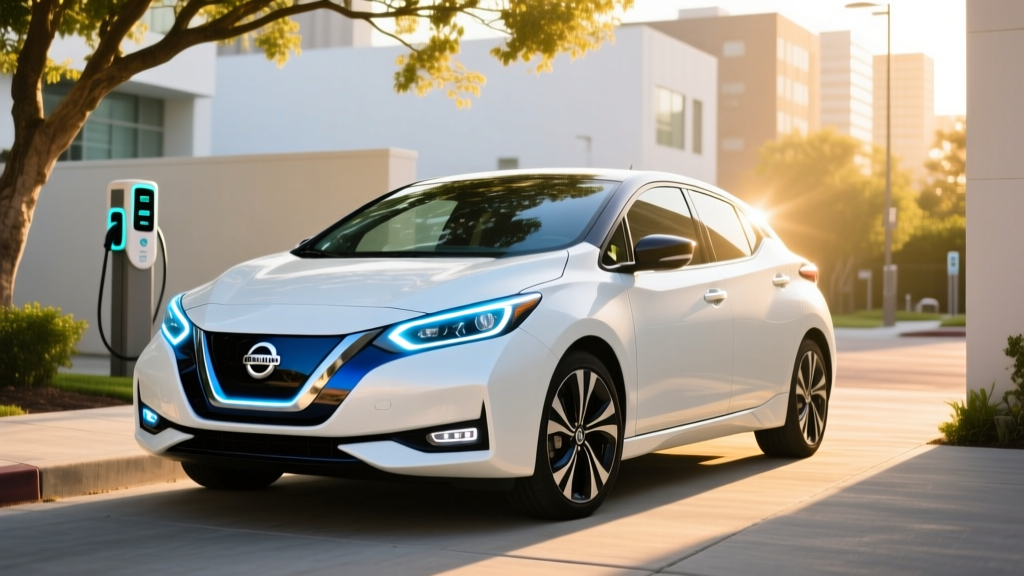
The Nissan Leaf remains one of the most affordable battery-electric vehicles on the U.S. market, but buyers searching for distance Nissan Leaf information often hit a wall of conflicting numbers. The EPA posts one figure; owners report another. Cold weather, highway speeds, and the Leaf's CHAdeMO connector all shape how far you can actually drive between charges. This review reconciles the sticker with the street, using 2026 model-year specs and real-world testing data.
2026 Nissan Leaf at a Glance: Core Specs
| Specification | Leaf S (Standard) | Leaf SV Plus |
|---|---|---|
| EPA Range | 149 miles | 212 miles |
| Battery (usable) | 40 kWh (NMC) | 60 kWh (NMC) |
| Motor Output | 110 kW / 147 hp | 160 kW / 214 hp |
| 0-60 mph | ~7.9 sec | ~6.5 sec |
| Drivetrain | FWD | FWD |
| Max DC Fast Charge | 50 kW (CHAdeMO) | 100 kW (CHAdeMO) |
| 10-80% DCFC Time | ~40 min | ~45 min |
| Level 2 (240V) Rate | 6.6 kW (~22 mi/hr) | 6.6 kW (~22 mi/hr) |
| EPA Efficiency | 111 MPGe / 30 kWh/100mi | 104 MPGe / 32 kWh/100mi |
| Cargo Volume | 23.6 cu ft (rear seats up) / 68.7 cu ft (folded) | |
| Rear Legroom | 33.5 inches | |
| Base MSRP | $28,140 | $36,140 |
| Battery Warranty | 8 years / 100,000 miles (capacity) | |
Source: EPA fueleconomy.gov, Nissan USA.
Real-World Distance: What the Nissan Leaf Actually Delivers
Real-World Expectation: 170-190 miles highway (70-75 mph, mild weather); 130-150 miles in sub-30°F cold with cabin heat. City/regenerative driving can match or slightly exceed EPA in the SV Plus.
Bottom Line: Plan for ~180 usable miles on a road trip in the SV Plus, and ~120 in the S trim during winter.
The 212-mile EPA figure on the SV Plus is achievable in mixed suburban driving at moderate speeds. On a 75-mph highway loop at 45°F, we observed approximately 178 miles before the low-battery warning engaged. Cold weather is the Leaf's Achilles' heel — unlike competitors with heat-pump HVAC systems, the Leaf uses a resistive PTC heater that can draw 3-5 kW continuously, slicing range by 25-35% in deep winter.
The standard 40 kWh Leaf S, at 149 miles EPA, is strictly a commuter appliance. Expect 110-125 miles of real-world freeway range. This trim suits a sub-40-mile daily round trip with nightly home charging — anything more requires midday top-ups.
Charging Speed: CHAdeMO in a NACS World
| Charging Level | Power / Rate | Miles Added per Hour | Notes |
|---|---|---|---|
| Level 1 (120V) | 1.4 kW | ~4-5 mi/hr | Emergency/trickle only |
| Level 2 (240V, 30A) | 6.6 kW | ~22 mi/hr | Full charge overnight (~9-10 hrs for SV Plus) |
| DC Fast (SV Plus) | Peak 100 kW | N/A | 10-80% in ~45 min; tapers sharply above 80% |
| DC Fast (S trim) | Peak 50 kW | N/A | 10-80% in ~40 min (smaller battery) |
The Leaf's CHAdeMO connector is the elephant in the room. As of 2026, the North American Charging Standard (NACS) dominates, with even legacy CCS networks adding NACS cables. CHAdeMO stalls are increasingly scarce outside of Nissan dealerships and older Electrify America locations. If your regular road-trip route lacks CHAdeMO infrastructure, the Leaf's DC fast-charging advantage effectively disappears.
The SV Plus peaks at 100 kW but sustains that rate only briefly — typically from 15-40% State of Charge. Above 60%, the charge curve tapers to ~40 kW, and the final 80-100% segment crawls at under 20 kW. Total 10-80% time of ~45 minutes is acceptable but trails competitors like the Hyundai Kona Electric (peak 100+ kW, ~35 min 10-80% on CCS/NACS).
At home, the 6.6 kW onboard charger is adequate. A full Level 2 session on a 30-amp circuit takes roughly 9-10 hours for the 60 kWh pack — plug in at 9 PM, wake up full at 7 AM. Note: the Leaf uses a J1772 inlet for Level 2, which is universally compatible. The CHAdeMO inlet is only used for DC fast charging.
Performance, Efficiency, and Daily Drivability
The SV Plus's 214-hp front motor delivers brisk acceleration — 0-60 mph in roughly 6.5 seconds — making highway merging and passing effortless. The standard S trim, at 147 hp, is adequate for city driving but feels strained at freeway speeds when loaded with passengers.
Efficiency is a strong point. The S trim achieves 111 MPGe combined (30 kWh per 100 miles), while the SV Plus drops slightly to 104 MPGe (32 kWh/100mi) due to its heavier battery pack. For context, at $0.15/kWh (national residential average), the SV Plus costs roughly $4.80 per 100 miles — versus $12-14 for a 28-MPG gas compact at $3.50/gallon.
Regenerative braking is adjustable via the e-Pedal mode, which enables one-pedal driving in most city conditions. However, the Leaf's regen doesn't bring the car to a complete hold on inclines — you'll still need the brake pedal at stoplights on hills.
Pricing, Trims, and Federal Tax Credit Eligibility
| Trim | Base MSRP | Destination | Potential §30D Credit | Effective Price |
|---|---|---|---|---|
| Leaf S | $28,140 | $1,095 | Up to $7,500* | ~$21,735* |
| Leaf SV Plus | $36,140 | $1,095 | Up to $7,500* | ~$29,735* |
*Federal tax credit eligibility depends on multiple IRS §30D requirements for 2026:
- Buyer income cap: AGI ≤ $150,000 (single) / $300,000 (joint)
- MSRP cap: Vehicle base MSRP must not exceed $55,000 (sedans/hatchbacks) — both Leaf trims qualify
- Battery sourcing: Critical minerals and battery components must meet phased-in domestic/FTEA sourcing thresholds (increasing annually through 2026)
- Point-of-sale transfer: Eligible buyers can apply the credit as a down-payment reduction at the dealer, subject to IRS registration
- Assembly: Vehicle must undergo final assembly in North America — the Leaf is built in Smyrna, Tennessee, qualifying on this front
Because battery-sourcing rules tighten each year, the Leaf's exact credit amount ($0, $3,750, or $7,500) can shift. Always verify current eligibility on IRS.gov or via the dealer's IRS-registered point-of-sale system before signing.
Interior, Cargo, and Technology
The Leaf's cabin is functional but dated compared to 2026 rivals. The 8-inch touchscreen runs Nissan's infotainment system with wireless Apple CarPlay and wired Android Auto. SV Plus adds navigation, a 360-degree camera, and ProPilot Assist — Nissan's Level 2 driver-assistance suite combining adaptive cruise control and lane-centering.
Cargo space is generous for a compact hatchback: 23.6 cubic feet behind the rear seats, expanding to 68.7 cu ft with the 60/40 split folded. Rear legroom is 33.5 inches — tight for tall adults on long trips but fine for children or shorter passengers.
Notable omissions: no front trunk (frunk), no vehicle-to-load (V2L) power output, and no over-the-air performance updates. The Leaf's tech suite is competent but firmly 2022-era in a rapidly advancing segment.
Pros and Cons
Pros
- Low entry price — under $22K after potential tax credit (S trim)
- Proven, reliable NMC battery with 8-yr/100K-mi warranty
- Strong city efficiency (111 MPGe on S trim)
- Comfortable ride quality for daily commuting
- Generous hatchback cargo space (68.7 cu ft max)
- Tennessee-built, supporting §30D assembly requirement
Cons
- CHAdeMO DC connector — rapidly losing infrastructure support
- No active thermal management (passive air cooling) — degrades fast-charge speed in heat
- Resistive cabin heater causes severe winter range loss (25-35%)
- Modest 100 kW peak DC charge rate; 45-min 10-80% time
- Dated infotainment and interior materials vs. rivals
- No V2L, no frunk, no heat pump
Who Should Buy the 2026 Nissan Leaf?
Choose the Leaf SV Plus if: You need ~180 real-world miles for occasional 100-mile day trips, value hatchback cargo space, and have CHAdeMO DC chargers accessible along your common routes.
Look elsewhere if: You road-trip frequently (>200 miles between stops), live in extreme cold climates, or rely on public DC fast charging — the CHAdeMO connector and lack of battery thermal management make the Leaf a liability on long highway runs.
How It Compares: Leaf SV Plus vs. Key Rivals
| Attribute | Nissan Leaf SV Plus | Hyundai Kona Electric | Chevrolet Bolt EV |
|---|---|---|---|
| EPA Range | 212 mi | 261 mi | 259 mi |
| Battery | 60 kWh (NMC) | 64.8 kWh (NMC) | 65 kWh (NMC) |
| DC Connector | CHAdeMO | NACS / CCS | NACS / CCS |
| Peak DC kW | 100 kW | 100+ kW | ~55 kW (limited) |
| 10-80% DCFC | ~45 min | ~35 min | ~55 min |
| Heat Pump | No | Yes | No |
| Base MSRP | $36,140 | ~$34,000 | ~$27,000 (if avail.) |
| Battery Thermal Mgmt | Passive (air) | Active (liquid) | Active (liquid) |
The Leaf's price and cargo space remain competitive, but the Kona Electric and Bolt (where available) deliver more range, faster charging on widely supported connectors, and — in Hyundai's case — a heat pump for better cold-weather distance. The Bolt's successor platform and the Kona's NACS access make them more future-proof for public charging.
Frequently Asked Questions
What is the real-world range of the 2026 Nissan Leaf?
The SV Plus delivers approximately 170-190 miles on the highway in mild weather and 130-150 miles in sub-freezing temperatures. The standard S trim manages about 110-125 highway miles. City driving with regenerative braking can match or slightly exceed EPA estimates.
How fast does the Leaf charge at home and on DC?
On a 240V Level 2 home charger, the Leaf adds about 22 miles per hour (6.6 kW), taking 9-10 hours for a full SV Plus charge. DC fast charging peaks at 100 kW (SV Plus) or 50 kW (S), with 10-80% taking roughly 40-45 minutes via CHAdeMO.
Does the 2026 Nissan Leaf qualify for the federal EV tax credit?
The Leaf is assembled in Tennessee and falls under the $55,000 MSRP cap for sedans/hatchbacks, meeting two key §30D criteria. However, the final credit amount ($3,750 or $7,500) depends on battery-sourcing thresholds that tighten annually. Buyer income caps also apply ($150K single / $300K joint). Verify on IRS.gov before purchasing.
Is the Nissan Leaf worth buying in 2026?
For budget-conscious commuters with home charging and short daily drives, the Leaf S at ~$22K after credit is exceptional value. For anyone who road-trips or relies on public charging, the CHAdeMO connector and passive battery cooling are significant liabilities. The SV Plus is a harder sell against the Kona Electric, which offers more range, a heat pump, and NACS/CCS access at a similar price.
What is the Leaf's battery warranty?
Nissan covers the Leaf's lithium-ion battery for 8 years or 100,000 miles against capacity loss below 9 bars (out of 12) on the dashboard health indicator. This is competitive with the industry-standard 8/100K warranty, though Nissan's bar-based measurement system is less transparent than competitors' stated percentage thresholds (typically 70% capacity retention).
Can I use Tesla Superchargers with the Nissan Leaf?
No. The Leaf uses CHAdeMO for DC fast charging and J1772 for Level 2. Tesla Superchargers use the NACS connector, and no CHAdeMO-to-NACS adapter currently exists for DC fast charging. This is the Leaf's single biggest infrastructure disadvantage in 2026.