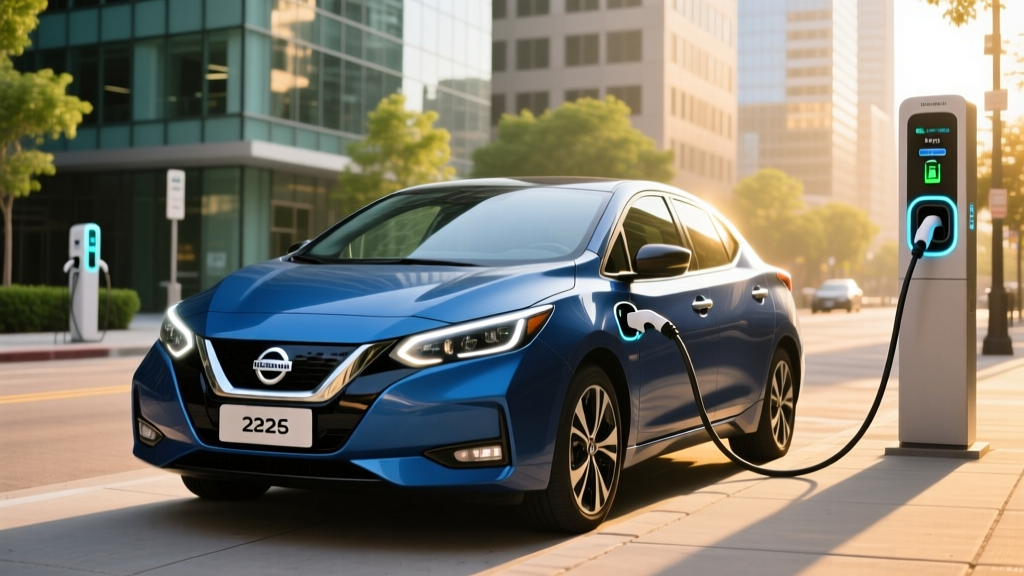
If you've landed here after searching "Nissan Leaf Wikipedia," you likely already know the basics: the Leaf was the world's first mass-market electric vehicle, launched in 2010, and has sold over 650,000 units globally. But encyclopedia entries don't tell you what it's actually like to live with a 2026 Nissan Leaf — whether it can handle your commute, how fast it really charges, or if it still makes sense against newer competitors. That's what this review covers, with exact numbers and real-world caveats.
For 2026, Nissan continues the Leaf with two battery options, updated standard safety tech, and a starting price that keeps it among the most affordable new EVs available. But the platform's age shows in specific areas — particularly DC fast charging. Let's break down everything that matters.
2026 Nissan Leaf Specifications at a Glance
| Specification | Leaf S (40 kWh) | Leaf SV Plus (60 kWh) |
|---|---|---|
| EPA Estimated Range | 149 miles | 212 miles |
| Battery Capacity (Usable) | ~38 kWh (NMC) | ~58 kWh (NMC) |
| Battery Chemistry | NMC (Nickel Manganese Cobalt) | NMC (Nickel Manganese Cobalt) |
| Motor Output | 110 kW / 147 hp | 160 kW / 214 hp |
| 0–60 mph | ~7.9 seconds | ~6.5 seconds |
| Drivetrain | FWD (single motor) | FWD (single motor) |
| Max DC Fast Charge Rate | ~50 kW (CHAdeMO) | ~100 kW (CHAdeMO) |
| Level 2 Charge Rate | 6.6 kW (onboard charger) | 6.6 kW (onboard charger) |
| EPA Efficiency (Combined) | 111 MPGe | 104 MPGe |
| Cargo Volume (rear seats up) | 23.6 cu ft | 23.6 cu ft |
| Cargo Volume (rear seats folded) | 50.0 cu ft | 50.0 cu ft |
| Rear Legroom | 33.5 inches | 33.5 inches |
| Base MSRP | $28,140 | $36,190 |
| Battery Warranty | 8 yr / 100,000 mi | 8 yr / 100,000 mi |
Range: EPA Sticker vs. Real-World Expectations
EPA Estimate: 149 mi (S) / 212 mi (SV Plus)
Real-World Highway (70 mph, moderate temps): Expect ~125–135 mi (S) / ~180–195 mi (SV Plus)
Cold Weather (below 30°F, highway): Expect ~100–115 mi (S) / ~145–165 mi (SV Plus) — a 20–30% reduction typical for NMC packs without a heat pump
City / Suburban Commuting: Range can meet or slightly exceed EPA estimates thanks to regenerative braking at lower speeds
The 2026 Leaf uses NMC (nickel manganese cobalt) lithium-ion cells in both trims. Nissan has refined the pack design over the years, but the fundamental limitation remains: the Leaf relies on resistive cabin heating rather than a heat pump, which draws significantly more energy in cold weather. If you live in a region with harsh winters, budget at least 25% off the EPA sticker for your daily range planning.
According to EPA data on fueleconomy.gov, the Leaf SV Plus achieves 104 MPGe combined (roughly 30 kWh/100 mi), while the lighter S trim manages 111 MPGe combined. The S is more efficient per mile but carries less total energy — so the SV Plus still goes farther overall.
For a daily commuter driving 30–50 miles round trip, even the 40 kWh Leaf S provides ample buffer. For road trips or longer suburban commutes, the SV Plus is the pragmatic choice.
Charging Speeds: The Leaf's Most Important Limitation
| Charging Level | Connector / Power | Leaf S (40 kWh) | Leaf SV Plus (60 kWh) |
|---|---|---|---|
| Level 1 (120V household) | J1772 / ~1.4 kW | ~3–4 mi/hr added | ~3–4 mi/hr added |
| Level 2 (240V home/public) | J1772 / 6.6 kW | ~22 mi/hr; full charge ~6 hr | ~22 mi/hr; full charge ~9 hr |
| DC Fast Charge | CHAdeMO / up to 50 kW (S) or 100 kW (SV Plus) | 10–80% in ~55 min | 10–80% in ~40 min |
Here's where the Leaf's age as a platform becomes most visible. Nissan uses the CHAdeMO DC fast-charging standard, which has been largely superseded in North America by CCS1 and, increasingly, Tesla's NACS connector. While CHAdeMO stations still exist — Electrify America, EVgo, and some ChargePoint locations maintain them — the network is not growing, and new installations overwhelmingly favor CCS and NACS.
The SV Plus peaks at approximately 100 kW on DC fast charge, but that peak is not sustained. Expect the charge curve to taper noticeably above 60% state of charge (SoC). In practice, a 10–80% session takes roughly 40 minutes under ideal thermal conditions. If the battery is cold or you've been driving hard, charging speeds will be lower until the pack warms up — the Leaf lacks active battery preconditioning for DC charging, a feature common on newer platforms from Hyundai, Tesla, and GM.
For home charging on a Level 2 station (240V, 30-amp circuit minimum), the 6.6 kW onboard charger adds roughly 22 miles of range per hour. Most owners will wake up to a full battery every morning, which is the core use case this car is designed around.
Performance and Driving Dynamics
The Leaf SV Plus delivers 214 horsepower and 250 lb-ft of torque from its front-mounted single motor — adequate for confident highway merging and quick off-the-line acceleration. The 0–60 mph time of roughly 6.5 seconds won't challenge a Tesla Model 3 or Hyundai Ioniq 5, but it's perfectly respectable for a practical hatchback.
The S trim's 147 hp and 7.9-second 0–60 time feels less urgent, especially when loaded with passengers or cargo. If your commute includes steep grades or frequent highway on-ramps, the SV Plus powertrain is worth the premium.
Ride quality is compliant and comfortable — Nissan tuned the suspension for comfort over sportiness. The low center of gravity from the floor-mounted battery pack keeps body roll reasonable in corners. One-pedal driving is available via Nissan's e-Pedal mode, which provides strong regenerative braking that can bring the car to a complete stop without touching the brake pedal in most city driving scenarios.
The ProPILOT Assist system (standard on SV Plus, available on S) provides SAE Level 2 driver assistance — adaptive cruise control combined with lane-centering steering. It works well on marked highways but requires hands on the wheel and full driver attention at all times. This is not autonomous driving.
Pricing, Trims, and Federal Tax Credit Eligibility
| Trim | Base MSRP | Typical As-Tested | Federal §30D Credit Eligibility |
|---|---|---|---|
| Leaf S (40 kWh) | $28,140 | $29,500–$31,000 | Up to $3,750 (see below) |
| Leaf SV Plus (60 kWh) | $36,190 | $38,000–$41,500 | Up to $3,750 (see below) |
- Maximum credit: Up to $7,500, split into two halves — $3,750 for critical minerals sourcing and $3,750 for battery component manufacturing.
- The Leaf typically qualifies for $3,750 (one half) due to battery sourcing requirements. Exact eligibility depends on the specific vehicle's battery supply chain for the model year.
- MSRP cap: The Leaf qualifies (sedans/hatchbacks must be under $55,000 MSRP).
- Buyer income cap: AGI must not exceed $150,000 (single), $225,000 (head of household), or $300,000 (joint filers).
- Point-of-sale transfer: You can transfer the credit to the dealer at purchase for an immediate price reduction, rather than waiting to claim it on your tax return.
- Always verify current eligibility on IRS.gov or consult a tax professional before purchasing.
At $28,140 base, the Leaf S is one of the least expensive new EVs on the market. With a $3,750 point-of-sale credit, the effective price drops to roughly $24,390 — a compelling entry point for first-time EV buyers. The SV Plus at ~$32,440 after credit is still well-positioned against rivals, though competitors offer more range and faster charging at similar price points.
Interior, Cargo, and Daily Practicality
The Leaf is a five-seat compact hatchback. Interior materials are functional rather than premium — expect hard plastics on the lower dash and door panels, with soft-touch surfaces on the upper dash and armrests. The 8-inch touchscreen infotainment system (standard on all trims) supports Apple CarPlay and Android Auto, including wireless connectivity on SV Plus.
Cargo space is a genuine strength: 23.6 cubic feet behind the rear seats and 50.0 cubic feet with the 60/40 split rear seats folded. That's competitive with compact crossovers and significantly more than a Tesla Model 3's trunk. However, the Leaf has no front trunk (frunk) — the space under the hood houses conventional power electronics.
Rear legroom at 33.5 inches is adequate for adults on shorter trips but tighter than rivals like the Hyundai Kona Electric (36.5 in) or Volkswagen ID.4 (37.6 in). Headroom is generous front and rear thanks to the hatchback roofline.
Warranty, Battery Longevity, and Ownership Costs
Nissan provides the following warranty coverage for the 2026 Leaf:
- Lithium-ion battery: 8 years / 100,000 miles (capacity retention warranty — Nissan guarantees the battery will not fall below 9 bars out of 12 on the capacity gauge, roughly ~66% of original capacity)
- EV system components: 5 years / 60,000 miles
- New vehicle limited: 3 years / 36,000 miles
- Powertrain: 5 years / 60,000 miles
The 9-bar battery warranty threshold has drawn criticism from owners — it allows for significant degradation before a warranty claim is honored. Real-world data from Leaf owners (tracked on platforms like LeafSpy) suggests modern Leaf packs with improved thermal management degrade roughly 2–3% per year under normal use. Over 8 years, expect roughly 80–85% state of health (SoH) for most owners — better than the warranty minimum, but not class-leading.
The Leaf uses passive air cooling for its battery rather than the active liquid thermal management found in most modern EVs. In hot climates (Arizona, Texas, Southern California), this can accelerate degradation if the car is frequently DC fast-charged or parked in direct sun at high SoC. If you live in a hot region, this is a genuine consideration.
Insurance costs for the Leaf are generally moderate — lower than performance-oriented EVs but slightly higher than comparable gas hatchbacks. Expect annual premiums of $1,400–$1,900 depending on your profile and location, based on industry averages.
How the Leaf Compares: Is It Worth Buying?
| Attribute | Nissan Leaf SV Plus | Hyundai Kona Electric | Chevrolet Equinox EV | Tesla Model 3 RWD |
|---|---|---|---|---|
| EPA Range | 212 mi | 261 mi | 319 mi | 272 mi |
| Battery (usable) | ~58 kWh NMC | ~63 kWh NMC | ~85 kWh NMC | ~57.5 kWh LFP |
| DC Fast Charge Peak | ~100 kW (CHAdeMO) | ~100 kW (CCS) | ~150 kW (CCS) | ~170 kW (NACS) |
| 10–80% DC Time | ~40 min | ~43 min | ~33 min | ~25 min |
| Starting MSRP | $36,190 | $32,975 | $33,600 | $38,990 |
| Cargo (rear seats up) | 23.6 cu ft | 25.5 cu ft | 26.4 cu ft | 23.0 cu ft (trunk) |
| Connector Standard | CHAdeMO | NACS (2026+) | NACS (2026+) | NACS (native) |
The Leaf's strongest argument is price — particularly the S trim at $28,140 before incentives. It is one of the cheapest ways to buy a brand-new electric vehicle in America. For a second car, a city commuter, or a budget-conscious buyer with reliable home charging, it fills that role competently.
However, the CHAdeMO connector is the Leaf's most significant strategic liability in 2026. Nearly every major automaker has adopted or is transitioning to NACS (Tesla's connector), and CCS remains widely available. CHAdeMO infrastructure is stagnant. If you plan to take road trips or rely on public fast charging, the connector ecosystem matters enormously — and the Leaf is on the wrong side of that transition.
- Among the lowest starting MSRPs of any new EV
- Comfortable ride and practical hatchback cargo space
- Proven platform with over a decade of real-world data
- Strong standard safety features (Nissan Safety Shield 360)
- One-pedal driving with e-Pedal mode
- Good efficiency (111 MPGe on S trim)
- CHAdeMO connector — shrinking public fast-charge network
- No active battery thermal management (air-cooled pack)
- No battery preconditioning for DC fast charging
- Range below most modern competitors
- No heat pump — significant cold-weather range loss
- Rear seat legroom is tight for the class
- Interior materials feel dated vs. newer rivals
Who Should Buy the 2026 Nissan Leaf?
- Budget-first EV buyers who want the lowest possible new-EV purchase price
- City and suburban commuters with a predictable daily route under 80 miles round trip
- Home-charging owners who can install a Level 2 charger and rarely need public DC fast charging
- Second-car households where a gas or long-range EV handles road trips
- You regularly take road trips over 200 miles and need reliable public fast charging
- You live in an extremely hot climate and are concerned about long-term battery health
- You want access to the Tesla Supercharger network (NACS) without adapters
- You need more than 212 miles of EPA range for your daily driving
Frequently Asked Questions
What is the real-world range of the 2026 Nissan Leaf?
The EPA rates the Leaf S at 149 miles and the SV Plus at 212 miles. In real-world highway driving at 70 mph in moderate temperatures, expect roughly 125–135 miles from the S and 180–195 miles from the SV Plus. In cold weather (below 30°F), subtract another 20–30% due to the Leaf's resistive heating system and lack of a heat pump. City driving with regenerative braking can match or slightly exceed EPA estimates.
How fast does the Nissan Leaf charge at home and on DC fast chargers?
On a Level 2 home charger (240V, 6.6 kW), the Leaf adds roughly 22 miles of range per hour — a full overnight charge is sufficient for either battery size. On DC fast charge, the SV Plus peaks at ~100 kW via CHAdeMO, reaching 10–80% in approximately 40 minutes. The S trim peaks at ~50 kW, taking about 55 minutes for the same 10–80% session. Neither trim supports battery preconditioning, so cold-weather charging will be slower.
Does the 2026 Nissan Leaf qualify for the federal EV tax credit?
The Leaf generally qualifies for up to $3,750 under IRS §30D (one half of the potential $7,500 credit), depending on battery critical-mineral and component sourcing for the specific model year. It falls well under the $55,000 MSRP cap for sedans/hatchbacks. Buyer income caps apply: $150,000 single / $225,000 head of household / $300,000 joint. The credit can be transferred to the dealer at point of sale for an immediate price reduction. Verify current eligibility at IRS.gov before purchasing.
Is the Nissan Leaf worth buying compared to the Hyundai Kona Electric or Chevrolet Equinox EV?
If your priority is the lowest purchase price and you charge primarily at home, the Leaf S at $28,140 is hard to beat. However, the Kona Electric offers 261 miles of EPA range for roughly $33,000 with NACS/CCS charging, and the Equinox EV delivers 319 miles starting around $33,600. Both use more widely supported connectors and have active battery thermal management. For buyers who need road-trip capability or live in hot climates, the competitors offer meaningful advantages for a modest price premium.
Why does the Nissan Leaf still use CHAdeMO instead of CCS or NACS?
Nissan was an early adopter of the CHAdeMO standard (co-developed with Japanese automakers and Tokyo Electric Power Company) when the Leaf launched in 2010. Switching charging standards mid-platform would require significant reengineering. The current-generation Leaf platform has carried over since 2018, and Nissan has not announced a transition for this model. Nissan's next-generation EVs on the CMF-EV platform (like the Ariya) use CCS, and future models are expected to adopt NACS.
How long will the Nissan Leaf battery last?
Nissan warranties the battery for 8 years / 100,000 miles against dropping below 9 of 12 capacity bars (~66% SoH). Real-world data from Leaf owners suggests typical degradation of 2–3% per year under normal conditions, meaning most packs will retain 80–85% capacity after 8 years. However, the Leaf's passive air-cooled battery is more susceptible to heat-related degradation in hot climates or with frequent DC fast charging. A full battery replacement outside of warranty costs approximately $6,500–$9,000 depending on the pack size and labor.
Sources: EPA Fuel Economy (fueleconomy.gov), IRS Clean Vehicle Credits, Nissan USA Leaf Specifications.