Quick Verdict: The Original EV at a Crossroads
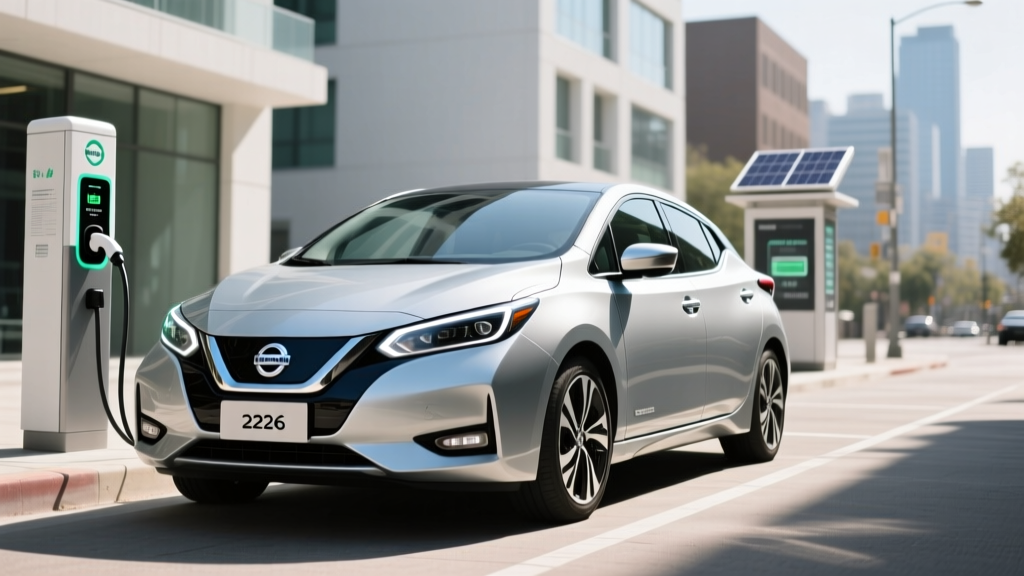
The Nissan Leaf holds a unique place in electric-vehicle history. Launched for the 2011 model year, it was the first mass-market, purpose-built BEV sold globally — and for many buyers, it was their first encounter with plug-in ownership. Now in its 2026 model year, the Leaf continues with the same fundamental architecture that has defined it since its 2018 redesign: a front-wheel-drive hatchback with either a 40 kWh or 62 kWh battery pack, air-cooled thermal management, and a CHAdeMO DC fast-charging connector.
That architecture is showing its age. While the Leaf remains one of the most affordable new EVs available in the United States, competitors have moved to liquid-cooled batteries, NACS/CCS connectors, 150+ kW charging, and 300+ mile ranges. The Leaf is best understood as a budget-conscious commuter car — excellent for predictable daily driving, less suited to road trips or extreme climates. If you can charge at home, drive under 100 miles a day, and don't need fast public charging, the Leaf's low entry price and proven reliability still make a compelling case.
Range, Efficiency, and the Real-World Reality
The 2026 Leaf comes in two battery configurations across its trim lineup:
| Spec | Leaf S / SV (40 kWh) | Leaf SV Plus / SL Plus (62 kWh) |
|---|---|---|
| Battery (usable) | 40 kWh | 62 kWh |
| Chemistry | NMC (nickel manganese cobalt) | NMC (nickel manganese cobalt) |
| EPA Range | 149 miles | 212 miles |
| EPA MPGe (combined) | 111 MPGe | 104 MPGe |
| Energy Consumption | 30 kWh/100 mi | 32 kWh/100 mi |
| Motor Output | 110 kW (147 hp) | 160 kW (214 hp) |
| 0–60 mph | ~7.9 sec | ~6.5 sec |
| Drivetrain | FWD | FWD |
| Base MSRP | $28,140 | $36,190 |
The EPA sticker says 149 miles (40 kWh) or 212 miles (62 kWh), but real-world results depend heavily on conditions. In mild city driving at 30–45 mph, owners of the 62 kWh pack routinely report 220–230 miles on a full charge — the Leaf's regenerative braking shines in stop-and-go traffic. On the highway at 70 mph, expect the 62 kWh model to deliver roughly 175–190 miles. In cold weather (below 32°F / 0°C), range drops 25–35% due to cabin heating demands and reduced battery efficiency — the 62 kWh Leaf may fall to 140–160 miles in winter highway driving. The Leaf lacks a heat pump, relying on resistive PTC heating, which is a significant efficiency penalty in cold climates.
For context, the 40 kWh Leaf's 149-mile EPA range is the lowest of any new EV currently sold in the U.S. It's adequate for commuting but requires range planning for anything beyond daily errands.
Charging: The CHAdeMO Question
The 2026 Leaf uses the CHAdeMO DC fast-charging standard — a connector that was once widely available but has been effectively abandoned by the broader industry in favor of CCS1 and, increasingly, Tesla's NACS. This is the Leaf's single biggest practical limitation in 2026.
| Charging Level | 40 kWh Model | 62 kWh Model |
|---|---|---|
| Level 1 (120V, 1.4 kW) | ~4 mi/hr added | ~4 mi/hr added |
| Level 2 (240V, 6.6 kW onboard) | ~22 mi/hr; full in ~7.5 hr | ~25 mi/hr; full in ~11.5 hr |
| DC Fast (CHAdeMO, peak) | 50 kW peak | 100 kW peak |
| DC Fast 10–80% | ~40 min | ~45 min |
The 62 kWh Leaf's 100 kW peak DC rate sounds modest compared to the 200–350 kW rates offered by Hyundai, Kia, Tesla, and GM's latest platforms — and the real-world experience is even slower. The Leaf's passive air-cooled battery cannot sustain peak charge rates. On a hot day or after consecutive fast charges, the battery temperature rises and the charging system throttles power aggressively, a phenomenon owners call Rapidgate. In summer road-trip testing, sustained charge rates on the 62 kWh model often average 50–65 kW across a 10–80% session, pushing actual charge times closer to 55–65 minutes.
Level 2 home charging at 6.6 kW is perfectly adequate for overnight replenishment. A full charge from empty takes roughly 7.5 hours on the 40 kWh pack and 11.5 hours on the 62 kWh pack — both manageable with a standard 240V home charger installed on a 30-amp circuit.
The CHAdeMO connector issue deserves emphasis: Electrify America, the largest U.S. DC fast-charging network, has largely transitioned new installations to CCS1 and NACS. While many existing CHAdeMO stations remain operational, the network is shrinking. Tesla Superchargers — now the dominant U.S. fast-charging infrastructure — do not offer CHAdeMO adapters. Leaf owners planning road trips should use apps like PlugShare to verify CHAdeMO availability along their routes.
Performance and Driving Dynamics
The Leaf was never designed to be a performance EV, and the 2026 model confirms that. The SV Plus and SL Plus trims produce 214 horsepower and 250 lb-ft of torque from a single front-mounted motor, delivering a 0–60 mph time of roughly 6.5 seconds. That's brisk for a compact hatchback and makes highway merging effortless. The base S and SV trims with the 40 kWh pack offer 147 hp and a 0–60 time near 7.9 seconds — adequate but unexciting.
Ride quality is a genuine strength. The Leaf's suspension tuning prioritizes comfort, absorbing bumps and road imperfections with a composure that rivals more expensive crossovers. Cabin noise levels are low at city speeds, though wind and tire noise increase noticeably above 65 mph.
The Leaf's e-Pedal mode provides aggressive regenerative braking that enables one-pedal driving in most city conditions. It's not as strong as the regen found in a Tesla Model 3 or Hyundai Ioniq 5, but it's effective enough to reduce brake wear significantly. The ProPILOT Assist system (standard on SV and above) provides SAE Level 2 driver assistance with adaptive cruise control and lane-centering — competent for highway use, though it requires continuous hands-on-wheel engagement and does not support automated lane changes.
Interior, Cargo, and Technology
The 2026 Leaf's cabin is functional and honest, if dated. An 8-inch touchscreen with Apple CarPlay and Android Auto is standard across all trims. The SV Plus and SL Plus add built-in navigation and a Bose premium audio system. Physical buttons for climate and volume controls remain — a welcome ergonomic choice in an era of touchscreen-only interfaces.
Cargo space measures 23.6 cubic feet behind the rear seats, expanding to 30.0 cubic feet with the rear seatbacks folded (the 62 kWh models have slightly less at 22.4 / 28.8 cu ft due to the larger battery encroaching on the cargo floor). Rear legroom is 33.5 inches — sufficient for adults on shorter trips but tight for taller passengers. The Leaf is a five-seat hatchback, not a family hauler, and there's no frunk (the power electronics occupy the space under the hood).
Notable tech omissions in 2026: no vehicle-to-load (V2L) capability, no over-the-air software updates for the powertrain, no phone-as-a-key functionality, and no 360-degree camera on base trims. The Leaf's technology suite reflects its 2018-era architecture rather than the software-defined vehicle expectations of 2026.
Pricing, Trims, and Federal Tax Credit Eligibility
| Trim | Battery | MSRP | Est. After §30D Credit* |
|---|---|---|---|
| S | 40 kWh | $28,140 | See eligibility notes |
| SV | 40 kWh | $29,740 | See eligibility notes |
| SV Plus | 62 kWh | $36,190 | See eligibility notes |
| SL Plus | 62 kWh | $39,390 | See eligibility notes |
*Federal tax credit eligibility is complex and subject to change. The IRS §30D credit offers up to $7,500 for qualifying new EVs, but eligibility depends on multiple factors:
- MSRP cap: Vans/SUVs/pickups capped at $80,000; other vehicles (including the Leaf hatchback) capped at $55,000 — all Leaf trims qualify on price.
- Buyer income cap: Modified AGI must not exceed $150,000 (single), $225,000 (head of household), or $300,000 (joint).
- Battery sourcing: The credit is split into two halves — $3,750 for critical-minerals sourcing and $3,750 for battery-component assembly — both with escalating domestic-content thresholds through 2026. Vehicles with battery components from a "foreign entity of concern" (FEOC) are disqualified.
- Point-of-sale transfer: Eligible buyers can transfer the credit to the dealer at purchase, reducing the out-of-pocket price immediately rather than waiting for a tax refund.
The Leaf's tax-credit status has fluctuated as battery-sourcing rules tighten. Consult the fueleconomy.gov tax credit tracker and a tax professional to confirm your specific eligibility before purchasing. Nissan's U.S.-assembled battery packs have historically helped the Leaf qualify for at least partial credit, but the FEOC restrictions introduced in 2024–2025 have complicated sourcing compliance for many automakers.
Battery Longevity, Warranty, and the Air-Cooling Trade-Off
Nissan provides an 8-year / 100,000-mile battery capacity warranty on the 2026 Leaf, guaranteeing that the pack will retain at least 65% of its original capacity (9 bars out of 12 on the dashboard capacity gauge) during the warranty period. The powertrain is covered for 5 years / 60,000 miles.
The Leaf's passive air-cooled battery thermal management is the most debated aspect of its design. Unlike liquid-cooled competitors (Tesla, Hyundai, GM, Ford), the Leaf relies on ambient airflow to regulate battery temperature. In moderate climates — the Pacific Northwest, coastal California, the Southeast — long-term degradation data shows the Leaf's NMC packs holding up reasonably well, with many 2013–2017 models retaining 80–85% capacity after 100,000 miles. In hot climates (Arizona, Texas, inland California), degradation accelerates. Early-generation Leafs in Phoenix lost 20–30% capacity within five years.
The 2026 model benefits from improved NMC cell chemistry and better battery management software compared to early Leafs, but the fundamental thermal limitation remains. If you live in a consistently hot climate and plan to keep the vehicle beyond five years, a liquid-cooled competitor is a safer long-term bet.
Pros, Cons, and Who Should Buy
Pros
- Lowest starting MSRP of any new EV in the U.S. ($28,140)
- Comfortable ride quality and quiet cabin at city speeds
- Proven reliability track record over 15 model years
- Hatchback practicality with 23.6 cu ft cargo volume
- Physical buttons and straightforward infotainment
- Eligible for HOV lane access in many states
Cons
- CHAdeMO connector — shrinking public charging network
- Air-cooled battery limits fast-charging speed and longevity in heat
- 149-mile range on 40 kWh model is inadequate for road trips
- No heat pump — significant cold-weather range loss (25–35%)
- Dated interior technology and no OTA updates
- FWD only; no AWD option for snow-belt buyers
Who the 2026 Nissan Leaf Suits Best
Choose the Leaf if: You need an affordable new EV for a predictable daily commute under 80 miles, you have reliable home Level 2 charging, you live in a moderate climate, and you rarely take road trips exceeding 150 miles one-way. The SV Plus with the 62 kWh pack is the sweet spot — 212 miles of EPA range covers most daily needs with margin.
Look elsewhere if: You regularly drive in extreme heat or cold, you need DC fast charging for road trips, you want access to Tesla Superchargers, you need AWD, or you plan to keep the vehicle 10+ years in a hot climate. The Hyundai Ioniq 5, Chevrolet Equinox EV, and Tesla Model 3 all offer superior charging infrastructure, range, and thermal management at higher price points.
Frequently Asked Questions
What is the real-world range of the 2026 Nissan Leaf?
The 62 kWh Leaf SV Plus / SL Plus delivers 212 miles EPA combined. Real-world highway range at 70 mph is approximately 175–190 miles. In cold weather below freezing, expect 140–160 miles. The 40 kWh model's 149-mile EPA rating drops to roughly 120–130 miles on the highway and 95–115 miles in winter conditions.
How fast does the 2026 Nissan Leaf charge?
On a Level 2 home charger at 6.6 kW, the 62 kWh Leaf adds about 25 miles per hour and charges fully overnight in ~11.5 hours. On DC fast charging (CHAdeMO), the 62 kWh model peaks at 100 kW but averages 50–65 kW in sustained sessions, reaching 10–80% in roughly 45–65 minutes depending on battery temperature. The 40 kWh model peaks at 50 kW DC.
Does the 2026 Nissan Leaf qualify for the $7,500 federal tax credit?
Eligibility depends on your income, the vehicle's battery sourcing compliance, and current IRS rules. The Leaf's MSRP is well below the $55,000 hatchback cap. Buyer income must not exceed $150K single / $300K joint. Battery-sourcing and FEOC rules determine whether the full $7,500, a partial $3,750, or no credit applies. Check fueleconomy.gov and consult a tax professional before purchasing.
Is the Nissan Leaf worth buying over competitors in 2026?
The Leaf is worth buying if price is your primary concern and your driving needs are modest. At $28,140, it undercuts every other new EV. But the CHAdeMO connector, air-cooled battery, and limited range make it hard to recommend over the Chevrolet Equinox EV (~$33,000, CCS, 319 mi range), Hyundai Ioniq 5 (~$42,000, 800V architecture, 303 mi), or Tesla Model 3 (~$39,990, NACS, 341 mi) for buyers who need charging flexibility and long-term battery confidence.
How long will the Nissan Leaf battery last?
Nissan warrants the battery for 8 years / 100,000 miles at 65%+ capacity retention. In moderate climates, Leaf owners report 80–90% capacity retention at 100,000 miles. In hot climates, degradation accelerates due to the passive air-cooling system. If you live where summer temperatures regularly exceed 95°F, consider a liquid-cooled alternative for better long-term battery health.
Can I use Tesla Superchargers with a Nissan Leaf?
No. Tesla Superchargers use the NACS connector, and no commercially available, certified CHAdeMO-to-NACS adapter exists as of 2026. The Leaf is limited to CHAdeMO-equipped public DC fast chargers and J1772 Level 2 stations.