Quick Verdict: The Nissan Leaf Motor Still Defines Budget EV Commuting
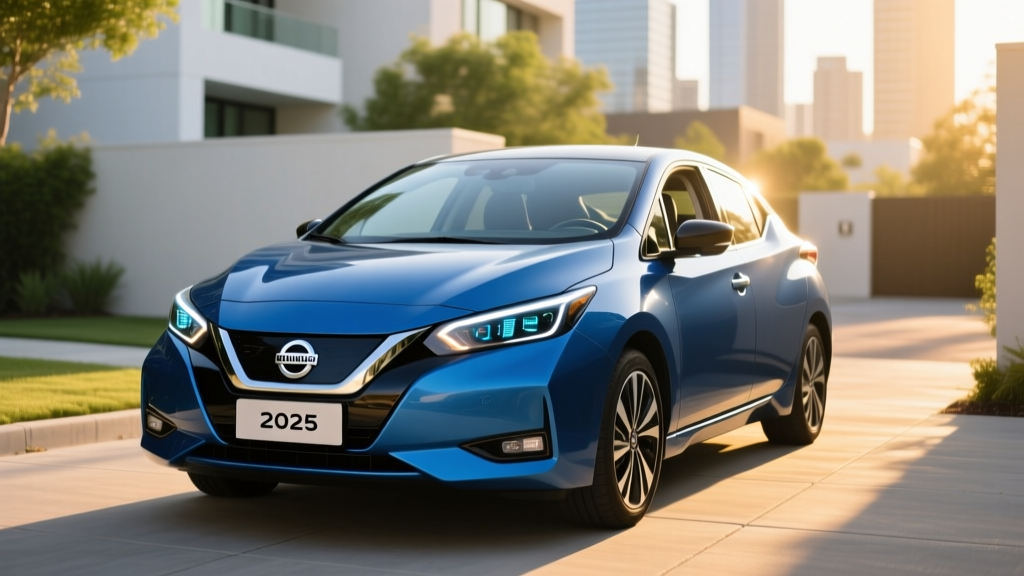
The Nissan Leaf remains one of the most affordable new electric vehicles on the U.S. market, and its appeal starts with the drivetrain. The standard Nissan Leaf motor — a front-mounted AC synchronous electric motor producing 147 horsepower and 236 lb-ft of torque in the S trim — delivers the instant, linear thrust that makes EVs so satisfying around town. Step up to the SV Plus, and a larger 214-hp motor paired with a 60 kWh battery transforms the Leaf into a legitimate 212-mile commuter with passing power to spare. For 2026, the Leaf carries over with minor packaging adjustments, but the fundamental formula is unchanged: a practical, front-wheel-drive hatchback that undercuts nearly every rival on price while offering competitive efficiency and surprisingly roomy cargo space.
But the Leaf's age is showing. Its CHAdeMO DC fast-charging connector is increasingly orphaned as the industry consolidates around NACS and CCS. Air cooling for the battery limits repeated fast-charge speeds. And the absence of a heat pump means real-world winter range takes a sharper hit than liquid-cooled competitors. If you're a budget-minded commuter with reliable home Level 2 access and modest daily miles, the Leaf's motor and efficiency still punch well above the price tag. For road-trippers or those dependent on public charging, the picture gets more complicated.
Nissan Leaf Motor and Performance Specs
Understanding the Leaf's motor lineup is key to choosing the right trim. Nissan offers two distinct powertrain configurations:
| Spec | Leaf S (40 kWh) | Leaf SV Plus (60 kWh) |
|---|---|---|
| Motor Type | AC Synchronous | AC Synchronous |
| Horsepower | 147 hp | 214 hp |
| Torque | 236 lb-ft | 250 lb-ft |
| Drivetrain | FWD | FWD |
| 0–60 mph | ~7.9 sec | ~6.5 sec |
| Top Speed | ~90 mph (governed) | ~98 mph (governed) |
The base 147-hp motor in the S trim is perfectly adequate for city and suburban driving. Electric motors deliver peak torque from 0 RPM, so the Leaf S feels brisk off the line — quicker than its 7.9-second 0–60 time might suggest in stoplight-to-stoplight sprints. Highway merging requires a bit more planning, especially when loaded with passengers.
The SV Plus motor's 214 hp and 250 lb-ft give the larger-battery Leaf genuinely confident highway manners. The 6.5-second 0–60 time puts it in the same ballpark as a Volkswagen ID.4's base motor and well ahead of the Chevrolet Bolt EV's 200-hp setup. Overtaking at 65 mph feels immediate, and the single-speed reduction gear means there's no shift lag — just a seamless wave of torque.
One-pedal driving via Nissan's e-Pedal mode is standard and well-calibrated, offering strong regenerative braking that can bring the car to a complete stop without touching the friction brakes. In normal driving mode, regen is milder and more coast-friendly, which some drivers prefer for highway efficiency.
Battery, Range, and Real-World Efficiency
| Spec | Leaf S (40 kWh) | Leaf SV Plus (60 kWh) |
|---|---|---|
| Battery Chemistry | Lithium-ion (NMC) | Lithium-ion (NMC) |
| Usable Capacity | ~38 kWh | ~58 kWh |
| EPA Range | 149 miles | 212 miles |
| EPA MPGe (Combined) | 111 MPGe | 109 MPGe |
| Efficiency (kWh/100 mi) | 30 kWh | 31 kWh |
The EPA estimates 149 miles for the S and 212 miles for the SV Plus. In mixed real-world driving at moderate temperatures (60–75°F), expect roughly 130–140 miles from the S and 190–200 miles from the SV Plus. At sustained highway speeds of 70–75 mph, range drops further — plan on 115–125 miles (S) and 165–180 miles (SV Plus). In cold weather (below 30°F), the Leaf's air-cooled battery and lack of a heat pump can reduce range by 25–35%, bringing the SV Plus down to roughly 140–155 miles. Source: fueleconomy.gov.
The Leaf's NMC (nickel manganese cobalt) battery chemistry offers good energy density but is passively air-cooled — a significant differentiator from liquid-cooled packs in the Hyundai Ioniq 5, Tesla Model 3, and Chevrolet Equinox EV. Air cooling keeps cost and weight down, but it means the battery can heat-soak during repeated DC fast charges or hard acceleration in hot weather, triggering power throttling to protect the cells. For daily commuting with overnight Level 2 charging, this is a non-issue. For road trips requiring multiple fast charges in a single day, it's a real limitation.
Efficiency is a Leaf strong suit. At 30–31 kWh per 100 miles, it's competitive with the Bolt EV and not far behind more aerodynamic sedans like the Tesla Model 3. The hatchback shape does create more drag at highway speeds, which is why city MPGe actually exceeds highway MPGe in EPA testing.
Charging Speeds: DC Fast, Level 2, and Level 1
| Charging Level | Leaf S (40 kWh) | Leaf SV Plus (60 kWh) |
|---|---|---|
| Level 1 (120V, 1.4 kW) | ~3 mi/hr | ~3 mi/hr |
| Level 2 (240V, 6.6 kW onboard) | ~22 mi/hr (~7 hr full) | ~22 mi/hr (~10 hr full) |
| DC Fast (CHAdeMO, peak) | 50 kW peak | 100 kW peak |
| DC Fast 10–80% (est.) | ~40 min | ~45 min |
| Connector | CHAdeMO + J1772 | CHAdeMO + J1772 |
Charging is where the Leaf shows its most significant age-related weakness. The CHAdeMO DC fast-charging standard has been effectively abandoned by the broader industry. Tesla's NACS connector is now the North American standard, with CCS1 as the legacy alternative for non-Tesla EVs. While Electrify America and some regional networks still maintain CHAdeMO connectors, new installations increasingly omit them. If you rely on public DC fast charging, verify CHAdeMO availability on your regular routes using apps like PlugShare before committing to the Leaf.
The SV Plus's 100 kW peak DC rate is respectable but not sustained. The charge curve tapers noticeably after 60% State of Charge (SoC), and the air-cooled battery means that in warm weather or after a highway drive, peak rates may be limited to 70–80 kW as the thermal management system protects the cells. A 10–80% session typically takes 40–50 minutes in moderate conditions — competitive with the outgoing Bolt EV but significantly slower than 800V architectures like the Ioniq 5 or Kia EV6, which can do 10–80% in 18 minutes.
Level 2 home charging is straightforward. The 6.6 kW onboard charger works with any standard J1772 Level 2 station (ChargePoint Home Flex, Emporia Vue, Wallbox Pulsar Plus). A full charge from empty takes roughly 7 hours for the S and 10 hours for the SV Plus — easily achievable overnight on a 240V/32A circuit. Most owners will rarely charge from empty, so a typical 50% replenishment takes 3.5–5 hours.
Pricing, Trims, and Federal Tax Credit Eligibility
| Trim | 2026 MSRP | Key Features |
|---|---|---|
| Leaf S (40 kWh) | $28,140 | 8" touchscreen, ProPILOT Assist, e-Pedal, 147-hp motor |
| Leaf SV Plus (60 kWh) | $36,140 | 214-hp motor, 212-mi range, Bose audio, leatherette, fog lights |
The Nissan Leaf is assembled in Smyrna, Tennessee, and has historically qualified for the full $3,750 federal tax credit under IRS §30D (meeting critical-mineral requirements but not the full battery-component sourcing threshold for the additional $3,750). Key eligibility rules for 2026:
- MSRP cap: The Leaf (a hatchback/wagon classification) must be under $55,000 — both trims qualify easily.
- Income cap: Modified AGI must not exceed $150,000 (single), $225,000 (head of household), or $300,000 (married filing jointly).
- Point-of-sale transfer: You can apply the credit as an immediate dealer discount rather than waiting for tax filing.
- Battery sourcing: Requirements tighten annually. Verify current-year eligibility at IRS.gov clean vehicle list before purchasing.
After the $3,750 credit, the Leaf S effectively starts around $24,390 — making it one of the cheapest new EVs available. The SV Plus drops to roughly $32,390.
At these effective prices, the Leaf competes with used EVs and undercuts the Chevrolet Equinox EV, Hyundai Kona Electric, and Volvo EX30 on starting cost. However, buyers should factor in potential state incentives (which vary by jurisdiction — check your state energy office) and the reality that the Leaf's lower residual value may offset some of the upfront savings at trade-in time.
Interior, Cargo, and Technology
The Leaf's interior is functional rather than flashy, with a layout that dates to the car's 2018 redesign. Materials are hard-plastic-heavy below the dash, but the seats are comfortable and the driving position is car-like — no awkward SUV perch or cramped subcompact squeeze.
| Dimension | Leaf S / SV Plus |
|---|---|
| Front Headroom | 41.2 in |
| Front Legroom | 42.1 in |
| Rear Headroom | 37.3 in |
| Rear Legroom | 33.5 in |
| Cargo (rear seats up) | 23.6 cu ft |
| Cargo (rear seats folded) | 50.0 cu ft |
Cargo space is a genuine Leaf advantage. At 23.6 cubic feet behind the rear seats and 50.0 cu ft with them folded, the hatchback offers more usable volume than the Tesla Model 3's trunk and rivals compact crossovers. The load floor is flat and the opening is wide, making it easy to slide in groceries, a stroller, or a couple of carry-on bags for a weekend trip. There is no frunk — the space under the hood houses the motor, power electronics, and the 12V auxiliary battery.
Tech highlights include an 8-inch touchscreen with wireless Apple CarPlay and wired Android Auto, a 7-inch driver information display, and Nissan's ProPILOT Assist — a solid Level 2 driver-assistance system combining adaptive cruise control with lane-centering. ProPILOT is competent on highways but requires hands-on-wheel contact and doesn't offer lane changes or stoplight recognition like more advanced systems. The available Bose 7-speaker audio system in the SV Plus is a nice upgrade.
- ProPILOT Assist is SAE Level 2 — you must remain fully engaged with hands on the wheel and eyes on the road at all times. It is not autonomous driving.
- No over-the-air (OTA) software updates — the infotainment and motor-control software is fixed at purchase.
- CHAdeMO connector limits public DC fast-charging options as networks transition to NACS/CCS.
- No heat pump — cold-weather cabin heating draws directly from the traction battery, accelerating range loss in winter.
Battery Warranty and Longevity
Nissan covers the Leaf's battery with an 8-year/100,000-mile warranty against capacity loss below 9 bars out of 12 on the battery health gauge (roughly 66–70% of original capacity). The powertrain warranty is 5 years/60,000 miles, and the basic bumper-to-bumper coverage is 3 years/36,000 miles.
Real-world degradation data from Leaf owners is mixed but generally reassuring for moderate-use commuters. The air-cooled battery degrades faster than liquid-cooled alternatives in hot climates — owners in Arizona, Texas, and Southern California have reported 15–20% capacity loss after 5–6 years of daily use and frequent DC fast charging. In temperate climates with predominantly Level 2 home charging, degradation is closer to 8–12% over the same period. If you live in a hot climate and plan to keep the Leaf long-term, minimize DC fast charging and avoid routinely charging to 100% — keeping SoC between 20–80% significantly extends NMC battery life.
A full battery replacement (if out of warranty) currently runs $6,500–$9,000 depending on the pack size and dealer labor rates — a significant cost that should factor into long-term ownership calculations for a budget-priced EV.
Who Should Buy the Nissan Leaf?
✅ Choose the Leaf If:
- You want the lowest-cost new EV available (especially the S trim after tax credit)
- Your daily commute is under 80 miles round-trip with reliable home Level 2 charging
- You value hatchback cargo practicality over crossover styling
- You live in a temperate climate where air-cooled battery degradation is manageable
- You don't need frequent DC fast charging or long road trips
❌ Look Elsewhere If:
- You rely on public DC fast charging (CHAdeMO availability is shrinking)
- You regularly drive in extreme heat or cold without garage parking
- You want a modern 800V charging architecture or NACS connector
- You need AWD, towing capability, or more than 212 miles of range
- Long-term battery degradation in a hot climate concerns you
The Leaf's ideal owner is a commuter with a garage or driveway where a Level 2 charger can be installed, whose daily driving rarely exceeds 60–80 miles, and who prioritizes low purchase price and running costs over cutting-edge tech or road-trip versatility. For that buyer, the Nissan Leaf motor — whether the 147-hp S or the 214-hp SV Plus — delivers the smooth, quiet, torque-rich driving experience that makes EVs compelling, at a price point that's hard to beat.
Frequently Asked Questions
What is the real-world range of the 2026 Nissan Leaf?
The Leaf S delivers roughly 130–140 miles in mixed real-world conditions and 115–125 miles at sustained highway speeds. The SV Plus manages 190–200 miles mixed and 165–180 miles highway. Cold weather (below 30°F) can reduce these figures by 25–35% due to the lack of a heat pump and resistive cabin heating drawing from the traction battery.
How fast does the Nissan Leaf charge at home and on DC fast chargers?
On a 240V Level 2 home charger at 6.6 kW, the Leaf adds about 22 miles of range per hour — a full charge takes roughly 7 hours (S) or 10 hours (SV Plus). On a CHAdeMO DC fast charger, the S peaks at 50 kW (10–80% in ~40 minutes) and the SV Plus peaks at 100 kW (10–80% in ~45 minutes), though air-cooling thermal limits can reduce sustained rates in warm weather.
Does the Nissan Leaf qualify for the federal EV tax credit?
As of 2026, the Leaf qualifies for $3,750 under IRS §30D (meeting critical-mineral but not full battery-component sourcing thresholds). Eligibility requires income below $150K/$300K (single/joint), and the MSRP must be under $55,000 for non-SUV classifications — both trims qualify. The credit can be applied at point of sale as a dealer discount. Always verify current eligibility on the IRS clean vehicle list before purchasing.
Is the Nissan Leaf worth buying vs. the Hyundai Kona Electric or Chevrolet Equinox EV?
The Leaf wins on base price — the S trim at ~$24,390 after the tax credit is significantly cheaper than rivals. But the Kona Electric offers a CCS connector, liquid-cooled battery, and 261-mile range. The Equinox EV provides 315+ miles of range, NACS compatibility, and a more modern platform. If budget is the top priority and your driving fits the Leaf's range and charging profile, it's an excellent value. If you need more range, better charging infrastructure compatibility, or plan to keep the car 8+ years in a hot climate, the premium for a rival is justified.
What are the biggest pros and cons of the Nissan Leaf?
Pros: Lowest starting price among new EVs, strong hatchback cargo space (50 cu ft), efficient at 30 kWh/100mi, comfortable ride, ProPILOT Assist included standard, proven reliability with extensive service network.
Cons: CHAdeMO connector limits public charging access, air-cooled battery degrades faster in hot climates, no heat pump hurts winter range, interior design and tech feel dated, DC fast-charge speeds trail modern rivals, no OTA updates.
How long will the Nissan Leaf battery last?
Nissan warrants the battery for 8 years/100,000 miles against dropping below 9 of 12 capacity bars (~70%). Real-world data suggests 10–15 years of usable service life for moderate commuters in temperate climates, with 15–25% total degradation over that period. Hot-climate owners who DC fast-charge frequently may see accelerated degradation. Replacement cost is $6,500–$9,000 out of warranty.