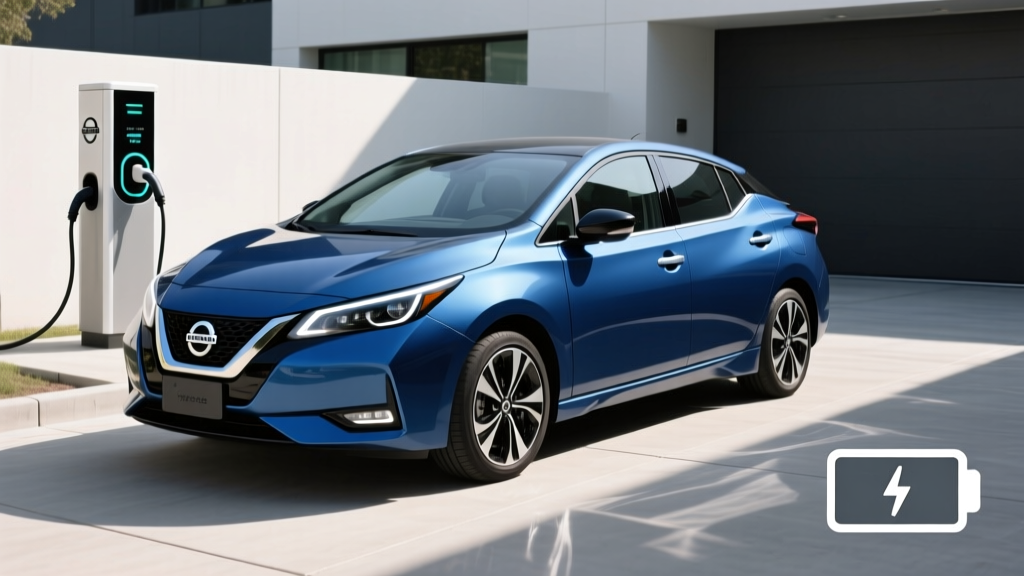
The Nissan Leaf has been an EV staple since 2011, but as the market matures, buyers need to know where it stands against newer competition. For 2026, Nissan continues to offer the Leaf in two distinct configurations: the standard-range S and the extended-range SV PLUS. Both remain among the most affordable new EVs on the market, but their CHAdeMO charging connector and aging platform raise legitimate questions for today's shoppers. Here's a data-driven look at what you're actually getting.
Quick Verdict: Who Should Consider the 2026 Nissan Leaf?
The 2026 Leaf is best suited for budget-conscious commuters who charge primarily at home and drive under 150 miles daily. The SV PLUS trim's 212-mile EPA range handles most commutes comfortably, while the base S trim's 149-mile range works for shorter urban routes. However, if you road-trip frequently or need the fastest public charging, competitors with NACS or CCS connectors and 150+ kW DC fast-charging capabilities offer more flexibility.
Range & Efficiency: EPA Numbers vs Real-World Expectations
2026 Nissan Leaf Range Reality Check
Leaf S: EPA-estimated 149 miles | Real-world highway: ~120-130 miles | Cold weather (below 32°F): ~105-115 miles
Leaf SV PLUS: EPA-estimated 212 miles | Real-world highway: ~175-190 miles | Cold weather (below 32°F): ~150-165 miles
The Leaf S pairs a 40 kWh lithium-ion battery (NMC chemistry) with a 110-kW electric motor, while the SV PLUS steps up to a 60 kWh pack and a 160-kW motor. Both use passive air cooling rather than active liquid thermal management—a design choice that impacts both charging consistency and range in extreme temperatures.
According to EPA data on fueleconomy.gov, the SV PLUS achieves 121 MPGe combined (114 city / 129 highway) and consumes 28 kWh per 100 miles. The S trim rates slightly higher at 123 MPGe combined. These efficiency figures are competitive for the segment, though the Leaf's lack of a heat pump means cabin heating draws directly from the battery in winter, reducing range more than heat-pump-equipped rivals.
Charging Speed: The CHAdeMO Limitation
| Charging Level | Leaf S (40 kWh) | Leaf SV PLUS (60 kWh) |
|---|---|---|
| Level 1 (120V household) | ~2-3 miles/hour | ~3-4 miles/hour |
| Level 2 (240V home/public) | 6.6 kW onboard charger (~22 mi/hr) | 6.6 kW onboard charger (~22 mi/hr) |
| DC Fast Charge (CHAdeMO) | 50 kW peak, 10-80% in ~40 min | 100 kW peak, 10-80% in ~45 min |
| Full Charge Time (Level 2) | ~7.5 hours | ~11 hours |
The Leaf's CHAdeMO connector is its most significant limitation in 2026. While CHAdeMO stations still exist, the North American charging infrastructure has decisively shifted toward NACS (Tesla's standard, now adopted by Ford, GM, Rivian, and others) and CCS1. Most new public fast-charging installations prioritize NACS and CCS, meaning CHAdeMO charger availability will likely continue declining.
The SV PLUS peaks at 100 kW on DC fast charging, but sustained rates drop as the battery warms and state of charge increases. Expect 45-50 minutes for a 10-80% charge under ideal conditions, with longer times in cold weather due to the passive thermal management system. For home Level 2 charging, both trims include a 6.6 kW onboard charger—adequate for overnight replenishment but slower than the 11-19 kW chargers found in some competitors.
Performance & Drivetrain
| Specification | Leaf S | Leaf SV PLUS |
|---|---|---|
| Horsepower | 147 hp | 214 hp |
| Torque | 236 lb-ft | 250 lb-ft |
| 0-60 mph | ~7.9 seconds | ~6.5 seconds |
| Drivetrain | Front-wheel drive | Front-wheel drive |
| Top Speed | 90 mph (electronically limited) | 98 mph (electronically limited) |
The SV PLUS's 214 hp and instant electric torque make it genuinely quick off the line—adequate for confident highway merging and passing. The S trim's 147 hp feels adequate around town but less enthusiastic at higher speeds. Both trims are front-wheel drive only; all-wheel drive is not available, which may deter buyers in snowy climates who prefer AWD traction.
Pricing, Trims & Federal Tax Credit Eligibility
| Trim | Base MSRP | Federal Tax Credit Eligibility | Effective Price (if eligible) |
|---|---|---|---|
| Leaf S | $28,140 | Up to $3,750 (partial credit) | ~$24,390 |
| Leaf SV PLUS | $36,140 | Up to $3,750 (partial credit) | ~$32,390 |
Under current IRS §30D rules, the 2026 Leaf qualifies for a partial federal tax credit—typically $3,750 rather than the full $7,500—because its battery components and critical minerals do not fully meet the domestic sourcing requirements that took effect in 2024. This credit is available only to buyers meeting income caps ($150,000 single / $300,000 joint filers) and can be transferred to the dealer at point of sale as a purchase discount.
Because the Leaf's MSRP falls well below the $55,000 vehicle cap for sedans/hatchbacks, price is not a disqualifying factor. However, the partial credit reduces its value proposition compared to competitors that qualify for the full $7,500. Always verify current-year eligibility on IRS.gov or consult a tax professional before purchase, as sourcing requirements continue tightening annually.
Interior, Cargo & Technology
The Leaf's interior prioritizes function over luxury. Both trims feature cloth upholstery (leatherette available on SV PLUS), an 8-inch touchscreen infotainment system with Apple CarPlay and Android Auto, and physical climate controls—a practical choice over touch-only interfaces. The SV PLUS adds navigation, a 360-degree camera, and Nissan's ProPILOT Assist adaptive cruise control with lane centering.
Cargo space measures 23.6 cubic feet behind the rear seats and 30.0 cubic feet with the 60/40 split rear seats folded—competitive for the compact hatchback segment. Rear legroom is 33.5 inches, adequate for adults on shorter trips but tighter than some crossovers.
ProPILOT Assist is a Level 2 driver-assistance system (per SAE classification), meaning it provides steering and acceleration support but requires continuous driver attention and hands-on-wheel engagement. It is not autonomous driving.
Pros, Cons & Competitor Comparison
Pros
- Low starting price; one of the most affordable new EVs
- Comfortable ride quality for daily commuting
- Standard safety features (automatic emergency braking, lane departure warning)
- Proven reliability with over a decade of real-world data
- SV PLUS offers solid 212-mile EPA range
Cons
- CHAdeMO connector limits public charging options as infrastructure shifts to NACS/CCS
- Passive air cooling reduces charging consistency and cold-weather performance
- No active thermal management; battery degradation risk higher in extreme climates
- Slower DC fast charging (100 kW peak) vs 150-250 kW in competitors
- Front-wheel drive only; no AWD option
- Partial tax credit ($3,750) vs full $7,500 for some rivals
Against the Chevrolet Bolt EV/EUV (discontinued after 2023 but available used), the Leaf offers similar range but slower charging and less cargo space. The Hyundai Kona Electric provides CCS charging, liquid-cooled battery, and comparable pricing. The Tesla Model 3 costs more but delivers superior range, NACS Supercharger access, and faster charging. For buyers prioritizing lowest upfront cost and home charging convenience, the Leaf remains viable—but for road-trip flexibility, competitors with NACS/CCS and 150+ kW charging are better long-term bets.
Warranty & Long-Term Ownership
Nissan provides a 3-year/36,000-mile basic warranty and a 5-year/60,000-mile powertrain warranty. The lithium-ion battery carries an 8-year/100,000-mile warranty against capacity loss below 9 bars (out of 12) on the battery health indicator—roughly 75% of original capacity. This is shorter than the 8-year/100,000-mile or 8-year/150,000-mile warranties offered by most competitors, and the capacity threshold is less clearly defined in percentage terms.
Real-world battery degradation data from Leaf owners shows 10-20% capacity loss over 8-10 years, with faster degradation in hot climates due to the passive cooling system. Replacement battery costs range from $6,500 to $9,000 depending on capacity and labor—a significant expense if degradation accelerates beyond warranty coverage.
Frequently Asked Questions
What is the real-world range of the 2026 Nissan Leaf?
The Leaf S delivers approximately 120-130 miles on highway drives and 105-115 miles in cold weather, versus its 149-mile EPA estimate. The SV PLUS achieves 175-190 miles highway and 150-165 miles in cold conditions, compared to its 212-mile EPA rating. City driving with regenerative braking typically yields range closer to EPA estimates.
How fast does the Nissan Leaf charge at home and on DC fast chargers?
On a Level 2 home charger (240V, 6.6 kW), both trims add about 22 miles of range per hour, with full charges taking 7.5 hours (S) or 11 hours (SV PLUS). DC fast charging peaks at 50 kW for the S and 100 kW for the SV PLUS, with 10-80% charges taking 40-50 minutes under ideal conditions—slower than most 2026 competitors.
Does the 2026 Nissan Leaf qualify for the federal EV tax credit?
Yes, but only a partial credit of approximately $3,750 rather than the full $7,500, due to battery sourcing requirements under current IRS §30D rules. Eligibility also depends on buyer income (under $150,000 single / $300,000 joint) and can be applied as a point-of-sale discount. Verify current-year rules on IRS.gov before purchase.
Is the Nissan Leaf worth buying in 2026 vs competitors?
The Leaf makes sense if you prioritize low upfront cost, charge primarily at home, and drive under 150 miles daily. However, its CHAdeMO connector, slower DC charging, and passive battery cooling are significant drawbacks as public charging infrastructure shifts to NACS/CCS. Competitors like the Hyundai Kona Electric or Tesla Model 3 offer better long-term charging flexibility.
What are the biggest drawbacks of the Nissan Leaf?
The CHAdeMO charging connector is the most critical limitation, as new public chargers increasingly use NACS or CCS. The passive air-cooled battery also charges more slowly in extreme temperatures and may degrade faster in hot climates. Finally, the lack of all-wheel drive and limited DC fast-charging speed (100 kW peak) reduce its versatility for road trips and harsh weather.