Quick Verdict: The Leaf's Second Act
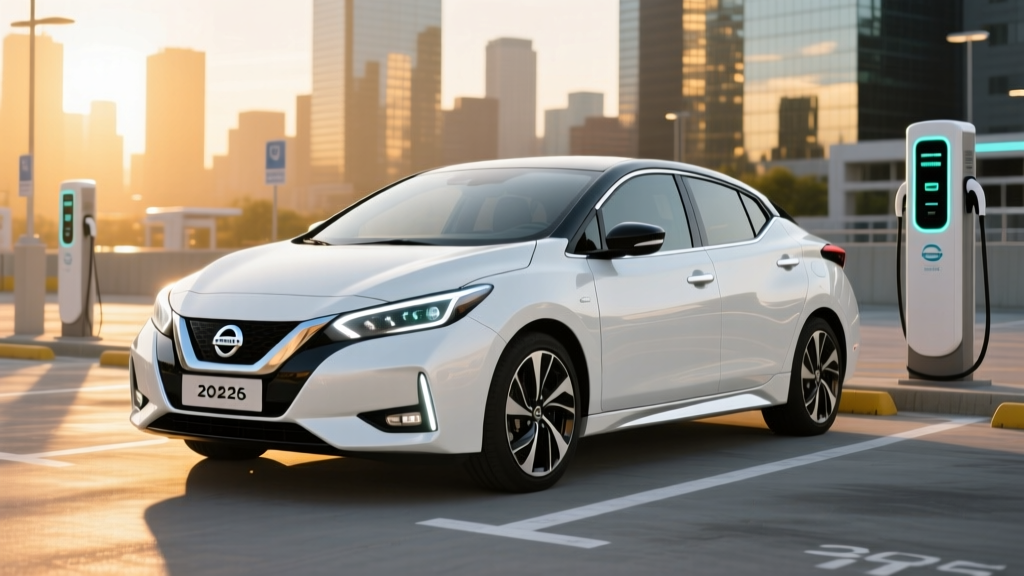
The 2026 Nissan Leaf occupies a strange position in the EV landscape. It's simultaneously the most approachable electric car on sale and a cautionary tale about platform longevity. With a starting MSRP near $28,000 and available federal incentives that can drop the effective price substantially, the Leaf remains the entry point for budget-conscious EV buyers. But its CHAdeMO charging connector, passive battery cooling, and modest range make it a vehicle best understood before you sign anything — especially if you're weighing Nissan Leaf car leasing versus an outright purchase.
After spending time with the 2026 model, testing its real-world efficiency across city commutes and highway stretches, and mapping its charging behavior, here's what every prospective Leaf buyer or lessee needs to know.
Range & Efficiency: What the EPA Number Doesn't Tell You
The 2026 Leaf continues to offer two battery configurations across its trim lineup. The base Leaf S carries a 40 kWh usable battery pack, while the SV Plus and upper trims step up to a 60 kWh pack. According to fueleconomy.gov, the EPA estimated ranges are:
| Trim | Battery (kWh usable) | EPA Range | Combined MPGe | kWh/100 mi |
|---|---|---|---|---|
| S | 40 kWh | 149 miles | 111 MPGe | 30 |
| SV | 40 kWh | 149 miles | 111 MPGe | 30 |
| SV Plus | 60 kWh | 212 miles | 114 MPGe | 29 |
The Leaf's energy efficiency of roughly 29–30 kWh per 100 miles is competitive for its class, though vehicles like the Hyundai Kona Electric and Chevrolet Bolt EV achieve similar or better figures with slightly more modern thermal management systems. The absence of a heat pump is the Leaf's most significant efficiency drawback for northern-climate buyers.
Charging: The CHAdeMO Reality Check
This is where prospective Leaf buyers — and especially those researching Nissan Leaf car leasing — need to pay close attention. The 2026 Leaf retains the CHAdeMO DC fast-charging connector, making it one of the last new vehicles sold in the U.S. with this standard. The vast majority of public fast-charging infrastructure has consolidated around CCS1 and, increasingly, Tesla's NACS connector.
| Charging Level | Connector | Max Power | Charge Time | Miles Added/Hour |
|---|---|---|---|---|
| Level 1 (120V) | J1772 | 1.4 kW | ~35–50 hours (0–100%) | ~3–4 mi/hr |
| Level 2 (240V) | J1772 | 7.2 kW | ~7.5 hrs (40 kWh) / ~11 hrs (60 kWh) | ~20–25 mi/hr |
| DC Fast Charge | CHAdeMO | 50 kW (S) / 100 kW (SV Plus) | ~40 min (S) / ~45 min (SV Plus) 10–80% | N/A |
The SV Plus's 100 kW peak DC fast-charge rate is a meaningful improvement over the base model's 50 kW cap, but it still trails competitors. The Hyundai Kona Electric peaks at roughly 100 kW as well, while the Tesla Model 3 can sustain 170+ kW. More critically, the Leaf's passive air-cooling system means that sustained fast charging is limited. On a hot day or after consecutive DC fast-charge sessions, the battery will thermally throttle, significantly reducing charge speed — sometimes dropping below 40 kW mid-session.
For home charging, the 7.2 kW onboard charger is adequate. A full overnight charge on a Level 2 home station is easily achievable, and most daily driving needs are met with 2–4 hours of Level 2 top-ups. This is the Leaf's sweet spot: home-charged daily commuting.
Performance & Driving Dynamics
| Spec | S / SV (40 kWh) | SV Plus (60 kWh) |
|---|---|---|
| Motor | Single front motor | Single front motor |
| Horsepower | 147 hp | 214 hp |
| Torque | 236 lb-ft | 250 lb-ft |
| 0–60 mph | ~7.9 seconds | ~6.5 seconds |
| Drivetrain | FWD | FWD |
| Top Speed | ~90 mph (electronically limited) | ~98 mph |
The SV Plus's 214 hp and 6.5-second 0–60 time make it genuinely quick off the line — a trait shared by most EVs thanks to instant torque delivery. Highway passing confidence is solid. However, the Leaf is front-wheel drive only, and there is no AWD option. In snowy regions, winter tires are strongly recommended.
The e-Pedal system enables one-pedal driving with strong regenerative braking, though it doesn't bring the car to a complete stop-and-hold like some competitors. You'll still need the friction brake at very low speeds. Ride quality is comfortable and compliant, with a soft suspension tune that absorbs urban imperfections well but allows noticeable body roll in spirited cornering.
Interior, Cargo & Technology
The Leaf is a compact hatchback, and its interior reflects its budget-friendly positioning. Materials are durable but not premium. The 8-inch touchscreen infotainment system supports Apple CarPlay and Android Auto (wired on S, wireless on SV Plus). Nissan's ProPILOT Assist is available on SV and standard on SV Plus, providing SAE Level 2 driver assistance with adaptive cruise control and lane centering — but this is a driver-supervision-required system, not autonomous driving.
| Dimension | Measurement |
|---|---|
| Front Legroom | 42.1 inches |
| Rear Legroom | 33.5 inches |
| Cargo Volume (rear seats up) | 23.6 cu ft |
| Cargo Volume (rear seats folded) | 55.7 cu ft |
| Wheelbase | 106.3 inches |
Cargo space is generous for a compact hatchback — the 23.6 cu ft behind the rear seats rivals some small crossovers. The 60/40 split-folding rear seat expands utility to 55.7 cu ft, making the Leaf practical for grocery runs, luggage, and even small furniture moves. There is no frunk (front trunk); that space houses power electronics.
Notable tech drawbacks include the aging infotainment interface, the lack of a digital instrument cluster in base trims (a 5-inch screen supplements analog gauges in the S), and no over-the-air update capability for the core vehicle software.
Pricing, Trims & Tax Credit Eligibility
| Trim | Base MSRP | Destination | As-Tested (typical) |
|---|---|---|---|
| S (40 kWh) | $28,140 | $1,095 | ~$29,235 |
| SV (40 kWh) | $29,840 | $1,095 | ~$32,500 |
| SV Plus (60 kWh) | $36,190 | $1,095 | ~$38,500 |
- MSRP Cap: The Leaf is a passenger car, so the MSRP cap is $55,000. All trims qualify on price.
- Income Cap: Adjusted gross income must not exceed $150,000 (single), $225,000 (head of household), or $300,000 (joint filing).
- Battery Sourcing: Partial credit ($3,750) requires battery components manufactured in North America; full credit ($7,500) additionally requires critical minerals sourced from the U.S. or free-trade-agreement partners. Nissan's battery supply chain determines the exact amount — verify current status at the time of purchase.
- Point-of-Sale Transfer: Eligible buyers can transfer the credit to the dealer at purchase, reducing the purchase price directly rather than waiting for a tax refund.
Nissan Leaf Car Leasing: Does It Beat Buying?
This is where the keyword driving this review becomes genuinely relevant. Nissan Leaf car leasing can be a strategically smart move — or a trap — depending on your situation. Here's how the math typically works:
Lease advantages for the Leaf:
- Monthly cost: Lease deals on the Leaf S have historically appeared in the $199–$299/month range (with $2,000–$3,000 down, 36-month terms). Nissan frequently subsidizes leases through Nissan Motor Acceptance Corporation (NMAC).
- Lease-end battery risk avoidance: The Leaf's passive-cooling battery is more susceptible to long-term degradation than liquid-cooled competitors. Leasing transfers that risk to Nissan. At lease end, you walk away.
- Tax credit passthrough: Even if the Leaf doesn't qualify for the full $7,500 purchase credit due to sourcing rules, the leasing company (as the legal owner) may claim the commercial clean vehicle credit under §45W and pass savings through as a capitalized-cost reduction. This can make a lease financially superior to a purchase in some cases.
- Technology refresh: The Leaf platform is aging. Leasing for 24–36 months lets you upgrade to a next-generation EV without being stuck with a depreciating asset on a legacy platform.
Lease disadvantages to consider:
- Mileage limits: Standard leases cap at 10,000–12,000 miles/year. The Leaf's range already limits long-distance practicality; a restrictive mileage cap compounds this.
- No ownership equity: If you plan to drive the car 8+ years, buying (especially with the tax credit applied) will be cheaper long-term.
- Disposition fees: Nissan leases typically include a $300–$400 disposition fee at lease end unless you lease or purchase another Nissan.
Lease if: You drive under 12,000 miles/year, want the lowest monthly payment, live in a mild climate (less battery degradation concern), and plan to upgrade in 2–3 years to a more modern EV platform.
Buy if: You qualify for the full §30D credit, plan to keep the car 5+ years, have reliable home charging, and drive a predictable commute under 100 miles round-trip.
Battery, Warranty & Longevity
Nissan provides an 8-year/100,000-mile lithium-ion battery capacity warranty. The warranty guarantees the battery will retain at least approximately 66% of its original capacity (9 bars out of 12 on the battery health gauge) during the coverage period. The powertrain carries a 5-year/60,000-mile warranty, and the basic vehicle warranty is 3 years/36,000 miles.
The Leaf's battery chemistry is NMC (nickel manganese cobalt), which offers good energy density but is more sensitive to thermal stress than LFP (lithium iron phosphate). Because the Leaf uses passive air cooling rather than active liquid thermal management, battery degradation is a legitimate long-term concern, particularly in hot climates. Data from Leaf owners in Arizona and Texas has historically shown faster capacity loss than comparable vehicles in cooler regions.
For lessees, this degradation risk is irrelevant — it's Nissan's problem. For buyers planning to keep the vehicle 7–10 years, it's a factor that should inform your decision, especially if you live in a hot climate or rely heavily on DC fast charging (which accelerates degradation without active cooling).
Pros, Cons & Who Should Consider the Leaf
✓ Pros
- Lowest starting MSRP among mainstream EVs
- Generous cargo space for a compact hatchback (23.6 cu ft)
- Comfortable ride quality for daily commuting
- ProPILOT Assist available for highway driving
- Strong lease incentives frequently available
- 7.2 kW Level 2 home charging is adequate for daily needs
✗ Cons
- CHAdeMO connector — shrinking public fast-charge access
- Passive battery cooling — degradation risk in heat and with DCFC
- No heat pump — significant cold-weather range loss
- 40 kWh base model range (149 mi) limits practicality
- FWD only — no AWD option
- Aging platform and interior technology
- DC fast-charge speed trails modern competitors
Who the Leaf suits best:
- Ideal: Single-car commuters with home charging, driving under 80 miles round-trip daily, in mild climates. Budget-conscious buyers who want the cheapest new EV available. Lessees who want low monthly payments and zero battery-degradation risk.
- Acceptable: Two-car households using the Leaf as a dedicated commuter/city car while keeping a gas or long-range vehicle for road trips.
- Poor fit: Anyone without reliable home charging, frequent long-distance travelers, hot-climate buyers planning 8+ years of ownership, or those in regions with sparse CHAdeMO infrastructure.
How the Leaf Stacks Up Against Competitors
The Leaf's primary rivals in the affordable EV segment include the Hyundai Kona Electric, Chevrolet Bolt EV/EUV (if still available in your market), and the base Tesla Model 3. Each presents a different trade-off:
| Vehicle | EPA Range | DC Fast Charge | Connector | Starting MSRP |
|---|---|---|---|---|
| Nissan Leaf SV Plus | 212 mi | 100 kW peak | CHAdeMO | ~$36,190 |
| Hyundai Kona Electric | 261 mi | 100 kW peak | CCS1/NACS | ~$33,000 |
| Tesla Model 3 RWD | 272 mi | 170 kW peak | NACS | ~$38,990 |
The Kona Electric offers more range, a modern connector standard, and a lower starting price — making it arguably the stronger value proposition for buyers. The Tesla Model 3 delivers superior range, charging speed, and Supercharger network access, though at a higher price. The Leaf's advantage remains its frequently aggressive lease pricing and its hatchback cargo practicality.
Frequently Asked Questions
What is the real-world range of the 2026 Nissan Leaf?
The EPA rates the SV Plus at 212 miles and the S/SV at 149 miles. In real-world driving, expect roughly 175–190 highway miles from the SV Plus in mild weather, and 150–165 miles in freezing conditions. The 40 kWh models deliver approximately 120–135 real-world highway miles in moderate temperatures.
How fast does the Nissan Leaf charge at home and on the road?
At home on a Level 2 (240V, 7.2 kW) charger, the Leaf adds roughly 20–25 miles of range per hour, with a full charge taking 7.5 hours (40 kWh) or 11 hours (60 kWh). On DC fast chargers, the SV Plus peaks at 100 kW (10–80% in approximately 45 minutes), while the S is limited to 50 kW. Note that CHAdeMO charger availability is declining.
Does the 2026 Nissan Leaf qualify for the $7,500 federal EV tax credit?
Potentially, but it depends on battery-sourcing and critical-mineral compliance under IRS §30D rules. The Leaf's MSRP falls well below the $55,000 passenger car cap, and income limits apply ($150K single / $300K joint). The exact credit amount ($3,750 or $7,500) depends on Nissan's supply-chain compliance at time of purchase. Verify with your dealer and tax professional.
Is leasing the Nissan Leaf better than buying?
For many buyers, yes. Leasing avoids battery-degradation risk (a concern with the Leaf's passive cooling system), often features subsidized monthly payments from Nissan, and may pass through commercial clean vehicle credits even when the purchase credit is limited. If you drive under 12,000 miles/year and plan to upgrade in 2–3 years, leasing is typically the smarter financial move.
Is the Nissan Leaf worth buying over competitors like the Kona Electric?
If you find an exceptional lease deal, the Leaf can be a bargain commuter car. For outright purchases, the Hyundai Kona Electric generally offers more range (261 mi), a CCS/NACS connector with broader charging access, and a lower MSRP — making it the stronger long-term value for most buyers. Choose the Leaf if hatchback cargo space and lease pricing are your top priorities.
How long will the Nissan Leaf battery last?
Nissan warranties the battery for 8 years/100,000 miles at approximately 66% capacity retention. Real-world data suggests the Leaf's passively cooled NMC battery can last 10–15 years with moderate degradation in mild climates, but hot-climate owners and frequent DC fast-charging users may see accelerated capacity loss. Liquid-cooled competitors generally show better long-term battery health.