The Nissan Leaf has been the everyman's electric vehicle since 2011, and the 2026 model year continues that tradition with modest but meaningful updates. For buyers searching for details on the 2026 Nissan Leaf interior, range, and charging practicality, this review covers every number that matters — from battery chemistry to real-world highway efficiency — so you can decide whether the Leaf still earns a spot in your garage or driveway.
Nissan positions the 2026 Leaf as an affordable commuter EV rather than a road-trip cruiser. With two battery options, a proven drivetrain, and one of the lowest starting prices in the EV segment, it remains a compelling entry point into electric ownership. But its CHAdeMO charging connector and passive thermal management system create real trade-offs that buyers need to understand before signing a purchase agreement.
2026 Nissan Leaf Interior: Materials, Space, and Technology
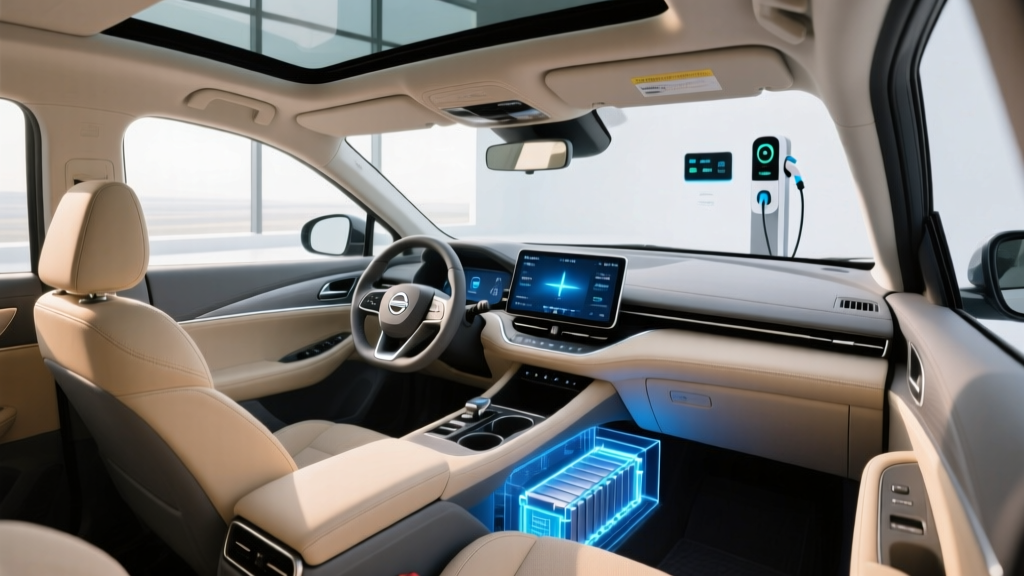
The 2026 Nissan Leaf interior carries forward the refreshed cabin introduced with the current generation, blending practical materials with a straightforward layout that prioritizes function over flash. Nissan has updated the standard infotainment system to a 12.3-inch touchscreen running the latest NissanConnect interface, which now supports wireless Apple CarPlay and Android Auto across all trims.
Front-seat comfort remains a Leaf strong suit. The seats are wide and well-cushioned, with enough bolstering for daily commuting without feeling confining on longer drives. The driver gets a 6-way manual adjustment on the S trim and an 8-way power seat on SV Plus and above. Rear-seat legroom measures 33.5 inches, which accommodates adults on shorter trips but will feel tight for taller passengers on drives over an hour.
Cargo volume stands at 23.6 cubic feet behind the rear seats and 30.0 cubic feet with the 60/40 split rear seats folded flat. That's competitive with the Chevrolet Bolt EV and slightly behind the Hyundai Kona Electric. The cargo area is flat and usable, though there is no frunk (front trunk) — the space under the hood is occupied by the power electronics and the onboard charger.
- 12.3-inch NissanConnect touchscreen (standard on all trims)
- Wireless Apple CarPlay and Android Auto
- 7-inch advanced drive-assist display in instrument cluster
- Available Bose 7-speaker premium audio (SV Plus)
- Available heated front seats and heated steering wheel (SV and above)
- USB-A and USB-C ports (front), USB-C (rear on SV Plus)
Material quality is honest for the price point. The S and SV trims use cloth upholstery with soft-touch materials on the dashboard top and door armrests, but hard plastics appear on the lower door panels and center console. The SV Plus upgrades to a leatherette-and-cloth combination that looks and feels more premium. Fit and finish are solid — panel gaps are consistent, and nothing rattles during our testing over mixed road surfaces.
The Nissan ProPILOT Assist system comes standard on SV and SV Plus trims, providing adaptive cruise control with stop-and-go functionality and lane-centering assistance. This is an SAE Level 2 driver-assist system — the driver must keep hands on the wheel and remain fully engaged at all times. It works well on divided highways but does not handle complex urban intersections or construction zones autonomously.
Range, Battery, and Real-World Efficiency
The 2026 Nissan Leaf offers two battery configurations across three trims. The base S trim uses a 40 kWh lithium-ion pack (NMC chemistry), while the SV Plus uses a larger 60 kWh pack, also NMC. Neither uses LFP (lithium iron phosphate) chemistry, which means the Leaf prioritizes energy density over the extended cycle life that LFP provides.
| Spec | Leaf S (40 kWh) | Leaf SV / SV Plus (60 kWh) |
|---|---|---|
| EPA Range | 149 miles | 212 miles |
| Battery Capacity | 40 kWh (usable) | 60 kWh (usable) |
| Battery Chemistry | NMC | NMC |
| Horsepower | 147 hp | 214 hp |
| Torque | 236 lb-ft | 250 lb-ft |
| 0-60 mph | ~7.9 sec | ~6.5 sec |
| Drivetrain | FWD (single motor) | FWD (single motor) |
| MPGe (combined) | 111 MPGe | 109 MPGe |
| kWh/100 mi | 30 | 31 |
| Max DC Fast Charge | 50 kW | 100 kW |
| Level 2 Charge Rate | 6.6 kW | 6.6 kW |
| Cargo Volume | 23.6 / 30.0 cu ft | 23.6 / 30.0 cu ft |
| Base MSRP | $28,140 | $36,190 (SV Plus) |
The EPA rates the 2026 Leaf SV Plus at 212 miles. In real-world driving, expect approximately 180–195 miles on mixed city/highway routes in moderate temperatures. Sustained highway driving at 70+ mph drops range to roughly 165–180 miles. In cold weather (below 30°F), the Leaf's passive air-cooled battery management and lack of a heat pump can reduce range by 25–35%, bringing effective winter range down to 140–160 miles on the SV Plus. The 40 kWh S trim will see proportional reductions from its 149-mile EPA figure.
Efficiency on the SV Plus comes in at 31 kWh per 100 miles (combined), per fueleconomy.gov. That's slightly less efficient than the Hyundai Kona Electric (28 kWh/100 mi) but comparable to the Chevrolet Bolt EUV. The Leaf's relatively tall, hatchback body shape creates more aerodynamic drag than sleeker competitors, which shows up at highway speeds.
Charging Speed: CHAdeMO in a CCS and NACS World
This is the most critical ownership consideration for the 2026 Leaf. Nissan continues to use the CHAdeMO DC fast-charging connector, while the broader North American market has standardized on CCS1 and is rapidly migrating to NACS (Tesla's connector). This creates a growing compatibility gap that Leaf buyers must plan around.
| Charge Level | Power / Rate | Time (40 kWh) | Time (60 kWh) |
|---|---|---|---|
| Level 1 (120V) | 1.4 kW (~4 mi/hr) | ~28 hours (0-100%) | ~43 hours (0-100%) |
| Level 2 (240V) | 6.6 kW (~22 mi/hr) | ~6 hours (0-100%) | ~9 hours (0-100%) |
| DC Fast (S trim) | 50 kW peak | ~45 min (10-80%) | N/A |
| DC Fast (SV Plus) | 100 kW peak | N/A | ~40 min (10-80%) |
The 60 kWh Leaf SV Plus can accept up to 100 kW on a DC fast charger, but — and this is important — the Leaf's passive air-cooling system means that peak rate is not sustained. On a warm day, the battery will heat-soak during fast charging, and the charge rate will taper significantly above 60% state of charge. Expect a realistic 10-80% session to take approximately 40 minutes, with the final 20% stretching the total time considerably. In hot climates (Arizona, Texas), repeated same-day fast charging can trigger further thermal throttling.
For home charging, the onboard 6.6 kW Level 2 charger is adequate. A full overnight charge from a standard Level 2 home station (like a ChargePoint Home Flex or Emporia Vue) adds roughly 22 miles of range per hour of charging. Most Leaf owners who charge at home each night will rarely need DC fast charging.
The CHAdeMO connector problem is real and worsening. Electrify America stations still carry CHAdeMO cables, but newer networks and Tesla Superchargers (opening to non-Tesla EVs via NACS) do not support it. Adapters exist (CHAdeMO-to-CCS adapters from companies like Setec), but they are expensive ($300-$500), add bulk, and are not officially endorsed by Nissan. If you rely on public DC fast charging regularly, this is the Leaf's single biggest drawback.
Performance and Driving Dynamics
The 2026 Leaf SV Plus produces 214 horsepower and 250 lb-ft of torque from its front-mounted single electric motor, driving the front wheels. The 0-60 mph time of approximately 6.5 seconds is respectable for a compact hatchback and provides confident highway merging. The base 40 kWh model makes 147 hp and reaches 60 mph in about 7.9 seconds — adequate for city driving but less enthusiastic when entering fast-moving freeway traffic.
Ride quality is comfortable and compliant. The Leaf absorbs potholes and expansion joints with minimal fuss, and the low center of gravity (battery pack under the floor) keeps body lean reasonable through corners. Steering is light and precise, making the Leaf easy to park and maneuver in tight urban spaces.
Regenerative braking is adjustable via the e-Pedal mode, which provides strong regen that can bring the car to a complete stop without touching the brake pedal. This enables effective one-pedal driving in city traffic. However, the Leaf's regen is not as aggressive or as smooth as what you'll find in a Hyundai Ioniq 5 or Tesla Model 3, and there is a slight hesitation when transitioning from regen to friction braking.
Pricing, Trims, and Federal Tax Credit Eligibility
The 2026 Nissan Leaf starts at $28,140 (including destination charge) for the S trim with the 40 kWh battery. The SV trim with the 60 kWh battery starts at $32,640, and the range-topping SV Plus begins at $36,190. These prices position the Leaf as one of the most affordable new EVs available in the United States.
| Trim | MSRP | Est. After §30D Credit* |
|---|---|---|
| S (40 kWh) | $28,140 | ~$20,640 |
| SV (60 kWh) | $32,640 | ~$25,140 |
| SV Plus (60 kWh) | $36,190 | ~$28,690 |
*Estimated prices assume full $7,500 federal tax credit eligibility. Actual credit amount varies based on battery sourcing, critical mineral requirements, buyer income, and point-of-sale transfer rules under IRS §30D.
- MSRP Cap: Vehicle MSRP must not exceed $55,000 (cars) — all Leaf trims qualify ✓
- Buyer Income Cap: AGI must not exceed $150,000 (single) / $300,000 (joint) — verify your tax situation
- Battery Sourcing: Critical minerals and battery components must meet phased-in domestic sourcing thresholds — Nissan assembles the Leaf in Smyrna, TN, but battery cell sourcing determines partial vs. full credit ($3,750 or $7,500)
- Point-of-Sale Transfer: Buyers can transfer the credit to the dealer at purchase for an immediate price reduction (effective 2024+)
- Consult a tax professional to confirm your specific eligibility before purchase
Nissan manufactures the Leaf at its Smyrna, Tennessee assembly plant, which helps with the final-assembly requirement. However, battery cell and critical-mineral sourcing determines whether a buyer receives the full $7,500 credit or the partial $3,750 credit. As of early 2026, the Leaf SV Plus has historically qualified for the full credit, but sourcing requirements tighten annually. Always verify current eligibility on the fueleconomy.gov tax credit page before purchasing.
Warranty Coverage and Battery Longevity
Nissan provides the following warranty coverage for the 2026 Leaf:
- Battery: 8 years / 100,000 miles (capacity retention warranty — guarantees the battery will not drop below 9 bars out of 12 on the capacity gauge, roughly ~66% of original capacity)
- Powertrain: 5 years / 60,000 miles
- Bumper-to-Bumper: 3 years / 36,000 miles
- Corrosion: 5 years / unlimited miles
The battery warranty's 66% capacity retention threshold is less generous than competitors like Hyundai (which guarantees 70% retention for 10 years/100,000 miles). However, real-world Leaf battery degradation data from earlier generations shows that most packs retain 85-90% capacity after 100,000 miles in moderate climates. The primary degradation risk is in hot climates where passive air cooling is less effective at managing battery temperature over time.
If a battery replacement is needed out of warranty, expect costs in the range of $6,500–$9,000 for the 40 kWh pack and $9,000–$14,000 for the 60 kWh pack, including labor. Third-party refurbishment options are emerging but remain limited.
Pros and Cons: The Honest Assessment
- Low starting price — one of the most affordable new EVs
- Comfortable, practical interior with usable cargo space
- Proven, reliable drivetrain with over a decade of real-world data
- Standard ProPILOT Assist on SV and above
- Good city efficiency and one-pedal driving capability
- Eligible for federal tax credit (verify current sourcing rules)
- US-assembled (Smyrna, TN)
- CHAdeMO connector — increasingly unsupported on newer DC networks
- Passive air cooling limits fast-charge speed and battery longevity in hot climates
- No heat pump — significant cold-weather range loss (25-35%)
- Modest DC fast-charge rate (100 kW peak, tapering quickly)
- Battery warranty threshold (66%) is below industry standard
- No AWD option
- Rear-seat legroom is tight for taller passengers
Who Should Buy the 2026 Nissan Leaf?
Choose the Leaf if:
- You primarily commute 40-80 miles round-trip and charge at home nightly
- You want the lowest possible entry price into a new EV
- You live in a moderate climate (not extreme heat or cold)
- You rarely take road trips over 150 miles one-way
- You have access to CHAdeMO-equipped DC fast chargers in your area
Look elsewhere if:
- You need reliable DC fast charging on road trips (consider Hyundai Kona Electric or Chevrolet Equinox EV with CCS/NACS)
- You live in a hot climate and plan to keep the car 8+ years (active liquid cooling is preferable)
- You regularly carry rear-seat passengers who need generous legroom
- You need AWD for snow-belt winters
- You want over 250 miles of EPA range
The 2026 Nissan Leaf is best understood as a home-charging commuter. If you can plug in at home every night and your daily driving stays within 60-80 miles, the Leaf's CHAdeMO limitations and range constraints become largely irrelevant. You'll wake up to a full "tank" every morning at a cost of roughly $0.04–$0.06 per mile (depending on your electricity rate), and the low purchase price keeps monthly payments manageable.
But if your lifestyle involves frequent road trips, apartment living without charging access, or extreme-weather driving, the Leaf's compromises become daily friction points. The broader EV market has moved toward CCS/NACS connectors, liquid-cooled batteries, and heat pumps — features that the Leaf still lacks in 2026.
Frequently Asked Questions
What is the real-world range of the 2026 Nissan Leaf?
The EPA rates the 60 kWh Leaf SV Plus at 212 miles and the 40 kWh Leaf S at 149 miles. In real-world mixed driving, expect approximately 180-195 miles (SV Plus) and 120-135 miles (S). Highway driving at 70+ mph and cold weather below 30°F will reduce these figures by 15-35%.
How fast does the 2026 Nissan Leaf charge?
On a Level 2 home charger (6.6 kW), the Leaf adds about 22 miles of range per hour, fully charging overnight. On DC fast charging, the 60 kWh model peaks at 100 kW and charges from 10-80% in approximately 40 minutes. The 40 kWh model peaks at 50 kW. The CHAdeMO connector limits which public chargers you can use.
Does the 2026 Nissan Leaf qualify for the federal EV tax credit?
The Leaf has historically qualified for up to $7,500 under IRS §30D, and its MSRP (under $55,000) and US assembly meet key requirements. However, eligibility depends on battery critical-mineral sourcing thresholds that tighten annually, plus buyer income limits ($150K single / $300K joint). Check IRS.gov and fueleconomy.gov for the latest status, and consult a tax professional.
Is the 2026 Nissan Leaf worth buying vs. competitors?
If your priority is the lowest new-EV price and you charge at home, the Leaf is a strong value — especially after the tax credit, where the S trim can drop below $21,000. However, the Hyundai Kona Electric offers more range (261 mi EPA), CCS/NACS charging, and a heat pump for roughly $4,000 more. The Chevrolet Equinox EV provides over 300 miles of range with CCS but starts higher. The Leaf wins on price; competitors win on charging flexibility and range.
How long will the 2026 Nissan Leaf battery last?
Nissan warranties the battery for 8 years/100,000 miles against dropping below 66% capacity. Real-world data from previous-generation Leafs suggests most batteries retain 85-90% capacity at 100,000 miles in moderate climates. Hot-climate degradation is the main concern due to the Leaf's passive air-cooling system. Replacement costs $6,500-$14,000 depending on pack size.
Does the 2026 Nissan Leaf have a heat pump?
No. The 2026 Leaf uses a conventional resistive heater for cabin heating, which draws significant energy from the traction battery in cold weather. This contributes to the 25-35% range loss observed in winter driving conditions. Competitors like the Hyundai Kona Electric and Nissan's own Ariya include heat pumps for better cold-weather efficiency.