Quick Answer: Does Nissan Make an EV Truck?
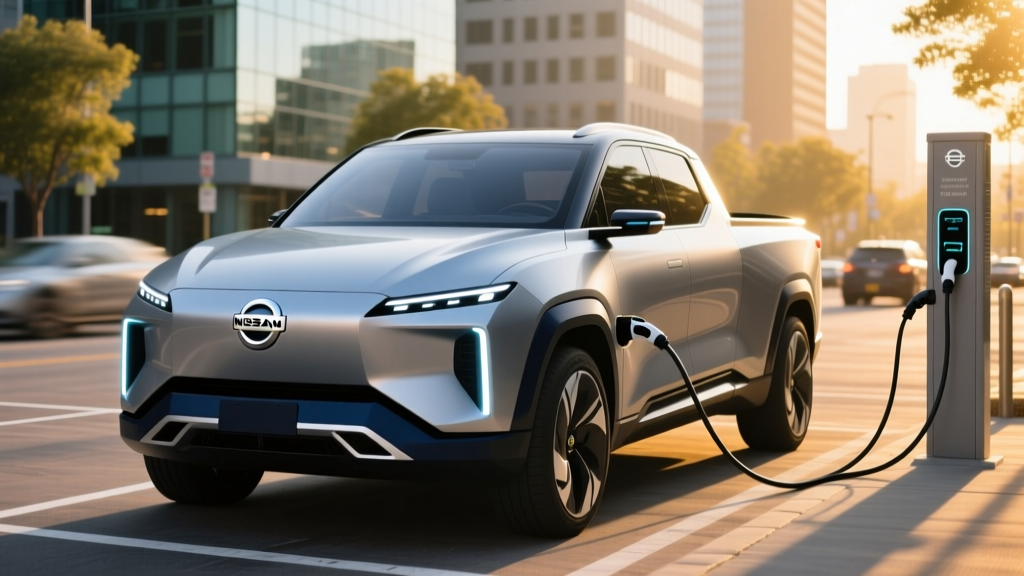
As of early 2026, Nissan does not sell a fully electric pickup truck in the United States. The company has announced plans for an electrified truck lineup, but no battery-electric (BEV) Nissan pickup is currently available for purchase. Buyers searching for a "Nissan EV truck" today will find the Nissan Frontier (gas-only midsize truck) and the Nissan Titan (discontinued after the 2024 model year). If you need an electric truck now, competitors like the Ford F-150 Lightning, Rivian R1T, and Chevrolet Silverado EV are the closest alternatives. Nissan's ProPILOT autonomous-drive technology and e-4ORCE electric AWD system—found in the Ariya SUV—hint at what a future Nissan EV truck could offer, but no official specs, pricing, or release date have been confirmed.
What Nissan Has Announced for Electric Trucks
Nissan has signaled its intent to enter the electric truck segment, but details remain scarce. The company's Ambition 2030 roadmap commits to expanding its electrified lineup significantly, and executives have acknowledged the importance of trucks in the North American market. However, no production model, concept reveal, or firm timeline for a Nissan EV truck has been published as of this writing.
What we can infer from Nissan's current EV portfolio:
- Platform technology: The Ariya crossover uses Nissan's CMF-EV dedicated EV platform with e-4ORCE dual-motor AWD, producing up to 389 hp and offering an EPA-estimated 304 miles of range (with the 91 kWh battery pack). A truck adaptation of this or a next-generation platform is plausible.
- ProPILOT Assist: Nissan's Level 2 driver-assistance system, available on the Ariya and Frontier, provides adaptive cruise control and lane centering—likely a feature in any future electric truck.
- Charging architecture: The Ariya supports up to 130 kW DC fast charging (CCS connector), with a 10–80% charge in approximately 35 minutes. Future Nissan EVs are expected to adopt the NACS (Tesla-style) connector per industry agreements.
Until Nissan makes an official announcement, all truck specs are speculative. We'll update this guide when confirmed details emerge.
Current Alternatives: Electric Trucks You Can Buy Now
If you're ready to go electric in a truck today, here's how the major players compare. These are real, purchasable vehicles with confirmed EPA data:
| Spec | Ford F-150 Lightning (2025) | Rivian R1T (Dual-Motor) | Chevrolet Silverado EV (4WT) | Nissan Frontier (2025, Gas) |
|---|---|---|---|---|
| Powertrain | BEV (Extended Range) | BEV (Dual-Motor) | BEV (Work Truck) | 3.8L V6 Gas |
| EPA Range | 320 mi | 352 mi (Max Pack) | 390 mi | ~450 mi (est. tank) |
| Battery / Fuel | 131 kWh (usable, NMC) | 149 kWh (Max, NMC) | 200+ kWh (NMC) | 21-gal tank |
| Horsepower | 580 hp | 533 hp | 510 hp | 310 hp |
| 0–60 mph | ~3.8 sec | ~4.5 sec | ~4.5 sec | ~7.0 sec |
| Max DC Fast Charge | 150 kW | 200+ kW | 350 kW | N/A |
| 10–80% Charge Time | ~41 min | ~30 min | ~20 min (est.) | N/A |
| Towing Capacity | 10,000 lbs | 11,000 lbs | 10,000 lbs | 6,720 lbs |
| Starting MSRP | ~$55,000 | ~$69,900 | ~$55,000 (work) | ~$31,000 |
| Federal §30D Credit | Eligible (verify sourcing) | Eligible (verify sourcing) | Eligible (verify sourcing) | Not eligible |
Sources: fueleconomy.gov, manufacturer press sites. MSRP figures reflect base trims before destination charges. Federal tax credit eligibility depends on battery component and critical-mineral sourcing requirements per IRS §30D rules, buyer income caps ($150K single / $300K joint), and MSRP caps ($80K for trucks). Always verify current eligibility before purchase.
Cost Breakdown: Electric Truck vs. Gas Truck Ownership
A common question for truck buyers: does going electric actually save money? The answer depends on your driving patterns, electricity rates, and how long you keep the vehicle. Here's a realistic 5-year comparison assuming 15,000 miles per year:
| Cost Category (5 Years) | Electric Truck (e.g., F-150 Lightning) | Gas Truck (e.g., Nissan Frontier) |
|---|---|---|
| Purchase Price (base) | $55,000 | $31,000 |
| Federal Tax Credit | −$7,500 (if eligible) | $0 |
| Net Purchase | $47,500 | $31,000 |
| Fuel / Electricity (75K mi) | $4,500 (home charging at $0.14/kWh) | $9,375 (20 MPG avg at $3.50/gal) |
| Maintenance (5 yr) | $1,200 (no oil changes, less brake wear) | $3,500 (oil, filters, brakes, transmission) |
| Insurance (est. avg) | $9,000 ($1,800/yr, higher for EVs) | $7,000 ($1,400/yr) |
| Depreciation (est.) | $22,000 | $14,000 |
| Total 5-Year Cost | ~$84,200 | ~$64,875 |
Key takeaways:
- Fuel savings are real: Home-charging an electric truck costs roughly 60% less per mile than gassing up a midsize truck. At commercial DC fast-charger rates ($0.35–$0.50/kWh), the gap narrows significantly.
- Upfront cost gap is the hurdle: Even after a potential $7,500 federal credit, an electric truck costs $16,500+ more upfront than a gas midsize truck. You'd need to own it for 10+ years for fuel and maintenance savings to close that gap.
- Insurance is higher for EVs: EV trucks typically carry 20–30% higher premiums due to battery replacement costs and specialized repair requirements.
- Depreciation uncertainty: EV truck residual values are still establishing. Early data suggests higher depreciation than proven gas trucks, though this may stabilize as the market matures.
Real-World Ownership Considerations for Electric Trucks
Before committing to any electric truck—not just a hypothetical Nissan model—consider these practical factors:
Home Charging Access
Most EV truck owners do 80–90% of their charging at home on a Level 2 (240V) charger. A typical Level 2 setup delivers 7.2–11.5 kW, adding roughly 20–35 miles of range per hour—enough to fully recharge overnight. Installation costs range from $500 (simple outlet near the panel) to $3,000+ (panel upgrade, long wire runs). If you live in an apartment or lack dedicated parking, public charging becomes your primary option, which is more expensive and less convenient.
Cold-Weather Range Loss
Lithium-ion batteries lose efficiency in freezing temperatures. Expect 20–30% range reduction at 20°F compared to the EPA sticker. A truck rated at 320 miles EPA might deliver 220–250 miles in winter highway driving. Heat pumps (standard on some models) mitigate this somewhat, but physics is unforgiving. If you live in the northern U.S. and regularly drive long distances in winter, plan your routes around charging availability.
Towing and Payload Impact
Electric trucks lose range dramatically when towing. Expect a 40–50% range reduction when pulling a 5,000+ lb trailer. An F-150 Lightning rated at 320 miles might manage only 150–170 miles while towing at highway speeds. For frequent heavy towing, a diesel or gas truck still holds a practical advantage on long hauls.
Charging on Road Trips
DC fast charging adds 100–200 miles in 20–40 minutes depending on the truck and charger. However, charging curves taper significantly above 80% state of charge—what starts at 150 kW may drop to 40 kW past 85%. Real-world road-trip stops typically take 30–45 minutes. Network reliability varies: Tesla Superchargers (now opening to NACS-equipped non-Teslas via adapter) consistently outperform CCS networks in uptime surveys.
Common Misconceptions About Electric Trucks
| Myth | Fact |
|---|---|
| "Electric trucks can't tow anything." | They can tow up to 10,000–11,000 lbs. The limitation is range while towing, not capability. For short tows around town, EVs excel with instant torque. |
| "The battery will need replacing in 5 years." | Modern NMC and LFP batteries are warrantied for 8 years / 100,000 miles with a minimum 70% capacity retention threshold (NHTSA-mandated minimum). Real-world degradation data shows most EV batteries retain 85–90% capacity at 100,000 miles. |
| "EVs are worse in the cold." | Range drops 20–30% in freezing temps, but EVs start instantly (no cold cranking), cabin heating is immediate with a heat pump, and regenerative braking works from startup. Preconditioning while plugged in minimizes range loss. |
| "Charging takes hours." | Level 2 home charging takes 8–12 hours for a full charge (overnight). DC fast charging adds 100+ miles in 15–20 minutes. Most daily driving requires only 10–20 minutes of Level 2 top-up. |
| "Electric trucks are all $80,000+." | The F-150 Lightning Pro starts near $55,000 and the Silverado EV 4WT near $55,000. After a potential $7,500 federal credit, effective prices drop to ~$47,500. Still more than a base gas truck, but not exotic-car pricing. |
Decision Framework: Should You Wait for a Nissan EV Truck?
Choose to buy an electric truck NOW if:
- You need a truck within the next 6–12 months and can't wait for an unannounced product.
- You have home Level 2 charging access (garage, driveway, or dedicated parking with electrical access).
- Your daily driving is under 200 miles round-trip, with occasional longer road trips.
- You want to lock in current §30D federal tax credit eligibility before sourcing rules tighten further.
- You primarily use your truck for commuting, light hauling, and weekend projects—not frequent long-distance towing.
Wait for a Nissan EV truck (or other upcoming models) if:
- Your current truck still meets your needs and you can comfortably wait 2–4 years.
- You're a loyal Nissan owner invested in the Nissan dealer and service network.
- You want to see how Nissan's e-4ORCE AWD system translates to a truck platform.
- You're hoping for a more affordable midsize electric truck (current EV trucks are mostly full-size and $50K+).
- You want next-generation battery chemistry (potentially LFP for lower cost or solid-state for greater range) that may debut by the late 2020s.
Consider a hybrid or gas truck instead if:
- You lack reliable home charging and your area has limited public DC fast-charging infrastructure.
- You regularly tow heavy trailers over long distances (200+ miles).
- You live in a rural area with charging deserts and extreme cold-weather conditions.
- Your budget is firmly under $40,000 and you need a truck now.
What First-Time EV Truck Buyers Should Know
If you're transitioning from a gas truck to an electric one, here are the essentials:
- kW vs. kWh: Kilowatts (kW) measure power—how fast you charge. Kilowatt-hours (kWh) measure energy—your battery's total capacity. A 131 kWh battery charged at 150 kW doesn't fill in under an hour; the charge curve tapers as the battery fills.
- Install Level 2 at home before delivery: Schedule an electrician 4–6 weeks before your truck arrives. A NEMA 14-50 outlet or hardwired Level 2 charger (like a ChargePoint Home Flex or Tesla Wall Connector) on a 50–60 amp circuit is the standard setup.
- Precondition your battery: Before DC fast charging, use your truck's navigation to route to the charger. This triggers battery preconditioning, warming the pack for faster charging speeds—especially important in cold weather.
- Plan road trips with apps: Use A Better Routeplanner (ABRP) or your truck's built-in route planner to identify chargers along your route. Always have a backup charger option in case your primary stop is offline.
- Understand the tax credit: The federal §30D credit of up to $7,500 can now be transferred to the dealer at point of sale, reducing your purchase price directly. But eligibility depends on your income (AGI caps), the truck's MSRP (must be under $80,000 for trucks), and battery sourcing requirements. Check the IRS clean vehicle credit page and consult a tax professional.
- Budget for insurance: Get quotes before purchasing. EV trucks often cost 20–30% more to insure than comparable gas trucks due to higher repair costs and battery replacement expense.
Frequently Asked Questions
Will Nissan release an electric Frontier or Titan?
Nissan has not confirmed an electric Frontier or Titan by name. The company's Ambition 2030 strategy includes expanding electrified vehicles, and a truck is a logical addition for the North American market. No timeline or specs have been published.
What is Nissan's current electric vehicle lineup?
In the U.S., Nissan currently sells the Leaf (compact hatchback, up to 212 miles EPA range) and the Ariya (electric crossover SUV, up to 304 miles EPA range). The Frontier remains gas-only with a 3.8L V6.
How much would a Nissan EV truck cost?
No pricing has been announced. Based on the current EV truck market, a midsize electric truck from Nissan would likely start between $45,000 and $60,000 to compete with upcoming entries from other manufacturers.
Can I charge an electric truck on a standard 120V outlet?
Yes, but slowly. Level 1 charging (120V) adds roughly 3–5 miles of range per hour—adequate for plug-in hybrids with small batteries, but impractical for a full-size EV truck with a 100+ kWh battery. A full Level 1 charge could take 40+ hours.
Do electric trucks qualify for the federal tax credit?
Many do, but eligibility is complex. Under current §30D rules, the truck must have an MSRP under $80,000, the buyer's AGI must be under $150,000 (single) or $300,000 (joint), and the battery must meet critical-mineral and component sourcing thresholds. These rules change—always verify on the IRS website before purchasing.
How long do EV truck batteries last?
Federal law requires EV battery warranties of at least 8 years / 100,000 miles. Most manufacturers warrant 70% capacity retention over that period. Real-world data from long-term EVs suggests batteries typically retain 80–90% capacity at 150,000 miles with proper care (avoiding frequent 100% charges and extreme heat exposure).