Quick Answer: Is a Nissan EV Car Right for You?
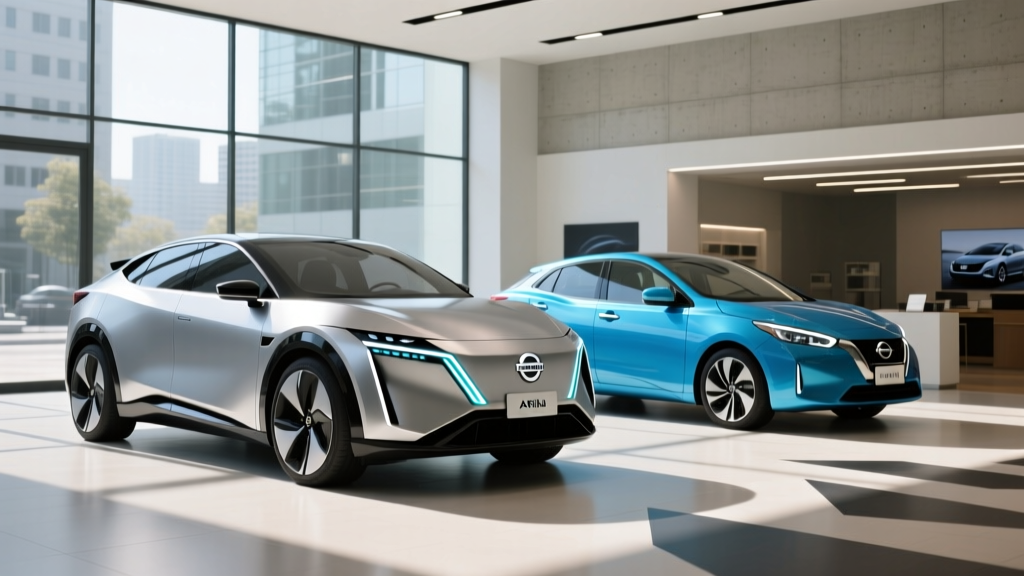
Nissan currently sells two fully electric vehicles in the US: the 2026 Leaf (starting around $28,140, up to 212 miles EPA range, 60 kWh battery) and the 2026 Ariya (starting around $39,590, up to 304 miles EPA range, 91 kWh battery). The Leaf is one of the most affordable new EVs available and ideal for commuting under 100 miles daily with home charging. The Ariya competes with the Hyundai Ioniq 5 and Tesla Model Y as a practical family crossover with DC fast charging up to 130 kW. Both use CHAdeMO connectors for DC charging — a critical detail, as the industry has largely shifted to NACS (Tesla's standard). Nissan has committed to adopting NACS on future models, but for 2026, plan your public charging strategy accordingly.
The 2026 Nissan EV Lineup at a Glance
Nissan's electric strategy in 2026 rests on two distinct vehicles serving different buyer profiles. Here's the essential specification breakdown:
| Spec | 2026 Nissan Leaf (S / SV) | 2026 Nissan Ariya (Engage / Evolve / Empower+) |
|---|---|---|
| Base MSRP | $28,140 (S) / $32,640 (SV Plus) | $39,590 (Engage FWD) – $53,090 (Platinum+ e-4ORCE) |
| EPA Range | 149 mi (40 kWh) / 212 mi (60 kWh) | 289–304 mi depending on trim |
| Real-World Range (highway/cold) | ~110 mi / ~170 mi | ~230–250 mi highway; ~200 mi cold |
| Battery (usable) | 40 kWh / 60 kWh (laminated lithium-ion) | 91 kWh usable (NMC chemistry) |
| Peak DC Fast Charge | 50 kW (CHAdeMO) | 130 kW (CHAdeMO) |
| 10–80% DC Charge Time | ~45 min (60 kWh pack) | ~35 min |
| Level 2 (240V) Rate | 6.6 kW onboard charger | 7.2 kW onboard charger |
| Level 2 Full Charge Time | ~7.5–9.5 hours (60 kWh) | ~12.5 hours (91 kWh) |
| Horsepower | 147 hp (40 kWh) / 214 hp (60 kWh) | 238 hp (FWD) / 389 hp (e-4ORCE AWD) |
| 0–60 mph | ~7.9s (SV Plus 60 kWh) | ~7.2s (FWD) / ~4.8s (e-4ORCE) |
| MPGe (combined) | 111 MPGe (SV Plus) | 97–101 MPGe |
| Drivetrain | FWD | FWD or e-4ORCE AWD |
| Battery Warranty | 8 yr / 100,000 mi (capacity loss) | 8 yr / 100,000 mi |
| Connector (DC) | CHAdeMO | CHAdeMO |
Sources: fueleconomy.gov (EPA), Nissan USA. Real-world range estimates reflect highway driving at 70+ mph and temperatures below 40°F.
Real-World Range: What the EPA Sticker Doesn't Tell You
The EPA range figure is tested under controlled conditions that don't fully replicate highway driving, cold weather, or mountain terrain. Here's what to actually expect from a Nissan EV car in daily use:
Nissan Leaf SV Plus (60 kWh) — 212 mi EPA
- City commuting (moderate temps): ~195–210 miles — regen braking in stop-and-go extends range
- Highway at 70 mph (moderate temps): ~165–180 miles — aerodynamic drag dominates at speed
- Highway in winter (below 32°F): ~130–150 miles — battery chemistry slows, cabin heating draws energy
- Mixed driving, climate-controlled: ~170–190 miles — realistic daily expectation
Nissan Ariya Empower+ (91 kWh) — 304 mi EPA
- City commuting (moderate temps): ~280–300 miles
- Highway at 70 mph (moderate temps): ~240–260 miles
- Highway in winter (below 32°F): ~195–220 miles — Ariya includes a heat pump on most trims, which mitigates some cold loss
- Mixed driving, climate-controlled: ~250–275 miles
The Leaf's smaller battery and lack of active thermal management (it uses passive air cooling) mean it's more vulnerable to extreme temperatures. In Arizona summer heat or Minnesota winter, expect wider range variance. The Ariya's liquid-cooled battery pack manages temperature more effectively, sustaining both range and charging speed under stress.
Charging the Nissan EV Car: Home, Public, and the CHAdeMO Reality
Charging access is the single most important factor in EV ownership satisfaction. Nissan's continued use of the CHAdeMO DC fast-charging connector in 2026 creates a unique planning requirement.
| Charging Level | Power | Leaf (60 kWh) Miles/Hour | Ariya (91 kWh) Miles/Hour | Typical Use Case |
|---|---|---|---|---|
| Level 1 (120V household outlet) | ~1.4 kW | ~4–5 mi/hr | ~3–4 mi/hr | Overnight trickle; emergency top-up |
| Level 2 (240V home charger) | 6.6–7.2 kW | ~22–25 mi/hr | ~22–28 mi/hr | Daily home charging; full charge overnight |
| DC Fast (CHAdeMO public) | 50–130 kW peak | ~100–150 mi/hr (peak) | ~180–250 mi/hr (peak) | Road trips; rapid top-ups |
The CHAdeMO Challenge in 2026
With Tesla opening its Supercharger network (NACS) to non-Tesla EVs and most automakers adopting NACS starting in 2025, the CHAdeMO connector is increasingly rare at new charging stations. Electrify America stations still carry CHAdeMO connectors, but availability varies by location. Before committing to a Nissan EV car, map your local CHAdeMO stations using the Alternative Fuels Data Center station finder.
Practical workaround: CHAdeMO-to-NACS adapters are available from third-party manufacturers (typically $200–$350), but verify compatibility with your specific model year and check whether the adapter supports the full charge rate. Nissan has announced a transition to NACS on future vehicles — the 2026 Ariya and Leaf still ship with CHAdeMO.
Home Charging Setup Costs
| Item | Estimated Cost Range |
|---|---|
| Level 2 charger (EVSE hardware, 32–48A) | $350 – $700 |
| 240V outlet installation (NEMA 14-50) | $300 – $800 |
| Hardwired Level 2 install (if preferred) | $600 – $1,500 |
| Electrical panel upgrade (100A → 200A, if needed) | $1,500 – $3,500 |
| Permit and inspection | $50 – $200 |
| Total typical install (no panel upgrade) | $700 – $1,700 |
| Total with panel upgrade | $2,200 – $5,200 |
Always get a quote from a licensed electrician. Final costs depend on panel capacity, wire run distance, and local code requirements.
Nissan EV Car vs Gas: The Real Cost of Ownership
Comparing the Ariya against a comparably priced gas crossover (like the Toyota RAV4 AWD) reveals where EV economics shine — and where they don't.
| Cost Factor (5 Years / 75,000 Miles) | 2026 Nissan Ariya Engage ($39,590) | 2026 Toyota RAV4 LE AWD (~$32,000) |
|---|---|---|
| Purchase Price (before incentives) | $39,590 | $32,000 |
| Federal Tax Credit (§30D, if eligible) | Up to $3,750–$7,500* (see caveats below) | $0 |
| Effective Purchase Price | ~$32,090 – $35,840 | $32,000 |
| Fuel / Energy Cost (75,000 mi) | ~$2,400 (home charging at $0.14/kWh) | ~$9,000 (gas at $3.50/gal, 30 MPG) |
| Maintenance (5 years) | ~$900 (cabin filter, tire rotation, fluid top-offs) | ~$3,200 (oil changes, filters, brakes, spark plugs) |
| Insurance (avg annual premium) | ~$2,100/yr ($10,500 total) | ~$1,600/yr ($8,000 total) |
| Tires (EVs wear tires faster due to torque) | ~$1,400 (one replacement set) | ~$1,000 (one replacement set) |
| Total 5-Year Cost | ~$47,290 – $51,040 | ~$44,200 |
| Cost Per Mile | ~$0.63 – $0.68 | ~$0.59 |
*Federal Tax Credit Caveats (2026 §30D Rules): The Nissan Ariya's credit eligibility depends on battery component and critical mineral sourcing requirements that shift annually. Some Ariya trims may qualify for $3,750 (meeting one sourcing requirement) or $7,500 (meeting both). The Leaf, assembled in the US with varying battery sourcing, may also qualify partially or fully. Income caps apply: $150,000 single / $300,000 married filing jointly. MSRP caps: $55,000 for SUVs (Ariya qualifies), $25,000 for sedans/hatchbacks (Leaf SV Plus at $32,640 exceeds the cap — check current IRS guidance at irs.gov). Credits can now be transferred to the dealer at point of sale as a down payment reduction.
The Home Charging Advantage
The cost comparison above assumes primarily home Level 2 charging at residential electricity rates (~$0.14/kWh national average). If you rely heavily on public DC fast charging at $0.35–$0.50/kWh, the Ariya's fuel cost rises to approximately $5,500–$7,000 over 75,000 miles — narrowing the gap with gas significantly. Home charging access is the single biggest variable in EV economics.
First-Time EV Buyer: What You Must Know Before Choosing Nissan
Common Nissan EV Misconceptions
| Myth | Fact |
|---|---|
| "The Leaf battery degrades quickly and costs $20,000 to replace." | Early 2011–2015 Leafs had notable degradation due to passive air cooling and smaller packs. The 2026 Leaf's 60 kWh pack with improved chemistry retains ~85–90% capacity after 8 years based on fleet data. Warranty covers drops below ~70% (9 bars on the capacity gauge). Replacement cost: $6,500–$9,000 if out of warranty. |
| "CHAdeMO is dead — I'll never find a public charger." | CHAdeMO infrastructure is declining but not gone. Electrify America, EVgo, and many legacy stations still maintain CHAdeMO connectors. An adapter is a viable backup plan. Map your area before buying. |
| "The Ariya charges as fast as a Tesla or Ioniq 5." | The Ariya peaks at 130 kW — respectable but below the Hyundai Ioniq 5's 240 kW or Tesla Model Y's 250 kW peak. On a road trip, the Ariya adds ~180 miles in 30 minutes vs ~250+ miles for faster-charging competitors. |
| "I don't need home charging — public stations are everywhere." | Public charging reliability averages ~80% uptime nationally. Broken stalls, occupied chargers, and slower-than-advertised speeds are common. Home Level 2 charging is dramatically cheaper and more reliable. If you can't charge at home, weigh this carefully. |
| "EVs don't work in cold climates." | EVs work in cold — but range drops 20–35% in sub-freezing temperatures due to battery chemistry and cabin heating demand. The Ariya's heat pump helps. Preconditioning the battery while plugged in mitigates charging speed loss. |
Battery Longevity and Warranty
Both the Leaf and Ariya carry Nissan's 8-year / 100,000-mile battery capacity warranty. For the Leaf, this covers capacity loss below 9 bars on the 12-bar gauge (roughly 70–75% of original capacity). The Ariya's liquid-cooled pack is expected to retain ~85%+ capacity at the 100,000-mile mark based on NMC chemistry benchmarks. Real-world data from high-mileage Ariya fleet vehicles supports this projection, though the model is still relatively new.
Decision Framework: Which Nissan EV Car Fits Your Life?
If / Then Buying Guide
- If your daily round-trip commute is under 80 miles and you have home charging → Then the Leaf SV Plus ($32,640) is one of the best value EVs available. You'll charge nightly, rarely use public chargers, and pay ~$0.04/mile in electricity.
- If you need 250+ miles of real-world highway range for road trips and family hauling → Then the Ariya Empower+ (~$46,000) delivers 304 miles EPA with practical crossover cargo space (22.8 cu ft behind rear seats).
- If you live in a cold climate (frequent sub-30°F winters) → Then choose the Ariya for its liquid-cooled battery and heat pump. The Leaf's passive cooling struggles in temperature extremes.
- If you frequently road-trip more than 300 miles in a day → Then consider competitors with NACS connectors (Tesla Model Y, Hyundai Ioniq 5) for broader Supercharger access — or factor in a CHAdeMO adapter for the Ariya.
- If you can't install home charging (apartment, street parking) → Then carefully map reliable public CHAdeMO stations near you. If options are thin, a PHEV like the Toyota RAV4 Prime (42 mi electric-only, then gas) may be more practical.
- If you want AWD for snow or mountain driving → Then the Ariya e-4ORCE (389 hp, dual motor) is the only option — the Leaf is FWD only.
- If you're on a strict sub-$30,000 budget → Then the Leaf S ($28,140) with 149 miles EPA range is a viable city car, but the 40 kWh pack limits highway practicality. Consider a used Leaf or a Chevy Equinox EV as alternatives.
ProCon Analysis: Honest Ownership Trade-offs
Pros of Going Nissan EV
- Leaf is among the cheapest new EVs in the US market
- Ariya offers strong interior quality, quiet ride, and competitive range
- 8-year/100,000-mile battery warranty provides long-term peace of mind
- ProPILOT Assist (Level 2 driver assistance) is standard on most trims — adaptive cruise, lane centering
- Low maintenance costs: no oil changes, reduced brake wear from regen
- Leaf qualifies for some state/local incentives due to lower MSRP
- One-pedal driving (e-Pedal) reduces brake fatigue in city traffic
Cons and Limitations
- CHAdeMO connector limits public DC charging options as industry shifts to NACS
- Ariya's 130 kW peak DC charge rate is slower than Ioniq 5 (240 kW), EV6 (239 kW), and Model Y (250 kW)
- Leaf's passive battery thermal management reduces performance in extreme heat/cold
- No frunk (front trunk) on either model — space is used by power electronics
- Insurance premiums typically 20–30% higher than comparable gas vehicles
- Federal tax credit eligibility is uncertain and subject to annual sourcing rule changes
- Leaf 40 kWh base model's 149-mile range is impractical for anything beyond city commuting
Frequently Asked Questions
Does the Nissan Leaf qualify for the $7,500 federal tax credit in 2026?
It depends. The Leaf SV Plus has an MSRP of $32,640, which exceeds the $25,000 sedan/hatchback cap under §30D rules. However, the base Leaf S at $28,140 also exceeds this cap. Nissan has reclassified some Leaf trims for credit purposes — always verify current eligibility on the IRS clean vehicle credit page and with your dealer. Point-of-sale transfer is available if eligible. Income caps of $150K single / $300K joint apply regardless.
Can I charge a Nissan EV at a Tesla Supercharger?
Not directly in 2026. Nissan's current EVs use CHAdeMO DC connectors, while Tesla Superchargers use NACS. Third-party CHAdeMO-to-NACS adapters exist ($200–$350), but confirm compatibility and charge-rate support before purchasing. Nissan has committed to NACS on future models, which may include a mid-cycle Ariya refresh.
How long does the Nissan Ariya battery last?
Nissan warranties the Ariya's 91 kWh battery for 8 years / 100,000 miles against capacity loss below a defined threshold (typically ~70% state of health). Based on NMC chemistry degradation curves and liquid-cooled thermal management, most owners should expect 85–90% capacity retention at 100,000 miles. Full battery replacement, if ever needed out of warranty, currently runs $12,000–$18,000 including labor.
Is the Nissan Ariya better than the Hyundai Ioniq 5?
It depends on your priorities. The Ioniq 5 charges significantly faster (240 kW peak vs 130 kW), uses NACS/CCS (broader station access), and offers V2L (vehicle-to-load) capability. The Ariya counters with a quieter cabin, more traditional crossover styling, standard ProPILOT Assist on base trims, and slightly more cargo volume. If road-trip charging speed is critical, the Ioniq 5 wins. For daily comfort and value, the Ariya is competitive.
What happens if my Nissan EV battery fails after the warranty expires?
Out-of-warranty battery replacement for the Leaf runs $6,500–$9,000; the Ariya is estimated at $12,000–$18,000. However, catastrophic battery failure after 100,000 miles is rare. More commonly, gradual degradation reduces range by 10–20% over 8–12 years. Individual module replacement (rather than the full pack) may be possible at lower cost. Third-party EV repair shops are increasingly offering module-level service.
Should I buy a Nissan EV car if I live in an apartment without charging?
Proceed with caution. Without home charging, you'll rely on public Level 2 and DC fast charging, which costs 2–4x more per kWh and is less reliable. Check your workplace for charging access, map nearby CHAdeMO stations, and calculate whether the added cost and inconvenience still beats a hybrid. If public infrastructure is thin in your area, a PHEV like the Toyota RAV4 Prime or a conventional hybrid may be the more practical choice until you have reliable charging access.