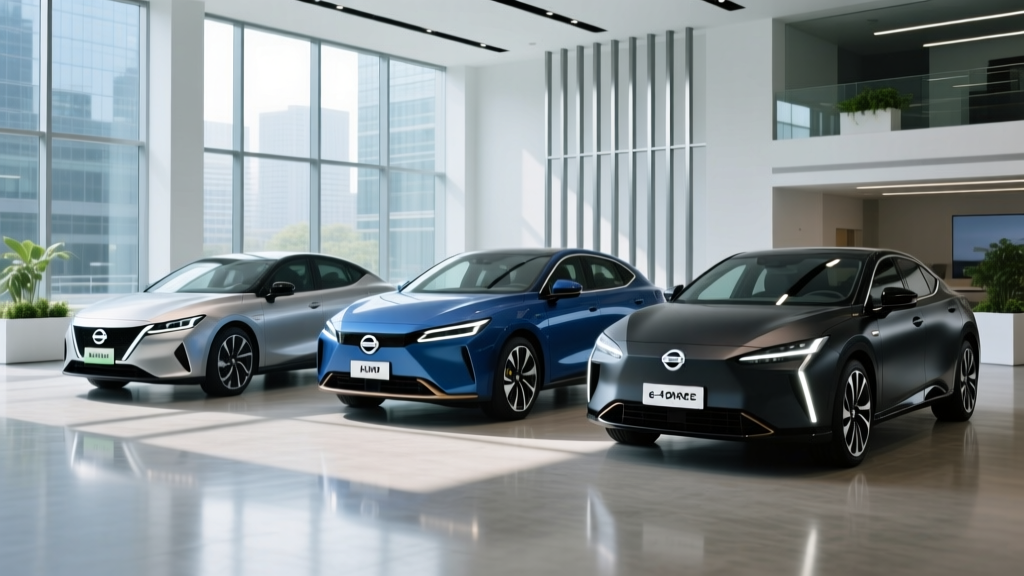
Quick Answer: Nissan's 2026 electric lineup centers on two models: the Leaf (a compact hatchback starting around $29,000 with up to 212 miles of EPA range) and the Ariya (a crossover SUV starting near $40,000 with up to 304 miles EPA range). The Leaf uses a CHAdeMO DC connector — increasingly rare at new public fast-charging stations — while the Ariya uses CCS1 with adapters available for Tesla's NACS Supercharger network. The Ariya is the stronger pick for road-trippers and cold-climate buyers thanks to its larger battery, liquid-cooled pack, and faster DC charging. The Leaf remains one of the cheapest new EVs available, but its air-cooled battery and CHAdeMO plug limit long-distance practicality. Neither model currently qualifies for the full $7,500 federal §30D tax credit due to battery-sourcing rules, though point-of-sale lease incentives may apply.
What Nissan Electric Vehicles Can You Buy in 2026?
Nissan offers two fully electric vehicles (BEVs) for the U.S. market. There are no Nissan plug-in hybrids (PHEVs) currently sold in the U.S., so buyers looking at nissan electric options are choosing between pure battery-electric models.
| Spec | 2026 Nissan Leaf S / SV Plus | 2026 Nissan Ariya Engage / Venture+ / Platinum+ |
|---|---|---|
| Body Style | Compact 5-door hatchback | Compact crossover SUV |
| Battery (usable) | 40 kWh (S) / 60 kWh (SV Plus) | 63 kWh (Engage) / 87 kWh (Venture+, Platinum+) |
| Chemistry | NMC (laminated pouch cells) | NMC (liquid-cooled) |
| EPA Range | 149 mi (S) / 212 mi (SV Plus) | 216 mi (Engage FWD) / 304 mi (Venture+ FWD) / 267 mi (Platinum+ e-4ORCE AWD) |
| Efficiency | 111–121 MPGe combined | 95–109 MPGe combined |
| Motor Output | 147 hp (S) / 214 hp (SV Plus) | 214 hp (FWD) / 389 hp (e-4ORCE AWD) |
| 0–60 mph | ~7.9 s (S) / ~6.5 s (SV Plus) | ~7.5 s (FWD) / ~4.8 s (Platinum+ e-4ORCE) |
| DC Fast Charge Peak | 50 kW (CHAdeMO) | 130 kW (CCS1) |
| 10–80% DC Time | ~40 min (60 kWh pack) | ~35 min (87 kWh pack) |
| Level 2 Onboard Charger | 6.6 kW (J1772) | 7.2 kW (J1772) |
| Starting MSRP | ~$29,135 (S) | ~$39,790 (Engage FWD) |
| Battery Warranty | 8 yr / 100,000 mi | 8 yr / 100,000 mi |
Sources: fueleconomy.gov, Nissan USA. Real-world highway range at 70 mph typically runs 15–20% below EPA combined figures. Cold-weather losses (below 32°F) can reduce range an additional 20–30%, particularly in the Leaf due to its resistive cabin heater versus the Ariya's available heat pump.
Leaf vs. Ariya: Range, Charging & Real-World Performance
The Leaf and Ariya serve different buyers, and the gap goes far beyond body style.
Range Reality Check
The Leaf SV Plus carries a 60 kWh battery rated at 212 miles EPA combined. On a 70-mph highway loop in mild weather, expect closer to 170–185 miles before needing a charge. In winter conditions (20–30°F), that number can drop to 130–150 miles because the Leaf uses a resistive PTC heater rather than a heat pump, which draws heavily from the traction battery.
The Ariya Venture+ with its 87 kWh pack and 304-mile EPA rating is more road-trip capable. Real-world highway range lands around 250–270 miles in mild weather, and approximately 200–220 miles in freezing temperatures — helped by the heat pump on most trims. The Ariya's liquid-cooled battery also sustains performance better during repeated fast-charging sessions or sustained high-speed driving, where the Leaf's passively air-cooled pack can thermally throttle.
Charging Speed and Connector Practicality
This is where the Nissan electric lineup's biggest divergence appears.
| Factor | Nissan Leaf (CHAdeMO) | Nissan Ariya (CCS1) |
|---|---|---|
| DC Connector | CHAdeMO — legacy standard | CCS1 — current U.S. standard |
| Peak DC Rate | 50 kW | 130 kW |
| Supercharger Access | No adapter exists for NACS/CHAdeMO | NACS adapter available; Supercharger access expanding |
| Public Charger Availability | Declining — most new DC stations omit CHAdeMO | Strong — CCS1 or NACS at virtually all networks |
| 10–80% on DC | ~40 min (60 kWh) | ~35 min (87 kWh) |
| Charge Curve Note | Flat ~50 kW to ~60%, then tapers hard | Peaks 130 kW to ~40%, tapers to ~60 kW above 80% |
The Leaf's 50 kW CHAdeMO cap means even on a 150 kW station, you'll only pull 50 kW — and the charge curve drops sharply past 60% state of charge (SoC). A 10–80% session takes roughly 40 minutes, which is slow by 2026 standards. Worse, CHAdeMO stalls are disappearing as Electrify America, EVgo, and others prioritize CCS1 and NACS connectors. If you rely on public fast charging, the Leaf is increasingly impractical for anything beyond short urban errands.
The Ariya's CCS1 port and 130 kW peak rate are more competitive. With a Nissan-supplied NACS adapter, Ariya owners can access Tesla Supercharger V3 stalls (250 kW capable, though the Ariya caps at ~130 kW). A 10–80% session takes about 35 minutes — adequate for highway rest stops.
Cost of Ownership: Nissan Electric vs. Gas and Hybrid
Let's compare the Ariya Venture+ (FWD, $43,190 MSRP) against a similarly equipped gas crossover — the Nissan Rogue SV AWD (~$32,500 MSRP) — over 5 years and 75,000 miles.
| Category | Ariya Venture+ (EV) | Rogue SV (Gas AWD) |
|---|---|---|
| Purchase Price (MSRP) | $43,190 | $32,500 |
| Federal Tax Credit (§30D) | $0 (battery sourcing ineligible) | $0 |
| Estimated Dealer/Incentive Discount | –$3,000 (lease or dealer cash) | –$1,500 |
| Net Effective Purchase | $40,190 | $31,000 |
| Fuel / Electricity (75k mi) | $3,750 (home L2 at $0.14/kWh avg) | $8,440 (30 MPG combined at $3.38/gal) |
| Maintenance (5 yr) | $1,200 (cabin filter, tire rotation, wiper fluid) | $3,800 (oil changes, brakes, filters, fluids) |
| Insurance (5 yr avg) | $9,500 ($1,900/yr avg) | $7,500 ($1,500/yr avg) |
| Depreciation (est. 5 yr) | $18,000 | $14,000 |
| Total 5-Year Cost | $72,640 | $64,740 |
| Cost Per Mile | $0.97 | $0.86 |
Assumptions: electricity at national average $0.14/kWh for home charging; gas at $3.38/gal national average (EIA); insurance via average of major carriers; depreciation from ALG/iSeeCars residual estimates. Actual costs vary by state, utility rate, and driving pattern. Federal and state incentives can shift this equation — check IRS §30D rules for current eligibility.
The Ariya's fuel and maintenance savings (~$7,290 combined over 5 years) are substantial, but they don't fully offset the higher purchase price, insurance premium, and steeper depreciation. The break-even point extends further if you rely on public DC fast charging at $0.35–$0.50/kWh, which pushes electricity costs closer to gasoline parity.
For the Leaf S at ~$29,135 MSRP, the math tightens considerably. A lower purchase price plus negligible maintenance brings the 5-year cost much closer to a gas subcompact, especially for a commuter driving under 12,000 miles per year and charging at home overnight on off-peak rates.
Federal Tax Credit & Incentive Reality for Nissan EVs
This is a critical area where many buyers are misinformed.
IRS §30D Federal Tax Credit Requirements (2026):
- Vehicle must have final assembly in North America
- MSRP cap: $55,000 for sedans/hatchbacks; $80,000 for SUVs/trucks/vans
- Buyer income cap: $150,000 (single) / $225,000 (head of household) / $300,000 (joint)
- Battery components must meet increasing domestic-content percentages (phased annually)
- Critical minerals must be sourced from the U.S. or free-trade-agreement countries
- Credit amount: up to $7,500 ($3,750 for battery components + $3,750 for critical minerals)
- Point-of-sale transfer available — the credit can be applied as a down-payment reduction at the dealer
Current status for Nissan electric models: Both the Leaf (assembled in Smyrna, TN) and the Ariya (assembled in Japan) face battery-sourcing challenges. The Ariya's Japan-built battery cells and modules use critical minerals that have not fully met the escalating FTA-sourcing thresholds. The Leaf's battery, also sourced largely from non-FTA supply chains, faces similar restrictions. As of early 2026, neither model qualifies for the full $7,500 credit under §30D. Some buyers may access partial credits or manufacturer-sponsored lease incentives that pass through a commercial clean-vehicle credit (§45W) — always verify with your tax professional and the dealer before signing.
Real-World Ownership: Who Should Buy a Nissan EV?
Not every buyer is a good fit for either Nissan electric model. Here's a practical framework based on driving patterns, climate, and charging access.
Choose the Nissan Leaf If:
- You have reliable home Level 2 charging (240V, 6.6 kW) and rarely drive more than 100 miles round-trip in a day.
- Your budget is under $35,000 and you want one of the cheapest new EVs on the market.
- You live in a mild climate — the Leaf's air-cooled battery and resistive heater perform poorly in sustained sub-freezing temperatures.
- You do not plan to take frequent road trips exceeding 150 miles one-way. CHAdeMO infrastructure is thin and shrinking.
- You view this as a second car or dedicated commuter vehicle.
Choose the Nissan Ariya If:
- You need a family crossover with legitimate road-trip range (250+ real-world miles on the Venture+ trim).
- You want access to the Tesla Supercharger network via the NACS adapter.
- You live in a cold climate — the liquid-cooled battery and available heat pump make a meaningful difference in winter range retention.
- You want AWD (e-4ORCE) for snow or mountain driving — the Platinum+ trim delivers 389 hp and 267 miles EPA.
- You can charge at home and your daily commute is under 200 miles.
Consider a Hybrid Instead If:
- You lack home charging access (apartment, street parking) and cannot install a Level 2 charger.
- You regularly drive 300+ miles between stops and don't want to plan around DC fast-charging availability.
- You live in an area with unreliable public charging infrastructure — a gas or hybrid vehicle eliminates that risk entirely.
Common Misconceptions About Nissan Electric Vehicles
| Myth | Fact |
|---|---|
| "The Leaf battery will die in a few years." | Nissan's 8-year/100,000-mile battery warranty covers capacity below 9 bars (of 12) on the capacity gauge. Most 2018+ Leaf packs with the 60 kWh battery show 5–10% degradation at 5 years based on fleet data. The earlier 24 kWh and 30 kWh packs degraded faster, especially in hot climates — the air-cooled design is the limiting factor. |
| "The Ariya qualifies for the $7,500 federal tax credit." | As of 2026, the Ariya does not meet the full critical-minerals and battery-component sourcing requirements under §30D. Lease deals may pass through a commercial credit, but purchase buyers should not count on the full $7,500. |
| "I can fast-charge the Leaf at any DC station." | The Leaf uses CHAdeMO, which is being phased out at most new public DC installations in the U.S. Electrify America still supports CHAdeMO at many existing stalls, but new builds increasingly omit it. |
| "EVs cost more to maintain, too." | BEVs have no engine oil, transmission fluid, spark plugs, or timing belts. Brake pad life is extended by regenerative braking. Typical 5-year maintenance for a Nissan EV runs $1,000–$1,500 vs. $3,500–$4,500 for a comparable gas car (source: AAA ownership cost studies). |
| "The Ariya charges as fast as a Tesla or Hyundai." | The Ariya peaks at 130 kW — respectable but below the 200–350 kW peak rates of the Hyundai Ioniq 5, Kia EV6, or Tesla Model Y. On a long road trip, the Ariya adds roughly 180 miles in 30 minutes; those rivals can add 200–250+ miles in the same window. |
Home Charging Setup for Nissan EVs
Both the Leaf and Ariya use a J1772 inlet for Level 1 (120V) and Level 2 (240V) AC charging. Here's what installation looks like in practice:
| Item | Cost Range | Notes |
|---|---|---|
| Level 2 EVSE (charger unit) | $350–$700 | Emporia, ChargePoint, Wallbox; 32–48A models |
| Electrician labor (240V/50A circuit) | $500–$2,000 | Depends on panel proximity, conduit run, drywall work |
| Electrical panel upgrade (if needed) | $1,500–$3,500 | Required if your panel is at capacity (common in older homes with 100A service) |
| Permit & inspection | $50–$300 | Varies by municipality |
| Total (typical install) | $900–$3,000 | Without panel upgrade; $2,500–$6,500 with upgrade |
The Leaf's 6.6 kW onboard charger adds roughly 25 miles of range per hour of Level 2 charging. The Ariya's 7.2 kW charger adds about 28 miles per hour. An overnight session (8–10 hours) fully replenishes either vehicle — more than enough for daily commuting if you charge at home.
Level 1 (standard 120V outlet) delivers about 1.2–1.4 kW, adding roughly 4–5 miles per hour. This works for the Leaf S (149-mile range) if you drive under 40 miles daily, but it's impractical as a primary charging method for the Ariya's larger battery.
Frequently Asked Questions
Is the Nissan Leaf being discontinued?
Nissan has signaled a next-generation Leaf is in development, likely on the CMF-EV platform shared with the Ariya, potentially with a CCS1 or NACS port and liquid-cooled battery. As of 2026, the current-generation Leaf remains on sale, but its long-term future in the U.S. is uncertain. If you buy one now, expect below-average resale value compared to EVs with CCS1/NACS connectors.
Can the Nissan Ariya use Tesla Superchargers?
Yes. Nissan has confirmed NACS adapter compatibility for the Ariya, enabling access to Tesla's Supercharger network (V3 stalls, 250 kW capable — though the Ariya's peak acceptance is ~130 kW). This significantly expands the Ariya's road-trip charging options beyond Electrify America and EVgo.
How long does a Nissan EV battery last?
Nissan warrants its EV batteries for 8 years or 100,000 miles against capacity loss below a defined threshold (typically 75% of original capacity, measured as 9 of 12 bars on the Leaf's gauge). Real-world data from fleet operators and owner communities suggests 2018+ Leaf 60 kWh packs lose roughly 1–2% capacity per year under normal use. The Ariya's liquid-cooled pack should perform similarly or better, though long-term data (5+ years) is still limited as the model launched for 2023.
Does the Nissan Ariya have a frunk?
No. The Ariya does not have a front trunk (frunk). The space under the hood is occupied by power electronics. Cargo volume is 22.8 cubic feet behind the rear seats and 59.7 cubic feet with the rear seats folded — competitive for the compact SUV segment, but the lack of a frunk is a missed opportunity for small-item storage.
Is Nissan ProPILOT Assist self-driving?
No. ProPILOT Assist is an SAE Level 2 driver-assistance system. It combines adaptive cruise control and lane-centering on highways, but the driver must keep hands on the wheel and eyes on the road at all times. It is not autonomous driving. The Ariya offers ProPILOT Assist 2.0 on higher trims, which allows hands-off driving in specific single-lane highway conditions at low speeds, but the driver must still remain attentive and ready to take over immediately.
What does it cost to charge a Nissan EV at home vs. public stations?
At the U.S. national average residential electricity rate of ~$0.16/kWh (EIA, 2025), fully charging the Ariya's 87 kWh battery at home costs roughly $13.92 — enough for ~270 real-world miles. That's about $0.05 per mile. Public DC fast charging at $0.35–$0.50/kWh pushes cost to $0.11–$0.16 per mile, which approaches the per-mile fuel cost of an efficient gas car. Home charging is where the economics work best.