The Short Answer on an Electric GTR
As of early 2026, Nissan has not released a production electric GT-R. The last R35 GT-R rolled off the line in October 2024, and Nissan's confirmed EV performance plans center on the Ariya Nismo (a tuned electric crossover) and a next-generation sports car teased in the Chill-Out and Hyper Force concepts. If you're searching for an "electric GTR" today, you're really weighing three paths: wait for Nissan's unconfirmed next-gen sports EV, buy a used R35 GT-R, or cross-shop established high-performance EVs like the Tesla Model S Plaid, Porsche Taycan Turbo GT, or Hyundai Ioniq 5 N. Below, we map the real costs, specs, and ownership trade-offs of each route.
Where the Nissan GT-R Stands in 2026
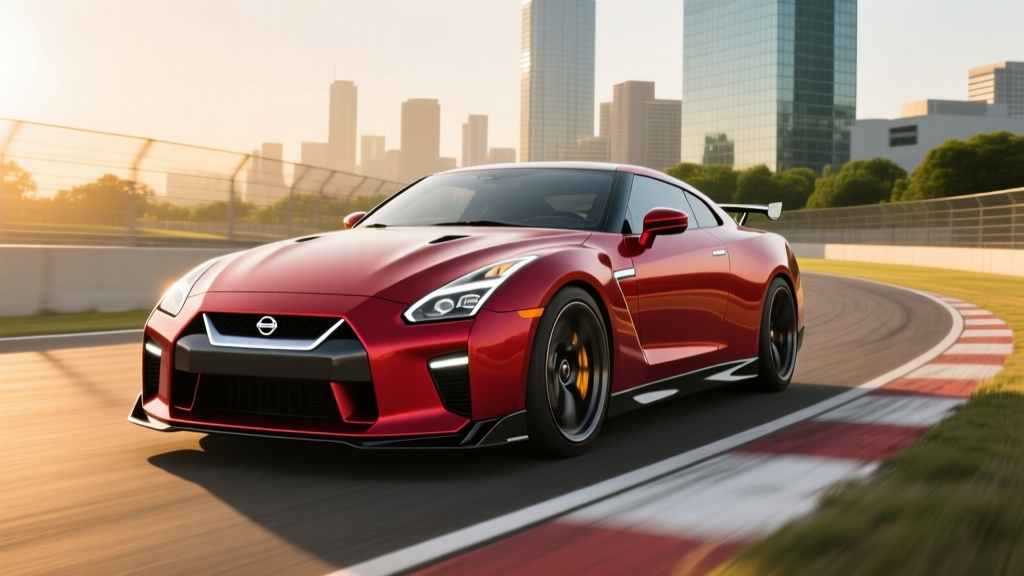
The R35 GT-R ended production after 17 model years. Nissan's U.S. lineup no longer lists it, and the 2024 T-Spec and NISMO variants were explicitly positioned as farewell editions. The twin-turbo 3.8L V6 (VR38DETT) peaked at 600 hp / 481 lb-ft in NISMO trim, with a 0-60 mph time around 2.9 seconds and EPA fuel economy in the low-to-mid teens — a thirst that made it one of the most expensive performance cars to fuel per mile.
Nissan has confirmed a next-generation sports car exists in planning, and the Hyper Force concept (shown at Japan Mobility Show) previewed a solid-state-battery EV with a claimed 1,341 hp and all-wheel-drive torque vectoring. But concept specs are preliminary and non-binding. No pricing, EPA range, battery kWh, or delivery timeline has been announced for a production electric GT-R successor.
The Real Electric Performance EVs You Can Buy Now
While an electric GTR remains speculative, several production EVs already deliver or exceed GT-R NISMO performance. Here's how they compare on the metrics that matter: acceleration, sustained power, range under load, and price.
| Vehicle | Powertrain | 0-60 mph | Horsepower | EPA Range | Battery (kWh) | Base MSRP |
|---|---|---|---|---|---|---|
| 2024 Nissan GT-R NISMO (final) | Gas, TT V6 AWD | 2.9 s | 600 hp | ~220 mi (est.) | — | ~$225,000 |
| 2026 Tesla Model S Plaid | BEV, Tri-motor AWD | 1.99 s | 1,020 hp | 359 mi | ~100 kWh (NMC) | $89,990 |
| 2026 Porsche Taycan Turbo GT | BEV, Dual-motor AWD | 2.1 s | 1,019 hp (Launch) | 269 mi | 105 kWh (NMC) | $230,000 |
| 2026 Hyundai Ioniq 5 N | BEV, Dual-motor AWD | 3.25 s | 641 hp (N Grin Boost) | 221 mi | 84 kWh (NMC) | $67,500 |
| 2026 Nissan Ariya NISMO | BEV, Dual-motor AWD | ~5.0 s (est.) | ~430 hp (est.) | ~260 mi (est.) | 91 kWh (NMC) | ~$65,000 (est.) |
Sources: fueleconomy.gov, manufacturer U.S. press sites. Ariya NISMO figures are preliminary/estimated as of early 2026.
Real-World Range Reality for Performance EVs
EPA range is measured on mixed driving at moderate speeds. On a performance EV driven aggressively or on sustained highway runs above 75 mph, expect 20–35% less range than the EPA sticker. A Model S Plaid rated at 359 mi may deliver 240–270 mi on a spirited canyon run or 80 mph interstate cruise; the Ioniq 5 N (221 mi EPA) often drops to 160–180 mi under track-style load. Cold weather (below 30°F) compounds this with another 10–20% loss due to battery resistance and cabin heating.
Charging Speed: The Hidden Performance Metric
For a performance EV, how fast it charges matters as much as how fast it accelerates — especially if you plan road trips. Peak kW ratings are marketing headlines; the charge curve (how long peak power is sustained) is what determines real stop times.
| Vehicle | Max DC Fast Charge (kW) | 10–80% Time | Level 2 AC Rate (kW) | Connector |
|---|---|---|---|---|
| Tesla Model S Plaid | 250 kW (peak) | ~27 min | 11.5 kW | NACS (native) |
| Porsche Taycan Turbo GT | 320 kW (peak) | ~18 min | 19.2 kW | CCS1 (NACS adapter avail.) |
| Hyundai Ioniq 5 N | 238 kW (peak) | ~18 min | 10.9 kW | NACS (2025+ models) |
| Nissan Ariya NISMO | 130 kW (peak) | ~35 min | 7.2 kW | NACS (2025+ models) |
The Taycan's 800-volt architecture sustains high charge rates deeper into the session than 400V rivals. The Ioniq 5 N also uses 800V and charges remarkably fast for its price class. The Ariya's 130 kW peak is a notable weakness for a performance-oriented vehicle — it's adequate for daily use but frustrating on road trips.
Cost Breakdown: EV Performance vs Gas GT-R
The financial case for an electric performance car vs. a late-model GT-R is stark. Below is a 5-year ownership projection assuming 12,000 miles/year, national-average electricity ($0.17/kWh) and premium fuel ($4.80/gal), and no major warranty repairs.
| Cost Category (5 yr) | Used 2024 GT-R NISMO | 2026 Model S Plaid | 2026 Ioniq 5 N |
|---|---|---|---|
| Purchase price (typical) | $180,000–$220,000 | $89,990 | $67,500 |
| Federal tax credit (§30D) | $0 | Up to $7,500* | Up to $7,500* |
| Fuel/energy (60,000 mi) | ~$26,000 | ~$4,500 | ~$4,000 |
| Maintenance | ~$6,500 | ~$1,200 | ~$1,500 |
| Insurance (avg) | ~$22,000 | ~$18,000 | ~$14,000 |
| Estimated 5-yr total | $234,500–$274,500 | $106,190 | $79,500 |
* §30D credit eligibility depends on buyer AGI (single: ≤$150k, joint: ≤$300k), vehicle MSRP cap ($55k sedans / $80k SUVs/trucks — note Model S Plaid exceeds the sedan cap), and battery-sourcing requirements. Always verify at irs.gov and consult a tax professional. Point-of-sale transfer is available at participating dealers.
Real-World Ownership Considerations
Buying a high-performance EV isn't only about specs. These are the factors that determine whether you'll actually enjoy owning one:
Home Charging Access
A Level 2 home charger (240V, 32–48A) is nearly essential for a performance EV. Expect a full home install to cost $800–$2,500 including a quality EVSE ($400–$700) and electrician labor, assuming your panel has capacity. A 200A panel upgrade, if needed, adds $1,500–$4,000. Without home charging, you'll rely on public DC fast chargers, which cost $0.35–$0.55/kWh and erase much of the EV fuel-cost advantage.
Climate and Range
If you live where winters regularly drop below freezing, budget 15–25% range loss. A heat pump (standard on Ioniq 5 N, Taycan, Ariya) mitigates cabin-heating draw but doesn't fully offset cold cell chemistry. In Phoenix or Miami, thermal management matters more for sustained performance than for range — Tesla and Porsche excel here.
Driving Pattern Fit
Performance EVs shine in stop-and-go and suburban driving where instant torque and regen braking dominate. On long highway road trips, a GT-R's quick gas fill (5 minutes) still beats even the fastest 18-minute DC fast-charge stop — and you won't face charger downtime or queue waits on holiday weekends.
Tire and Brake Costs
Performance EVs are heavy (Ioniq 5 N: ~4,860 lb; Model S Plaid: ~4,766 lb) and wear tires faster than gas equivalents due to instant torque. Budget $1,200–$2,000 for a set of Michelin Pilot Sport 4S or P Zero rubber every 15,000–20,000 miles. Regen braking saves pad life dramatically — many owners report 60,000+ miles on original brake pads.
Common Misconceptions About an Electric GTR
| Myth | Fact |
|---|---|
| "The electric GT-R is available now." | No production electric GT-R exists. The Hyper Force is a concept; Nissan has announced no production timeline, pricing, or EPA-certified specs. |
| "EVs can't match GT-R track performance." | Model S Plaid and Taycan Turbo GT beat the GT-R NISMO in 0-60 and lap times at many circuits. Sustained lap performance (heat management) favors Porsche. |
| "EVs are cheaper to own in every scenario." | Insurance on performance EVs is 15–30% higher than gas equivalents. Without home charging, fuel savings shrink. Upfront MSRP is often higher. |
| "All EVs charge at the same speed." | Charge rate varies from 50 kW (older LEAF) to 350 kW (Taycan on 800V). Peak kW is not sustained kW — the 10–80% time is what matters. |
| "An electric GTR would qualify for the $7,500 tax credit." | §30D has a $55,000 MSRP cap for sedans and $80,000 for SUVs/trucks. A hypothetical $150k electric GT-R would NOT qualify regardless of sourcing. |
Decision Framework: Which Path Is Right for You?
Choose a Used R35 GT-R (2020–2024) If:
- You value collector/enthusiast cachet and the sound/feel of a twin-turbo V6
- Your drives are short and local — you don't need 300+ mi range
- You accept $25k+ in 5-year fuel costs and premium maintenance
- You want a car likely to hold or appreciate in value as a future classic
Choose a Tesla Model S Plaid If:
- Straight-line acceleration is your priority (1.99s 0-60 is untouchable)
- You want 350+ mi EPA range and access to the Supercharger network
- You're comfortable with Tesla's minimalist interior and panel-fit variability
- Your AGI and purchase structure allow §30D eligibility
Choose a Porsche Taycan Turbo GT If:
- Track-day repeatability and chassis balance matter more than 0-60 bragging rights
- You want the fastest sustained DC charging in the segment (800V, 320 kW peak)
- Budget allows a $230k+ purchase with no tax-credit expectation
- Build quality and dealer service are top priorities
Choose a Hyundai Ioniq 5 N If:
- You want 80–90% of GT-R thrills at one-third the price
- Simulated gear shifts and ICE-like sound (N e-Shift) appeal to you
- You value 18-minute 10–80% charging on 800V architecture
- Back-seat usability and daily-driver comfort matter
Wait for a Production Electric GT-R Successor If:
- You're committed to the Nissan brand and GT-R lineage specifically
- You can comfortably wait 2–4+ years with no guaranteed specs or pricing
- You have a current daily driver that satisfies you in the interim
Frequently Asked Questions
Is Nissan making an electric GT-R?
Nissan has confirmed a next-generation sports car is in development and showed the Hyper Force concept with a solid-state battery and 1,341 hp claim. However, no production timeline, pricing, battery kWh, EPA range, or MSRP has been announced as of early 2026. Treat all concept figures as preliminary.
What's the closest thing to an electric GTR I can buy today?
For pure acceleration, the Tesla Model S Plaid (1.99s 0-60, $89,990). For track handling and charge speed, the Porsche Taycan Turbo GT. For the best blend of price and engagement, the Hyundai Ioniq 5 N at $67,500 offers 641 hp, 800V charging, and simulated gear shifts that mimic an ICE sports car.
Would an electric GT-R qualify for the federal tax credit?
Almost certainly not, if priced like the current GT-R. The §30D credit caps eligibility at $55,000 MSRP for sedans and $80,000 for SUVs/trucks/vans. A hypothetical $120k–$200k electric GT-R successor would exceed these limits regardless of battery sourcing or buyer income. Verify current rules at irs.gov.
How much does it cost to charge a performance EV at home?
At the U.S. average of $0.17/kWh, fully recharging a 100 kWh battery (Model S Plaid) costs about $17 — yielding roughly 3.5 miles per dollar. The same distance in a GT-R NISMO at 14 mpg and $4.80/gal premium costs about $1.21 per mile, or roughly $0.34 per mile in the EV. Over 12,000 miles/year, that's a ~$4,100 annual fuel savings with home charging.
Do performance EVs degrade faster than normal EVs?
Not necessarily, but frequent DC fast charging and repeated high-discharge track use accelerate battery wear. Most manufacturers warranty the traction battery for 8 years / 100,000 miles with a minimum 70% capacity retention threshold. NMC chemistry (used in all the performance EVs above) typically shows 8–12% degradation over 100,000 miles in normal use — higher with heavy track/DCFC abuse.
Can I daily-drive a performance EV like an Ioniq 5 N or Model S Plaid?
Yes, and most owners do. Ride quality in comfort modes is surprisingly compliant, and cargo space (especially the Model S liftback and Ioniq 5 hatch) is practical. The main compromise is range under aggressive driving and higher tire consumption versus a mainstream EV or sedan.
Safety note: All current consumer performance EVs use SAE Level 2 driver-assist systems (Tesla Autopilot, Hyundai Highway Driving Assist, Porsche InnoDrive). These require continuous driver supervision and are not self-driving. Only Level 4 robotaxi services like Waymo operate without a human driver in defined geofenced areas.