Quick Answer: Is the Nissan Electric Ariya Worth Buying?
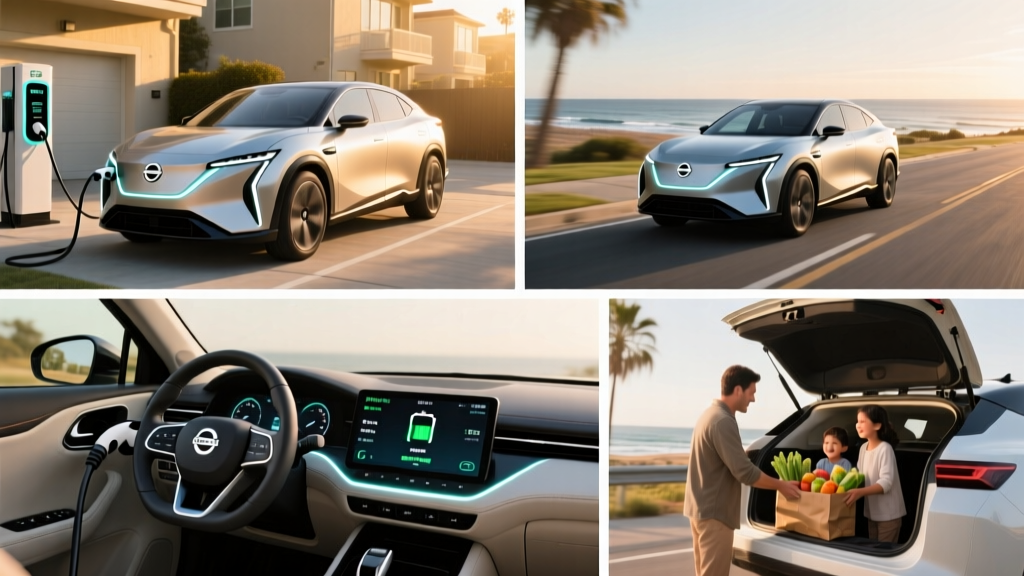
The 2026 Nissan Ariya is a comfortable, well-built electric crossover with up to 304 miles of EPA-estimated range (Venture+ trim), starting around $39,590 before incentives. It charges at up to 130 kW on DC fast chargers (10–80% in roughly 35 minutes) and qualifies for partial or full federal tax credits depending on your income and the vehicle's battery sourcing. It's best suited for buyers who prioritize ride comfort, interior quality, and everyday usability over class-leading charging speed or sporty dynamics. If you can charge at home and drive under 250 miles daily, the Ariya delivers strong total-cost-of-ownership savings versus a gas-powered Rogue or Forester.
Range, Battery, and Charging: The Numbers That Matter
The Ariya comes in two battery configurations across its trim lineup. Understanding the difference between kW (power — how fast you charge) and kWh (energy — how far you can drive) is essential before shopping.
| Spec | Venture+ (FWD) | Evolve+ / Empower+ (FWD) | Platinum+ e-4ORCE (AWD) |
|---|---|---|---|
| Battery (usable) | 63 kWh (NMC) | 87 kWh (NMC) | 87 kWh (NMC) |
| EPA Range | 216 mi | 289–304 mi | 267 mi |
| Real-World Highway Range* | ~175–190 mi | ~240–265 mi | ~220–240 mi |
| Motor Output | 214 hp / 221 lb-ft | 238 hp / 221 lb-ft | 389 hp / 443 lb-ft |
| 0–60 mph | ~7.5 sec | ~7.2 sec | ~4.8 sec |
| Max DC Fast Charge | 130 kW | 130 kW | 130 kW |
| 10–80% DCFC Time | ~30 min | ~35 min | ~35 min |
| Level 2 (240V) Charge Rate | 7.2 kW | 7.2 kW | 7.2 kW |
| MPGe (combined) | 99 MPGe | 97–101 MPGe | 93 MPGe |
| Base MSRP | $39,590 | $43,190 | $53,190 |
| Battery/Powertrain Warranty | 8 years / 100,000 miles | ||
*Real-world highway range assumes 70–75 mph sustained speeds in moderate temperatures. In cold weather (below 30°F), expect 15–25% further reduction across all trims. The Ariya lacks a heat pump on most trims, which increases cabin-heating energy draw in winter.
Real-World Range Reality Check
EPA Sticker: 304 miles (Empower+)
Expect in practice: 240–270 miles on mixed driving; 220–245 miles on sustained highway trips; as low as 190–210 miles in freezing weather with cabin heat.
The Ariya's charging curve is moderate. It peaks near 130 kW up to roughly 40% state of charge, then tapers progressively. Above 80% SoC, charging slows dramatically to protect the NMC battery — plan to unplug at 80% on road trips rather than waiting for a full top-off.
Ariya vs Gas Crossover: The Cost Comparison
Most Ariya shoppers are cross-shopping against compact gas crossovers like the Nissan Rogue, Toyota RAV4, or Subaru Forester. Here's what five years of ownership looks like, assuming 15,000 miles/year and a national-average electricity rate of $0.16/kWh versus $3.40/gallon for regular unleaded.
| Category | Nissan Ariya Empower+ (FWD) | Gas Crossover (30 MPG combined) |
|---|---|---|
| Purchase Price (MSRP) | $43,190 | $33,500 |
| Est. Federal Tax Credit (§30D) | –$3,750 to –$7,500* | $0 |
| Effective Purchase | $35,690–$39,440 | $33,500 |
| Fuel/Energy (5 yr / 75k mi) | $3,600–$4,800** | $8,500 |
| Maintenance (5 yr) | ~$1,200 | ~$3,200 |
| Insurance (5 yr avg) | ~$9,500 | ~$7,800 |
| 5-Year Total (est.) | $50,000–$54,900 | $53,000 |
*§30D credit eligibility depends on battery critical-mineral and component sourcing, buyer income caps ($150k single / $300k joint), and MSRP caps ($80k for SUVs). Credit may be applied at point of sale. Verify current rules at IRS.gov.
**Home charging at $0.16/kWh yields ~$3,600. Exclusive public DCFC use at $0.40–0.50/kWh pushes costs to ~$9,000–$11,250, erasing the fuel savings advantage. Home charging access is critical to Ariya economics.
The Ariya breaks even or beats a gas crossover over five years primarily through fuel and maintenance savings, but only if you charge at home. Public-charging-only owners may actually spend more on energy than gas-car drivers.
Home Charging Setup: What First-Time Buyers Need
The Ariya ships with a CCS1 charge port (a NACS adapter is available for Tesla Supercharger access on newer model years). For daily driving, Level 2 home charging is where the Ariya makes the most sense.
| Level | Power | Miles of Range per Hour | Full Charge Time (87 kWh) |
|---|---|---|---|
| Level 1 (120V outlet) | 1.2–1.4 kW | ~3–4 mi/hr | ~60+ hours |
| Level 2 (240V, 32A) | 7.2 kW | ~22–25 mi/hr | ~12 hours |
| DC Fast Charge | Up to 130 kW | N/A (session-based) | 10–80% in ~35 min |
Level 1 charging is impractical for the Ariya's 87 kWh battery unless you drive fewer than 30 miles daily. A Level 2 home charger installation typically costs:
- Level 2 EVSE hardware: $350–$700 (ChargePoint Home Flex, Emporia Level 2, Wallbox Pulsar Plus)
- Electrician labor (240V/50A circuit): $800–$2,500 depending on panel proximity
- Electrical panel upgrade (if needed): $1,500–$3,500 for older homes with 100A service
- Permit: $50–$250 depending on municipality
Total home charging setup: $1,200–$2,000 for most homes with modern 200A panels; up to $5,000+ if a panel upgrade is required. Always get a quote from a licensed electrician before committing to a purchase.
Common Misconceptions About the Ariya
| Myth | Fact |
|---|---|
| "The Ariya charges as fast as a Hyundai Ioniq 5 or Tesla Model Y." | It doesn't. The Ariya peaks at 130 kW, while the Ioniq 5 hits 240 kW (10–80% in ~18 min) and the Model Y peaks around 250 kW. The Ariya's 35-minute 10–80% time is adequate but not class-leading. |
| "304 miles of range means I can drive 304 miles before stopping." | The 304-mile EPA figure applies to the Empower+ FWD under mixed-test conditions. Sustained highway driving at 75 mph reduces this to ~240–265 miles. Cold weather drops it further. Plan road trips around 200–220 miles between stops. |
| "The Ariya qualifies for the full $7,500 tax credit." | Eligibility depends on battery sourcing requirements that shift periodically. As of the current tax year, some Ariya trims qualify for $3,750 (critical minerals only) or the full $7,500, but this changes as supply chains evolve. Always check the latest fueleconomy.gov listings before purchasing. |
| "EV batteries need replacing every few years." | Nissan warrants the Ariya's battery for 8 years/100,000 miles against degradation below a specified capacity threshold. Industry data from similar NMC packs shows 10–15% degradation over 150,000 miles is typical. Replacement costs for an 87 kWh pack currently range from $12,000–$18,000 but are declining. |
| "ProPILOT Assist is self-driving." | ProPILOT Assist 2.0 is an SAE Level 2 driver-assistance system. It handles adaptive cruise and lane centering, including limited hands-off operation on pre-mapped highways, but you must remain attentive and ready to take over immediately. It is not autonomous. |
SAE Automation Level: Level 2
Nissan ProPILOT Assist 2.0 is a Level 2 system per SAE International standards. The driver must supervise at all times. Only Level 4 services (like Waymo in designated zones) operate without a human driver.
Who Should Buy the Ariya — And Who Shouldn't
Ariya Decision Framework
Choose the Nissan Ariya if:
- You can install a Level 2 charger at home (garage or driveway with 240V access)
- Your daily commute is under 80 miles round-trip, with occasional 200-mile road trips
- You value a quiet, comfortable ride and premium interior over sporty handling
- You want a mainstream-brand EV with dealer service infrastructure
- You're cross-shopping the Hyundai Ioniq 5, VW ID.4, or Ford Mustang Mach-E and prefer the Ariya's more traditional crossover styling and softer ride
Look elsewhere if:
- You frequently take 400+ mile road trips and can't tolerate 35-minute charge stops (consider the Ioniq 5 or a Tesla on the Supercharger network)
- You live in a region with extreme cold and no garage — the Ariya's lack of a standard heat pump on base trims hurts winter range significantly
- You need third-row seating or maximum cargo space (the Ariya offers 59.7 cu ft with rear seats folded — competitive but not class-leading)
- You rely exclusively on public charging and have no home/workplace charging access — the economics won't work in your favor
Frequently Asked Questions
Does the Nissan Ariya qualify for the federal EV tax credit?
Eligibility for the §30D Clean Vehicle Credit (up to $7,500) depends on current battery-sourcing and critical-minerals requirements, your adjusted gross income (capped at $150,000 single / $225,000 head of household / $300,000 joint), and the vehicle's MSRP (under $80,000 for SUVs). The credit may be transferred to the dealer at point of sale as a purchase-price reduction. Verify your specific eligibility with a tax professional and check current status at IRS.gov.
How long does it take to charge the Ariya at home overnight?
With a Level 2 charger (7.2 kW), the 87 kWh battery takes roughly 12 hours from near-empty to full. In practice, most owners plug in nightly and only need to replenish 30–50% of the battery, which takes 4–6 hours — well within an overnight window. A standard 120V outlet (Level 1) adds only about 3–4 miles of range per hour and is not practical as a primary charging method for the larger battery.
Is the Ariya good in snow and winter conditions?
The e-4ORCE AWD trims (Engage+, Evolve+, Platinum+) provide competent dual-motor traction in snow, and the Ariya's weight distribution is favorable. However, cold temperatures reduce battery efficiency by 15–25%, and the Ariya's resistance-based cabin heating (no standard heat pump on most trims) draws additional energy. Preconditioning the battery and cabin while plugged in helps preserve range. Expect real-world winter range of 190–220 miles on AWD trims with the 87 kWh pack.
What does Ariya maintenance cost compared to a gas car?
The Ariya eliminates oil changes, spark plugs, transmission fluid, and exhaust system maintenance. Scheduled service is limited to cabin air filter replacement, tire rotation, brake fluid checks, and windshield washer fluid. Nissan estimates annual maintenance at roughly $200–$300, versus $600–$800/year for a comparable gas crossover. Brake pad life is extended significantly by regenerative braking — many EV owners report original brake pads lasting 80,000+ miles.
How does the Ariya compare to the Hyundai Ioniq 5 or Tesla Model Y?
The Ioniq 5 charges significantly faster (240 kW peak, 10–80% in ~18 min vs the Ariya's ~35 min) and offers a similar price range, but has a firmer ride and less traditional styling. The Tesla Model Y benefits from the Supercharger network and strong efficiency but has a stiffer ride and sparser interior. The Ariya trades charging speed for superior ride comfort, a more conventional crossover feel, and competitive interior materials. For safety ratings, check the latest results at IIHS.org and NHTSA.gov.