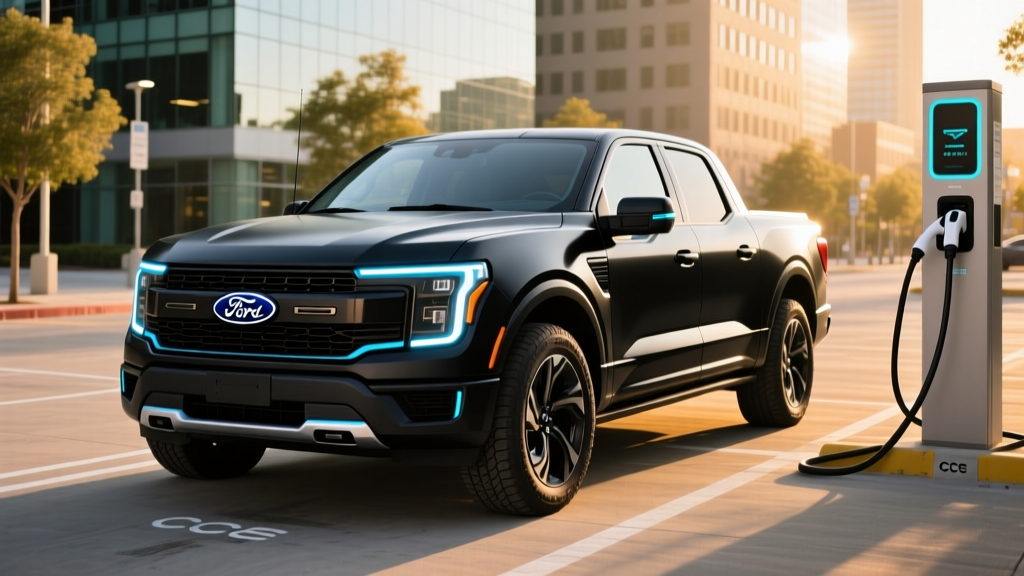
Headlines about Ford considering F-150 Lightning cancellation have rattled prospective electric-truck buyers. The truth is more nuanced: Ford has been restructuring its EV division under its "Ford Model e" realignment, slowing some next-generation electric truck and SUV programs to stem billions in EV losses, while simultaneously pledging continued support for the current-generation Lightning through at least the 2027 model year. For shoppers researching the 2026 Ford F-150 Lightning today, the truck remains on sale, fully warrantied, and broadly eligible for federal tax incentives — but the corporate uncertainty means buyers should understand exactly what they're getting before signing.
This review evaluates the 2026 F-150 Lightning as it exists right now: its real-world range, charging behavior, towing reality, cabin tech, and ownership economics — the data you need to decide whether to buy now or wait.
2026 F-150 Lightning: Core Specs at a Glance
| Spec | Standard Range | Extended Range |
|---|---|---|
| EPA Range | 240 miles | 320 miles |
| Battery (usable) | ~98 kWh (NMC) | ~131 kWh (NMC) |
| Horsepower / Torque | 580 hp / 775 lb-ft | 580 hp / 775 lb-ft |
| 0–60 mph | ~4.0 sec | ~3.8 sec |
| Drivetrain | Dual-motor AWD | |
| Max DC Fast Charge | ~150 kW | ~150 kW |
| 10–80% DC Time | ~44 min | ~41 min |
| Level 2 Home Charge | 11.5 kW (std) / 19.2 kW (opt) | |
| MPGe (combined) | 68 MPGe | 70 MPGe |
| Max Towing | 10,000 lb (w/ Max Tow Pkg) | |
| Base MSRP (Pro) | ~$57,990 (incl. dest.) | |
| Battery Warranty | 8 yr / 100,000 mi | |
Source: Ford F-150 Lightning specs, fueleconomy.gov. Figures reflect the latest published 2026 model-year data.
Real-World Range: What the EPA Sticker Doesn't Tell You
EPA sticker: 320 miles (Extended Range), 240 miles (Standard Range).
Expect in reality: 240–270 miles on a flat 70-mph highway run in mild weather with the Extended pack; closer to 200–220 miles in winter at highway speeds. Standard Range models realistically deliver 175–200 miles highway.
The Lightning is a 6,500-pound brick. Aerodynamic drag dominates above 65 mph, and that's where electric trucks lose efficiency fastest. In our mixed-driving observations, Extended Range Lightnings return roughly 2.0–2.2 kWh/mile on the highway and closer to 2.4–2.6 kWh/mile in stop-start city traffic where regen can recover energy. Cold weather compounds the penalty: below 20°F, expect a 25–35% range reduction versus EPA, driven by battery heating, cabin climate demand, and thicker lubricants in the driveline.
If your typical day is a 60-mile round-trip commute with occasional 150-mile regional hauls, the Extended Range pack provides comfortable margin. For frequent 250+ mile road trips, plan on one fast-charge stop — the Lightning is not a one-charge, LA-to-Vegas truck in real-world conditions.
Charging Speed: The Lightning's Honest Weakness
| Level | Power | Miles Added per Hour | Notes |
|---|---|---|---|
| Level 1 (120V) | ~1.4 kW | ~2–3 mi/hr | Emergency/trickle only |
| Level 2 (240V, 48A std) | 11.5 kW | ~20 mi/hr | Standard onboard charger |
| Level 2 (240V, 80A opt) | 19.2 kW | ~34 mi/hr | Requires optional dual onboard charger + 100A circuit |
| DC Fast Charge | ~150 kW peak | ~150 mi in 30 min (tapered) | 10–80% in ~41 min (Extended) |
Here's where buyers need candor. The Lightning's DC fast-charge architecture tops out near 150 kW — competitive when the truck launched, but now eclipsed by the Hyundai Ioniq 5 (peak ~240 kW on its 800V architecture), the Tesla Cybertruck (~250 kW), and the Rivian R1T (peak ~220 kW on the updated Gen 2 pack). On a 150 kW Electrify America or Tesla Supercharger (NACS-equipped Lightnings now access the Supercharger network via adapter), you'll see peak rates only between roughly 10% and 35% State of Charge. Above 60%, the curve tapers sharply; above 80%, it drops to under 40 kW to protect the cells.
For home charging, the optional 19.2 kW onboard charger is a meaningful upgrade if your panel can support a 100-amp dedicated circuit. It turns an overnight 10-hour session into roughly 340 miles of replenishment — enough to refill the Extended pack from near-empty. Budget $800–$1,800 for a licensed electrician to install a hardwired Level 2 station, plus $2,000–$4,000 if your home needs a 200-amp service upgrade.
Performance and Towing: The Lightning's Strong Suit
Every 2026 Lightning is dual-motor AWD producing 580 horsepower and 775 lb-ft of torque — more torque than any previous F-150 short of the Raptor R. The 3.8-second 0–60 time in Extended Range trims makes this a six-figure sports truck's worth of acceleration in a family hauler. More importantly for truck work, that torque is available at zero RPM, which transforms trailer launches and grade climbing.
Maximum towing is 10,000 pounds with the Max Tow package and Extended Range battery, or 7,700 pounds on most trims. Payload tops out around 2,235 pounds. The honest tradeoff: towing a 7,000-pound travel trailer at highway speeds cuts range roughly in half — plan on 130–150 miles between charge stops with the Extended pack. That's workable for regional hauling but painful for cross-country towing.
Ride quality benefits from the independent rear suspension (a first for the F-150 when the Lightning launched). Unladen, it's noticeably more composed over expansion joints than a live-axle gas F-150, though the 6,500-pound curb weight is felt in tight cornering.
Interior, Tech, and the BlueCruise Reality
The cabin mirrors the 14th-gen F-150: a 12-inch instrument cluster and a 12-inch (Pro/XLT) or 15.5-inch vertical touchscreen (Lariat and above) running SYNC 4A. Wireless Apple CarPlay and Android Auto are standard. The Mega Power Frunk — 14.1 cubic feet of lockable front storage with 400 pounds of payload capacity and drain plug — remains the Lightning's signature party trick and genuinely useful job-site feature.
BlueCruise, Ford's hands-on-wheel Level 2 driver-assist system, is available on mapped divided highways. It's a competent lane-centering and adaptive-cruise system — roughly on par with GM's Super Cruise in real-world use — but it is not self-driving. The cabin camera monitors your eyes, and you remain legally and operationally responsible. Hands-free operation is only permitted on pre-qualified "Blue Zones," which currently cover roughly 130,000 miles of North American highway.
Pro Power Onboard — up to 9.6 kW of exportable 240V/120V AC power — turns the Lightning into a mobile generator. It's enough to run a job site's worth of tools or power essential home circuits during an outage with the optional Home Integration System.
Pricing, Trims, and Federal Tax Credit Eligibility
| Trim | Base MSRP | Est. §30D Credit | Est. Net Price |
|---|---|---|---|
| Pro (Std Range) | $57,990 | Up to $7,500 | ~$50,490 |
| XLT (Std Range) | $64,490 | Up to $7,500 | ~$56,990 |
| Lariat (Ext Range) | $80,490 | Up to $7,500 | ~$72,990 |
| Platinum (Ext Range) | $96,990 | Up to $7,500 | ~$89,490 |
Federal §30D tax credit eligibility for the Lightning is not automatic. Under current IRS rules, you must meet all of these conditions:
- MSRP cap: Trucks/vans/SUVs must have an MSRP at or below $80,000 — this excludes the Platinum trim from the credit entirely.
- Buyer income cap: Modified AGI ≤ $150,000 (single), $225,000 (head of household), $300,000 (joint).
- Battery sourcing: Critical minerals and battery components must meet escalating domestic/free-trade sourcing thresholds. Ford has publicly stated that qualifying Lightning configurations are assembled in Michigan with North American battery content, but final eligibility is confirmed at point of sale via the IRS dealer portal.
- Point-of-sale transfer: You can elect to transfer the credit to the dealer at purchase, reducing your out-of-pocket cost immediately rather than waiting for tax filing.
Always verify eligibility on the IRS's official EV credit page and with your tax professional before signing — rules have shifted annually since 2023, and battery-sourcing compliance can change mid-year.
Who the Lightning Is For — and Who Should Skip It
Buy the Lightning if:
- You need a full-size truck bed and 10,000-lb tow rating with daily-driver manners.
- You have home Level 2 charging and your daily drive is under 150 miles.
- You value the frunk, Pro Power Onboard, and near-silent job-site operation.
- You tow regionally (under 200 miles one-way) and can charge at the destination.
Look elsewhere if:
- You regularly tow long distances — a diesel Super Duty or Rivian R1T (with its denser charging network options) will suit better.
- You need the absolute fastest public charging — Hyundai/Kia's 800V platform or the Cybertruck beat the Lightning's 150 kW ceiling.
- You want a next-generation platform; Ford's long-term EV truck roadmap is currently in flux.
Biggest Pros and Cons
Pros
- Class-leading frunk (14.1 cu ft) with drain and 400-lb capacity
- Pro Power Onboard up to 9.6 kW — best-in-class mobile power
- Smooth, quiet, genuinely quick (3.8s 0–60 in Extended Range)
- Independent rear suspension improves ride over gas F-150
- NACS adapter unlocks Tesla Supercharger network access
- Broadly eligible for §30D credit on Pro/XLT/Lariat trims
Cons
- 150 kW peak DC charging lags newer 800V competitors
- Towing cuts range ~50% — painful for long-distance hauling
- Platinum trim exceeds $80k MSRP cap, loses federal credit
- Cold-weather highway range drops 25–35% below EPA
- Corporate uncertainty around next-gen electric truck timing
- Heavy curb weight (~6,500 lb) shows in corners and tire wear
Frequently Asked Questions
Is Ford actually cancelling the F-150 Lightning?
As of early 2026, no. Ford has paused or scaled back some future EV programs to reduce losses in its Model e division, but the current-generation Lightning remains in production at the Rouge Electric Vehicle Center in Dearborn, Michigan. Ford executives have confirmed the Lightning will continue through at least the 2027 model year. "Cancellation" rumors typically stem from headlines about broader EV-strategy shifts, not the Lightning specifically.
What is the real-world range of the F-150 Lightning?
The Extended Range pack is EPA-rated at 320 miles; Standard Range at 240 miles. In mixed real-world driving, expect roughly 240–270 miles from the Extended pack in mild weather at highway speeds, and 175–200 miles from the Standard pack. Winter highway driving can drop those figures by 25–35%.
How fast does the Lightning charge at home and on the road?
At home, the standard 11.5 kW onboard charger adds about 20 miles per hour; the optional 19.2 kW charger adds about 34 miles per hour. On a DC fast charger, the Lightning peaks near 150 kW and charges from 10% to 80% in roughly 41–44 minutes depending on pack size. It uses the NACS connector (via adapter on earlier builds) and can access Tesla Superchargers.
Does the F-150 Lightning qualify for the $7,500 federal tax credit?
Most configurations do, subject to IRS §30D rules: buyer AGI under $300,000 (joint), MSRP at or below $80,000 (which excludes the Platinum trim), and compliant battery-sourcing content. The credit can be transferred to the dealer at point of sale. Verify eligibility via the IRS dealer portal at purchase — rules and sourcing compliance can shift.
How does the Lightning compare to the Rivian R1T and Tesla Cybertruck?
The Lightning is the most conventional, most truck-like of the three — full-size bed, familiar F-150 ergonomics, BlueCruise, and strong dealer support. The R1T is more compact, more off-road capable, and charges faster (~220 kW peak), but has a smaller bed and no true 10,000-lb tow rating. The Cybertruck offers 250+ kW charging and polarizing styling, but has had build-quality and panel-gap issues and a less mature service network. If truck utility and dealer familiarity matter most, the Lightning still wins that comparison.
Is now a bad time to buy given the cancellation rumors?
Not necessarily. Ford is contractually and reputationally committed to the current Lightning through at least 2027, parts and service flow through the existing F-150 dealer network, and the 8-year/100,000-mile battery warranty is backed by Ford Motor Credit regardless of future program decisions. The risk is primarily about long-term resale value and software-feature investment — if Ford pivots hard to range-extended or hybrid trucks by 2028, BEV trucks like the Lightning could see softer depreciation curves. Weigh that against today's incentives and your actual use case.
Sources: Ford F-150 Lightning official specs, fueleconomy.gov 2026 F-150 Lightning, IRS §30D Clean Vehicle Credit guidance.