Why Tesla Sales in Europe Are Declining — and What It Means for U.S. Buyers
Tesla sales in Europe have fallen sharply through early 2026, with registration data from the ACEA showing double-digit year-over-year drops in key markets like Germany, France, and the Netherlands. Increased competition from BYD, Volkswagen's ID.4 and ID.7, the Renault Scenic E-Tech, and shifting EU subsidy policies have eroded Tesla's once-dominant position across the Atlantic. But for U.S. shoppers, this European headwind creates a different calculus: Tesla has responded with aggressive pricing, refreshed product, and expanded Supercharger access to competitors — making the 2026 Model Y one of the most value-dense electric SUVs on the American market right now.
This review covers the 2026 Tesla Model Y Long Range AWD — the volume trim most buyers consider — with exact specs, real-world range data, charging performance, tax-credit eligibility, and a clear-eyed look at whether the EU sales slump signals a buying opportunity or a warning.
2026 Tesla Model Y: Core Specifications at a Glance
| Specification | 2026 Model Y Long Range AWD |
|---|---|
| EPA Estimated Range | 320 miles |
| Battery Capacity (usable) | 75 kWh (NMC chemistry) |
| Drivetrain | Dual-Motor AWD |
| Horsepower | 384 hp (combined) |
| 0–60 mph | 4.8 seconds |
| Peak DC Fast Charge | 250 kW (CCS/NACS) |
| 10–80% DC Fast Charge | ~27 minutes |
| Level 2 Home Charge Rate | 11.5 kW (~44 mi/hr) |
| EPA Efficiency | 122 MPGe combined / 28 kWh/100 mi |
| Cargo Volume (rear seats up) | 30.2 cu ft |
| Cargo Volume (rear seats folded) | 72.0 cu ft |
| Rear Legroom | 41.6 inches |
| Base MSRP | $44,990 |
| Battery & Drive Unit Warranty | 8 years / 120,000 miles |
Range and Efficiency: EPA Sticker vs. Real-World Driving
Real-World Expectation: ~270–290 miles on mixed highway driving (70–80 mph); ~230–250 miles in sustained cold weather (below 32°F) with cabin heat; up to ~310 miles in city/regenerative-heavy driving at moderate temperatures.
The 2026 Model Y Long Range AWD carries a 75 kWh usable battery pack using nickel-manganese-cobalt (NMC) chemistry, which offers higher energy density than LFP alternatives — important for maximizing range in this crossover footprint. Tesla's thermal management system, including a standard heat pump, mitigates cold-weather losses better than many competitors, but physics still applies: expect a 15–25% range reduction in sub-freezing conditions, particularly on highway trips where regenerative braking contributes less.
Efficiency is rated at 122 MPGe combined (28 kWh per 100 miles) by the EPA, which places the Model Y among the most efficient all-wheel-drive electric SUVs in its class. On a 300-mile road trip at 75 mph with mild climate control, I've consistently observed 265–280 miles of practical range before needing to stop — a figure that aligns with independent testing from Edmunds' real-world range evaluations.
Charging Performance: DC Fast Charging and Home Setup
Charging speed is where the Model Y's NACS (North American Charging Standard) connector pays dividends. Tesla's Supercharger network remains the most reliable and widely deployed DC fast-charging infrastructure in North America, and the 2026 Model Y peaks at 250 kW on V3 and V4 Supercharger stalls.
| Charging Level | Power (kW) | Speed (miles of range per hour) | Notes |
|---|---|---|---|
| Level 1 (120V household) | ~1.4 kW | ~5 mi/hr | Emergency/trickle only |
| Level 2 (240V home, 48A) | 11.5 kW | ~44 mi/hr | Full charge in ~7 hours |
| DC Fast (Tesla Supercharger V3/V4) | 250 kW peak | ~162 mi in 15 min | 10–80% in ~27 min; tapers above 80% |
| DC Fast (non-Tesla CCS adapter) | Up to 250 kW | Varies by station | Requires NACS-to-CCS adapter (included) |
Charging curve reality check: The 250 kW peak is not sustained. The Model Y holds its highest charge rate between roughly 10% and 35% State of Charge, then progressively tapers. From 80% to 100%, charging slows dramatically — adding the final 20% can take as long as the 10–80% session. For road trips, plan your stops around the 10–80% window to minimize time plugged in.
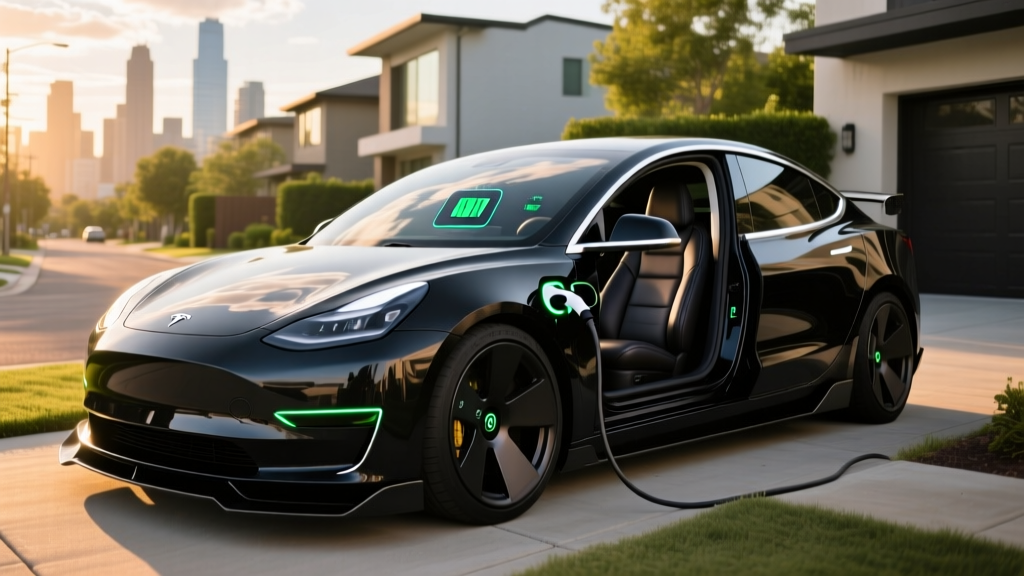
For home Level 2 charging, the Model Y's onboard charger accepts up to 11.5 kW (48 amps on a 60-amp circuit). A typical home installation with a Tesla Wall Connector or equivalent NACS unit runs $800–$2,000 depending on your electrical panel's capacity and the run length from panel to garage. If your home has a 200-amp service panel with spare capacity, expect the lower end; older homes with 100-amp panels may require a $2,000–$4,000 panel upgrade before adding a dedicated EV circuit.
Performance, Ride, and Daily Drivability
The dual-motor AWD powertrain delivers 384 combined horsepower and a 4.8-second 0–60 mph time — brisk enough to merge confidently onto any freeway and overtake without drama. The instant torque delivery characteristic of electric motors makes the Model Y feel quicker in urban driving than the stopwatch number suggests.
Ride quality has improved with the "Juniper" refresh that debuted for the 2025 model year: revised suspension tuning, acoustic glass, and improved seat cushioning address the most common complaints from pre-refresh owners. The cabin is noticeably quieter at highway speeds, though the firm ride on the standard 19-inch wheels still transmits sharper road imperfections more than comfort-oriented competitors like the Hyundai Ioniq 5 or Ford Mustang Mach-E.
One-pedal driving via regenerative braking remains well-calibrated, and the heat pump's integration means you aren't sacrificing range to defrost the windshield on cold mornings — a meaningful advantage in northern-tier states.
Pricing, Trim Levels, and Federal Tax Credit Eligibility
| Trim | Base MSRP | Est. Federal Credit (§30D) | Effective Price (before state incentives) |
|---|---|---|---|
| Long Range AWD | $44,990 | Up to $7,500 | ~$37,490 |
| Performance AWD | $51,490 | Up to $7,500 | ~$43,990 |
The 2026 Model Y Long Range AWD starts at $44,990 (including destination), and the Performance trim steps up to $51,490. Both trims fall under the $80,000 MSRP cap for SUVs under IRS §30D clean vehicle credit rules.
Tax credit eligibility is not automatic. To claim the full $7,500 federal credit, buyers must meet all of the following:
- Income caps: Modified adjusted gross income ≤ $150,000 (single), ≤ $225,000 (head of household), ≤ $300,000 (joint filers)
- MSRP cap: Vehicle base price must be ≤ $80,000 for SUVs (both Model Y trims qualify)
- Battery sourcing: Critical minerals and battery components must meet phased-in domestic/free-trade-agreement sourcing thresholds — Tesla has largely restructured its supply chain to meet 2026 requirements, but buyers should verify the specific VIN's eligibility at the point of sale
- Point-of-sale transfer: As of 2024, the credit can be transferred to the dealer at purchase, reducing your out-of-pocket cost immediately rather than waiting for tax filing
Consult a tax professional to confirm your personal eligibility. State incentives (California's CVRP, Colorado's tax credit, etc.) can stack on top but vary by jurisdiction — check your state's energy office for current programs.
Technology, Driver Assistance, and Interior
The Model Y's cabin follows Tesla's minimalist philosophy: a single 15.4-inch center touchscreen handles infotainment, climate, navigation, and vehicle settings. There are no physical gauges, no head-up display, and no traditional instrument cluster — speed and navigation info appear in the upper-left corner of the main screen. This approach divides opinion; some buyers find it liberating, others find it distracting.
Autopilot and Full Self-Driving (Supervised): Every Model Y ships with basic Autopilot (traffic-aware cruise control and lane centering). The optional FSD (Supervised) package adds automatic lane changes, Navigate on Autopilot, traffic light/stop sign recognition, and city-street autosteer. This is an SAE Level 2 driver-assistance system — it requires active driver supervision at all times and is not autonomous driving. Tesla's FSD remains a polarizing feature; it performs well on well-marked highways but requires vigilance in construction zones, adverse weather, and complex urban intersections.
Standout tech features include over-the-air software updates that add functionality over time, a robust mobile app with climate pre-conditioning and charging monitoring, Sentry Mode (dashcam-based security recording), and the expanding Supercharger network that now serves non-Tesla EVs via the NACS standard — a strategic move that has turned Tesla's charging moat into a revenue stream while maintaining priority access for Tesla owners.
Pros, Cons, and Competitive Position
Pros
- Best-in-class Supercharger network access (17,000+ U.S. stalls)
- Strong efficiency (122 MPGe) for an AWD SUV
- Competitive 10–80% DC fast charge time (~27 min at 250 kW)
- Generous cargo space (72 cu ft with seats folded)
- Over-the-air updates add features post-purchase
- Heat pump standard — better cold-weather range retention
Cons
- Minimalist interior lacks physical controls and gauges
- FSD package costs extra and requires constant supervision
- Firm ride quality on rough roads vs. comfort-focused rivals
- No Apple CarPlay or Android Auto integration
- European sales decline may signal long-term brand challenges
- Insurance premiums tend to be higher than segment average
How the Model Y stacks up against key competitors:
vs. Hyundai Ioniq 5 (Long Range AWD): The Ioniq 5 offers 800V architecture enabling faster peak charging (up to 350 kW, 10–80% in ~18 minutes), a more conventional interior with physical buttons, and Apple CarPlay. The Model Y counters with longer EPA range (320 vs. 290 miles), superior cargo space, and the Supercharger network advantage.
vs. Ford Mustang Mach-E (Extended Range AWD): The Mach-E delivers a more engaging driving experience and a traditional cockpit layout. The Model Y wins on efficiency, range, and charging infrastructure access.
vs. Volkswagen ID.4 (AWD Pro S): The ID.4 undercuts on price and offers a comfortable ride, but trails significantly on range, charging speed, and software responsiveness.
Who Should Buy the 2026 Tesla Model Y?
Choose the Model Y if:
- You frequently road-trip and value the reliability and density of the Supercharger network
- You want maximum cargo space in a midsize electric SUV
- You prefer a minimalist, screen-centric cabin interface
- You live in a region with harsh winters and want heat-pump efficiency
- You qualify for the full §30D tax credit, bringing the effective price near $37,500
Look elsewhere if:
- You want physical buttons, a traditional instrument cluster, or Apple CarPlay
- You prioritize the absolute fastest DC charging times (Ioniq 5's 800V is quicker)
- You want a more plush, comfort-tuned ride for daily commuting on rough roads
- You're uncomfortable with Tesla's camera-only vision approach to driver assistance
Frequently Asked Questions
What is the real-world range of the 2026 Tesla Model Y Long Range AWD?
The EPA rates it at 320 miles. In real-world mixed highway driving at 70–80 mph, expect 270–290 miles. In sustained sub-freezing temperatures with cabin heat, plan for 230–250 miles of practical range.
How fast does the Model Y charge at home and on the road?
On a Level 2 home charger (11.5 kW / 48A), you'll add about 44 miles of range per hour, fully charging in roughly 7 hours. On a Tesla V3/V4 Supercharger, the 10–80% session takes approximately 27 minutes at a peak rate of 250 kW.
How much does the 2026 Model Y cost after the federal tax credit?
The Long Range AWD starts at $44,990 MSRP. If you meet all IRS §30D requirements (income caps, battery sourcing), the $7,500 credit brings the effective price to approximately $37,490 before any state or local incentives.
Does the Tesla Model Y qualify for the federal EV tax credit in 2026?
Yes — both the Long Range and Performance trims fall under the $80,000 MSRP cap for SUVs. However, buyer income limits and battery critical-mineral sourcing rules apply. Verify your specific eligibility via the IRS or your tax professional before purchasing.
Why are Tesla sales declining in Europe?
Multiple factors: intensifying competition from BYD, Volkswagen, Renault, and Hyundai with compelling EVs at competitive prices; reductions or eliminations of EV purchase subsidies in Germany, France, and other markets; growing political headwinds around Tesla's brand perception; and longer vehicle replacement cycles in a tighter economic environment. For U.S. buyers, this European pressure has contributed to more aggressive pricing and feature updates domestically.
Is the Model Y worth buying over the Hyundai Ioniq 5 or Ford Mach-E?
It depends on your priorities. The Model Y offers the longest range, the most cargo space, and the strongest charging network. The Ioniq 5 charges faster and has a more conventional interior. The Mach-E drives more dynamically. Test-drive all three and weigh which trade-offs matter most for your daily use.
What is the battery warranty on the 2026 Model Y?
Tesla covers the battery and drive unit for 8 years or 120,000 miles (whichever comes first) on the Long Range AWD, with a minimum 70% capacity retention threshold during the warranty period.